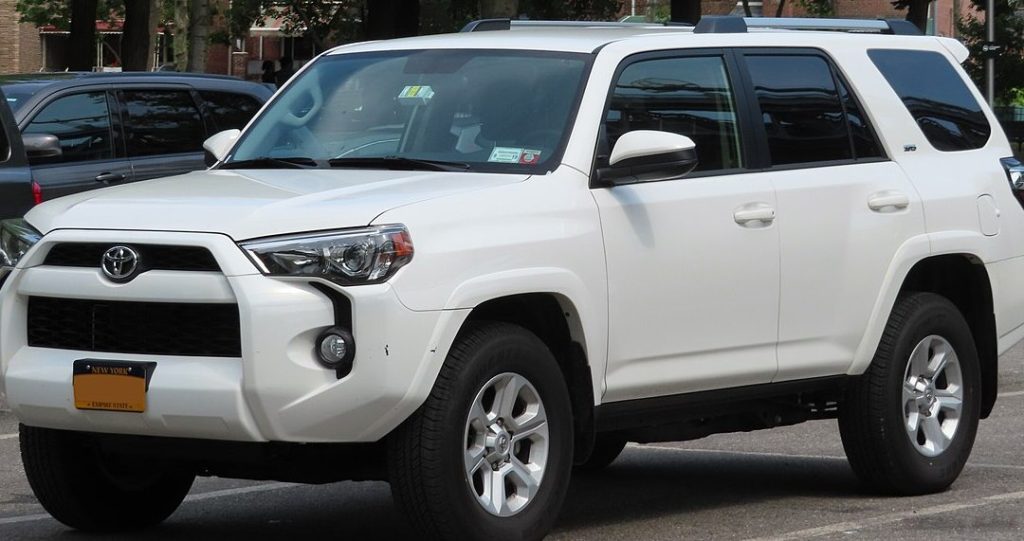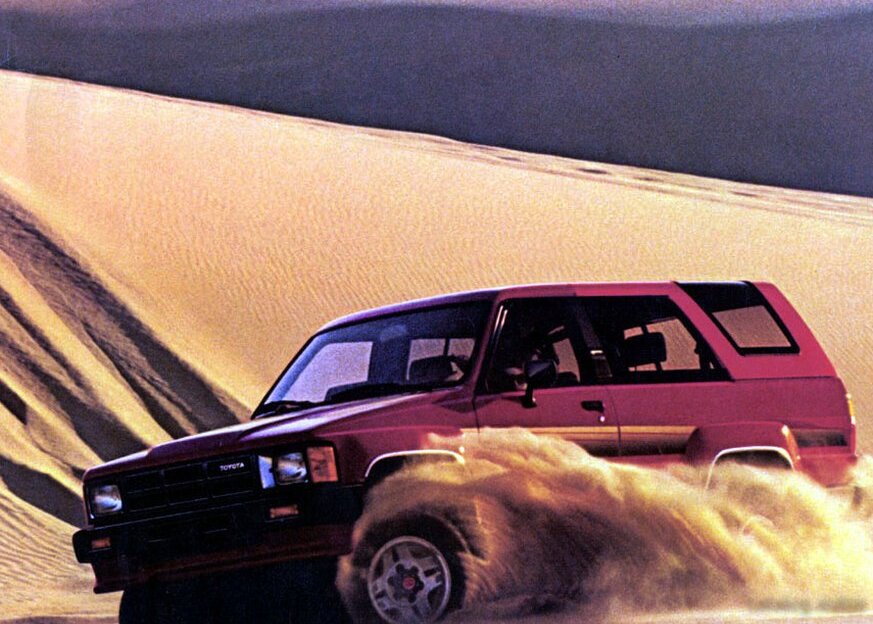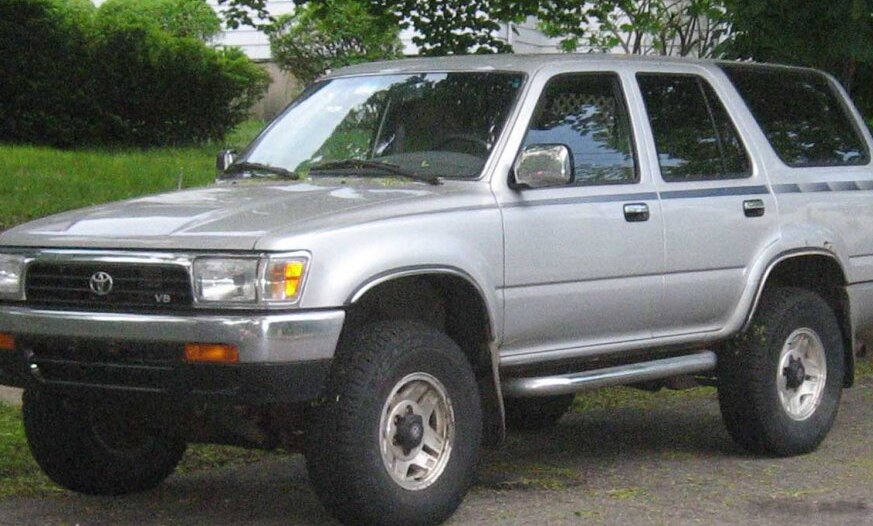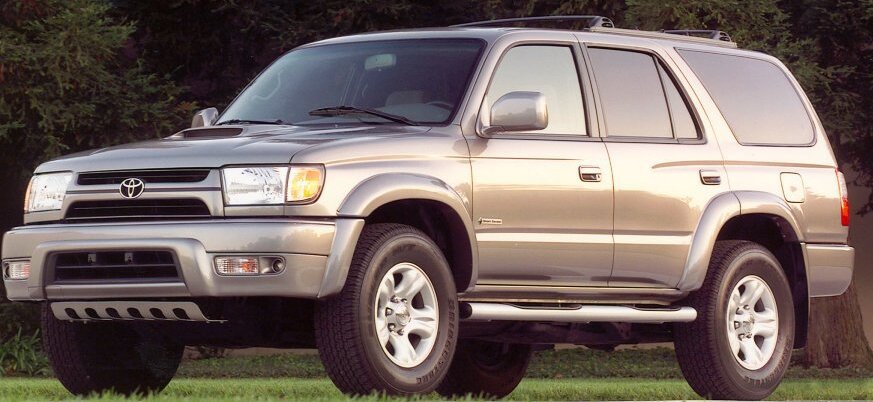
The Toyota 4Runner III, specifically the facelifted version produced from 1999 to 2000, represented a significant evolution of Toyota’s popular mid-size SUV. This generation, internally designated as the 180 series, continued the 4Runner’s reputation for ruggedness and reliability while incorporating refinements in comfort and technology. The 2.7 16V (150 Hp) 4×4 Automatic variant occupied a key position in the lineup, serving as the entry-level option for buyers seeking four-wheel-drive capability and automatic transmission convenience. It was primarily marketed towards families and individuals needing a versatile vehicle for both daily commuting and light off-road adventures.
Technical Specifications
| Brand | Toyota |
| Model | 4Runner |
| Generation | 4Runner III (facelift 1999) |
| Type (Engine) | 2.7 16V (150 Hp) 4×4 Automatic |
| Start of production | 1999 |
| End of production | 2000 |
| Powertrain Architecture | Internal Combustion engine |
| Body type | SUV |
| Seats | 5 |
| Doors | 5 |
| Fuel Type | Petrol (Gasoline) |
| Weight-to-power ratio | 11.3 kg/Hp, 88.4 Hp/tonne |
| Weight-to-torque ratio | 7.1 kg/Nm, 141.5 Nm/tonne |
| Power | 150 Hp @ 4800 rpm |
| Power per litre | 55.7 Hp/l |
| Torque | 240 Nm @ 4000 rpm (177.01 lb.-ft. @ 4000 rpm) |
| Engine layout | Front, Longitudinal |
| Engine Model/Code | 3RZ-FE |
| Engine displacement | 2694 cm3 (164.4 cu. in.) |
| Number of cylinders | 4 |
| Engine configuration | Inline |
| Cylinder Bore | 95 mm (3.74 in.) |
| Piston Stroke | 95 mm (3.74 in.) |
| Compression ratio | 9.5:1 |
| Number of valves per cylinder | 4 |
| Fuel injection system | Multi-port manifold injection |
| Engine aspiration | Naturally aspirated engine |
| Valvetrain | DOHC |
| Engine oil capacity | 5.4 l (5.71 US qt | 4.75 UK qt) |
| Coolant | 10 l (10.57 US qt | 8.8 UK qt) |
| Kerb Weight | 1696 kg (3739.04 lbs.) |
| Max. weight | 2381 kg (5249.21 lbs.) |
| Max load | 685 kg (1510.17 lbs.) |
| Trunk (boot) space – minimum | 1263 l (44.6 cu. ft.) |
| Trunk (boot) space – maximum | 2257 l (79.71 cu. ft.) |
| Fuel tank capacity | 70 l (18.49 US gal | 15.4 UK gal) |
| Length | 4656 mm (183.31 in.) |
| Width | 1690 mm (66.54 in.) |
| Height | 1715-1740 mm (67.52 – 68.5 in.) |
| Wheelbase | 2675 mm (105.31 in.) |
| Front track | 1505 mm (59.25 in.) |
| Rear (Back) track | 1495-1510 mm (58.86 – 59.45 in.) |
| Minimum turning circle (turning diameter) | 11.4 m (37.4 ft.) |
| Drive wheel | All wheel drive (4×4) |
| Number of gears and type of gearbox | 4 gears, automatic transmission |
| Front suspension | Double wishbone |
| Rear suspension | Independent multi-link suspension |
| Front brakes | Ventilated discs |
| Rear brakes | Drum |
| Assisting systems | ABS (Anti-lock braking system) |
| Steering type | Steering rack and pinion |
| Power steering | Hydraulic Steering |
| Tires size | 225/75 R15; 265/70 R16 |
| Wheel rims size | 7J x 15; 7J x 16 |
Powertrain & Engine Architecture
The heart of the 4Runner 2.7 Automatic was the 3RZ-FE inline-four cylinder engine. This 2.7-liter powerplant was a member of Toyota’s ‘RZ’ family, known for its durability and relatively simple design. The 3RZ-FE featured a cast iron block and an aluminum cylinder head, incorporating a double overhead camshaft (DOHC) valvetrain with four valves per cylinder. This configuration allowed for improved breathing and higher engine speeds compared to older designs. Fuel delivery was handled by a multi-port fuel injection system, optimizing fuel atomization and combustion efficiency. The engine produced 150 horsepower at 4800 rpm and 240 Nm (177 lb-ft) of torque at 4000 rpm. The engine was longitudinally mounted, contributing to a balanced weight distribution. Paired with the 3RZ-FE was a four-speed automatic transmission, providing smooth and convenient gear changes. This transmission was chosen for its ease of use and suitability for a wider range of drivers, particularly those not accustomed to manual transmissions.
Driving Characteristics
The 4Runner 2.7 Automatic offered a comfortable and capable driving experience, albeit not a particularly sporty one. The 150 horsepower engine provided adequate power for everyday driving and highway cruising, but acceleration was noticeably slower compared to the higher-output 3.4-liter V6 versions. The automatic transmission, while smooth, contributed to this lack of urgency, with gear ratios optimized for fuel economy and relaxed driving rather than rapid acceleration. The 4×4 system, selectable via a rotary dial, provided enhanced traction in slippery conditions and allowed for limited off-road capability. The relatively high curb weight of approximately 1696 kg (3739 lbs) further impacted performance, making the vehicle feel less nimble than lighter competitors. However, the suspension provided a comfortable ride, absorbing bumps and irregularities in the road surface effectively.
Equipment & Trim Levels
The 2.7L Automatic 4Runner typically came with a standard equipment list focused on practicality and convenience. This included features such as air conditioning, power windows and locks, and an AM/FM stereo. Interior upholstery was typically cloth, with a durable and easy-to-clean finish. Optional extras included features like a sunroof, upgraded audio systems, and alloy wheels. The trim level was generally considered the base model, offering a more affordable entry point into the 4Runner range. The dashboard layout was functional and straightforward, prioritizing ease of use over stylistic flair.
Chassis & Braking
The 4Runner III utilized a body-on-frame construction, providing a robust and durable chassis. The front suspension featured a double wishbone design, while the rear employed an independent multi-link setup. This combination aimed to balance ride comfort with handling stability. Braking duties were handled by ventilated discs at the front and drum brakes at the rear. An Anti-lock Braking System (ABS) was standard, enhancing safety by preventing wheel lockup during hard braking. Steering was rack and pinion, with hydraulic power assistance for ease of maneuvering.
Market Reception & Comparison
The 4Runner 2.7 Automatic was generally well-received by critics as a practical and reliable SUV. However, its performance was often criticized as being underwhelming compared to the V6 models. Fuel economy was considered average for its class. Compared to the 3.4-liter V6 4Runner, the 2.7-liter version offered a lower purchase price and slightly better fuel efficiency, but at the expense of significant performance. The 2.7L model appealed to buyers prioritizing affordability and fuel economy over outright power and acceleration. It also offered a compelling alternative to other mid-size SUVs like the Nissan Pathfinder and Jeep Cherokee.
Legacy
The 3RZ-FE engine, paired with the four-speed automatic transmission, has proven to be remarkably durable and reliable over the long term. Many examples of the 4Runner 2.7 Automatic remain on the road today, a testament to Toyota’s engineering prowess. While not as sought-after as the V6 models, the 2.7-liter version represents a solid and dependable choice in the used car market. Maintenance costs are generally reasonable, and parts availability remains good. The 4Runner 2.7 Automatic continues to be appreciated by owners for its practicality, reliability, and off-road capability, solidifying its place as a capable and long-lasting SUV.