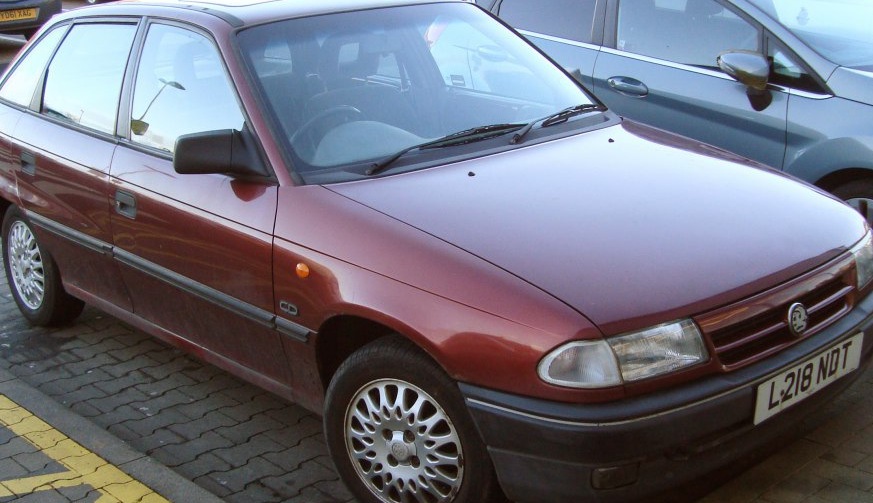
The Vauxhall Astra Mk III, produced between 1991 and 1994, represented a significant step forward for the British marque, building upon the success of its predecessors. Within the Mk III range, the 1.7 D (60 hp) variant occupied the entry-level position, aimed at buyers prioritizing fuel economy and practicality over outright performance. This model, available in both 3 and 5-door hatchback configurations, played a crucial role in establishing the Astra as a popular choice in the UK market, particularly for fleet buyers and those seeking a cost-effective family vehicle. It was built on the GM T platform, shared with other European Opel and Vauxhall models.
Technical Specifications
| Brand | Vauxhall |
| Model | Astra |
| Generation | Astra Mk III CC |
| Type (Engine) | 1.7 D (60 Hp) |
| Start of production | 1991 |
| End of production | 1994 |
| Powertrain Architecture | Internal Combustion engine |
| Body type | Hatchback |
| Seats | 5 |
| Doors | 3-5 |
| Fuel consumption (urban) | 6.7 l/100 km (35.1 US mpg, 42.2 UK mpg, 14.9 km/l) |
| Fuel consumption (extra urban) | 4.2 l/100 km (56 US mpg, 67.3 UK mpg, 23.8 km/l) |
| Fuel consumption (combined) | 5.6 l/100 km (42 US mpg, 50.4 UK mpg, 17.9 km/l) |
| CO2 emissions | 148 g/km |
| Fuel Type | Diesel |
| Acceleration 0 – 100 km/h | 18.5 sec |
| Acceleration 0 – 62 mph | 18.5 sec |
| Acceleration 0 – 60 mph | 17.6 sec |
| Maximum speed | 153 km/h (95.07 mph) |
| Weight-to-power ratio | 17.2 kg/Hp, 58.3 Hp/tonne |
| Weight-to-torque ratio | 9.9 kg/Nm, 101 Nm/tonne |
| Power | 60 Hp @ 4600 rpm |
| Power per litre | 35.3 Hp/l |
| Torque | 104 Nm @ 2400 rpm (76.71 lb.-ft. @ 2400 rpm) |
| Engine layout | Front, Transverse |
| Engine Model/Code | 17DR |
| Engine displacement | 1700 cm3 (103.74 cu. in.) |
| Number of cylinders | 4 |
| Engine configuration | Inline |
| Fuel injection system | Precombustion chamber injection |
| Engine aspiration | Naturally aspirated |
| Engine oil capacity | 5 l (5.28 US qt | 4.4 UK qt) |
| Coolant capacity | 7.8 l (8.24 US qt | 6.86 UK qt) |
| Kerb Weight | 1030 kg (2270.76 lbs.) |
| Max. weight | 1535 kg (3384.1 lbs.) |
| Max load | 505 kg (1113.33 lbs.) |
| Trunk (boot) space – minimum | 360 l (12.71 cu. ft.) |
| Length | 4049 mm (159.41 in.) |
| Width | 1689 mm (66.5 in.) |
| Height | 1410 mm (55.51 in.) |
| Wheelbase | 2520 mm (99.21 in.) |
| Front track | 1420 mm (55.91 in.) |
| Rear track | 1420 mm (55.91 in.) |
| Ride height (ground clearance) | 135 mm (5.31 in.) |
| Drag coefficient (Cd) | 0.31 |
| Drivetrain Architecture | Front wheel drive |
| Number of gears | 5 |
| Gearbox type | Manual transmission |
| Front brakes | Ventilated discs |
| Rear brakes | Drum |
| Tires size | 175/70 R13 |
| Wheel rims size | 13 |
Powertrain & Engine Architecture
The heart of the Astra 1.7 D was the 17DR engine, a naturally aspirated, inline-four cylinder diesel. This engine utilized a precombustion chamber injection system, a common technology for diesel engines of the era. This system involved injecting fuel into a precombustion chamber, where it partially ignited before being transferred to the main combustion chamber for complete combustion. This design aided in smoother combustion and reduced engine noise compared to direct injection systems of the time. The engine produced 60 horsepower at 4600 rpm and 104 Nm (77 lb-ft) of torque at 2400 rpm. The five-speed manual transmission was the only gearbox option available with this engine, prioritizing fuel efficiency over rapid acceleration. The engine was transversely mounted, a layout common in front-wheel-drive vehicles, contributing to a more compact engine bay.
Driving Characteristics
The 1.7 D Astra was not designed for spirited driving. Its focus was firmly on economy and practicality. Acceleration was leisurely, taking around 18.5 seconds to reach 62 mph. The engine’s torque delivery was relatively low-end focused, making it adequate for everyday driving and hauling loads, but lacking in high-speed passing power. The five-speed manual transmission helped to keep the engine within its optimal operating range, but required frequent shifting to maintain momentum, especially when climbing hills. Compared to the more powerful petrol variants, such as the 1.8 or 2.0 litre models, the 1.7 D felt significantly slower. However, it offered a noticeable improvement in fuel economy, making it a popular choice for high-mileage drivers.
Equipment & Trim Levels
The 1.7 D Astra typically came with a basic level of equipment. Standard features included central locking, power steering (on some models), and a basic stereo system. Interior upholstery was typically cloth, and the dashboard featured a simple, functional design. Optional extras included electric windows, a sunroof, and upgraded stereo systems. The trim level was generally considered the base model, with limited cosmetic enhancements compared to higher-spec versions. The focus was on providing a functional and affordable vehicle rather than luxury or sporting features.
Chassis & Braking
The Astra Mk III utilized a MacPherson strut front suspension and a torsion beam rear suspension. This setup provided a reasonable balance between ride comfort and handling. The front brakes were ventilated discs, offering adequate stopping power, while the rear brakes were drums, a cost-saving measure common on entry-level models. The 1.7 D variant, being lighter than its more powerful siblings, didn’t require the more sophisticated braking systems found on higher-spec models. Stabilizer bars were fitted to both the front and rear axles, helping to reduce body roll during cornering.
Market Reception & Comparison
The Astra 1.7 D was well-received in the UK market as a practical and economical choice. Critics praised its fuel efficiency and low running costs, but noted its lack of performance. Compared to other diesel models of the time, such as the Ford Escort 1.8 D, the Astra offered a similar level of economy and practicality. However, the Escort was often considered to be slightly more refined. Within the Astra range, the 1.7 D served as a direct contrast to the more powerful petrol variants, offering a more affordable entry point into the model line-up. It appealed to a different type of buyer – those prioritizing economy and reliability over performance and features.
Legacy
The 1.7 D Astra Mk III, while not a performance icon, has proven to be a surprisingly durable and reliable vehicle. Many examples are still on the road today, testament to the robustness of the engine and chassis. The 17DR engine, while simple in design, is known for its longevity and relatively low maintenance costs. In the used car market, these Astras are often sought after by enthusiasts looking for a classic, affordable, and economical vehicle. While parts availability may be becoming more challenging, the simplicity of the engine and chassis makes them relatively easy to maintain for those with mechanical skills. The 1.7 D Astra Mk III remains a popular choice for those seeking a practical and reliable classic car.