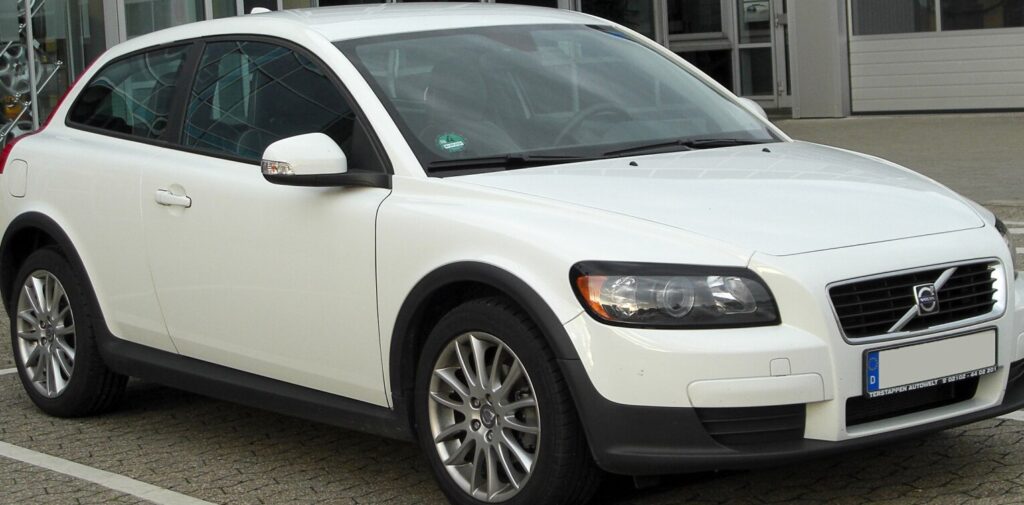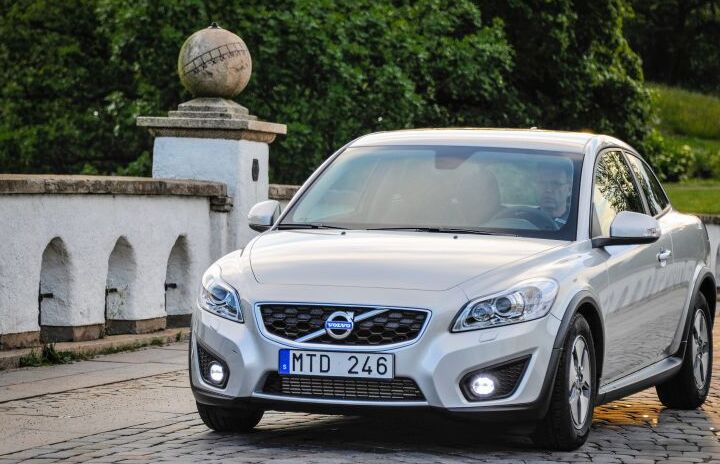
The Volvo C30 D3, specifically the facelifted version produced from 2010 to 2012, represented a compelling entry point into Volvo’s compact coupe range. Positioned as a stylish and relatively efficient alternative to more conventional hatchbacks, the C30 aimed to attract a younger demographic. This variant, powered by the 2.0-liter D3 turbodiesel engine producing 150 horsepower, was primarily sold in Europe, where demand for diesel-powered vehicles was significantly higher. It occupied a mid-range position within the C30 lineup, offering a balance between performance, fuel economy, and price. While not available in the North American market, the C30, in its various configurations, showcased Volvo’s commitment to Scandinavian design and safety.
Technical Specifications
| Brand | Volvo |
| Model | C30 |
| Generation | C30 (facelift 2010) |
| Type (Engine) | 2.0 D3 (150 Hp) |
| Start of production | 2010 |
| End of production | 2012 |
| Powertrain Architecture | Internal Combustion engine |
| Body type | Coupe |
| Seats | 4 |
| Doors | 3 |
| Fuel consumption (urban) | 7 l/100 km (33.6 US mpg, 40.4 UK mpg, 14.3 km/l) |
| Fuel consumption (extra urban) | 4 l/100 km (58.8 US mpg, 70.6 UK mpg, 25 km/l) |
| Fuel consumption (combined) | 5.1 l/100 km (46.1 US mpg, 55.4 UK mpg, 19.6 km/l) |
| CO2 emissions | 134 g/km |
| Fuel Type | Diesel |
| Acceleration 0 – 100 km/h | 9.4 sec |
| Acceleration 0 – 62 mph | 9.4 sec |
| Acceleration 0 – 60 mph | 8.9 sec |
| Emission standard | Euro 5 |
| Weight-to-power ratio | 9.7 kg/Hp, 103.4 Hp/tonne |
| Weight-to-torque ratio | 4.1 kg/Nm, 241.4 Nm/tonne |
| Power | 150 Hp @ 3500 rpm |
| Power per litre | 75.6 Hp/l |
| Torque | 350 Nm @ 1500-2750 rpm (258.15 lb.-ft. @ 1500-2750 rpm) |
| Engine layout | Front, Transverse |
| Engine Model/Code | D5204T5 |
| Engine displacement | 1984 cm3 (121.07 cu. in.) |
| Number of cylinders | 5 |
| Engine configuration | Inline |
| Piston Stroke | 81 mm (3.19 in.) |
| Fuel injection system | Diesel Commonrail |
| Engine aspiration | Turbocharger, Intercooler |
| Engine oil capacity | 5.9 l (6.23 US qt | 5.19 UK qt) |
| Coolant | 8.5 l (8.98 US qt | 7.48 UK qt) |
| Kerb Weight | 1450 kg (3196.7 lbs.) |
| Max. weight | 1900 kg (4188.78 lbs.) |
| Max load | 450 kg (992.08 lbs.) |
| Trunk (boot) space – minimum | 233 l (8.23 cu. ft.) |
| Fuel tank capacity | 52 l (13.74 US gal | 11.44 UK gal) |
| Length | 4266 mm (167.95 in.) |
| Width | 1782 mm (70.16 in.) |
| Height | 1447 mm (56.97 in.) |
| Wheelbase | 2640 mm (103.94 in.) |
| Front track | 1548 mm (60.94 in.) |
| Rear (Back) track | 1544 mm (60.79 in.) |
| Minimum turning circle | 11.1 m (36.42 ft.) |
| Drivetrain Architecture | The Internal combustion engine (ICE) drives the front wheels of the vehicle. |
| Drive wheel | Front wheel drive |
| Number of gears and type of gearbox | 6 gears, manual transmission |
| Assisting systems | ABS (Anti-lock braking system) |
| Steering type | Steering rack and pinion |
Powertrain & Engine Architecture
The heart of the C30 D3 is Volvo’s D5204T5 2.0-liter inline-five cylinder turbodiesel engine. This engine is part of Volvo’s modular engine family, known for its robustness and efficiency. The D3 variant utilizes a common rail direct injection system, delivering fuel at extremely high pressure for optimized combustion. A variable geometry turbocharger (VGT) with an intercooler further enhances performance and reduces turbo lag. The engine produces 150 horsepower at 3500 rpm and a substantial 350 Nm (258 lb-ft) of torque between 1500 and 2750 rpm. This broad torque curve provides strong pulling power from low engine speeds, making it well-suited for everyday driving. The engine meets Euro 5 emission standards, incorporating a diesel particulate filter (DPF) to minimize harmful emissions. The C30 D3 was exclusively offered with a 6-speed manual transmission, prioritizing fuel efficiency and driver engagement over the convenience of an automatic.
Driving Characteristics
The C30 D3, with its 150 hp and 350 Nm of torque, offers a surprisingly sprightly driving experience. While not a sports car, the engine’s strong low-end torque allows for effortless overtaking and comfortable cruising. The 6-speed manual transmission is well-matched to the engine, providing precise shifts and allowing the driver to keep the engine in its optimal power band. Acceleration from 0 to 62 mph takes approximately 9.4 seconds. Compared to the more powerful C30 T5 (with its 2.5-liter turbocharged petrol engine), the D3 offers less outright performance but significantly better fuel economy. The D3’s focus is on usability and efficiency, making it an ideal choice for drivers who prioritize practicality over outright speed. The relatively compact size of the C30 and its well-tuned suspension contribute to agile handling and a comfortable ride.
Equipment & Trim Levels
The C30 D3 typically came equipped with a generous level of standard equipment. This included climate control, power windows and mirrors, a CD stereo system with auxiliary input, and alloy wheels. Safety features were, as expected from Volvo, comprehensive, including ABS brakes, traction control, and multiple airbags. Optional extras included leather upholstery, a sunroof, parking sensors, and a premium audio system. Trim levels varied slightly depending on the market, but generally, the D3 was positioned as a well-equipped mid-range model. Interior upholstery was typically cloth, with the option of leather upgrades. The dashboard layout was clean and functional, with a focus on ergonomics and ease of use.
Chassis & Braking
The Volvo C30 utilizes a MacPherson strut front suspension and a multi-link rear suspension, providing a good balance between ride comfort and handling. The chassis is relatively lightweight, contributing to the car’s agility. The front brakes are ventilated discs, while the rear brakes are typically solid discs, although some earlier models may have featured drum brakes. The steering is a rack and pinion system, providing precise and responsive steering feel. The C30’s suspension is tuned to provide a comfortable ride without sacrificing handling, making it a pleasant car to drive on both city streets and winding country roads.
Market Reception & Comparison
The Volvo C30 D3 was generally well-received by automotive critics. It was praised for its stylish design, comfortable interior, and fuel-efficient engine. However, some critics noted its limited rear passenger space and relatively small trunk. Compared to other compact coupes in the European market, such as the Audi TT and the BMW 1 Series Coupe, the C30 offered a more practical and affordable alternative. Its fuel economy was particularly competitive, making it an attractive option for drivers looking to reduce their running costs. The D3’s reliability was generally good, although, like all diesel engines, it required regular maintenance to ensure the DPF remained functional.
Legacy
The Volvo C30, while discontinued in 2012, remains a popular choice among used car buyers. The D3 variant, in particular, is sought after for its fuel efficiency and reliability. The D5204T5 engine has proven to be a durable and long-lasting unit, provided it has been properly maintained. Today, well-maintained C30 D3 models can be found for reasonable prices, offering a stylish and practical alternative to more mainstream hatchbacks. The C30’s unique design and Scandinavian charm continue to appeal to a dedicated following, ensuring its place as a memorable and distinctive Volvo model.