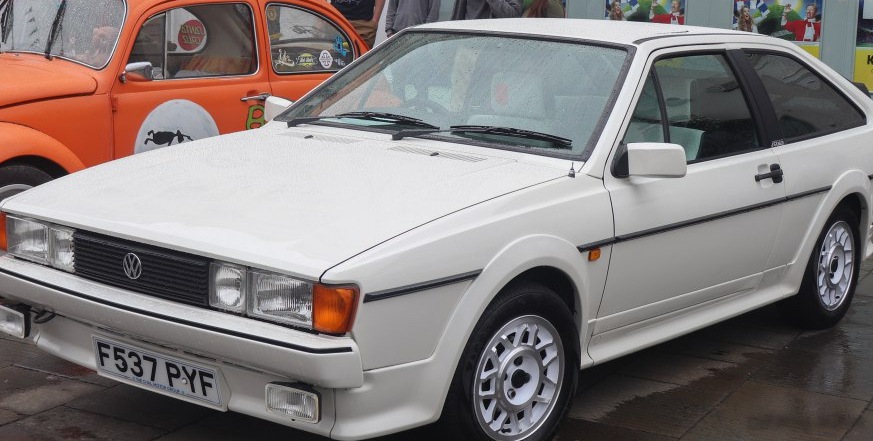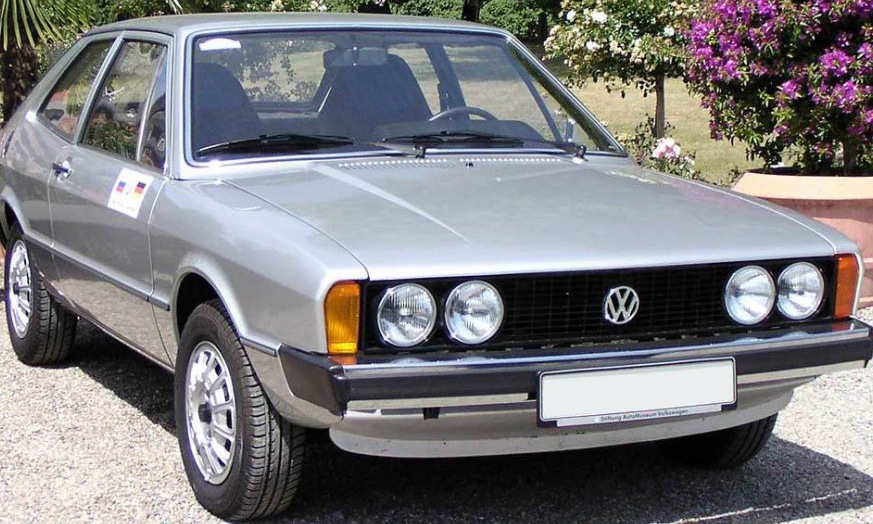
The Volkswagen Scirocco I, produced between 1974 and 1977, represented a significant departure for Volkswagen, moving away from the traditional rear-engine, air-cooled designs of the Beetle and towards a more modern, front-engine, water-cooled configuration. The Scirocco, sharing its platform (the 1HX0/A3) with the Volkswagen Golf and Audi Polo, was intended to offer a sporty, coupe alternative within the burgeoning compact car market. The 1.1-liter (50 hp) variant, while the entry-level offering, played a crucial role in making the Scirocco accessible to a wider audience, particularly in Europe where smaller displacement engines were favored due to tax regulations and fuel economy concerns. This model served as the foundation for the Scirocco range, establishing its styling and basic mechanical layout.
Technical Specifications
| Brand | Volkswagen |
| Model | Scirocco |
| Generation | Scirocco I (53) |
| Type (Engine) | 1.1 (50 Hp) |
| Start of production | March, 1974 |
| End of production | August, 1977 |
| Powertrain Architecture | Internal Combustion engine |
| Body type | Coupe |
| Seats | 4 |
| Doors | 2 |
| Fuel consumption (extra urban) | 5.4 l/100 km (43.6 US mpg, 52.3 UK mpg, 18.5 km/l) |
| Fuel consumption (combined) | 7.5 l/100 km (31.4 US mpg, 37.7 UK mpg, 13.3 km/l) |
| Fuel Type | Petrol (Gasoline) |
| Acceleration 0 – 100 km/h | 16 sec |
| Acceleration 0 – 62 mph | 16 sec |
| Acceleration 0 – 60 mph | 15.2 sec |
| Maximum speed | 144 km/h (89.48 mph) |
| Weight-to-power ratio | 15.6 kg/Hp, 64.1 Hp/tonne |
| Weight-to-torque ratio | 9.9 kg/Nm, 101.3 Nm/tonne |
| Power | 50 Hp @ 6000 rpm |
| Power per litre | 45.7 Hp/l |
| Torque | 79 Nm @ 3000 rpm (58.27 lb.-ft. @ 3000 rpm) |
| Engine layout | Front, Transverse |
| Engine Model/Code | FA |
| Engine displacement | 1093 cm3 (66.7 cu. in.) |
| Number of cylinders | 4 |
| Engine configuration | Inline |
| Cylinder Bore | 69.5 mm (2.74 in.) |
| Piston Stroke | 72 mm (2.83 in.) |
| Compression ratio | 8:1 |
| Number of valves per cylinder | 2 |
| Fuel injection system | Carburettor |
| Engine aspiration | Naturally aspirated engine |
| Valvetrain | SOHC |
| Kerb Weight | 780 kg (1719.61 lbs.) |
| Max. weight | 1170 kg (2579.41 lbs.) |
| Max load | 390 kg (859.8 lbs.) |
| Trunk (boot) space – minimum | 347 l (12.25 cu. ft.) |
| Trunk (boot) space – maximum | 533 l (18.82 cu. ft.) |
| Permitted trailer load with brakes (12%) | 800 kg (1763.7 lbs.) |
| Permitted trailer load without brakes | 400 kg (881.85 lbs.) |
| Length | 3885 mm (152.95 in.) |
| Width | 1624 mm (63.94 in.) |
| Height | 1309 mm (51.54 in.) |
| Wheelbase | 2400 mm (94.49 in.) |
| Front track | 1390 mm (54.72 in.) |
| Rear (Back) track | 1350 mm (53.15 in.) |
| Ride height (ground clearance) | 125 mm (4.92 in.) |
| Minimum turning circle (turning diameter) | 10.3 m (33.79 ft.) |
| Drivetrain Architecture | The Internal combustion engine (ICE) drives the front wheels of the vehicle. |
| Drive wheel | Front wheel drive |
| Number of gears and type of gearbox | 4 gears, manual transmission |
| Front suspension | Independent, type McPherson with coil spring and anti-roll bar |
| Rear suspension | Trailing arm |
| Front brakes | Disc |
| Rear brakes | Drum |
| Steering type | Steering rack and pinion |
| Wheel rims size | 5J x 13 |
Powertrain & Engine Architecture
The Scirocco I 1.1 utilized the Volkswagen FA engine, a 1093cc inline four-cylinder engine. This engine was a relatively simple design, featuring a single overhead camshaft (SOHC) and two valves per cylinder. Fuel delivery was managed by a single carburetor, a common setup for engines of this displacement and era. The FA engine produced 50 horsepower at 6000 rpm and 79 Nm (58.27 lb-ft) of torque at 3000 rpm. The engine was transversely mounted, a layout that became increasingly common in front-wheel-drive vehicles for packaging efficiency. The transmission was a standard four-speed manual gearbox. This configuration was chosen for its affordability and suitability for everyday driving, rather than outright performance.
Driving Characteristics
The 1.1-liter Scirocco was not a performance car. Acceleration was leisurely, taking approximately 16 seconds to reach 62 mph (100 km/h). Top speed was around 89.48 mph (144 km/h). The four-speed manual transmission offered relatively widely spaced gear ratios, prioritizing fuel economy over spirited acceleration. Compared to the later, more powerful versions of the Scirocco, such as the 1.6-liter or the GTI, the 1.1 felt significantly underpowered, especially when carrying passengers or luggage. However, the light weight of the vehicle (780 kg / 1719.61 lbs) helped to mitigate some of the performance deficit. The steering was light and precise, contributing to a reasonably enjoyable driving experience on winding roads, though lacking the responsiveness of the higher-performance models.
Equipment & Trim Levels
The 1.1-liter Scirocco was the base model, and as such, it came with a relatively sparse equipment list. Standard features typically included cloth upholstery, basic instrumentation (speedometer, fuel gauge, temperature gauge), and manually operated windows and door locks. Optional extras included a sunroof, upgraded audio systems, and different wheel trims. Interior trim was generally basic, with hard plastic surfaces dominating the cabin. The focus was on functionality and affordability rather than luxury.
Chassis & Braking
The Scirocco I featured an independent McPherson strut front suspension with coil springs and an anti-roll bar, providing a reasonable level of comfort and handling. The rear suspension utilized a trailing arm setup, which was simpler and more cost-effective. Braking was accomplished via disc brakes on the front wheels and drum brakes on the rear. This configuration was typical for cars in this price range during the 1970s. The steering was a rack and pinion system, offering precise control and a relatively tight turning circle.
Market Reception & Comparison
The 1.1-liter Scirocco was generally well-received as an affordable and stylish coupe. Critics acknowledged its attractive design and decent handling, but often noted its lack of power. Compared to the more expensive 1.6-liter and GTI models, the 1.1 offered a more economical option for buyers who prioritized fuel efficiency and affordability over performance. Fuel economy was a key selling point, achieving around 31.4 US mpg (37.7 UK mpg) in combined driving. Reliability was generally good, although the carburetor required periodic adjustment and maintenance.
Legacy
The 1.1-liter Scirocco I, while not the most sought-after variant today, represents an important entry point into the Scirocco lineage. Its simple, robust engine and relatively straightforward mechanicals make it a relatively easy car to maintain for enthusiasts. While not particularly collectible, well-preserved examples are becoming increasingly rare. The FA engine, while not known for its high performance, proved to be durable and reliable. In the used car market, these models are often found as affordable projects for restoration or as classic daily drivers, offering a taste of 1970s motoring at a reasonable price. The 1.1 laid the groundwork for the Scirocco’s success, establishing it as a stylish and accessible coupe for a new generation of drivers.