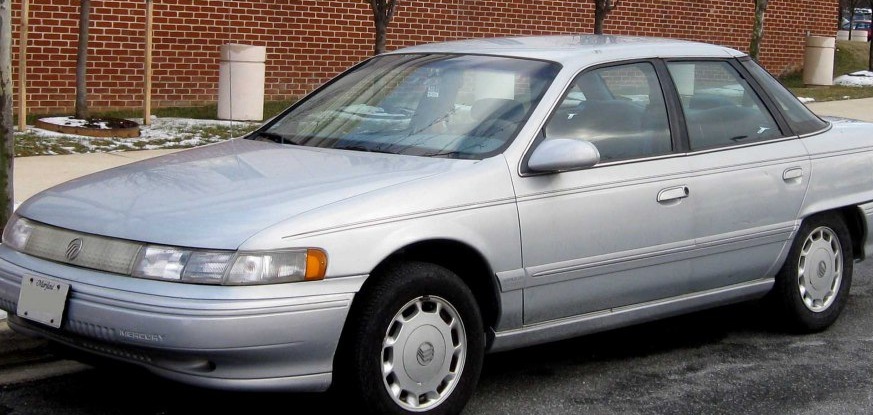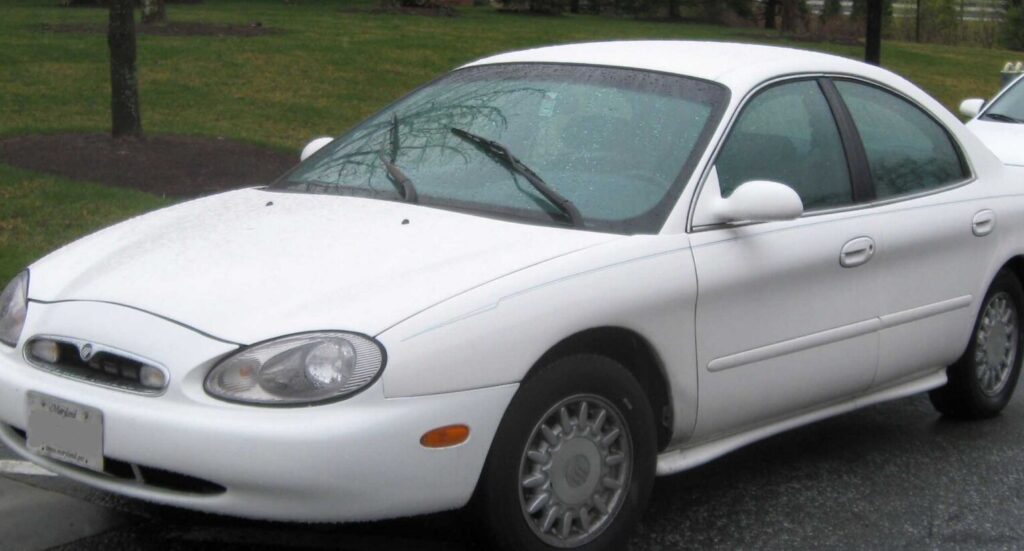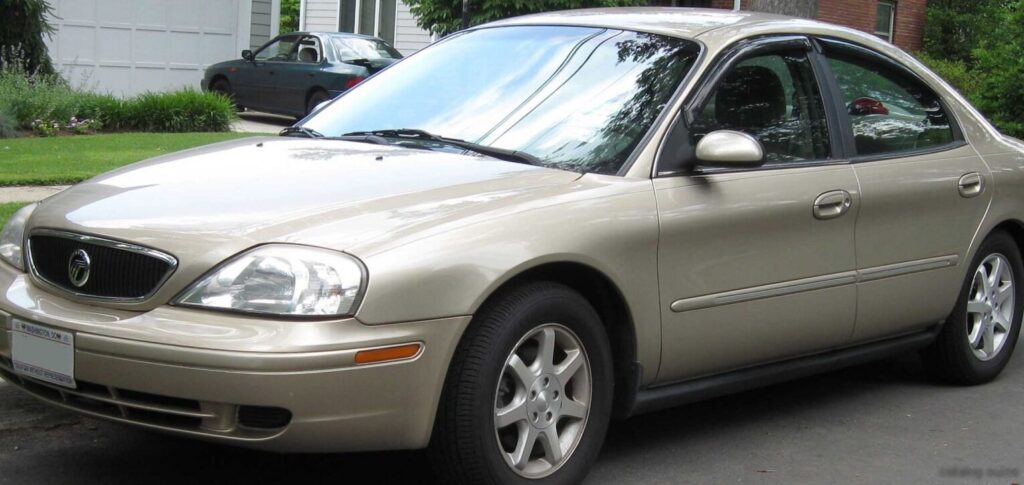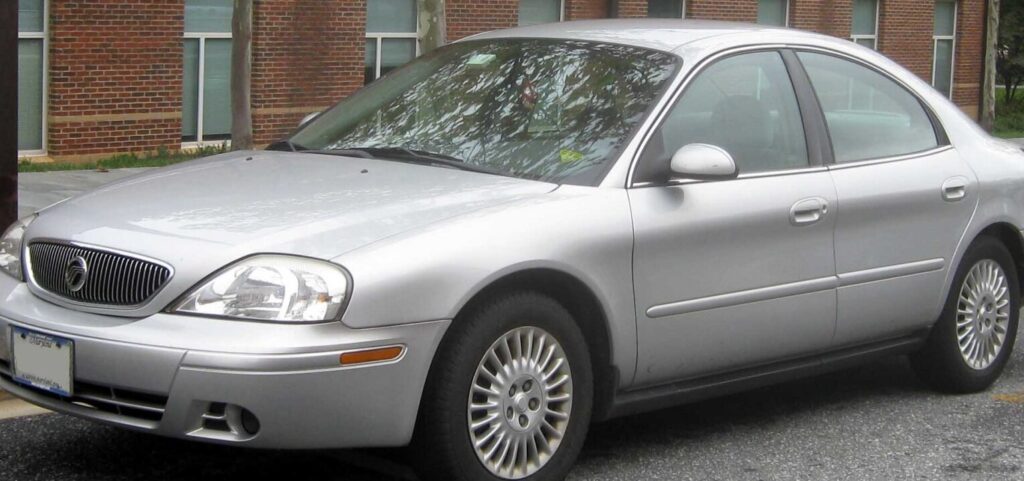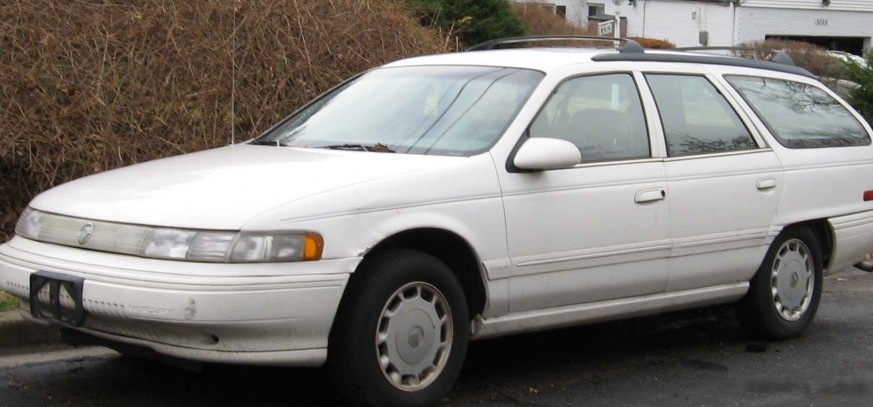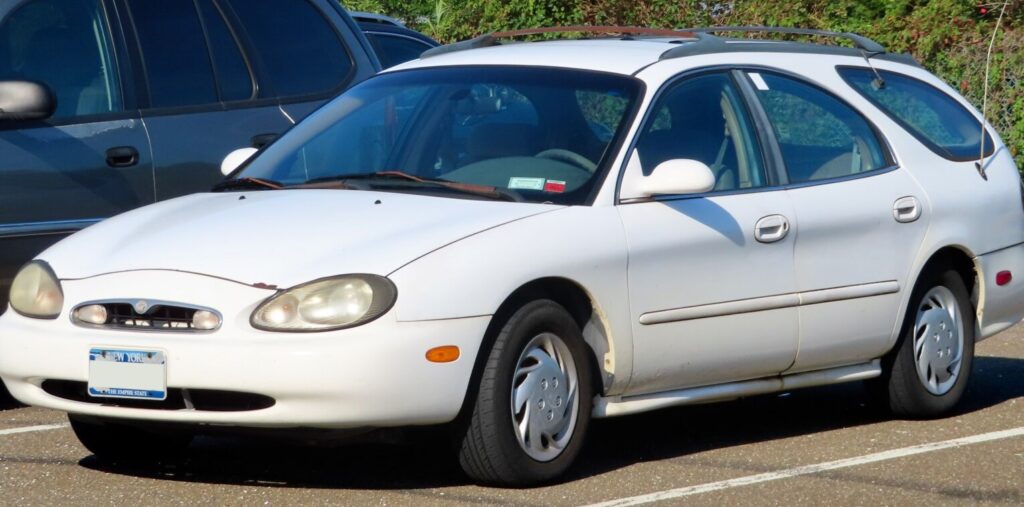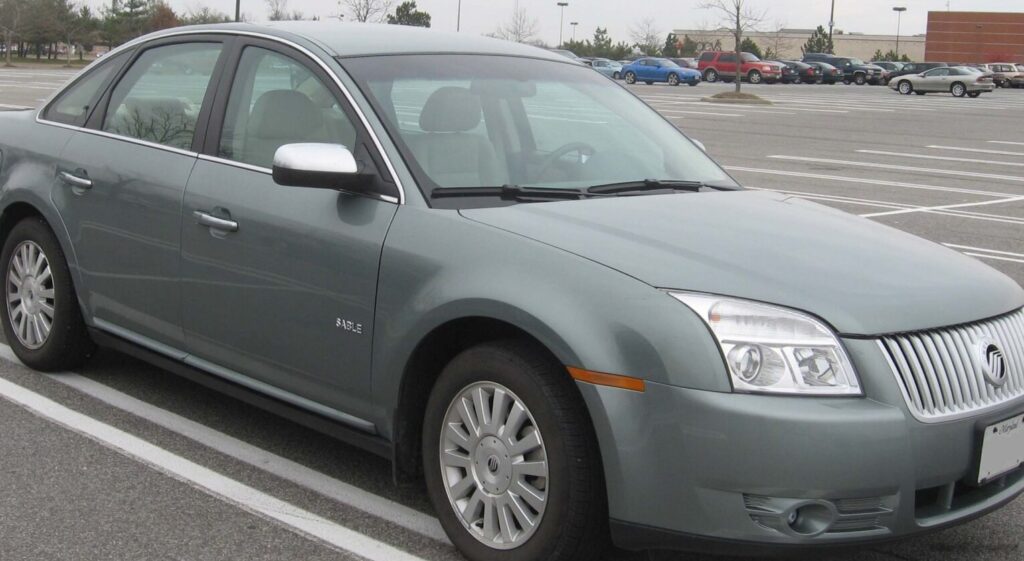
The Mercury Sable V 3.5 V6 AWD Automatic represents the final iteration of the Sable nameplate, produced for the 2007 and 2008 model years. Positioned as a near-premium offering within the Ford/Mercury lineup, it was based on the D3 platform shared with the Ford Taurus and Ford Five Hundred. This generation aimed to revitalize the Sable’s image, offering a more sophisticated driving experience and a more powerful engine option than previous models. The Sable V, specifically with the 3.5L V6 and all-wheel drive, was intended to compete with larger sedans like the Toyota Avalon and Buick LaCrosse, offering a blend of space, comfort, and performance. Production ended in 2009 as Mercury was phased out by Ford.
Technical Specifications
| Brand | Mercury |
| Model | Sable |
| Generation | Sable V |
| Type (Engine) | 3.5 V6 (263 Hp) AWD Automatic |
| Start of production | 2007 |
| End of production | 2009 |
| Powertrain Architecture | Internal Combustion engine |
| Body type | Sedan |
| Seats | 5 |
| Doors | 4 |
| Fuel consumption (economy) – urban (EPA) | 13.8 l/100 km (17 US mpg, 20.5 UK mpg) |
| Fuel consumption (economy) – extra urban (EPA) | 9.8 l/100 km (24 US mpg, 28.8 UK mpg) |
| Fuel Type | Petrol (Gasoline) |
| Emission standard | ULEV II |
| Weight-to-power ratio | 6.8 kg/Hp, 147.5 Hp/tonne |
| Weight-to-torque ratio | 5.3 kg/Nm, 189.6 Nm/tonne |
| Power | 263 Hp @ 6250 rpm |
| Power per litre | 75.2 Hp/l |
| Torque | 338 Nm @ 4500 rpm (249.3 lb.-ft. @ 4500 rpm) |
| Maximum engine speed | 6700 rpm |
| Engine layout | Front, Transverse |
| Engine Model/Code | Duratec 35 |
| Engine displacement | 3496 cm3 (213.34 cu. in.) |
| Number of cylinders | 6 |
| Engine configuration | V-engine |
| Cylinder Bore | 92.5 mm (3.64 in.) |
| Piston Stroke | 86.7 mm (3.41 in.) |
| Compression ratio | 10.3:1 |
| Number of valves per cylinder | 4 |
| Fuel injection system | Multi-port manifold injection |
| Engine aspiration | Naturally aspirated engine |
| Valvetrain | DOHC, iVCT |
| Engine oil capacity | 5.2 l (5.49 US qt | 4.58 UK qt) |
| Coolant | 10.5 l (11.1 US qt | 9.24 UK qt) |
| Kerb Weight | 1783 kg (3930.84 lbs.) |
| Trunk (boot) space – minimum | 600 l (21.19 cu. ft.) |
| Fuel tank capacity | 76 l (20.08 US gal | 16.72 UK gal) |
| Permitted trailer load with brakes (12%) | 454 kg (1000.9 lbs.) |
| Length | 5133 mm (202.09 in.) |
| Width | 1892 mm (74.49 in.) |
| Height | 1562 mm (61.5 in.) |
| Wheelbase | 2868 mm (112.91 in.) |
| Front track | 1633 mm (64.29 in.) |
| Rear (Back) track | 1636 mm (64.41 in.) |
| Minimum turning circle (turning diameter) | 12.05 m (39.53 ft.) |
| Drivetrain Architecture | All wheel drive (4×4). Internal Combustion engine. The ICE drives the front wheels permanently, and the rear wheels are driven through an electrically or mechanically operated clutch if necessary. |
| Number of gears and type of gearbox | 6 gears, automatic transmission |
| Front suspension | Independent, type McPherson with coil spring and anti-roll bar |
| Rear suspension | Independent multi-link spring suspension with stabilizer |
| Front brakes | Ventilated discs |
| Rear brakes | Disc |
| Assisting systems | ABS (Anti-lock braking system) |
| Steering type | Steering rack and pinion |
| Power steering | Hydraulic Steering |
| Tires size | 215/60 R17; 225/55 R18 |
| Wheel rims size | 17; 18 |
Powertrain & Engine Architecture
The heart of the Sable V 3.5 AWD was the Duratec 35 engine, a 3.5-liter, naturally aspirated V6. This engine, part of Ford’s Duratec family, featured a 60-degree V-angle and a cast aluminum block with cast iron cylinder liners. It utilized a double overhead camshaft (DOHC) valvetrain with variable valve timing (iVCT) on both intake and exhaust camshafts, optimizing performance and fuel efficiency. Fuel delivery was handled by a multi-port fuel injection system. The engine produced 263 horsepower at 6250 rpm and 249 lb-ft of torque at 4500 rpm. The engine was paired with a six-speed automatic transmission, providing smooth shifts and contributing to the Sable’s relatively refined driving experience. The all-wheel-drive system was an on-demand system, primarily driving the front wheels but engaging the rear wheels when traction was needed.
Driving Characteristics
The 3.5L V6 and six-speed automatic combination provided the Sable V with respectable acceleration. While not a sports sedan, it offered sufficient power for comfortable highway cruising and passing maneuvers. The automatic transmission was tuned for smoothness rather than aggressive shifting, prioritizing comfort over outright performance. The all-wheel-drive system enhanced stability and traction, particularly in inclement weather. Compared to the base 3.3L V6 Sable, the 3.5L version offered a noticeable improvement in acceleration and overall responsiveness. The gear ratios were optimized for a balance of fuel economy and performance, with a relatively tall final drive ratio contributing to highway efficiency. However, the added weight of the AWD system and the larger engine did slightly impact fuel economy compared to front-wheel-drive models.
Equipment & Trim Levels
The Sable V 3.5 AWD Automatic typically came well-equipped, reflecting its position as the top-of-the-line Sable trim. Standard features included leather upholstery, power-adjustable front seats, a premium audio system, automatic climate control, and alloy wheels. Optional extras included a navigation system, a sunroof, and upgraded interior trim packages. Safety features such as anti-lock brakes (ABS) and side airbags were standard. The interior design was generally considered comfortable and spacious, with a focus on providing a relaxed driving environment. The dashboard layout was straightforward and user-friendly, although some critics noted the materials weren’t quite as upscale as those found in some competing models.
Chassis & Braking
The Sable V utilized an independent front suspension with McPherson struts and a multi-link independent rear suspension, providing a comfortable ride quality. A stabilizer bar was included at both the front and rear to reduce body roll during cornering. The braking system consisted of ventilated discs at the front and solid discs at the rear. ABS was standard. The suspension tuning was geared towards comfort, prioritizing a smooth ride over sporty handling. The all-wheel-drive system added to the vehicle’s stability, particularly in slippery conditions. The steering was hydraulic power-assisted, providing a reasonably responsive feel.
Market Reception & Comparison
The Sable V 3.5 AWD Automatic received mixed reviews from automotive critics. While praised for its spacious interior, comfortable ride, and powerful engine, it was often criticized for its somewhat bland styling and lack of a truly premium feel. Fuel economy was considered average for its class. Compared to the base 3.3L Sable, the 3.5L AWD version offered a significant performance upgrade but came at a higher price. Reliability was generally considered good, although some owners reported minor issues with the electronic systems. The Sable V faced stiff competition from established players in the large sedan segment, such as the Toyota Avalon, Honda Accord, and Buick LaCrosse.
Legacy
The Mercury Sable V 3.5 AWD Automatic, while not a sales success, represents a final attempt to elevate the Sable nameplate. The Duratec 35 engine proved to be a reliable and capable powerplant, and examples of this powertrain continue to be found in good working order today. In the used car market, these Sables are often sought after by buyers looking for a spacious, comfortable, and relatively affordable large sedan with all-wheel drive. Maintenance costs are generally reasonable, and parts availability is good. However, potential buyers should be aware of the possibility of age-related issues, such as worn suspension components and potential problems with the electronic systems. The Sable V remains a somewhat overlooked but ultimately competent and comfortable family sedan.