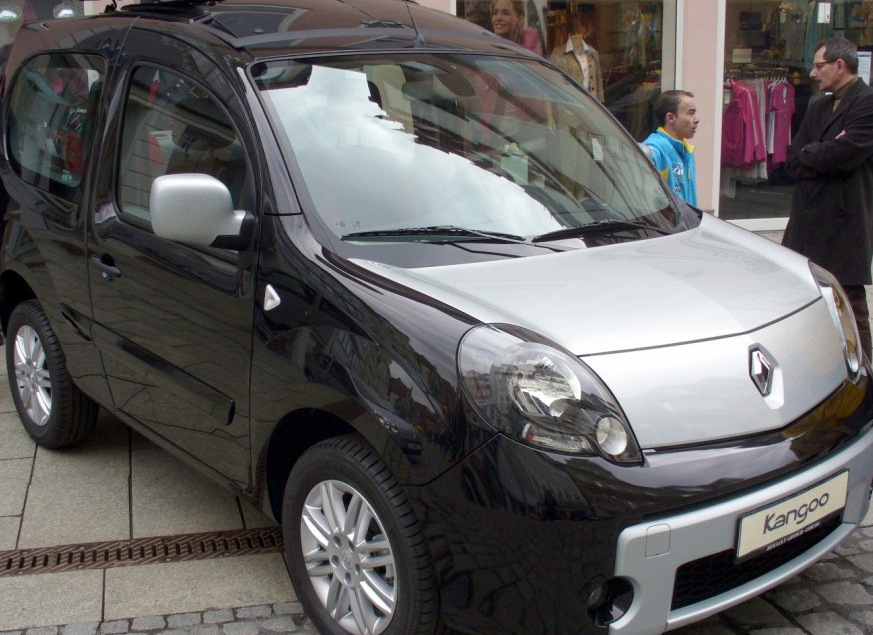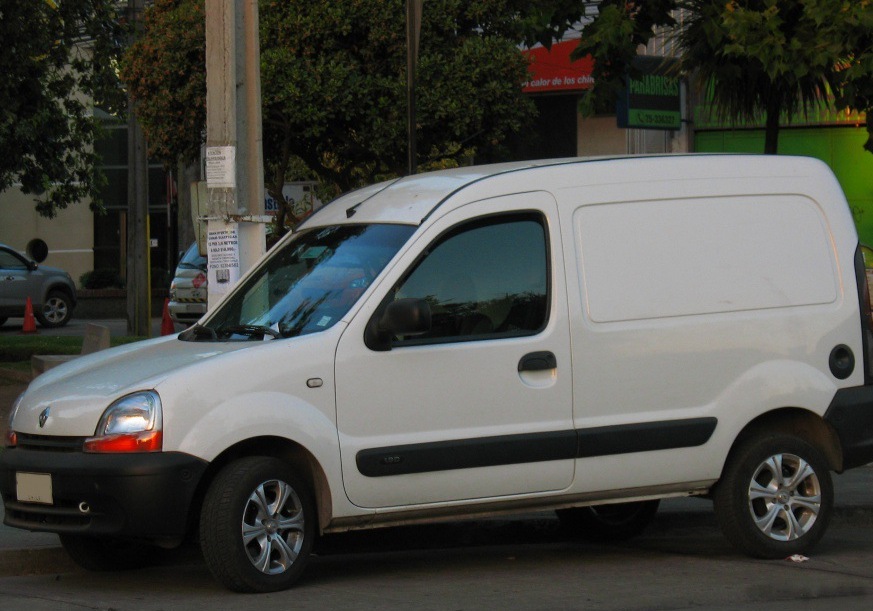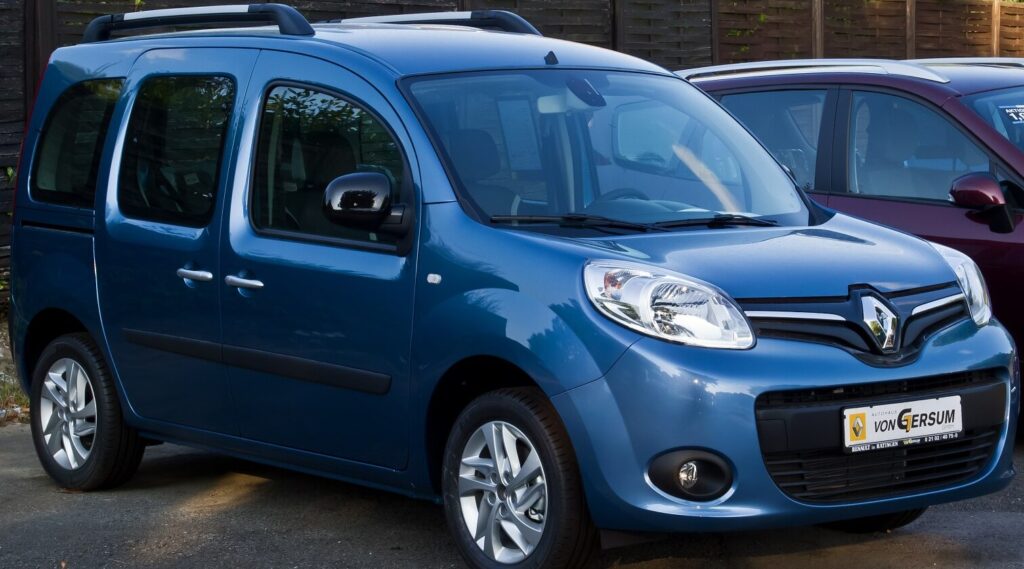
The Renault Kangoo II, particularly the facelifted version introduced in 2013, represented a significant evolution of Renault’s popular light commercial vehicle and passenger car blend. The 1.5 Energy dCi 110 horsepower variant with Start&Stop technology, produced from 2013 to 2018, occupied a crucial mid-range position within the Kangoo II lineup. It aimed to balance fuel efficiency, practicality, and a reasonable level of performance for both commercial and family users. This version was primarily marketed in Europe, where compact vans and leisure activity vehicles (LAVs) enjoy substantial popularity, offering a versatile solution for businesses and individuals alike.
Technical Specifications
| Brand | Renault |
| Model | Kangoo |
| Generation | Kangoo II (facelift 2013) |
| Type (Engine) | 1.5 Energy dCi (110 Hp) start&stop |
| Start of production | 2013 |
| End of production | 2018 |
| Powertrain Architecture | Internal Combustion engine |
| Body type | Minivan |
| Seats | 5 |
| Doors | 5 |
| Fuel consumption (urban) | 4.8 l/100 km (49 US mpg, 58.9 UK mpg, 20.8 km/l) |
| Fuel consumption (extra urban) | 4.2 l/100 km (56 US mpg, 67.3 UK mpg, 23.8 km/l) |
| Fuel consumption (combined) | 4.4 l/100 km (53.5 US mpg, 64.2 UK mpg, 22.7 km/l) |
| CO2 emissions | 115 g/km |
| Fuel Type | Diesel |
| Acceleration 0 – 100 km/h | 12.3 sec |
| Acceleration 0 – 62 mph | 12.3 sec |
| Acceleration 0 – 60 mph | 11.7 sec |
| Maximum speed | 170 km/h (105.63 mph) |
| Emission standard | Euro 5 |
| Weight-to-power ratio | 12 kg/Hp, 83.3 Hp/tonne |
| Weight-to-torque ratio | 5.5 kg/Nm, 181.8 Nm/tonne |
| Power | 110 Hp @ 4000 rpm |
| Power per litre | 75.3 Hp/l |
| Torque | 240 Nm @ 1750 rpm (177.01 lb.-ft. @ 1750 rpm) |
| Engine layout | Front, Transverse |
| Engine Model/Code | K9K |
| Engine displacement | 1461 cm3 (89.16 cu. in.) |
| Number of cylinders | 4 |
| Engine configuration | Inline |
| Number of valves per cylinder | 2 |
| Fuel injection system | Diesel Commonrail |
| Engine aspiration | Turbocharger, Intercooler |
| Engine oil capacity | 4.5 l (4.76 US qt | 3.96 UK qt) |
| Coolant capacity | 7.2 l (7.61 US qt | 6.34 UK qt) |
| Kerb Weight | 1320 kg (2910.1 lbs) |
| Max. weight | 1980 kg (4365.15 lbs) |
| Max load | 660 kg (1455.05 lbs) |
| Trunk (boot) space – minimum | 660 l (23.31 cu. ft.) |
| Trunk (boot) space – maximum | 2600 l (91.82 cu. ft.) |
| Fuel tank capacity | 60 l (15.85 US gal | 13.2 UK gal) |
| Permitted trailer load with brakes (12%) | 1050 kg (2314.85 lbs) |
| Permitted trailer load without brakes | 695 kg (1532.21 lbs) |
| Length | 4282 mm (168.58 in) |
| Width | 1805 mm (71.06 in) |
| Width including mirrors | 2138 mm (84.17 in) |
| Height | 1839 mm (72.4 in) |
| Wheelbase | 2697 mm (106.18 in) |
| Front track | 1521 mm (59.88 in) |
| Rear track | 1533 mm (60.35 in) |
| Front overhang | 875 mm (34.45 in) |
| Rear overhang | 710 mm (27.95 in) |
| Ride height (ground clearance) | 211-158 mm (8.31 – 6.22 in) |
| Minimum turning circle | 10.7 m (35.1 ft) |
| Drivetrain Architecture | Front wheel drive |
| Drive wheel | Front wheel drive |
| Number of gears and type of gearbox | 6 gears, manual transmission |
| Front suspension | Independent type McPherson |
| Rear suspension | Torsion |
| Front brakes | Ventilated discs |
| Rear brakes | Disc |
| Assisting systems | ABS (Anti-lock braking system) |
| Steering type | Steering rack and pinion |
| Power steering | Electric Steering |
| Tires size | 195/65 R15 |
| Wheel rims size | 15 |
INTRODUCTION
The Renault Kangoo II, launched in 2008, built upon the success of its predecessor, offering a more refined and versatile package. The 2013 facelift brought updated styling, improved interior materials, and crucially, the introduction of the Energy dCi engine family. The 1.5 Energy dCi producing 110 horsepower was a key variant, positioned as a sweet spot for buyers needing a practical vehicle without sacrificing too much performance or economy. It catered to both commercial users requiring a reliable workhorse and families seeking a spacious and adaptable MPV. The Kangoo II competed with vehicles like the Citroën Berlingo, Peugeot Partner, and Volkswagen Caddy.
Powertrain & Engine Architecture
The heart of this Kangoo variant is the Renault K9K engine, a 1.5-liter inline-four diesel. This engine is a member of the ‘Energy’ family, signifying Renault’s efforts to improve fuel efficiency. The K9K utilizes a common rail direct injection system, delivering fuel at extremely high pressure for optimized combustion. A turbocharger with an intercooler further enhances performance. The 110 horsepower output is achieved at 4000 rpm, while peak torque of 240 Nm (177 lb-ft) is available from just 1750 rpm, providing good low-end grunt for everyday driving and load-carrying. The engine features a two-valve per cylinder configuration. The transmission is a 6-speed manual gearbox, chosen for its efficiency and driver engagement. While an automated manual transmission (AMT) was available on some Kangoo II models, the 110 hp version was predominantly offered with the manual.
Driving Characteristics
The 1.5 dCi 110 hp Kangoo offers a comfortable and practical driving experience. Acceleration is adequate, with a 0-62 mph (0-100 km/h) time of around 12.3 seconds. However, it’s not a particularly sporty vehicle; the focus is on usability and efficiency. The engine’s strong low-end torque makes it easy to navigate urban environments and provides sufficient power for overtaking on the highway. The 6-speed gearbox is well-matched to the engine, allowing for relaxed cruising at motorway speeds. Compared to the lower-powered 90 hp version, the 110 hp model feels noticeably more responsive, especially when carrying a full load or tackling inclines. It doesn’t offer the outright performance of higher-spec K9K variants, but it strikes a good balance between power and economy.
Equipment & Trim Levels
Trim levels for the Kangoo II 1.5 dCi 110 varied depending on the market, but generally included features like air conditioning, power steering, electric front windows, and a CD player with auxiliary input. Higher trim levels added features such as alloy wheels, rear parking sensors, cruise control, and a more sophisticated infotainment system. Interior upholstery typically consisted of durable cloth materials. Optional extras included a panoramic sunroof, navigation system, and upgraded audio systems. Safety features included ABS, driver and passenger airbags, and seatbelt pretensioners.
Chassis & Braking
The Kangoo II utilizes a McPherson strut front suspension and a torsion beam rear suspension. This setup provides a comfortable ride quality, although it’s not particularly sporty. The front brakes are ventilated discs, while the rear brakes are discs. ABS (Anti-lock Braking System) is standard. The Kangoo’s suspension is tuned to prioritize ride comfort and load-carrying capacity over sharp handling. The steering is light and easy to use, making it well-suited for urban driving.
Market Reception & Comparison
The Renault Kangoo II 1.5 dCi 110 was generally well-received by critics for its practicality, fuel efficiency, and comfortable ride. It was praised for its spacious interior and versatile load-carrying capabilities. Compared to the 90 hp version, the 110 hp model was considered a worthwhile upgrade for those who frequently carry passengers or cargo. Fuel economy was a strong point, with combined figures around 53.5 US mpg. Reliability was generally good, although some owners reported minor issues with the electronic systems. Compared to competitors like the Citroën Berlingo and Peugeot Partner, the Kangoo II offered a similar level of practicality and economy, but was often praised for its more refined interior.
Legacy
The Renault Kangoo II 1.5 dCi 110 remains a popular choice in the used car market, particularly for those seeking a practical and affordable vehicle. The K9K engine is known for its durability, and with regular maintenance, it can provide many years of reliable service. While not the fastest or most exciting vehicle, the Kangoo II 1.5 dCi 110 offers a compelling combination of practicality, economy, and comfort, making it a versatile choice for a wide range of buyers. Its enduring popularity is a testament to its well-rounded design and robust engineering.