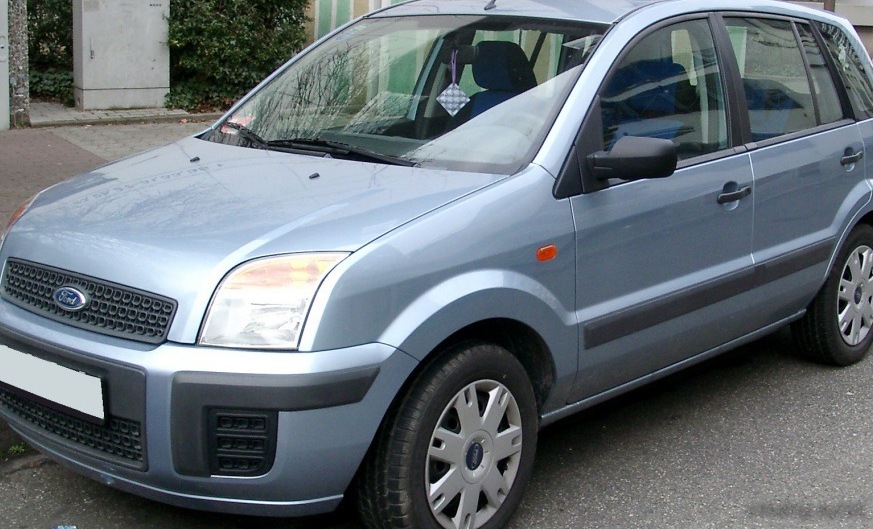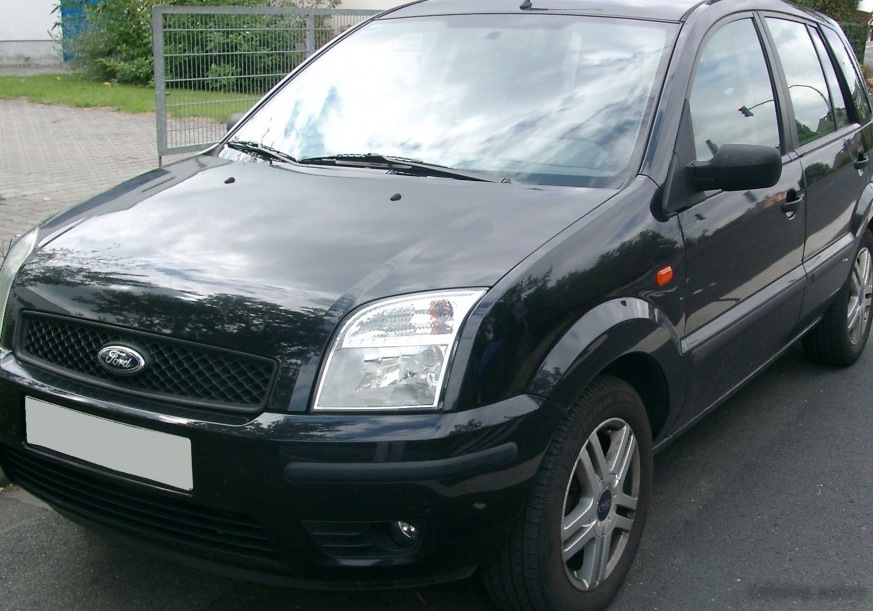
The Ford Fusion, launched in Europe in 2002, represented Ford’s entry into the compact family car segment, aiming to replace the aging Escort and provide a modern, versatile vehicle. The 1.6 TDCi 90 hp variant, produced between 2002 and 2005, served as the entry-level diesel offering within the first generation (Fusion I) lineup. Positioned as an economical and practical choice, it targeted buyers prioritizing fuel efficiency and affordability over outright performance. This model was exclusively a five-door hatchback, reflecting the European market’s preference for this body style.
Technical Specifications
| Brand | Ford |
| Model | Fusion |
| Generation | Fusion I |
| Type (Engine) | 1.6 TDCi (90 Hp) |
| Start of production | 2002 |
| End of production | 2005 |
| Powertrain Architecture | Internal Combustion engine |
| Body type | Hatchback |
| Seats | 5 |
| Doors | 5 |
| Fuel consumption (urban) | 5.5 l/100 km (42.8 US mpg) |
| Fuel consumption (extra urban) | 4 l/100 km (58.8 US mpg) |
| Fuel Type | Diesel |
| Acceleration 0 – 100 km/h | 12.9 sec |
| Acceleration 0 – 62 mph | 12.9 sec |
| Acceleration 0 – 60 mph | 12.3 sec |
| Maximum speed | 176 km/h (109.36 mph) |
| Weight-to-power ratio | 12.3 kg/Hp |
| Weight-to-torque ratio | 5.4 kg/Nm |
| Power | 90 Hp @ 4000 rpm |
| Power per litre | 57.7 Hp/l |
| Torque | 204 Nm @ 1750 rpm (150.46 lb.-ft. @ 1750 rpm) |
| Engine layout | Front, Transverse |
| Engine Model/Code | HHJA, HHJB |
| Engine displacement | 1560 cm3 (95.2 cu. in.) |
| Number of cylinders | 4 |
| Engine configuration | Inline |
| Cylinder Bore | 75 mm (2.95 in.) |
| Piston Stroke | 88.3 mm (3.48 in.) |
| Compression ratio | 18.3:1 |
| Number of valves per cylinder | 4 |
| Fuel injection system | Diesel Commonrail |
| Engine aspiration | Turbocharger, Intercooler |
| Engine oil capacity | 3.85 l (4.07 US qt | 3.39 UK qt) |
| Coolant | 6 l (6.34 US qt | 5.28 UK qt) |
| Kerb Weight | 1105 kg (2436.11 lbs.) |
| Max. weight | 1675 kg (3692.74 lbs.) |
| Max load | 570 kg (1256.63 lbs.) |
| Trunk (boot) space – minimum | 337 l (11.9 cu. ft.) |
| Trunk (boot) space – maximum | 1175 l (41.49 cu. ft.) |
| Fuel tank capacity | 45 l (11.89 US gal | 9.9 UK gal) |
| Length | 4020 mm (158.27 in.) |
| Width | 1708 mm (67.24 in.) |
| Height | 1503 mm (59.17 in.) |
| Wheelbase | 2488 mm (97.95 in.) |
| Front track | 1472 mm (57.95 in.) |
| Rear (Back) track | 1435 mm (56.5 in.) |
| Drivetrain Architecture | The Internal combustion engine (ICE) drives the front wheels of the vehicle. |
| Drive wheel | Front wheel drive |
| Number of gears and type of gearbox | 5 gears, manual transmission |
| Front suspension | Spring Strut |
| Rear suspension | Coil spring |
| Front brakes | Disc |
| Rear brakes | Drum |
| Steering type | Steering rack and pinion |
| Power steering | Hydraulic Steering |
| Tires size | 195/60 R15 |
Powertrain & Engine Architecture
The heart of the Fusion 1.6 TDCi was the HHJA or HHJB engine code, a 1.6-liter inline-four cylinder diesel engine. This engine utilized a common rail direct injection system, a relatively new technology at the time, allowing for precise fuel delivery and improved combustion efficiency. A turbocharger with an intercooler was employed to boost power output and enhance torque across a wider rev range. The engine featured four valves per cylinder and a compression ratio of 18.3:1, contributing to its fuel efficiency. The 90 horsepower output was achieved at 4000 rpm, while peak torque of 204 Nm (150.46 lb-ft) was available from just 1750 rpm. This low-end torque was a key characteristic of the engine, providing good drivability in everyday conditions. The engine was transversely mounted in the front of the vehicle, driving the front wheels. The standard transmission was a five-speed manual gearbox, optimized for fuel economy rather than sporty performance.
Driving Characteristics
The 1.6 TDCi-powered Fusion offered a practical and economical driving experience. Acceleration was modest, taking approximately 12.9 seconds to reach 100 km/h (62 mph), and 12.3 seconds to 60 mph. While not particularly quick, the engine’s strong low-end torque made it feel responsive around town. The five-speed manual transmission was well-matched to the engine’s characteristics, with gear ratios geared towards maximizing fuel efficiency. Compared to the higher-output 1.8-liter petrol versions or the later 2.0-liter TDCi models, the 1.6 TDCi lacked outright performance. However, it provided significantly better fuel economy, making it a popular choice for drivers covering long distances or prioritizing running costs. The steering was light and precise, making the Fusion easy to maneuver in urban environments.
Equipment & Trim Levels
The 1.6 TDCi typically represented the base trim level for the Fusion diesel range. Standard equipment generally included central locking, power steering, an adjustable steering column, and basic audio system. Interior upholstery was typically cloth, and the dashboard featured a functional, if somewhat basic, design. Optional extras included air conditioning, alloy wheels, electric windows, and upgraded audio systems. Higher trim levels, such as the Zetec, added more features, including body-colored bumpers, upgraded interior trim, and additional safety equipment.
Chassis & Braking
The Fusion I utilized a relatively simple chassis design. Front suspension consisted of MacPherson strut coil springs, while the rear employed a coil spring setup. The front brakes were ventilated discs, providing adequate stopping power, while the rear brakes were drums, a cost-saving measure common in this segment. The steering system was a hydraulic rack and pinion, offering a reasonable level of feedback. Stabilizer bars were fitted to both the front and rear axles to reduce body roll during cornering. The suspension was tuned for comfort rather than sporty handling, providing a compliant ride on most road surfaces.
Market Reception & Comparison
The Ford Fusion 1.6 TDCi was generally well-received by critics as a practical and economical family car. Its fuel efficiency was a major selling point, and its low running costs made it an attractive option for budget-conscious buyers. However, some reviewers criticized its lack of performance compared to rival models. Compared to the petrol-powered Fusions, the 1.6 TDCi offered significantly better fuel economy but less power. Against competitors like the Volkswagen Golf or Opel/Vauxhall Astra, the Fusion offered a competitive package in terms of price and practicality, but lacked the brand prestige of some rivals.
Legacy
The 1.6 TDCi engine proved to be relatively reliable, although, like all diesel engines, it was susceptible to issues related to the fuel injection system and turbocharger. The Fusion I, as a whole, established Ford as a serious contender in the European compact family car market. In the used car market today, the 1.6 TDCi Fusion represents an affordable and economical option for those seeking a practical hatchback. While not a performance car, its fuel efficiency and relatively low maintenance costs make it a sensible choice for everyday transportation. Finding well-maintained examples can be challenging due to their age, but they remain a viable option for those seeking a budget-friendly vehicle.