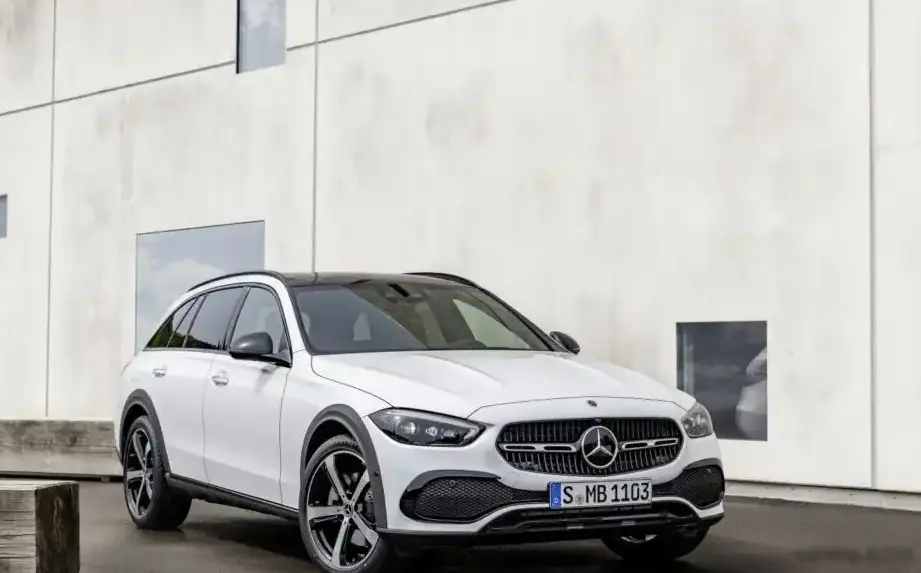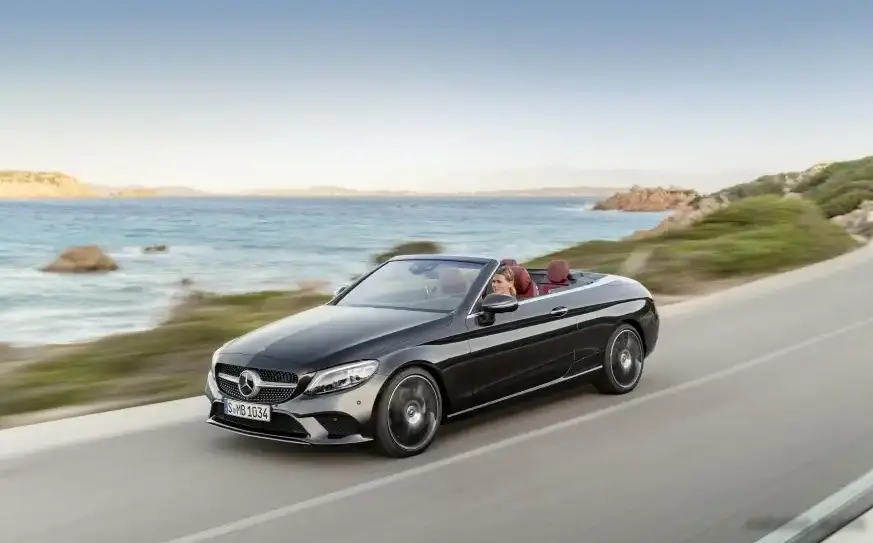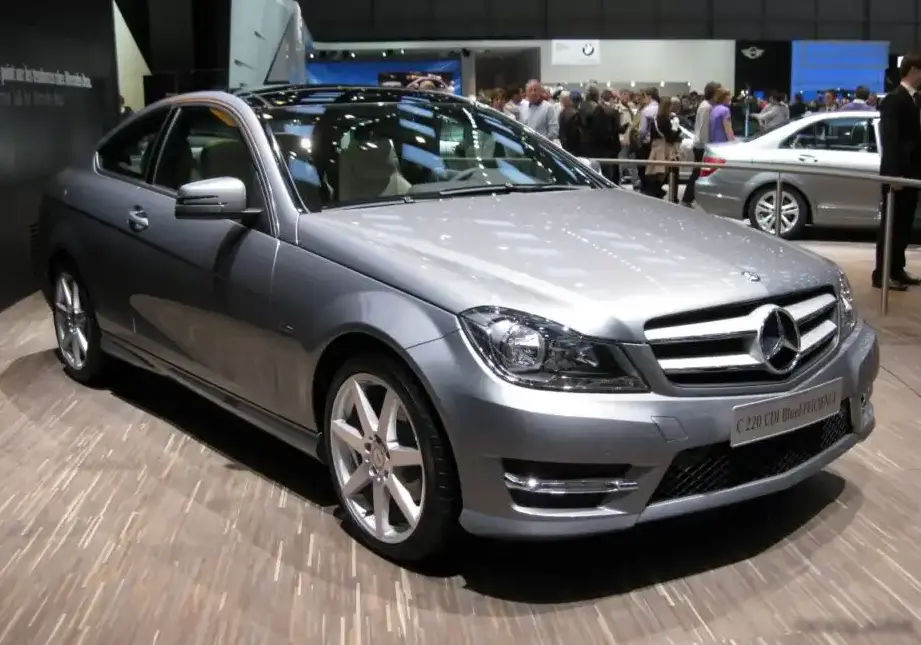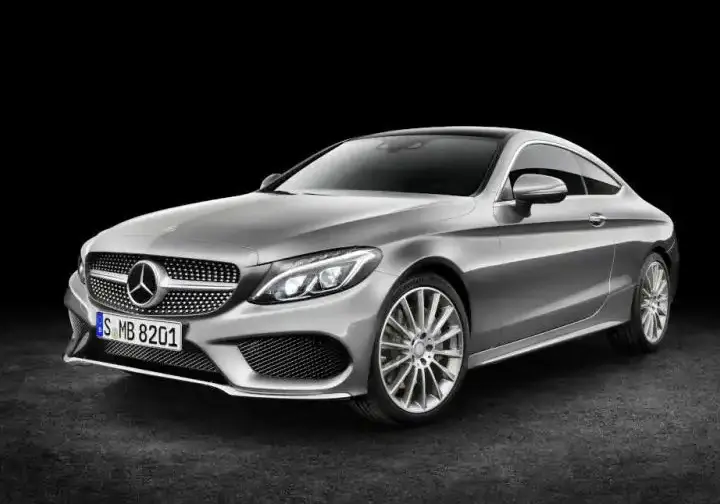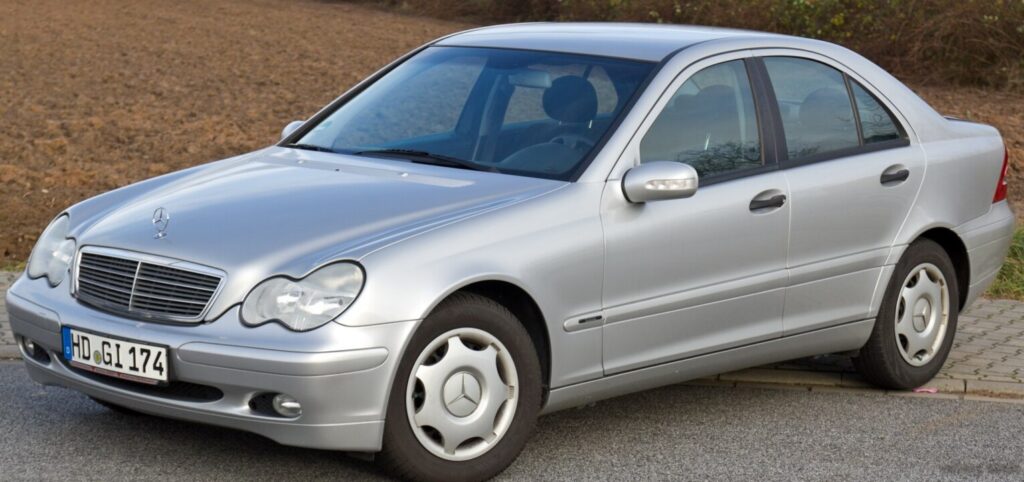
The Mercedes-Benz C 240 V6, produced between February 2000 and March 2004, was a significant variant within the W203 C-Class range. Representing a mid-tier offering, it bridged the gap between the entry-level C180/C200 Kompressor models and the performance-oriented C32 AMG. Positioned as a comfortable and refined option, the C 240 V6 aimed to deliver a balance of power and luxury within the compact executive segment. It was primarily sold in Europe and other international markets, offering a naturally aspirated alternative to the supercharged four-cylinder engines becoming increasingly common at the time.
Technical Specifications
| Brand | Mercedes-Benz |
| Model | C-class |
| Generation | C-class (W203) |
| Type (Engine) | C 240 V6 (170 Hp) |
| Start of production | February, 2000 |
| End of production | March, 2004 |
| Powertrain Architecture | Internal Combustion engine |
| Body type | Sedan |
| Seats | 5 |
| Doors | 4 |
| Fuel consumption (economy) – urban (NEDC) | 16.6 l/100 km (14.2 US mpg, 17 UK mpg, 6 km/l) |
| Fuel consumption (economy) – extra urban (NEDC) | 7.9 l/100 km (29.8 US mpg, 35.8 UK mpg, 12.7 km/l) |
| Fuel consumption (economy) – combined (NEDC) | 11 l/100 km (21.4 US mpg, 25.7 UK mpg, 9.1 km/l) |
| CO2 emissions (NEDC) | 266 g/km |
| Fuel Type | Petrol (Gasoline) |
| Acceleration 0 – 100 km/h | 9.2 sec |
| Acceleration 0 – 62 mph | 9.2 sec |
| Acceleration 0 – 60 mph | 8.7 sec |
| Maximum speed | 235 km/h (146.02 mph) |
| Weight-to-power ratio | 8.6 kg/Hp, 116.4 Hp/tonne |
| Weight-to-torque ratio | 6.1 kg/Nm, 164.4 Nm/tonne |
| Power | 170 Hp @ 5500 rpm |
| Power per litre | 65.5 Hp/l |
| Torque | 240 Nm @ 4500 rpm (177.01 lb.-ft. @ 4500 rpm) |
| Maximum engine speed | 6000 rpm |
| Engine layout | Front, Longitudinal |
| Engine Model/Code | M 112.912 |
| Engine displacement | 2597 cm3 (158.48 cu. in.) |
| Number of cylinders | 6 |
| Engine configuration | V-engine |
| Cylinder Bore | 89.9 mm (3.54 in.) |
| Piston Stroke | 68.2 mm (2.69 in.) |
| Compression ratio | 10.5:1 |
| Number of valves per cylinder | 3 |
| Fuel injection system | Multi-port manifold injection |
| Engine aspiration | Naturally aspirated engine |
| Valvetrain | SOHC |
| Engine oil capacity | 8 l (8.45 US qt | 7.04 UK qt) |
| Coolant | 10.5 l (11.1 US qt | 9.24 UK qt) |
| Kerb Weight | 1460 kg (3218.75 lbs.) |
| Max. weight | 1935 kg (4265.94 lbs.) |
| Max load | 475 kg (1047.2 lbs.) |
| Trunk (boot) space – minimum | 455 l (16.07 cu. ft.) |
| Fuel tank capacity | 62 l (16.38 US gal | 13.64 UK gal) |
| Max. roof load | 100 kg (220.46 lbs.) |
| Permitted trailer load with brakes (12%) | 1500 kg (3306.93 lbs.) |
| Permitted trailer load without brakes | 750 kg (1653.47 lbs.) |
| Length | 4526 mm (178.19 in.) |
| Width | 1728 mm (68.03 in.) |
| Width including mirrors | 1980 mm (77.95 in.) |
| Height | 1427 mm (56.18 in.) |
| Wheelbase | 2715 mm (106.89 in.) |
| Front track | 1493 mm (58.78 in.) |
| Rear (Back) track | 1464 mm (57.64 in.) |
| Front overhang | 755 mm (29.72 in.) |
| Rear overhang | 1056 mm (41.57 in.) |
| Drag coefficient (Cd) | 0.27 |
| Minimum turning circle (turning diameter) | 10.76 m (35.3 ft.) |
| Drivetrain Architecture | The Internal combustion engine (ICE) drives the rear wheels of the vehicle. |
| Drive wheel | Rear wheel drive |
| Number of gears and type of gearbox | 6 gears, manual transmission |
| Front suspension | Independent type McPherson, Transverse stabilizer |
| Rear suspension | Independent multi-link suspension, Transverse stabilizer |
| Front brakes | Ventilated discs, 300 mm |
| Rear brakes | Disc, 290 mm |
| Assisting systems | ABS (Anti-lock braking system) |
| Steering type | Steering rack and pinion |
| Power steering | Hydraulic Steering |
| Tires size | 205/55 R 16 91 V |
| Wheel rims size | 7 J x 16 H 2 |
Powertrain & Engine Architecture
The heart of the C 240 V6 is the M112.912 engine, a 2.6-liter naturally aspirated V6. This engine is a member of Mercedes-Benz’s M112 family, known for its smooth operation and relatively simple design. It features a single overhead camshaft (SOHC) per cylinder bank, operating three valves per cylinder (two intake, one exhaust). Fuel delivery is handled by a multi-port fuel injection system, providing precise fuel metering for optimal combustion. The engine produces 170 horsepower at 5500 rpm and 240 Nm (177 lb-ft) of torque at 4500 rpm. The engine’s longitudinal mounting and rear-wheel drive configuration were typical for Mercedes-Benz sedans of this era. The standard transmission was a 6-speed manual, though a 5-speed automatic transmission was also available, impacting the car’s acceleration and fuel economy.
Driving Characteristics
The C 240 V6 with the manual transmission offered a reasonably engaging driving experience. Acceleration from 0-60 mph took approximately 8.7 seconds, making it competitive with other vehicles in its class. The V6 engine provided a smooth and linear power delivery, lacking the pronounced low-end torque of a turbocharged engine but offering ample power for everyday driving and highway cruising. The automatic transmission, while offering convenience, slightly dulled the driving experience and resulted in marginally slower acceleration times. Gear ratios were tuned for a balance of fuel efficiency and performance, prioritizing comfortable cruising over outright speed. Compared to the C180 Kompressor, the C 240 V6 offered a noticeable power increase, while the more powerful C32 AMG provided significantly more aggressive performance.
Equipment & Trim Levels
The C 240 V6 typically came equipped with a respectable level of standard features. Interior appointments included cloth upholstery, although leather was available as an option. Standard equipment often included power windows, power locks, a multi-function steering wheel, and an automatic climate control system. Optional extras included a sunroof, upgraded audio systems, heated seats, and parking sensors. Trim levels were relatively simple, with options primarily revolving around interior materials and additional convenience features. The C 240 V6 aimed for a balance between luxury and affordability, offering a step up in refinement compared to the base models without reaching the premium price point of the AMG variants.
Chassis & Braking
The W203 C-Class featured an independent suspension system at all four wheels. The front suspension utilized a McPherson strut design, while the rear employed a multi-link setup. This configuration provided a comfortable ride and good handling characteristics. The C 240 V6 typically came equipped with ventilated disc brakes at the front and solid disc brakes at the rear. Anti-lock braking system (ABS) was standard, enhancing braking performance and stability. Stabilizer bars were fitted to both the front and rear axles to reduce body roll during cornering. The chassis was designed to provide a balance between comfort and handling, catering to a broad range of driving conditions.
Market Reception & Comparison
The C 240 V6 was generally well-received by automotive critics. It was praised for its smooth engine, comfortable ride, and refined interior. However, some reviewers noted that it lacked the sporty character of its competitors, such as the BMW 3 Series. Fuel economy was considered average for its class, with combined fuel consumption around 11 liters per 100 kilometers (21.4 US mpg). Compared to the C180 Kompressor, the C 240 V6 offered a significant performance advantage, but at a higher price point. The C 240 V6 proved to be a reliable vehicle, with relatively few reported mechanical issues.
Legacy
The M112 engine family, including the 2.6-liter V6 found in the C 240 V6, has a reputation for durability and longevity. Well-maintained examples continue to be found on the used car market today. While not as sought after as the higher-performance AMG models, the C 240 V6 represents a solid and reliable option for those seeking a comfortable and refined Mercedes-Benz sedan. Its relatively simple design and robust construction contribute to its continued appeal among enthusiasts and collectors. Parts availability remains good, making it a relatively easy vehicle to maintain and repair.