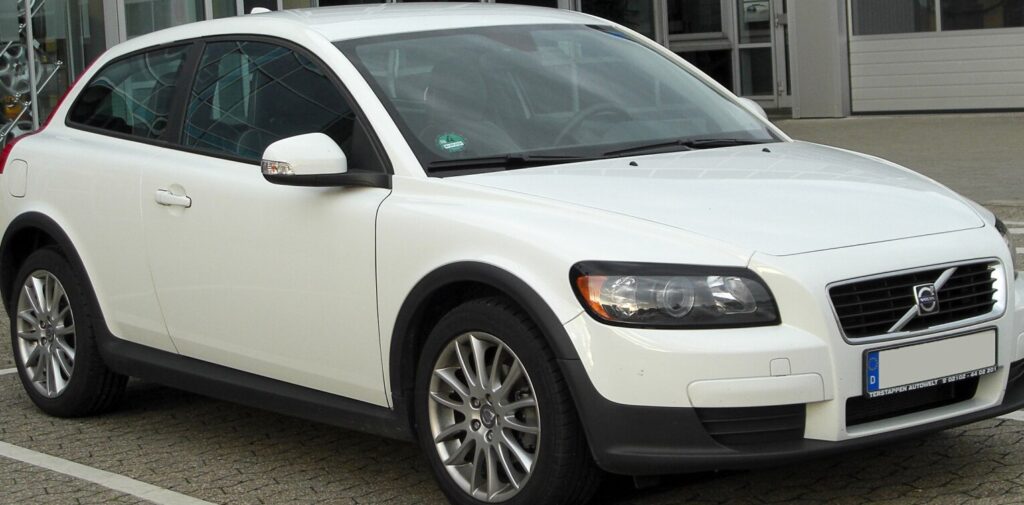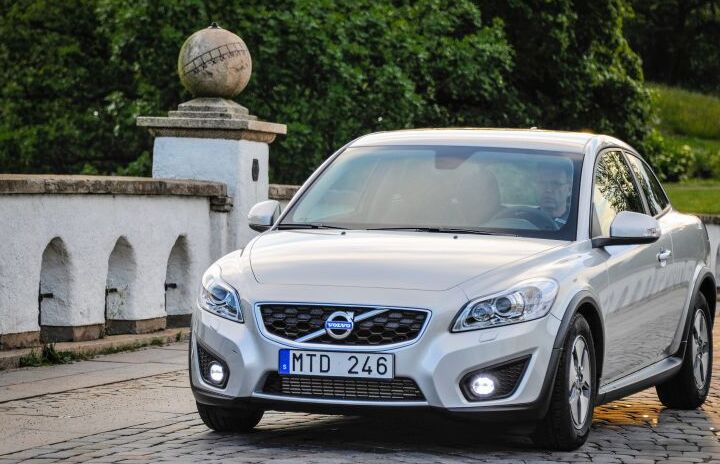
The Volvo C30 2.0 D4 (177 hp) represents a compelling blend of Scandinavian design, fuel efficiency, and surprisingly capable performance within the compact coupe segment. Introduced as part of the C30 facelift in 2010 and continuing through 2012, this variant occupied a mid-range position in the C30 lineup, offering a balance between the entry-level 1.6 D Drive and the more potent T5 gasoline models. Built on Volvo’s 1HX0/A3 platform – shared with the first-generation Ford Focus – the C30 aimed to attract a younger demographic with its distinctive styling and focus on driving enjoyment. The D4 model specifically targeted buyers seeking a refined and economical diesel option.
Technical Specifications
| Brand | Volvo |
| Model | C30 |
| Generation | C30 (facelift 2010) |
| Type (Engine) | 2.0 D4 (177 Hp) |
| Start of production | 2010 |
| End of production | 2012 |
| Powertrain Architecture | Internal Combustion engine |
| Body type | Coupe |
| Seats | 4 |
| Doors | 3 |
| Fuel consumption (urban) | 7 l/100 km (33.6 US mpg, 40.4 UK mpg, 14.3 km/l) |
| Fuel consumption (extra urban) | 4 l/100 km (58.8 US mpg, 70.6 UK mpg, 25 km/l) |
| Fuel consumption (combined) | 5.1 l/100 km (46.1 US mpg, 55.4 UK mpg, 19.6 km/l) |
| CO2 emissions | 134 g/km |
| Fuel Type | Diesel |
| Acceleration 0 – 100 km/h | 8.6 sec |
| Acceleration 0 – 62 mph | 8.6 sec |
| Acceleration 0 – 60 mph | 8.2 sec |
| Emission standard | Euro 5 |
| Weight-to-power ratio | 8.2 kg/Hp, 122 Hp/tonne |
| Weight-to-torque ratio | 3.6 kg/Nm, 275.7 Nm/tonne |
| Power | 177 Hp @ 3500 rpm |
| Power per litre | 89.2 Hp/l |
| Torque | 400 Nm @ 1750-2750 rpm (295.02 lb.-ft. @ 1750-2750 rpm) |
| Engine layout | Front, Transverse |
| Engine Model/Code | D5204T |
| Engine displacement | 1984 cm3 (121.07 cu. in.) |
| Number of cylinders | 5 |
| Engine configuration | Inline |
| Piston Stroke | 81 mm (3.19 in.) |
| Fuel injection system | Diesel Commonrail |
| Engine aspiration | Turbocharger, Intercooler |
| Engine oil capacity | 5.9 l (6.23 US qt | 5.19 UK qt) |
| Coolant | 8.5 l (8.98 US qt | 7.48 UK qt) |
| Kerb Weight | 1451 kg (3198.91 lbs.) |
| Max. weight | 1900 kg (4188.78 lbs.) |
| Max load | 449 kg (989.88 lbs.) |
| Trunk (boot) space – minimum | 233 l (8.23 cu. ft.) |
| Fuel tank capacity | 52 l (13.74 US gal | 11.44 UK gal) |
| Length | 4266 mm (167.95 in.) |
| Width | 1782 mm (70.16 in.) |
| Height | 1447 mm (56.97 in.) |
| Wheelbase | 2640 mm (103.94 in.) |
| Front track | 1548 mm (60.94 in.) |
| Rear (Back) track | 1544 mm (60.79 in.) |
| Minimum turning circle | 11.1 m (36.42 ft.) |
| Drivetrain Architecture | The Internal combustion engine (ICE) drives the front wheels of the vehicle. |
| Drive wheel | Front wheel drive |
| Number of gears and type of gearbox | 6 gears, manual transmission |
| Assisting systems | ABS (Anti-lock braking system) |
| Steering type | Steering rack and pinion |
Powertrain & Engine Architecture
The heart of the C30 D4 is Volvo’s D5204T 2.0-liter inline-five cylinder diesel engine. This engine is a member of Volvo’s modular engine family, known for its robust construction and relatively simple design. The D5204T utilizes a common-rail direct fuel injection system, delivering fuel at extremely high pressure for optimized combustion. A turbocharger with an intercooler is employed to boost power output and improve torque across a wide rev range. The engine produces 177 horsepower at 3500 rpm and a substantial 400 Nm (295 lb-ft) of torque between 1750 and 2750 rpm. This torque figure is a key characteristic of the D4, providing strong pulling power for everyday driving and overtaking. The engine meets Euro 5 emission standards, incorporating a diesel particulate filter (DPF) to reduce harmful emissions. The engine is transversely mounted in the front of the vehicle. The C30 D4 was exclusively offered with a 6-speed manual transmission, prioritizing driver engagement and fuel efficiency over the convenience of an automatic.
Driving Characteristics
The 6-speed manual transmission in the C30 D4 is well-matched to the engine’s torque curve. First gear is relatively short, providing brisk acceleration from a standstill. The remaining gears are spaced to maximize fuel economy during cruising, while still offering ample power for highway passing. The D4 doesn’t possess the outright acceleration of the C30 T5, taking approximately 8.6 seconds to reach 62 mph (0-100 km/h). However, the abundant torque makes it feel quicker in real-world driving situations, particularly when overtaking. The steering is precise and well-weighted, providing a confident feel on winding roads. The C30’s relatively compact size and well-tuned suspension contribute to agile handling. Compared to the T5, the D4 offers a more relaxed and refined driving experience, prioritizing comfort and fuel economy over outright performance.
Equipment & Trim Levels
The C30 D4 typically came equipped with a generous level of standard features. These included climate control, power windows and mirrors, a CD stereo system with auxiliary input, and alloy wheels. Safety features were also a priority, with standard equipment including ABS brakes, traction control, and multiple airbags. Optional extras included leather upholstery, a sunroof, a premium audio system, and parking sensors. The interior design of the C30 is minimalist and Scandinavian, with a focus on functionality and simplicity. The dashboard features a floating center console, a distinctive design element of the C30. Upholstery options typically included cloth or leather, with a range of color choices available.
Chassis & Braking
The C30’s chassis is based on the Ford Focus platform, but Volvo made significant modifications to the suspension to improve handling and ride comfort. The front suspension utilizes MacPherson struts, while the rear suspension employs a multi-link setup. The D4 model typically featured a stabilizer bar on both the front and rear axles to reduce body roll. Braking duties are handled by disc brakes on all four wheels, providing ample stopping power. ABS (Anti-lock Braking System) is standard, enhancing safety during emergency braking situations. The C30’s relatively low weight (approximately 1451 kg or 3199 lbs) contributes to its agile handling and efficient braking performance.
Market Reception & Comparison
The Volvo C30 D4 was generally well-received by automotive critics. It was praised for its stylish design, comfortable interior, and fuel-efficient engine. The D4’s torque-rich diesel engine was particularly appreciated for its ability to deliver strong performance without sacrificing economy. Compared to the C30 T5, the D4 offered significantly better fuel economy, making it a more practical choice for drivers who cover long distances. However, the T5’s higher power output and quicker acceleration appealed to those seeking a more sporty driving experience. The C30 D4 also faced competition from other premium compact coupes, such as the Audi TT and the BMW 1 Series Coupe.
Legacy
The Volvo C30, including the 2.0 D4 variant, has developed a loyal following among enthusiasts. The D5204T engine is known for its durability and reliability, provided it is properly maintained. Regular servicing, including oil changes and DPF maintenance, is crucial for ensuring long-term reliability. On the used car market, the C30 D4 represents a good value proposition, offering a stylish and well-equipped coupe at an affordable price. While no longer in production, the C30 remains a distinctive and desirable vehicle, appreciated for its unique design and Scandinavian charm.