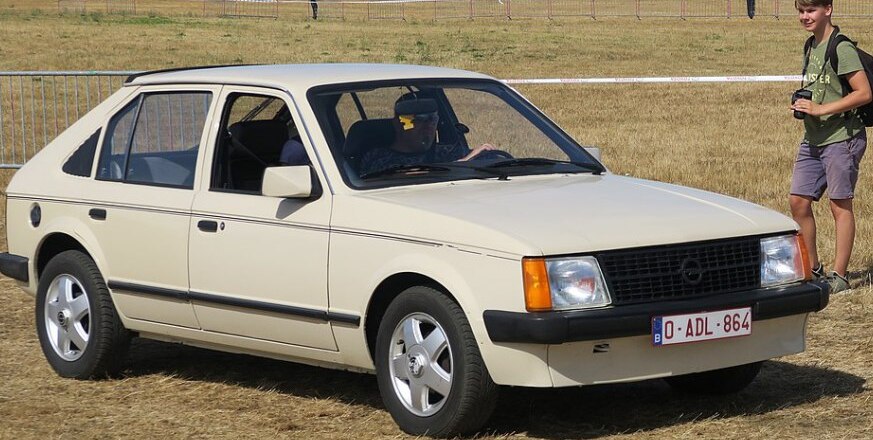
The Opel Kadett D 1.3 N, producing 60 horsepower, was a mainstay of the Kadett D range from 1979 to 1984. Positioned as the entry-level model, it offered affordable transportation within the compact car segment, primarily in European markets. The Kadett D, built on the GM T-platform (internally designated as the 1HX0/A3), represented a significant step forward for Opel in terms of design, safety, and overall refinement compared to its predecessor, the Kadett C. This particular 1.3 N variant was aimed at buyers prioritizing economy and practicality over outright performance, making it a popular choice for first-time car owners and families.
Technical Specifications
| Brand | Opel |
| Model | Kadett |
| Generation | Kadett D |
| Type (Engine) | 1.3 N (60 Hp) |
| Start of production | 1979 |
| End of production | 1984 |
| Powertrain Architecture | Internal Combustion engine |
| Body type | Hatchback |
| Seats | 5 |
| Doors | 3-5 |
| Fuel Type | Petrol (Gasoline) |
| Acceleration 0 – 100 km/h | 15.5 sec |
| Acceleration 0 – 62 mph | 15.5 sec |
| Acceleration 0 – 60 mph | 14.7 sec |
| Maximum speed | 147 km/h (91.34 mph) |
| Weight-to-power ratio | 14.8 kg/Hp, 67.4 Hp/tonne |
| Weight-to-torque ratio | 9.5 kg/Nm, 105.6 Nm/tonne |
| Power | 60 Hp @ 5800 rpm |
| Power per litre | 46.3 Hp/l |
| Torque | 94 Nm @ 3400-3800 rpm (69.33 lb.-ft. @ 3400-3800 rpm) |
| Engine layout | Front, Transverse |
| Engine Model/Code | 13N, 13NB |
| Engine displacement | 1297 cm3 (79.15 cu. in.) |
| Number of cylinders | 4 |
| Engine configuration | Inline |
| Cylinder Bore | 75 mm (2.95 in.) |
| Piston Stroke | 73.4 mm (2.89 in.) |
| Compression ratio | 8.2:1 |
| Number of valves per cylinder | 2 |
| Fuel injection system | Carburettor |
| Engine aspiration | Naturally aspirated engine |
| Valvetrain | SOHC |
| Engine oil capacity | 3 l (3.17 US qt | 2.64 UK qt) |
| Coolant | 7 l (7.4 US qt | 6.16 UK qt) |
| Kerb Weight | 890 kg (1962.11 lbs.) |
| Max. weight | 1360 kg (2998.29 lbs.) |
| Max load | 470 kg (1036.17 lbs.) |
| Trunk (boot) space – minimum | 490 l (17.3 cu. ft.) |
| Trunk (boot) space – maximum | 1360 l (48.03 cu. ft.) |
| Fuel tank capacity | 42 l (11.1 US gal | 9.24 UK gal) |
| Length | 3998 mm (157.4 in.) |
| Width | 1636 mm (64.41 in.) |
| Height | 1380 mm (54.33 in.) |
| Wheelbase | 2514 mm (98.98 in.) |
| Front track | 1400 mm (55.12 in.) |
| Rear (Back) track | 1406 mm (55.35 in.) |
| Minimum turning circle | 10.5 m (34.45 ft.) |
| Drivetrain Architecture | The Internal combustion engine (ICE) drives the front wheels of the vehicle. |
| Drive wheel | Front wheel drive |
| Number of gears | 4 gears, manual transmission |
| Front brakes | Disc |
| Rear brakes | Drum |
Powertrain & Engine Architecture
The heart of the Kadett D 1.3 N was the 13N (and later 13NB) engine, a 1.3-liter inline-four cylinder unit. This engine was a relatively simple design, featuring a single overhead camshaft (SOHC) operating two valves per cylinder. Fuel delivery was handled by a single, down-draft carburetor – typically a Solex or Pierburg – a common setup for European economy cars of the era. The 13N engine was known for its durability, but its performance was modest. The 13NB variant, introduced later in the production run, featured minor improvements to the combustion chamber and carburetor tuning, resulting in a slight increase in power and refinement. The engine was transversely mounted, driving the front wheels through a four-speed manual transmission. While an automatic transmission was offered on some Kadett D models, it was not typically paired with the base 1.3 N engine due to the limited power output.
Driving Characteristics
The 1.3 N Kadett D offered a predictable, if uninspiring, driving experience. With only 60 horsepower on tap, acceleration was leisurely, taking around 15.5 seconds to reach 62 mph. The four-speed manual transmission was well-matched to the engine’s characteristics, providing adequate gearing for everyday driving. The gear ratios were relatively tall, prioritizing fuel economy over outright performance. Compared to the more powerful Kadett D variants, such as the 1.6S or the later GSi models, the 1.3 N felt significantly slower. However, its lighter weight and simpler mechanicals contributed to a nimble feel in city driving. The steering was light and responsive, making it easy to maneuver in tight spaces.
Equipment & Trim Levels
The 1.3 N Kadett D was typically equipped with basic, functional features. Standard equipment included cloth upholstery, vinyl floor covering, and a simple dashboard layout. Power steering, central locking, and electric windows were generally not available on this base model. However, options such as a radio, heated rear window, and upgraded interior trim could be specified. The Kadett D was available in both three-door and five-door hatchback configurations, with the five-door version offering greater practicality for families. The exterior trim was minimal, with black plastic bumpers and steel wheels being common features.
Chassis & Braking
The Kadett D featured a MacPherson strut front suspension and a twist-beam rear axle. The suspension setup was tuned for comfort and ride quality, rather than sporty handling. The front brakes were disc brakes, providing adequate stopping power, while the rear brakes were drum brakes. The braking system was generally reliable, but lacked the sophistication of more advanced systems found on higher-end vehicles. The Kadett D’s chassis was relatively lightweight, contributing to its fuel efficiency and nimble handling. A stabilizer bar was fitted to the front suspension to reduce body roll during cornering.
Market Reception & Comparison
The Kadett D 1.3 N was well-received in its target market as an affordable and reliable family car. Critics praised its fuel economy and practicality, but noted its lack of performance. Compared to other cars in its class, such as the Ford Escort and Volkswagen Golf, the Kadett D offered a competitive price point and a spacious interior. The 1.6S and GSi variants of the Kadett D offered significantly more performance, but at a higher cost. The 1.3 N was often seen as a sensible choice for buyers who prioritized economy and reliability over driving excitement.
Legacy
The Opel Kadett D 1.3 N, while not a performance icon, remains a fondly remembered car for many European drivers. Its simple mechanicals and robust construction contribute to its continued reliability, and well-maintained examples are still found on the roads today. The 13N engine is known for its durability, and parts availability remains relatively good. In the used car market, the Kadett D 1.3 N represents an affordable entry point into classic car ownership, offering a nostalgic driving experience and a glimpse into the automotive landscape of the 1980s. Its legacy lies in providing dependable and economical transportation for a generation of drivers.