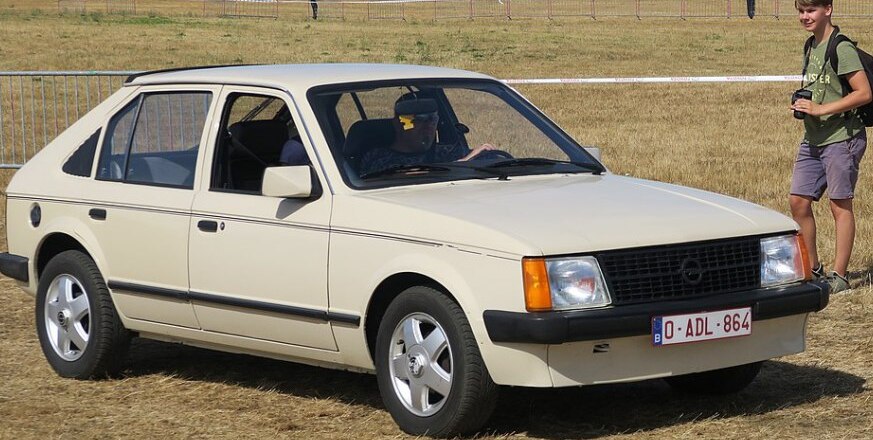
The Opel Kadett D 1.3 S, produced between 1979 and 1984, represented a key entry point into the Kadett D range, Opel’s popular compact offering. Positioned as a more sporting variant within the lineup, the 1.3 S aimed to provide a balance of affordability, practicality, and a slightly more engaging driving experience than the base models. It was a significant vehicle for Opel, contributing to the Kadett D’s success as one of Europe’s best-selling cars during its production run. The Kadett D itself was built on the GM T-platform, shared with other vehicles like the Vauxhall Astra, Isuzu Gemini, and Holden Gemini, reflecting Opel’s integration within the General Motors global network.
Technical Specifications
| Brand | Opel |
| Model | Kadett |
| Generation | Kadett D |
| Type (Engine) | 1.3 S (75 Hp) |
| Start of production | 1979 |
| End of production | 1984 |
| Powertrain Architecture | Internal Combustion engine |
| Body type | Hatchback |
| Seats | 5 |
| Doors | 3-5 |
| Fuel Type | Petrol (Gasoline) |
| Acceleration 0 – 100 km/h | 13.5 sec |
| Acceleration 0 – 62 mph | 13.5 sec |
| Acceleration 0 – 60 mph | 12.8 sec |
| Maximum speed | 158 km/h (98.18 mph) |
| Weight-to-power ratio | 11.1 kg/Hp, 89.8 Hp/tonne |
| Weight-to-torque ratio | 8.3 kg/Nm, 121 Nm/tonne |
| Power | 75 Hp @ 5800 rpm |
| Power per litre | 57.8 Hp/l |
| Torque | 101 Nm @ 3800-4600 rpm (74.49 lb.-ft. @ 3800-4600 rpm) |
| Engine layout | Front, Transverse |
| Engine Model/Code | 13S, 13SC |
| Engine displacement | 1297 cm3 (79.15 cu. in.) |
| Number of cylinders | 4 |
| Engine configuration | Inline |
| Cylinder Bore | 75 mm (2.95 in.) |
| Piston Stroke | 73.4 mm (2.89 in.) |
| Compression ratio | 9.2:1 |
| Number of valves per cylinder | 2 |
| Fuel injection system | Carburettor |
| Engine aspiration | Naturally aspirated engine |
| Valvetrain | SOHC |
| Engine oil capacity | 3 l (3.17 US qt | 2.64 UK qt) |
| Coolant | 7 l (7.4 US qt | 6.16 UK qt) |
| Kerb Weight | 835 kg (1840.86 lbs.) |
| Max. weight | 1280 kg (2821.92 lbs.) |
| Max load | 445 kg (981.06 lbs.) |
| Trunk (boot) space – minimum | 490 l (17.3 cu. ft.) |
| Trunk (boot) space – maximum | 1360 l (48.03 cu. ft.) |
| Fuel tank capacity | 42 l (11.1 US gal | 9.24 UK gal) |
| Length | 3998 mm (157.4 in.) |
| Width | 1636 mm (64.41 in.) |
| Height | 1380 mm (54.33 in.) |
| Wheelbase | 2514 mm (98.98 in.) |
| Front track | 1400 mm (55.12 in.) |
| Rear (Back) track | 1406 mm (55.35 in.) |
| Minimum turning circle | 10.5 m (34.45 ft.) |
| Drivetrain Architecture | The Internal combustion engine (ICE) drives the front wheels of the vehicle. |
| Drive wheel | Front wheel drive |
| Number of gears | 4 gears, manual transmission |
| Front brakes | Disc |
| Rear brakes | Drum |
Powertrain & Engine Architecture
The heart of the Kadett D 1.3 S was the 13S or 13SC engine, a 1.3-liter inline-four cylinder unit. This engine featured a single overhead camshaft (SOHC) valvetrain operating two valves per cylinder. Fuel delivery was handled by a carburetor, a common setup for the time, offering simplicity and relatively low cost. The 13S engine produced 75 horsepower at 5800 rpm and 101 Nm (74.49 lb-ft) of torque between 3800 and 4600 rpm. The engine’s transverse mounting and front-wheel drive configuration were typical for European compact cars of the era, maximizing interior space and improving traction in adverse conditions. The 4-speed manual transmission was the standard offering, providing a direct connection between the engine and the front wheels.
Driving Characteristics
The 1.3 S, with its 75 hp, offered modest performance. Acceleration to 60 mph took around 12.8 seconds, and the top speed was approximately 98 mph. While not a particularly quick car by modern standards, it provided adequate performance for everyday driving. Compared to the base Kadett models with smaller engines, the 1.3 S felt noticeably more responsive. However, it lagged behind the more powerful Kadett variants, such as those equipped with the 1.6-liter or 2.0-liter engines. The 4-speed manual transmission offered a reasonably direct driving experience, but the gear ratios were spaced to prioritize fuel economy over outright acceleration. The car’s relatively light weight (around 1840 lbs) helped to mitigate the engine’s modest power output.
Equipment & Trim Levels
The Kadett D 1.3 S typically came equipped with basic but functional features. Standard equipment included cloth upholstery, a basic instrument cluster, and manual windows and door locks. The interior was designed with practicality in mind, offering a comfortable and durable environment. Optional extras included a sunroof, upgraded audio systems, and more comfortable seating. The 1.3 S often served as a base for buyers who wanted a slightly more refined Kadett without the expense of the higher-spec models. Trim levels varied slightly depending on the market, but generally, the 1.3 S represented a mid-range offering within the Kadett D lineup.
Chassis & Braking
The Kadett D 1.3 S utilized a relatively simple chassis design. It featured independent suspension at the front, typically using MacPherson struts, and a rigid axle suspension at the rear. Front brakes were disc brakes, providing adequate stopping power, while rear brakes were drum brakes, a cost-saving measure common in this class of vehicle. The suspension was tuned for a comfortable ride, prioritizing everyday usability over sporty handling. Stabilizer bars were often included, helping to reduce body roll during cornering. The car’s relatively light weight contributed to its manageable handling characteristics.
Market Reception & Comparison
The Kadett D 1.3 S was generally well-received by automotive critics as a practical and affordable compact car. It was praised for its fuel efficiency, reliability, and comfortable ride. However, its performance was often criticized as being somewhat underwhelming, particularly when compared to more powerful rivals. Compared to other Kadett D variants, the 1.3 S offered a good balance of price and performance. The 1.6-liter models provided more power but came at a higher cost, while the base models were more affordable but lacked the 1.3 S’s extra punch. Fuel economy was a strong point for the 1.3 S, making it an attractive option for budget-conscious buyers.
Legacy
The Opel Kadett D 1.3 S, while not a particularly rare or collectible car today, holds a place in automotive history as a representative of the popular and practical compact cars of the 1980s. The 13S engine, while simple in design, proved to be relatively reliable, and many examples are still on the road today. In the used car market, Kadett D 1.3 S models are typically affordable and offer a nostalgic driving experience. Their simplicity makes them relatively easy to maintain and repair, appealing to enthusiasts and those seeking a classic European car. The Kadett D, and the 1.3 S variant in particular, remains a fondly remembered vehicle for many European drivers.