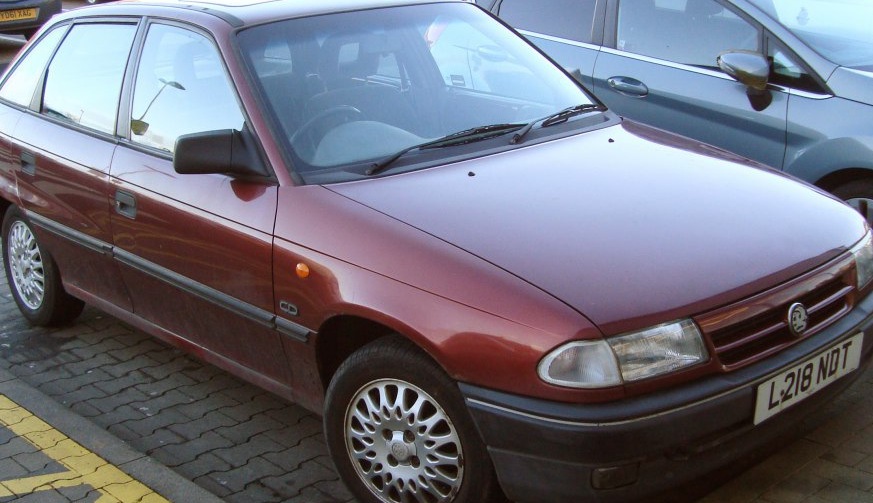
The Vauxhall Astra Mk III CC 1.8i (90 hp) was a popular variant of the third-generation Astra, produced between 1991 and 1994. Positioned as a mid-range offering within the CC (Coupe/Compact) body style, it provided a balance between affordability and reasonable performance. This model was a key part of Vauxhall’s lineup during a period of increasing competition in the European small family car segment, and represented a significant step forward in terms of design and technology compared to its predecessor. It was built on the 1HX0/A3 platform, shared with other General Motors and partner vehicles.
Technical Specifications
| Brand | Vauxhall |
| Model | Astra |
| Generation | Astra Mk III CC |
| Type (Engine) | 1.8i (90 Hp) |
| Start of production | 1991 |
| End of production | 1994 |
| Powertrain Architecture | Internal Combustion engine |
| Body type | Hatchback |
| Seats | 5 |
| Doors | 3-5 |
| Fuel consumption (urban) | 7.6 l/100 km (30.9 US mpg, 37.2 UK mpg, 13.2 km/l) |
| CO2 emissions | 181 g/km |
| Fuel Type | Petrol (Gasoline) |
| Acceleration 0 – 100 km/h | 12.5 sec |
| Acceleration 0 – 62 mph | 12.5 sec |
| Acceleration 0 – 60 mph | 11.9 sec |
| Maximum speed | 180 km/h (111.85 mph) |
| Weight-to-power ratio | 11.4 kg/Hp, 87.4 Hp/tonne |
| Weight-to-torque ratio | 7.1 kg/Nm, 140.8 Nm/tonne |
| Power | 90 Hp @ 5400 rpm |
| Power per litre | 50.1 Hp/l |
| Torque | 145 Nm @ 3000 rpm (106.95 lb.-ft. @ 3000 rpm) |
| Engine layout | Front, Transverse |
| Engine Model/Code | C18NZ |
| Engine displacement | 1796 cm3 (109.6 cu. in.) |
| Number of cylinders | 4 |
| Engine configuration | Inline |
| Cylinder Bore | 84.8 mm (3.34 in.) |
| Piston Stroke | 79.5 mm (3.13 in.) |
| Compression ratio | 9.2:1 |
| Number of valves per cylinder | 2 |
| Fuel injection system | Single-point injection |
| Engine aspiration | Naturally aspirated engine |
| Engine oil capacity | 4 l (4.23 US qt | 3.52 UK qt) |
| Coolant | 7 l (7.4 US qt | 6.16 UK qt) |
| Kerb Weight | 1030 kg (2270.76 lbs.) |
| Max. weight | 1550 kg (3417.17 lbs.) |
| Max load | 520 kg (1146.4 lbs.) |
| Trunk (boot) space – minimum | 360 l (12.71 cu. ft.) |
| Trunk (boot) space – maximum | 1201 l (42.41 cu. ft.) |
| Length | 4049 mm (159.41 in.) |
| Width | 1689 mm (66.5 in.) |
| Height | 1410 mm (55.51 in.) |
| Wheelbase | 2520 mm (99.21 in.) |
| Front track | 1420 mm (55.91 in.) |
| Rear (Back) track | 1420 mm (55.91 in.) |
| Ride height (ground clearance) | 135 mm (5.31 in.) |
| Drag coefficient (Cd) | 0.31 |
| Drivetrain Architecture | The Internal combustion engine (ICE) drives the front wheels of the vehicle. |
| Drive wheel | Front wheel drive |
| Number of gears and type of gearbox | 5 gears, manual transmission |
| Front brakes | Ventilated discs |
| Rear brakes | Drum |
| Tires size | 175/65 R14 |
| Wheel rims size | 14 |
Powertrain & Engine Architecture
The heart of the Astra Mk III CC 1.8i was the C18NZ engine, an 1.8-liter inline-four cylinder petrol engine. This engine was a mainstay of Vauxhall and Opel’s offerings during the early 1990s. The C18NZ featured a single-point fuel injection system (throttle body injection), which was a relatively simple and cost-effective technology for the time. It produced 90 horsepower at 5400 rpm and 145 Nm (107 lb-ft) of torque at 3000 rpm. The engine’s design emphasized reliability and fuel efficiency over outright performance. The cylinder head featured two valves per cylinder, and the compression ratio was set at 9.2:1. The engine was transversely mounted in the front of the vehicle, driving the front wheels. The transmission was a five-speed manual gearbox, although a four-speed automatic transmission was also available as an option. The automatic transmission, while offering convenience, did impact acceleration and fuel economy.
Driving Characteristics
The 1.8i 90 hp Astra Mk III CC offered a comfortable, if not particularly exhilarating, driving experience. Acceleration from 0 to 60 mph took around 11.9 seconds, and the top speed was approximately 112 mph. The engine provided adequate power for everyday driving, but it felt strained when pushed hard, especially when fully loaded or tackling steep hills. The five-speed manual gearbox allowed drivers to keep the engine in its optimal power band, while the optional automatic transmission provided smoother shifts but at the expense of responsiveness. The suspension was tuned for comfort, resulting in a relatively soft ride, but this also meant that the car exhibited some body roll in corners. Compared to the more powerful 2.0-liter versions of the Astra, the 1.8i felt noticeably slower, but it offered better fuel economy and lower running costs.
Equipment & Trim Levels
The Astra Mk III CC 1.8i typically came equipped with features such as power steering, central locking, and an adjustable steering column. Interior upholstery was usually cloth, with a simple and functional dashboard layout. Optional extras included electric windows, a sunroof, and upgraded audio systems. The trim level varied depending on the market and specific package chosen, but generally, the 1.8i sat in the middle of the range, offering a good balance of features and affordability. Higher trim levels, such as the GSi, featured sportier styling, upgraded suspension, and more powerful engines.
Chassis & Braking
The Astra Mk III CC utilized a MacPherson strut front suspension and a torsion beam rear suspension. The front brakes were ventilated discs, providing adequate stopping power, while the rear brakes were drums. This configuration was typical for cars in this class during the early 1990s. The chassis was relatively lightweight, contributing to the car’s decent handling characteristics. Stabilizer bars were fitted to both the front and rear axles to reduce body roll. The 14-inch wheels were typically fitted with 175/65 R14 tires.
Market Reception & Comparison
The Astra Mk III CC 1.8i was generally well-received by automotive critics as a practical and reliable family car. It was praised for its comfortable ride, spacious interior, and reasonable fuel economy. However, some critics noted that the engine lacked outright power and that the interior trim was somewhat basic. Compared to rivals such as the Ford Escort and Volkswagen Golf, the Astra offered a competitive package in terms of price and features. The 1.8i variant was often seen as a sensible choice for buyers who prioritized fuel efficiency and affordability over performance. The automatic transmission version, while convenient, was often criticized for its sluggishness and reduced fuel economy compared to the manual.
Legacy
The C18NZ engine and the Astra Mk III CC 1.8i have proven to be relatively reliable over the long term, with many examples still on the road today. The engine is known for its durability and relatively simple construction, making it easier to maintain and repair. However, like any older vehicle, it is susceptible to age-related issues such as corrosion and wear and tear on rubber components. In the used car market, the Astra Mk III CC 1.8i remains an affordable and practical option for those seeking a classic 1990s hatchback. Its simplicity and reliability make it a popular choice for first-time car owners or those looking for a dependable runabout.