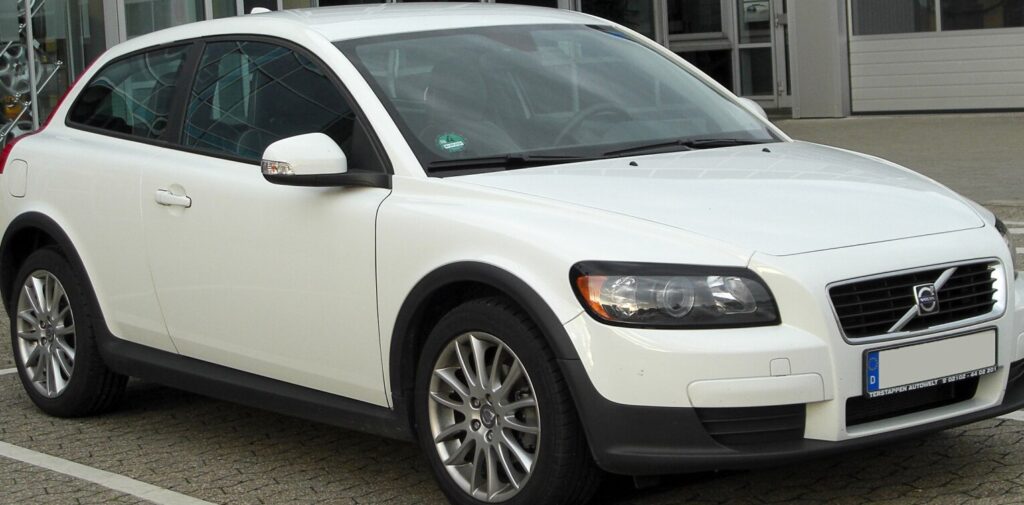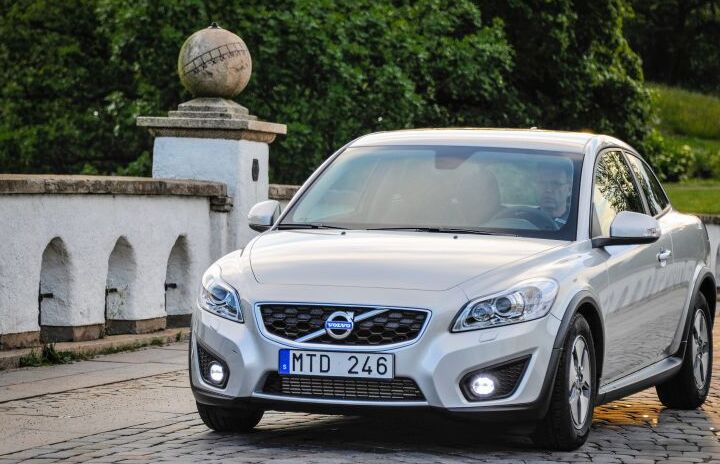
The Volvo C30 T5, specifically the facelifted version produced from 2010 to 2013, represents a unique offering in Volvo’s lineup. Positioned as a sporty, compact coupe, the C30 aimed to attract a younger demographic than traditional Volvo buyers. The 2.5 T5 20V variant, boasting 230 horsepower, served as the performance flagship of the C30 range, offering a blend of Scandinavian design, respectable performance, and available luxury features. It was built on Volvo’s P1 platform, shared with the first-generation Ford Focus, but distinguished itself through its distinctive styling and focus on driver engagement.
Technical Specifications
| Brand | Volvo |
| Model | C30 |
| Generation | C30 (facelift 2010) |
| Type (Engine) | 2.5 T5 20V (230 Hp) |
| Start of production | 2010 |
| End of production | 2013 |
| Powertrain Architecture | Internal Combustion engine |
| Body type | Coupe |
| Seats | 4 |
| Doors | 3 |
| Fuel consumption (urban) | 12.6 l/100 km (18.7 US mpg, 22.4 UK mpg, 7.9 km/l) |
| Fuel consumption (extra urban) | 6.4 l/100 km (36.8 US mpg, 44.1 UK mpg, 15.6 km/l) |
| Fuel consumption (combined) | 8.7 l/100 km (27 US mpg, 32.5 UK mpg, 11.5 km/l) |
| CO2 emissions | 203 g/km |
| Fuel Type | Petrol (Gasoline) |
| Acceleration 0 – 100 km/h | 6.7 sec |
| Acceleration 0 – 62 mph | 6.7 sec |
| Acceleration 0 – 60 mph | 6.4 sec |
| Maximum speed | 240 km/h (149.13 mph) |
| Weight-to-power ratio | 6.6 kg/Hp, 152.5 Hp/tonne |
| Weight-to-torque ratio | 4.7 kg/Nm, 212.2 Nm/tonne |
| Power | 230 Hp @ 5000 rpm |
| Power per litre | 91.2 Hp/l |
| Torque | 320 Nm @ 1500-5000 rpm (236.02 lb.-ft. @ 1500-5000 rpm) |
| Engine layout | Front, Transverse |
| Engine Model/Code | B5254T7 |
| Engine displacement | 2521 cm3 (153.84 cu. in.) |
| Number of cylinders | 5 |
| Engine configuration | Inline |
| Cylinder Bore | 83 mm (3.27 in.) |
| Piston Stroke | 93.2 mm (3.67 in.) |
| Compression ratio | 9:1 |
| Number of valves per cylinder | 4 |
| Fuel injection system | Multi-port manifold injection |
| Engine aspiration | Turbocharger, Intercooler |
| Engine oil capacity | 5.8 l (6.13 US qt | 5.1 UK qt) |
| Coolant | 7 l (7.4 US qt | 6.16 UK qt) |
| Kerb Weight | 1508 kg (3324.57 lbs.) |
| Max. weight | 1860 kg (4100.6 lbs.) |
| Max load | 352 kg (776.03 lbs.) |
| Trunk (boot) space – minimum | 278 l (9.82 cu. ft.) |
| Trunk (boot) space – maximum | 921 l (32.52 cu. ft.) |
| Fuel tank capacity | 62 l (16.38 US gal | 13.64 UK gal) |
| Permitted trailer load with brakes (12%) | 1500 kg (3306.93 lbs.) |
| Permitted trailer load without brakes | 700 kg (1543.24 lbs.) |
| Permitted towbar download | 75 kg (165.35 lbs.) |
| Length | 4266 mm (167.95 in.) |
| Width | 1782 mm (70.16 in.) |
| Width including mirrors | 2039 mm (80.28 in.) |
| Height | 1447 mm (56.97 in.) |
| Wheelbase | 2640 mm (103.94 in.) |
| Front track | 1535 mm (60.43 in.) |
| Rear (Back) track | 1531 mm (60.28 in.) |
| Minimum turning circle | 10.6 m (34.78 ft.) |
| Drivetrain Architecture | Front wheel drive |
| Drive wheel | Front wheel drive |
| Number of gears and type of gearbox | 6 gears, manual transmission |
| Front suspension | Spring Strut |
| Rear suspension | Transverse stabilizer |
| Front brakes | Ventilated discs |
| Rear brakes | Ventilated discs |
| Assisting systems | ABS (Anti-lock braking system) |
| Steering type | Steering rack and pinion |
| Tires size | 205/55 R16 |
| Wheel rims size | 16 |
Powertrain & Engine Architecture
The heart of the C30 T5 is Volvo’s 2.5-liter inline-five cylinder engine, designated the B5254T7. This engine is a turbocharged, multi-port fuel-injected unit, known for its smooth power delivery and distinctive sound. The 20-valve configuration (four valves per cylinder) contributes to its breathing efficiency. The turbocharger, coupled with an intercooler, provides a significant boost in power and torque. The engine produces 230 horsepower at 5000 rpm and 320 Nm (236 lb-ft) of torque available from a low 1500 rpm all the way to 5000 rpm. This broad torque curve makes the C30 T5 surprisingly responsive in everyday driving. The engine’s transverse mounting and front-wheel-drive configuration are typical for compact European cars. The C30 T5 came standard with a 6-speed manual transmission, offering precise shifts and a direct connection to the engine. A 5-speed automatic transmission was also available, though it slightly diminished performance and fuel economy.
Driving Characteristics
The C30 T5 with the manual transmission delivers a genuinely engaging driving experience. Acceleration to 60 mph takes around 6.4 seconds, and the car feels nimble and well-balanced. The turbocharger provides a noticeable surge of power, but it’s not overly aggressive, making the power accessible and predictable. The automatic transmission, while convenient, feels less responsive and slightly dulls the overall driving experience. Gear ratios are tuned for a balance between acceleration and fuel efficiency. The C30’s relatively short wheelbase contributes to its agile handling, but the suspension is tuned for comfort rather than outright sportiness. Compared to lower-powered C30 variants (like the 1.6 or 2.0 models), the T5 offers a substantial performance upgrade, making it significantly more enjoyable on winding roads and during highway overtaking.
Equipment & Trim Levels
The C30 T5 typically came well-equipped, even in base form. Standard features included leather upholstery, automatic climate control, a premium audio system, and alloy wheels. Optional extras included a sunroof, navigation system, and upgraded interior trim. The C30’s interior design is minimalist and Scandinavian, with a focus on functionality and clean lines. The dashboard layout is straightforward, and the controls are easy to use. The rear seats are relatively cramped, reflecting the C30’s coupe body style. Safety features were a Volvo hallmark, and the C30 T5 included a comprehensive suite of airbags, ABS brakes, and stability control.
Chassis & Braking
The C30 T5 utilizes a MacPherson strut front suspension and a multi-link rear suspension. This setup provides a good balance between ride comfort and handling. The steering is precise and well-weighted. The braking system consists of ventilated discs on all four wheels, providing ample stopping power. ABS (Anti-lock Braking System) is standard, enhancing safety in emergency braking situations. The C30’s chassis is relatively lightweight, contributing to its agility. Stabilizer bars are fitted to both the front and rear axles to reduce body roll during cornering.
Market Reception & Comparison
The Volvo C30 T5 received generally positive reviews from automotive critics. It was praised for its stylish design, engaging driving dynamics, and comfortable interior. However, some critics noted the limited rear seat space and the relatively high price compared to competitors. Compared to other compact coupes like the Audi TT or BMW 1 Series Coupe, the C30 T5 offered a unique blend of Scandinavian design and practicality. The 1.6 and 2.0 liter C30 models offered better fuel economy, but lacked the T5’s performance. The T5 was positioned as the enthusiast’s choice, appealing to drivers who prioritized performance and driving enjoyment.
Legacy
The Volvo C30 T5 has developed a loyal following among enthusiasts. The B5254T7 engine is known for its reliability, although regular maintenance is essential. The turbocharger and fuel injection system require periodic attention. The C30’s unique styling and engaging driving dynamics have ensured its continued appeal in the used car market. While not a high-volume seller during its production run, the C30 T5 remains a distinctive and desirable Volvo, offering a compelling alternative to more mainstream compact coupes.