
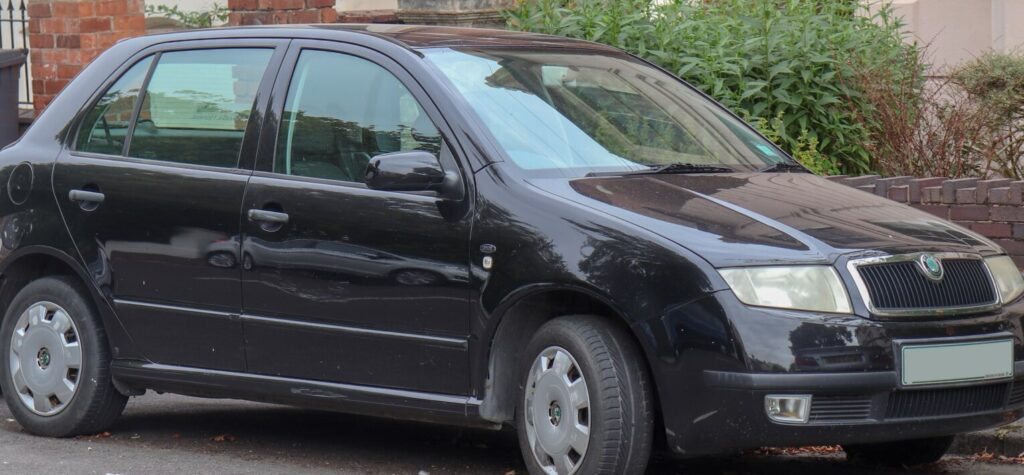
The Skoda Fabia I (6Y) 1.9 TDI, producing 98 horsepower, was a significant model within the first generation Fabia lineup, manufactured between 2000 and 2004. Positioned as a practical and fuel-efficient option, it catered to buyers seeking a diesel-powered hatchback with reasonable performance. The 6Y Fabia, built on the Volkswagen Group’s PQ24 platform (also known as the A3 platform), represented Skoda’s entry into the modern small car segment, offering a blend of affordability, functionality, and increasingly, build quality. This particular 1.9 TDI variant aimed to provide a balance between economy and usability, appealing to those who covered significant mileage or required a dependable workhorse.
Technical Specifications
| Brand | Skoda |
| Model | Fabia |
| Generation | Fabia I (6Y) |
| Type (Engine) | 1.9 TDI (98 Hp) |
| Start of production | January, 2000 |
| End of production | 2004 |
| Powertrain Architecture | Internal Combustion engine |
| Body type | Hatchback |
| Seats | 5 |
| Doors | 5 |
| Fuel consumption (urban) | 6.5 l/100 km (36.2 US mpg, 43.5 UK mpg, 15.4 km/l) |
| Fuel consumption (extra urban) | 4 l/100 km (58.8 US mpg, 70.6 UK mpg, 25 km/l) |
| Fuel consumption (combined) | 5 l/100 km (47 US mpg, 56.5 UK mpg, 20 km/l) |
| Fuel Type | Diesel |
| Acceleration 0 – 100 km/h | 11.5 sec |
| Acceleration 0 – 62 mph | 11.5 sec |
| Acceleration 0 – 60 mph | 10.9 sec |
| Maximum speed | 185 km/h (114.95 mph) |
| Weight-to-power ratio | 11.8 kg/Hp, 84.8 Hp/tonne |
| Weight-to-torque ratio | 4.8 kg/Nm, 207.8 Nm/tonne |
| Power | 98 Hp @ 4000 rpm |
| Power per litre | 51.7 Hp/l |
| Torque | 240 Nm @ 1800-2400 rpm (177.01 lb.-ft. @ 1800-2400 rpm) |
| Engine layout | Front, Transverse |
| Engine Model/Code | ATD |
| Engine displacement | 1896 cm3 (115.7 cu. in.) |
| Number of cylinders | 4 |
| Engine configuration | Inline |
| Cylinder Bore | 79.5 mm (3.13 in.) |
| Piston Stroke | 95.5 mm (3.76 in.) |
| Compression ratio | 19:1 |
| Number of valves per cylinder | 2 |
| Fuel injection system | Pump-nozzle (Unit Injector) |
| Engine aspiration | Turbocharger, Intercooler |
| Engine oil capacity | 4.3 l (4.54 US qt | 3.78 UK qt) |
| Coolant | 6.8 l (7.19 US qt | 5.98 UK qt) |
| Kerb Weight | 1155 kg (2546.34 lbs.) |
| Max. weight | 1650 kg (3637.63 lbs.) |
| Max load | 495 kg (1091.29 lbs.) |
| Trunk (boot) space – minimum | 260 l (9.18 cu. ft.) |
| Trunk (boot) space – maximum | 1015 l (35.84 cu. ft.) |
| Fuel tank capacity | 45 l (11.89 US gal | 9.9 UK gal) |
| Length | 3960 mm (155.91 in.) |
| Width | 1645 mm (64.76 in.) |
| Height | 1450 mm (57.09 in.) |
| Wheelbase | 2462 mm (96.93 in.) |
| Front track | 1419 mm (55.87 in.) |
| Rear (Back) track | 1408 mm (55.43 in.) |
| Drivetrain Architecture | The Internal combustion engine (ICE) drives the front wheels of the vehicle. |
| Drive wheel | Front wheel drive |
| Number of gears and type of gearbox | 5 gears, manual transmission |
| Front suspension | Coil spring |
| Rear suspension | Coil spring |
| Front brakes | Disc |
| Rear brakes | Disc |
| Assisting systems | ABS (Anti-lock braking system) |
| Steering type | Steering rack and pinion |
| Power steering | Hydraulic Steering |
| Tires size | 185/60 R14 |
| Wheel rims size | 6J X 14 |
Powertrain & Engine Architecture
The heart of this Fabia variant is the 1.9-liter (1896 cc) inline-four cylinder diesel engine, designated the ATD engine code. This engine was a mainstay in the Volkswagen Group’s diesel offerings during the early 2000s. It features a cast iron block and an aluminum cylinder head, employing a single overhead camshaft (SOHC) operating two valves per cylinder. The ATD engine utilizes a pump-nozzle (unit injector) fuel injection system, a technology known for its precise fuel delivery and contribution to improved combustion efficiency. This system, developed by Bosch, injects fuel directly into the combustion chamber at extremely high pressure. A turbocharger with an intercooler is employed to boost power output, providing 98 horsepower at 4000 rpm and a substantial 240 Nm (177 lb-ft) of torque between 1800 and 2400 rpm. The engine’s robust bottom end and efficient combustion process contribute to its durability and fuel economy. The 5-speed manual transmission was the standard offering, providing a balance between fuel efficiency and drivability.
Driving Characteristics
The 1.9 TDI 98 hp Fabia offered a practical and economical driving experience. While not a performance-oriented model, the engine’s torque output provided adequate acceleration for everyday driving situations. The 0-60 mph time of around 10.9 seconds and a top speed of 115 mph were respectable for its class. The gear ratios in the 5-speed manual transmission were well-matched to the engine’s characteristics, allowing for comfortable cruising at highway speeds. Compared to the more powerful TDI variants (like the 130 hp PD130), this version felt less strained during acceleration, but lacked the outright punch for quick overtaking maneuvers. The manual transmission provided a more engaging driving experience than the optional automatic, which could feel sluggish and detract from the engine’s available torque.
Equipment & Trim Levels
The 1.9 TDI 98 hp Fabia typically came with a reasonable level of standard equipment. This included central locking, power steering, front airbags, and an adjustable steering column. Interior upholstery was typically cloth, with a functional, if somewhat basic, dashboard layout. Optional extras included air conditioning, alloy wheels, electric windows, and a radio/CD player. Trim levels varied depending on the market, but generally offered incremental upgrades in terms of interior comfort and exterior styling. The focus was on providing a well-equipped, affordable package rather than luxury.
Chassis & Braking
The Fabia I utilized a MacPherson strut front suspension and a twist-beam rear suspension. This setup provided a comfortable ride quality, although it wasn’t particularly sporty. The front brakes were ventilated discs, while the rear brakes were typically solid discs. ABS (Anti-lock Braking System) was standard, enhancing safety. The steering was a hydraulic power-assisted rack and pinion system, offering reasonable precision and feedback. Stabilizer bars were fitted to both the front and rear axles to reduce body roll during cornering.
Market Reception & Comparison
The Skoda Fabia 1.9 TDI 98 hp was generally well-received by automotive critics as a practical and economical choice. It was praised for its fuel efficiency, reliability, and spacious interior. However, some reviewers noted that the engine could be somewhat noisy and that the interior lacked the refinement of some competitors. Compared to other trims in the Fabia lineup, such as the 1.4-liter petrol versions, the 1.9 TDI offered significantly better fuel economy and torque, making it ideal for long-distance driving. Against competitors like the Ford Fiesta and Opel Corsa, the Fabia offered a compelling value proposition, often undercutting them in price while providing similar levels of equipment.
Legacy
The 1.9 TDI engine, particularly the ATD code, has proven to be remarkably durable and reliable over the long term. Properly maintained examples can accumulate high mileage with minimal issues. In the used car market today, these Fabias are often sought after for their fuel efficiency and affordability. While age and mileage can necessitate some maintenance, the engine’s robust construction and readily available parts contribute to its continued viability. The 1.9 TDI Fabia represents a significant step forward for Skoda, establishing the brand as a credible competitor in the European small car market and laying the foundation for its future success.
