
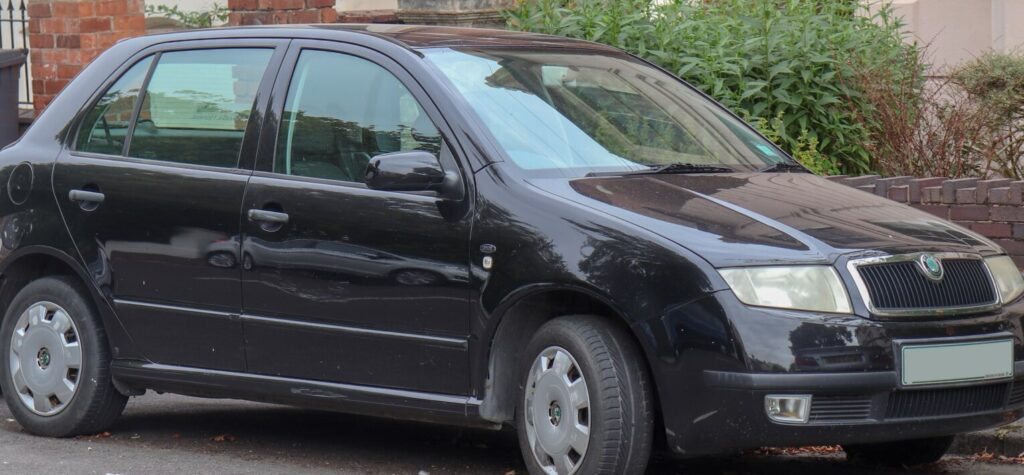
The Skoda Fabia I (6Y) 2.0, producing 115 horsepower, was a significant offering in Skoda’s lineup from December 1999 to July 2004. Positioned as a mid-range option within the first generation Fabia (6Y) series, which utilized the Volkswagen Group’s PQ6 platform – also known as the A3 platform – it aimed to provide a balance of performance and affordability. This variant represented a step up from the base 1.0 and 1.4 liter engines, offering a more spirited driving experience while remaining accessible to a broad customer base, particularly in European markets where compact hatchbacks were, and continue to be, immensely popular. The 2.0L engine was a key component in establishing Skoda as a brand capable of delivering modern, reliable vehicles.
Technical Specifications
| Brand | Skoda |
| Model | Fabia |
| Generation | Fabia I (6Y) |
| Type (Engine) | 2.0 (115 Hp) |
| Start of production | December, 1999 |
| End of production | July, 2004 |
| Powertrain Architecture | Internal Combustion engine |
| Body type | Hatchback |
| Seats | 5 |
| Doors | 5 |
| Fuel consumption (urban) | 11.1 l/100 km (21.2 US mpg) |
| Fuel consumption (extra urban) | 5.9 l/100 km (39.9 US mpg) |
| Fuel Type | Petrol (Gasoline) |
| Acceleration 0 – 100 km/h | 9.9 sec |
| Acceleration 0 – 62 mph | 9.9 sec |
| Acceleration 0 – 60 mph | 9.4 sec |
| Maximum speed | 195 km/h (121.17 mph) |
| Weight-to-power ratio | 9.7 kg/Hp |
| Weight-to-torque ratio | 6.5 kg/Nm |
| Power | 115 Hp @ 5200 rpm |
| Power per litre | 58 Hp/l |
| Torque | 170 Nm @ 2400 rpm (125.39 lb.-ft. @ 2400 rpm) |
| Engine layout | Front, Transverse |
| Engine Model/Code | AZL |
| Engine displacement | 1984 cm3 (121.07 cu. in.) |
| Number of cylinders | 4 |
| Engine configuration | Inline |
| Cylinder Bore | 82.5 mm (3.25 in.) |
| Piston Stroke | 92.8 mm (3.65 in.) |
| Compression ratio | 10.5:1 |
| Number of valves per cylinder | 2 |
| Fuel injection system | Multi-port manifold injection |
| Engine aspiration | Naturally aspirated engine |
| Valvetrain | OHC |
| Engine oil capacity | 4 l (4.23 US qt | 3.52 UK qt) |
| Coolant | 6.9 l (7.29 US qt | 6.07 UK qt) |
| Kerb Weight | 1110 kg (2447.13 lbs.) |
| Max. weight | 1625 kg (3582.51 lbs.) |
| Max load | 515 kg (1135.38 lbs.) |
| Trunk (boot) space – minimum | 260 l (9.18 cu. ft.) |
| Trunk (boot) space – maximum | 1016 l (35.88 cu. ft.) |
| Fuel tank capacity | 45 l (11.89 US gal | 9.9 UK gal) |
| Length | 3960 mm (155.91 in.) |
| Width | 1645 mm (64.76 in.) |
| Height | 1450 mm (57.09 in.) |
| Wheelbase | 2462 mm (96.93 in.) |
| Front track | 1419 mm (55.87 in.) |
| Rear (Back) track | 1408 mm (55.43 in.) |
| Drivetrain Architecture | The Internal combustion engine (ICE) drives the front wheels of the vehicle. |
| Drive wheel | Front wheel drive |
| Number of gears and type of gearbox | 5 gears, manual transmission |
| Front suspension | Coil spring |
| Rear suspension | Coil spring |
| Front brakes | Ventilated discs |
| Rear brakes | Disc |
| Assisting systems | ABS (Anti-lock braking system) |
| Steering type | Steering rack and pinion |
| Power steering | Hydraulic Steering |
| Tires size | 195/50 R15 |
| Wheel rims size | 6J x 15 |
Powertrain & Engine Architecture
The heart of the Fabia 2.0 was the AZL engine, a 1.8-liter inline-four cylinder gasoline engine. This engine was part of the EA827 family, commonly found in various Volkswagen Group vehicles. It featured a cast iron block and an aluminum cylinder head, a relatively standard configuration for the time. The AZL engine utilized a multi-port fuel injection system, delivering fuel directly into the intake ports, and a single overhead camshaft (OHC) design operating two valves per cylinder. This configuration prioritized simplicity and reliability over outright performance. The 170 Nm (125 lb-ft) of torque was available at 2400 rpm, providing reasonable responsiveness for everyday driving. The five-speed manual transmission was the standard offering, providing a direct connection between the engine and the front wheels. The gear ratios were tuned for a balance of acceleration and fuel efficiency, with a relatively tall fifth gear for highway cruising.
Driving Characteristics
The Fabia 2.0 offered a noticeable improvement in performance compared to the lower-displacement engines in the range. While not a sports car, the 115 horsepower and 170 Nm of torque provided adequate power for confident overtaking and merging onto highways. The 0-60 mph time of around 9.4 seconds was respectable for a car of this class in the early 2000s. The manual transmission allowed for precise control, and the gear ratios were well-matched to the engine’s powerband. Compared to the 1.4-liter models, the 2.0 felt significantly more relaxed at higher speeds and under load. However, it wasn’t as nimble or engaging as some of its rivals, such as the Ford Fiesta or Renault Clio, which prioritized handling over outright power. The suspension was tuned for comfort, resulting in a slightly softer ride, but also some body roll in corners.
Equipment & Trim Levels
The 2.0-liter Fabia typically came with a reasonable level of standard equipment. This included power steering, central locking, electric front windows, and an adjustable steering column. Interior upholstery was typically cloth, with a relatively simple dashboard layout. Optional extras included air conditioning, alloy wheels, a radio/CD player, and upgraded interior trim. The trim level often dictated the availability of these options, with higher trims offering more features as standard. Safety features included ABS brakes and driver and passenger airbags.
Chassis & Braking
The Fabia I utilized a MacPherson strut front suspension and a twist-beam rear suspension. This setup was a cost-effective solution that provided a reasonable balance of ride comfort and handling. The front brakes were ventilated discs, providing good stopping power, while the rear brakes were solid discs. The ABS system helped to prevent wheel lockup during hard braking, enhancing safety. The steering was a hydraulic power steering system, offering a light and easy driving experience.
Market Reception & Comparison
The Skoda Fabia 2.0 was generally well-received by automotive critics. It was praised for its spacious interior, comfortable ride, and good value for money. The 2.0-liter engine was considered a significant improvement over the smaller engines, providing a more enjoyable driving experience. However, some critics noted that the handling wasn’t as sharp as some of its rivals. In terms of fuel economy, the 2.0-liter Fabia was reasonably efficient, achieving around 39.9 US mpg on the extra-urban cycle. Compared to the 1.4-liter models, the 2.0 offered a trade-off between performance and fuel economy. The 1.4 was more economical, but the 2.0 provided more power and responsiveness.
Legacy
The AZL engine, while not known for being particularly groundbreaking, proved to be a reliable and durable unit. Many examples are still on the road today, testament to its robust construction. The Fabia 2.0 remains a popular choice for budget-conscious buyers looking for a practical and affordable hatchback. Parts availability is generally good, and maintenance costs are relatively low. However, as with any older vehicle, potential buyers should be aware of common issues such as corrosion and wear and tear on suspension components. The Fabia 2.0 played a role in establishing Skoda as a credible alternative to established European automakers, demonstrating that the brand could deliver well-built, reliable, and affordable vehicles.
