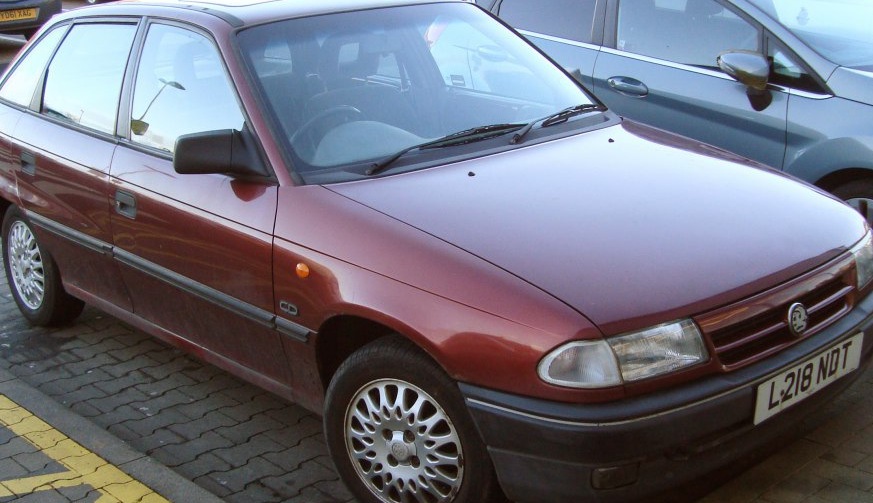
The Vauxhall Astra Mk III 2.0 GSi (116 hp) was a performance-oriented variant of the Mk III Astra, produced between 1991 and 1994. Positioned as the flagship trim level within the hatchback range, it offered a more engaging driving experience compared to lower-spec models. The Mk III Astra, internally designated as the H platform, represented a significant step forward for Vauxhall in terms of design, build quality, and available technology. The 2.0 GSi specifically aimed to capture buyers seeking a sporty and practical family car, competing with rivals like the Ford Escort XR3i and Volkswagen Golf GTI.
Technical Specifications
| Brand | Vauxhall |
| Model | Astra |
| Generation | Astra Mk III CC |
| Type (Engine) | 2.0 GSi (116 Hp) |
| Start of production | 1991 |
| End of production | 1994 |
| Powertrain Architecture | Internal Combustion engine |
| Body type | Hatchback |
| Seats | 5 |
| Doors | 3-5 |
| Fuel consumption (combined) | 8 l/100 km (29.4 US mpg, 35.3 UK mpg, 12.5 km/l) |
| CO2 emissions | 190 g/km |
| Fuel Type | Petrol (Gasoline) |
| Acceleration 0 – 100 km/h | 9.5 sec |
| Acceleration 0 – 62 mph | 9.5 sec |
| Acceleration 0 – 60 mph | 9 sec |
| Maximum speed | 200 km/h (124.27 mph) |
| Weight-to-power ratio | 9 kg/Hp, 111.5 Hp/tonne |
| Weight-to-torque ratio | 6.2 kg/Nm, 162.5 Nm/tonne |
| Power | 116 Hp @ 5400 rpm |
| Power per litre | 58.1 Hp/l |
| Torque | 169 Nm @ 2600 rpm (124.65 lb.-ft. @ 2600 rpm) |
| Engine layout | Front, Transverse |
| Engine Model/Code | C20NE |
| Engine displacement | 1998 cm3 (121.93 cu. in.) |
| Number of cylinders | 4 |
| Engine configuration | Inline |
| Cylinder Bore | 86 mm (3.39 in.) |
| Piston Stroke | 86 mm (3.39 in.) |
| Compression ratio | 9.2:1 |
| Number of valves per cylinder | 2 |
| Fuel injection system | Multi-port manifold injection |
| Engine aspiration | Naturally aspirated engine |
| Engine oil capacity | 4 l (4.23 US qt | 3.52 UK qt) |
| Coolant | 6.5 l (6.87 US qt | 5.72 UK qt) |
| Kerb Weight | 1040/1060 kg (2292.81 lbs.) |
| Max. weight | 1555 kg (3428.19 lbs.) |
| Max load | 495-515 kg (1091.29 – 1135.38 lbs.) |
| Trunk (boot) space – minimum | 360 l (12.71 cu. ft.) |
| Trunk (boot) space – maximum | 1201 l (42.41 cu. ft.) |
| Length | 4049 mm (159.41 in.) |
| Width | 1689 mm (66.5 in.) |
| Height | 1410 mm (55.51 in.) |
| Wheelbase | 2520 mm (99.21 in.) |
| Front track | 1420 mm (55.91 in.) |
| Rear (Back) track | 1420 mm (55.91 in.) |
| Ride height (ground clearance) | 135 mm (5.31 in.) |
| Drag coefficient (Cd) | 0.32 |
| Drivetrain Architecture | The Internal combustion engine (ICE) drives the front wheels of the vehicle. |
| Drive wheel | Front wheel drive |
| Number of gears and type of gearbox | 5 gears, manual transmission |
| Front brakes | Ventilated discs |
| Rear brakes | Disc |
| Tires size | 185/60 R14 |
| Wheel rims size | 14 |
Powertrain & Engine Architecture
The heart of the Astra 2.0 GSi was the C20NE engine, a 1998cc inline-four cylinder petrol engine. This engine was a mainstay of Vauxhall/Opel’s mid-range offerings throughout the early 1990s. It featured a cast iron block and an aluminum cylinder head, equipped with two valves per cylinder. Fuel delivery was handled by Bosch multi-port fuel injection, providing a good balance between performance and fuel efficiency for the time. The C20NE was known for its robust construction and relative simplicity, making it a relatively easy engine to maintain. The five-speed manual transmission was a Getrag unit, chosen for its durability and precise shift feel. The transmission’s gear ratios were tuned to provide brisk acceleration, while still offering comfortable cruising at highway speeds.
Driving Characteristics
The 2.0 GSi offered a noticeable step up in performance compared to the lower-powered Astra variants. The 116 hp output, while not groundbreaking, provided sufficient power for spirited driving. Acceleration from 0-60 mph took around 9 seconds, and the car could reach a top speed of 124 mph. The manual gearbox allowed for precise control over the engine’s power band, and the relatively short gear ratios encouraged frequent shifting. Compared to the 1.8L models, the 2.0 GSi felt more responsive and capable, particularly when overtaking or tackling winding roads. While not as nimble as some of its rivals, the Astra GSi offered a comfortable and predictable driving experience.
Equipment & Trim Levels
The Astra 2.0 GSi came reasonably well-equipped as standard. Interior features included sports seats with supportive bolstering, a leather-wrapped steering wheel, and a basic stereo system. Exterior features included body-colored bumpers and side skirts, alloy wheels, and a rear spoiler. Optional extras included electric windows, central locking, and a sunroof. The interior trim was typically dark grey or black, with a focus on functionality rather than luxury. The GSi trim level aimed to provide a sporty aesthetic without sacrificing everyday practicality.
Chassis & Braking
The Astra Mk III featured independent suspension at the front, utilizing MacPherson struts and anti-roll bar. The rear suspension employed a torsion beam setup. The GSi variant benefited from a slightly stiffer suspension setup compared to standard models, improving handling and reducing body roll. Braking duties were handled by ventilated discs at the front and solid discs at the rear. The braking system was adequate for the car’s performance, but lacked the sophistication of some of its competitors. The steering was power-assisted, providing a light and responsive feel.
Market Reception & Comparison
The Astra 2.0 GSi was generally well-received by automotive critics. It was praised for its strong engine, comfortable ride, and practical hatchback body style. However, some critics noted that the interior was somewhat bland and lacked the visual flair of some rivals. Compared to the Volkswagen Golf GTI, the Astra GSi offered a more affordable alternative, but lacked the GTI’s overall refinement. Against the Ford Escort XR3i, the Astra GSi provided a more balanced driving experience, with a better ride quality and more comfortable interior. Fuel economy was respectable for the time, averaging around 29 mpg in mixed driving.
Legacy
The C20NE engine proved to be a durable and reliable unit, and many Astra 2.0 GSi models are still on the road today. While not as sought-after as some other classic hot hatches, the Astra GSi has developed a loyal following among enthusiasts. Parts availability is generally good, and the engine is relatively easy to work on. The Astra 2.0 GSi represents a solid and practical performance car from the early 1990s, offering a good balance of performance, comfort, and affordability. Its enduring popularity in the used car market is a testament to its robust engineering and timeless appeal.