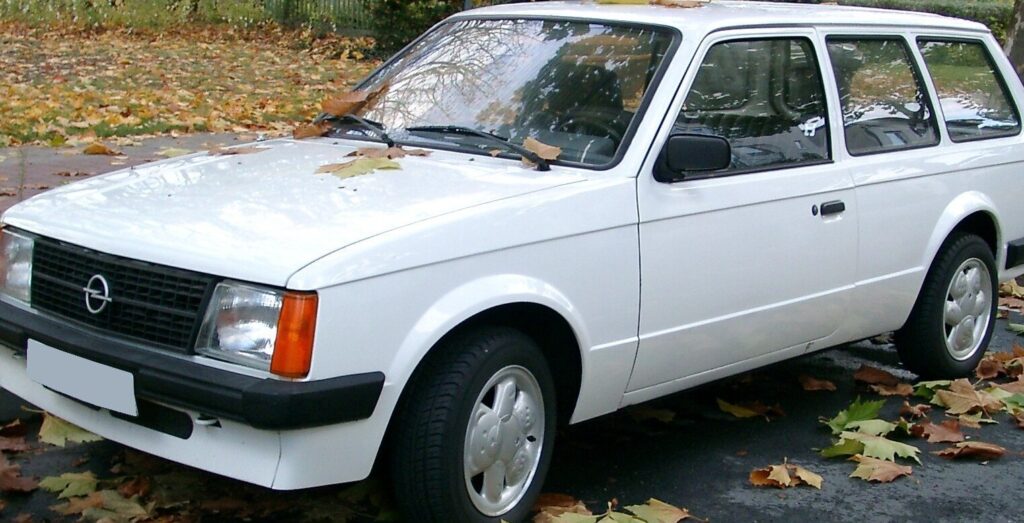
The Opel Kadett D Caravan 1.2 S, produced between 1979 and 1984, represented an entry-level offering within the broader Kadett D range. Positioned as a practical and economical family vehicle, the 1.2 S variant catered to buyers prioritizing affordability and fuel efficiency over outright performance. The Kadett D, launched in 1979, was a significant model for Opel (later Vauxhall and Buick), serving as a mainstay in the European compact car segment. The Caravan body style, a station wagon or estate, further enhanced the Kadett’s practicality, making it a popular choice for families and those requiring ample cargo space. This particular 1.2 S configuration, with its modest 60 horsepower, was aimed at a budget-conscious market segment.
Technical Specifications
| Brand | Opel |
| Model | Kadett |
| Generation | Kadett D Caravan |
| Type (Engine) | 1.2 S (60 Hp) |
| Start of production | 1979 |
| End of production | 1984 |
| Powertrain Architecture | Internal Combustion engine |
| Body type | Station wagon (estate) |
| Seats | 5 |
| Doors | 3-5 |
| Fuel Type | Petrol (Gasoline) |
| Acceleration 0 – 100 km/h | 17 sec |
| Acceleration 0 – 62 mph | 17 sec |
| Acceleration 0 – 60 mph | 16.2 sec |
| Maximum speed | 150 km/h (93.21 mph) |
| Weight-to-power ratio | 14.6 kg/Hp, 68.6 Hp/tonne |
| Weight-to-torque ratio | 9.9 kg/Nm, 100.6 Nm/tonne |
| Power | 60 Hp @ 5800 rpm |
| Power per litre | 50.2 Hp/l |
| Torque | 88 Nm @ 3000-3600 rpm (64.91 lb.-ft. @ 3000-3600 rpm) |
| Engine layout | Front, Transverse |
| Engine Model/Code | 12S, 12ST |
| Engine displacement | 1196 cm3 (72.98 cu. in.) |
| Number of cylinders | 4 |
| Engine configuration | Inline |
| Cylinder Bore | 79 mm (3.11 in.) |
| Piston Stroke | 61 mm (2.4 in.) |
| Compression ratio | 9:1 |
| Number of valves per cylinder | 2 |
| Fuel injection system | Carburettor |
| Engine aspiration | Naturally aspirated engine |
| Valvetrain | OHV |
| Engine oil capacity | 2.75 l (2.91 US qt | 2.42 UK qt) |
| Coolant | 5.7 l (6.02 US qt | 5.02 UK qt) |
| Kerb Weight | 875 kg (1929.04 lbs.) |
| Max. weight | 1375 kg (3031.36 lbs.) |
| Max load | 500 kg (1102.31 lbs.) |
| Trunk (boot) space – minimum | 535 l (18.89 cu. ft.) |
| Trunk (boot) space – maximum | 1700 l (60.03 cu. ft.) |
| Fuel tank capacity | 50 l (13.21 US gal | 11 UK gal) |
| Length | 4207 mm (165.63 in.) |
| Width | 1636 mm (64.41 in.) |
| Height | 1400 mm (55.12 in.) |
| Wheelbase | 2514 mm (98.98 in.) |
| Front track | 1400 mm (55.12 in.) |
| Rear (Back) track | 1406 mm (55.35 in.) |
| Minimum turning circle | 10.5 m (34.45 ft.) |
| Drivetrain Architecture | The Internal combustion engine (ICE) drives the front wheels of the vehicle. |
| Drive wheel | Front wheel drive |
| Number of gears and type of gearbox | 4 gears, manual transmission |
| Front brakes | Disc |
| Rear brakes | Drum |
Powertrain & Engine Architecture
The heart of the Kadett D Caravan 1.2 S was the 1196cc inline-four cylinder engine, designated as either 12S or 12ST depending on minor variations. This engine featured a relatively simple overhead valve (OHV) valvetrain and utilized a single carburetor for fuel delivery. The 9:1 compression ratio was typical for the era, and the engine produced 60 horsepower at 5800 rpm and 88 Nm (65 lb-ft) of torque between 3000 and 3600 rpm. The engine was transversely mounted, a common layout for front-wheel-drive vehicles, contributing to a more compact engine bay. The four-speed manual transmission was the standard offering, providing relatively long gearing to maximize fuel economy. The engine’s design prioritized reliability and ease of maintenance over high performance.
Driving Characteristics
The 1.2 S variant of the Kadett D Caravan offered modest performance. Acceleration from 0 to 60 mph took approximately 16.2 seconds, and the top speed was around 93 mph. The long gearing of the four-speed manual transmission meant that the engine needed to be revved to extract its full potential. Compared to the more powerful Kadett variants, such as those equipped with larger engines (e.g., 1.6 or 2.0-liter), the 1.2 S felt noticeably underpowered, particularly when fully loaded or tackling inclines. However, its light weight and predictable handling made it a reasonably enjoyable driver for everyday use. The steering was light, and the suspension provided a comfortable, if somewhat basic, ride.
Equipment & Trim Levels
The Kadett D Caravan 1.2 S was typically equipped with basic, functional features. Standard equipment included cloth upholstery, a simple dashboard layout with analog gauges, and manual windows and door locks. The interior was designed for practicality rather than luxury. Optional extras, depending on the market, could include a radio, upgraded upholstery, and a sunroof. The trim level was generally considered entry-level, focusing on providing essential transportation at an affordable price point. The Caravan body style itself added to the practicality with its large cargo area, making it suitable for families and those needing to transport bulky items.
Chassis & Braking
The Kadett D Caravan featured a relatively simple chassis design. The front suspension utilized MacPherson struts, while the rear suspension employed a twist-beam axle. This setup provided a reasonable balance between ride comfort and handling. Braking was accomplished via disc brakes on the front wheels and drum brakes on the rear. The braking system was adequate for the vehicle’s weight and performance, but lacked the stopping power of more modern systems. Stabilizer bars were often omitted on the base 1.2 S model to keep costs down, further impacting handling performance.
Market Reception & Comparison
The Kadett D Caravan 1.2 S was generally well-received as an affordable and practical family car. Critics acknowledged its fuel efficiency and reliability, but often noted its lack of performance. Compared to other Kadett variants, such as the 1.6-liter models, the 1.2 S offered significantly less power and acceleration. However, it was also more affordable to purchase and operate. In terms of fuel economy, the 1.2 S was among the most efficient Kadett D models. Its main competitors included other European compact station wagons, such as the Ford Escort Estate and the Fiat Regata Weekend.
Legacy
The Opel Kadett D Caravan 1.2 S, while not a performance icon, holds a place in automotive history as a representative of the practical and economical family cars of the late 1970s and early 1980s. The 12S engine, while simple in design, proved to be relatively durable and reliable. Today, well-maintained examples are sought after by classic car enthusiasts and collectors. The Kadett D, in general, is remembered for its affordability, practicality, and contribution to the European automotive landscape. The 1.2 S variant, in particular, represents a budget-friendly entry point into the world of classic Opel ownership, offering a glimpse into a bygone era of automotive design and engineering.