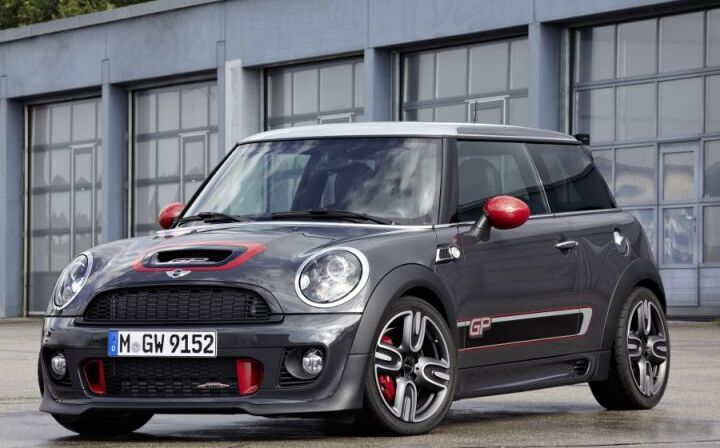
The Mini Hatch (R56) One D 1.6, produced between 2010 and 2012, represented the entry-level diesel offering within the second-generation Mini Hatchback range (R56). Positioned as a fuel-efficient and economical option, it catered to buyers seeking the iconic Mini style with lower running costs. This variant utilized a 1.6-liter turbocharged diesel engine producing 90 horsepower, paired exclusively with a six-speed manual transmission during its production run. It played a significant role in broadening the appeal of the new Mini, attracting a wider customer base beyond those prioritizing outright performance.
Technical Specifications
| Brand | Mini |
| Model | Hatch |
| Generation | Hatch (R56) |
| Type (Engine) | One D 1.6 (90 Hp) |
| Start of production | 2010 |
| End of production | 2012 |
| Powertrain Architecture | Internal Combustion engine |
| Body type | Hatchback |
| Seats | 4 |
| Doors | 3 |
| Fuel consumption (urban) | 4.7 l/100 km (50 US mpg, 60.1 UK mpg, 21.3 km/l) |
| Fuel consumption (extra urban) | 3.5 l/100 km (67.2 US mpg, 80.7 UK mpg, 28.6 km/l) |
| Fuel consumption (combined) | 3.9 l/100 km (60.3 US mpg, 72.4 UK mpg, 25.6 km/l) |
| CO2 emissions | 104 g/km |
| Fuel Type | Diesel |
| Acceleration 0 – 100 km/h | 11.5 sec |
| Acceleration 0 – 62 mph | 11.5 sec |
| Acceleration 0 – 60 mph | 10.9 sec |
| Maximum speed | 182 km/h (113.09 mph) |
| Emission standard | Euro 4 |
| Weight-to-power ratio | 12.1 kg/Hp, 82.6 Hp/tonne |
| Weight-to-torque ratio | 5.1 kg/Nm, 197.2 Nm/tonne |
| Power | 90 Hp @ 4000 rpm |
| Power per litre | 57.7 Hp/l |
| Torque | 215 Nm @ 1750 rpm (158.58 lb.-ft. @ 1750 rpm) |
| Engine layout | Front, Transverse |
| Engine displacement | 1560 cm3 (95.2 cu. in.) |
| Number of cylinders | 4 |
| Engine configuration | Inline |
| Cylinder Bore | 75 mm (2.95 in.) |
| Piston Stroke | 88.3 mm (3.48 in.) |
| Compression ratio | 18:1 |
| Number of valves per cylinder | 4 |
| Fuel injection system | Diesel Commonrail |
| Engine aspiration | Turbocharger, Intercooler |
| Engine oil capacity | 5.2 l (5.49 US qt | 4.58 UK qt) |
| Coolant capacity | 5.4 l (5.71 US qt | 4.75 UK qt) |
| Kerb Weight | 1090 kg (2403.04 lbs.) |
| Max. weight | 1540 kg (3395.12 lbs.) |
| Max load | 450 kg (992.08 lbs.) |
| Trunk (boot) space – minimum | 160 l (5.65 cu. ft.) |
| Trunk (boot) space – maximum | 680 l (24.01 cu. ft.) |
| Fuel tank capacity | 40 l (10.57 US gal | 8.8 UK gal) |
| Length | 3709 mm (146.02 in.) |
| Width | 1683 mm (66.26 in.) |
| Height | 1407 mm (55.39 in.) |
| Wheelbase | 2467 mm (97.13 in.) |
| Front track | 1459 mm (57.44 in.) |
| Rear track | 1467 mm (57.76 in.) |
| Ride height (ground clearance) | 138 mm (5.43 in.) |
| Minimum turning circle | 10.7 m (35.1 ft.) |
| Drivetrain Architecture | Front wheel drive |
| Number of gears | 6 |
| Gearbox type | Manual transmission |
| Front suspension | Independent, type McPherson with coil spring and anti-roll bar |
| Rear suspension | Independent coil spring |
| Front brakes | Ventilated discs |
| Rear brakes | Disc |
| Assisting systems | ABS (Anti-lock braking system) |
| Steering type | Steering rack and pinion |
| Tires size | 175/65 R15 84H |
| Wheel rims size | 5.5J x 15 |
Powertrain & Engine Architecture
The heart of the One D 1.6 was the PSA-derived 1.6-liter inline-four cylinder diesel engine, specifically the W16 engine family. Mini utilized various iterations of this engine, and the 90 horsepower version (often identified by engine codes such as W161A) featured a turbocharger with an intercooler to boost power and efficiency. The engine employed a common rail direct injection system, delivering fuel directly into the combustion chamber at extremely high pressure for optimized combustion. This system, coupled with four valves per cylinder, contributed to the engine’s relatively strong torque output of 215 Nm (158.58 lb-ft) available from just 1750 rpm. The six-speed manual transmission was chosen for its efficiency and driver engagement, offering precise gear changes and contributing to the car’s overall fuel economy. The transmission’s gear ratios were tuned to maximize the engine’s torque, providing good acceleration in everyday driving situations.
Driving Characteristics
The One D 1.6 offered a distinctly different driving experience compared to the more powerful Cooper and Cooper S models. While lacking the outright acceleration of its siblings, it provided ample torque for comfortable cruising and overtaking. The 0-60 mph time of around 10.9 seconds was respectable for a small diesel hatchback. The manual transmission allowed for good control over the engine’s power delivery, and the relatively light weight of the R56 chassis (around 1090 kg or 2403 lbs) helped to maintain a nimble feel. Compared to the petrol-powered One, the diesel offered significantly better fuel economy, making it an attractive option for drivers covering long distances. However, the diesel engine was noticeably louder and less refined than the petrol alternatives, and the turbo lag was more pronounced.
Equipment & Trim Levels
The One D 1.6 typically came equipped with a reasonable level of standard features, including air conditioning, power windows, central locking, and an audio system. Interior upholstery was generally cloth, with a focus on durability rather than luxury. Optional extras included alloy wheels, a panoramic sunroof, sport seats, and a more advanced infotainment system. The trim level was generally considered entry-level, but still retained the premium feel associated with the Mini brand. The dashboard layout was consistent with other R56 models, featuring the iconic central speedometer and a range of toggle switches.
Chassis & Braking
The R56 Mini Hatch featured a McPherson strut front suspension and a multi-link rear suspension, providing a good balance between ride comfort and handling. The One D 1.6 utilized a slightly softer suspension setup compared to the Cooper S, prioritizing comfort over outright sportiness. Braking duties were handled by ventilated discs at the front and solid discs at the rear, equipped with ABS (Anti-lock Braking System) as standard. The braking system was adequate for the car’s performance, providing confident stopping power in most conditions. The steering was precise and responsive, contributing to the car’s enjoyable handling characteristics.
Market Reception & Comparison
The One D 1.6 was generally well-received by critics for its fuel efficiency and low running costs. It was praised as a practical and economical option for urban driving. However, some reviewers criticized the engine’s lack of refinement and the noticeable turbo lag. Compared to the petrol-powered One, the diesel offered superior fuel economy but less engaging performance. Against competitors like the Ford Fiesta Econetic and Volkswagen Polo BlueMotion, the Mini One D 1.6 held its own in terms of fuel efficiency and style, but often came at a higher price point.
Legacy
The R56 Mini One D 1.6 has proven to be a relatively reliable vehicle, with the 1.6-liter diesel engine generally considered durable. However, like all diesel engines, it is susceptible to issues with the diesel particulate filter (DPF) if not driven on longer journeys regularly. In the used car market, these models remain popular due to their low running costs and iconic styling. They represent an affordable entry point into Mini ownership, appealing to buyers seeking a stylish and economical hatchback. The R56 generation, including the One D 1.6, played a crucial role in establishing the new Mini as a mainstream automotive brand, blending retro design with modern technology and practicality.