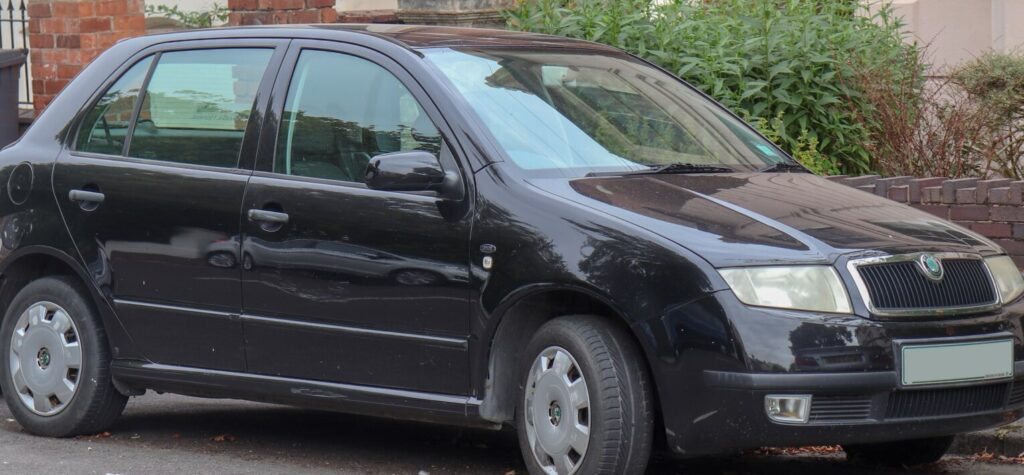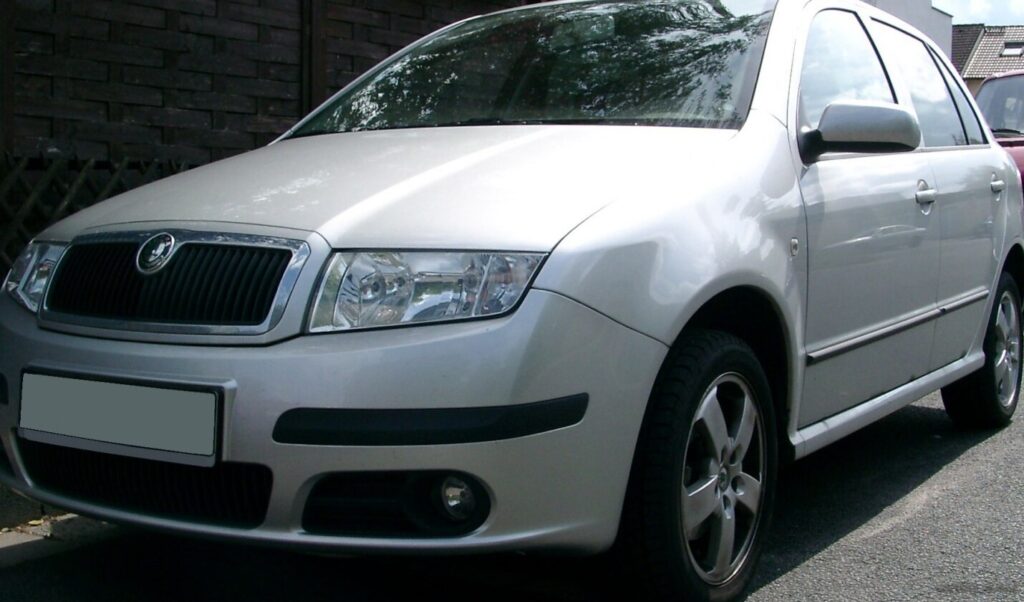
The Skoda Fabia I (6Y), particularly the facelifted version introduced in 2004, represented a significant step forward for the Czech automaker. Produced from July 2004 through December 2006, the 1.4 (75 hp) Automatic variant occupied an entry-level position within the Fabia range, aimed at buyers prioritizing affordability and ease of use over outright performance. This model was built on the Volkswagen Group’s PQ24 platform, also known as the A3/1HX0 platform, shared with the Volkswagen Polo and SEAT Ibiza. The facelift brought revised styling, improved interior materials, and updated engine options, solidifying the Fabia’s position as a competitive small hatchback in the European market.
Technical Specifications
| Brand | Skoda |
| Model | Fabia |
| Generation | Fabia I (6Y, facelift 2004) |
| Type (Engine) | 1.4 (75 Hp) Automatic |
| Start of production | July, 2004 |
| End of production | December, 2006 |
| Powertrain Architecture | Internal Combustion engine |
| Body type | Hatchback |
| Seats | 5 |
| Doors | 5 |
| Fuel consumption (urban) | 10.3 l/100 km (22.8 US mpg, 27.4 UK mpg, 9.7 km/l) |
| Fuel consumption (extra urban) | 6 l/100 km (39.2 US mpg, 47.1 UK mpg, 16.7 km/l) |
| Fuel consumption (combined) | 7.6 l/100 km (30.9 US mpg, 37.2 UK mpg, 13.2 km/l) |
| CO2 emissions | 182 g/km |
| Fuel Type | Petrol (Gasoline) |
| Acceleration 0 – 100 km/h | 17 sec |
| Acceleration 0 – 62 mph | 17 sec |
| Acceleration 0 – 60 mph | 16.2 sec |
| Maximum speed | 166 km/h (103.15 mph) |
| Emission standard | Euro 4 |
| Weight-to-power ratio | 14.6 kg/Hp, 68.5 Hp/tonne |
| Weight-to-torque ratio | 8.7 kg/Nm, 115.1 Nm/tonne |
| Power | 75 Hp @ 5000 rpm |
| Power per litre | 54 Hp/l |
| Torque | 126 Nm @ 3800 rpm (92.93 lb.-ft. @ 3800 rpm) |
| Engine layout | Front, Transverse |
| Engine Model/Code | BBY |
| Engine displacement | 1390 cm3 (84.82 cu. in.) |
| Number of cylinders | 4 |
| Engine configuration | Inline |
| Cylinder Bore | 76.5 mm (3.01 in.) |
| Piston Stroke | 75.6 mm (2.98 in.) |
| Compression ratio | 10.5:1 |
| Number of valves per cylinder | 4 |
| Fuel injection system | Multi-port manifold injection |
| Engine aspiration | Naturally aspirated engine |
| Valvetrain | DOHC |
| Engine oil capacity | 3.2 l (3.38 US qt | 2.82 UK qt) |
| Coolant | 5.5 l (5.81 US qt | 4.84 UK qt) |
| Kerb Weight | 1095 kg (2414.06 lbs.) |
| Max. weight | 1610 kg (3549.44 lbs.) |
| Max load | 515 kg (1135.38 lbs.) |
| Trunk (boot) space – minimum | 260 l (9.18 cu. ft.) |
| Trunk (boot) space – maximum | 1016 l (35.88 cu. ft.) |
| Fuel tank capacity | 45 l (11.89 US gal | 9.9 UK gal) |
| Max. roof load | 75 kg (165.35 lbs.) |
| Permitted trailer load with brakes (12%) | 800 kg (1763.7 lbs.) |
| Permitted trailer load without brakes | 450 kg (992.08 lbs.) |
| Permitted towbar download | 50 kg (110.23 lbs.) |
| Length | 3970 mm (156.3 in.) |
| Width | 1646 mm (64.8 in.) |
| Height | 1451 mm (57.13 in.) |
| Wheelbase | 2462 mm (96.93 in.) |
| Front track | 1435 mm (56.5 in.) |
| Rear (Back) track | 1424 mm (56.06 in.) |
| Ride height (ground clearance) | 120 mm (4.72 in.) |
| Drag coefficient (Cd) | 0.33 |
| Minimum turning circle (turning diameter) | 10.4 m (34.12 ft.) |
| Drivetrain Architecture | The Internal combustion engine (ICE) drives the front wheels of the vehicle. |
| Drive wheel | Front wheel drive |
| Number of gears and type of gearbox | 4 gears, automatic transmission |
| Front suspension | Independent, type McPherson with coil spring and anti-roll bar |
| Rear suspension | Trailing arm |
| Front brakes | Ventilated discs |
| Rear brakes | Drum |
| Assisting systems | ABS (Anti-lock braking system) |
| Steering type | Steering rack and pinion |
| Power steering | Electric Steering |
| Tires size | 155/80 R13; 165/70 R14; 185/60 R14 |
| Wheel rims size | 5J x 13; 5J x 16; 6J x 14 |
Powertrain & Engine Architecture
The 1.4-liter, 75 horsepower engine in the 2004-2006 Skoda Fabia facelift utilized the Volkswagen Group’s BBY engine code. This engine is a naturally aspirated, inline-four cylinder unit with a displacement of 1390cc. It features a multi-point fuel injection system and a double overhead camshaft (DOHC) valvetrain, operating with four valves per cylinder. The compression ratio is 10.5:1. The engine’s relatively simple design prioritized reliability and fuel efficiency over high performance. Paired with this engine was a four-speed automatic transmission, a common choice for drivers seeking convenience. This transmission, while providing smooth shifts, wasn’t known for its sportiness or efficiency compared to the available five-speed manual.
Driving Characteristics
The 1.4 Automatic Fabia offered a comfortable, if uninspiring, driving experience. Acceleration from 0-60 mph took around 16.2 seconds, and top speed was limited to 103 mph. The automatic transmission’s gear ratios were geared towards fuel economy rather than rapid acceleration. Compared to the more powerful 1.4 16V or the diesel variants, the 75 hp engine felt noticeably underpowered, especially when fully loaded or tackling inclines. The automatic transmission, while convenient, contributed to a less engaging driving experience than the manual gearbox. However, for urban commuting and relaxed driving, the 1.4 Automatic proved perfectly adequate.
Equipment & Trim Levels
The 1.4 Automatic trim typically included basic features such as power steering, central locking, electric front windows, and an adjustable steering column. Interior upholstery was generally cloth, with a functional, if somewhat basic, dashboard layout. Optional extras included air conditioning, alloy wheels, and a radio/CD player. The trim level sat at the lower end of the Fabia range, making it an attractive option for budget-conscious buyers. Higher trim levels offered more luxurious features like climate control, upgraded audio systems, and more sophisticated interior trim.
Chassis & Braking
The Fabia I featured a McPherson strut front suspension and a trailing arm rear suspension. The 1.4 Automatic variant, due to its lower power output and weight, typically utilized smaller brakes – ventilated discs at the front and drum brakes at the rear. ABS (Anti-lock Braking System) was standard equipment. The suspension setup prioritized ride comfort over sporty handling, providing a reasonably compliant ride on most road surfaces. Stabilizer bars were present, but their thickness was modest, reflecting the car’s intended use as a practical and affordable hatchback.
Market Reception & Comparison
The 1.4 Automatic Fabia was generally well-received as a practical and affordable city car. Critics noted its fuel efficiency and ease of driving, but also pointed out its lack of performance. Compared to the more powerful engine options, such as the 1.4 16V or the 1.9 TDI diesel, the 1.4 Automatic offered significantly less power and a slower driving experience. However, it was more affordable to purchase and maintain, and its fuel economy was competitive within its class. The automatic transmission was seen as a plus for drivers who preferred convenience over sporty driving dynamics.
Legacy
The Skoda Fabia I 1.4 Automatic has proven to be a relatively reliable vehicle, with the BBY engine known for its durability. Common issues are typically related to age and mileage, such as wear and tear on suspension components and potential oil leaks. On the used car market, these Fabias are often available at very affordable prices, making them attractive options for first-time car buyers or those seeking a cheap and reliable runabout. While not a performance icon, the 1.4 Automatic Fabia played a crucial role in establishing Skoda as a credible and value-for-money brand in the European automotive landscape.