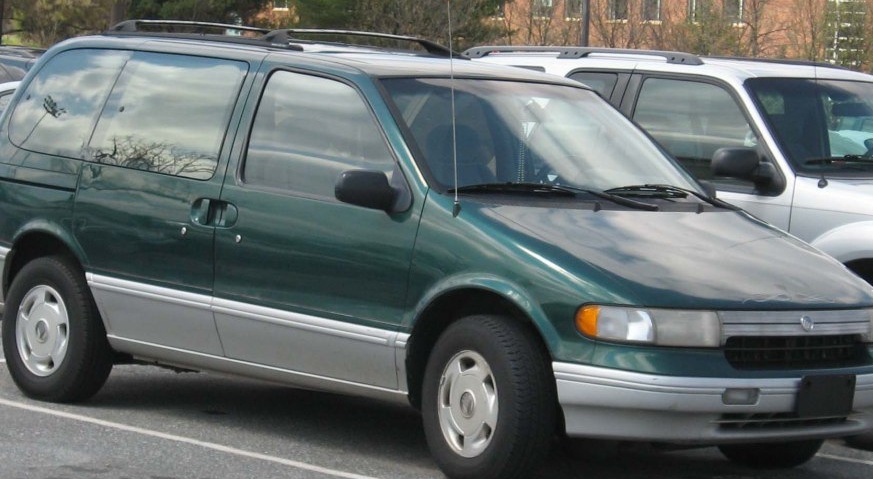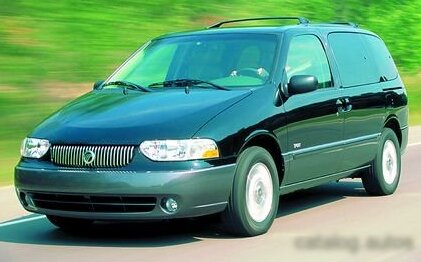
The Mercury Villager II, specifically the 3.3 V6 variant producing 173 horsepower, was a mainstay of the American minivan market from 1998 to 2002. Positioned as a practical and family-oriented vehicle, the Villager II represented Mercury’s entry into the increasingly competitive minivan segment. This generation, built on the Nissan-derived U62 platform (shared with the Nissan Quest), aimed to provide a comfortable and spacious alternative to offerings from Dodge, Chrysler, and Honda. The 3.3L V6 with a four-speed automatic transmission was a mid-range offering, balancing affordability with acceptable performance for typical family hauling duties.
Technical Specifications
| Brand | Mercury |
| Model | Villager |
| Generation | Villager II |
| Type (Engine) | 3.3 V6 (173 Hp) |
| Start of production | 1998 |
| End of production | 2002 |
| Powertrain Architecture | Internal Combustion engine |
| Body type | Minivan |
| Seats | 7 |
| Doors | 4 |
| Fuel consumption (urban) | 13.8 l/100 km (17 US mpg) |
| Fuel consumption (extra urban) | 9.8 l/100 km (24 US mpg) |
| Fuel consumption (combined) | 11.5 l/100 km (20.5 US mpg) |
| Fuel Type | Petrol (Gasoline) |
| Acceleration 0 – 100 km/h | 11 sec |
| Acceleration 0 – 62 mph | 11 sec |
| Acceleration 0 – 60 mph | 10.5 sec |
| Maximum speed | 176 km/h (109.36 mph) |
| Weight-to-power ratio | 10.5 kg/Hp |
| Weight-to-torque ratio | 6.7 kg/Nm |
| Power | 173 Hp @ 4800 rpm |
| Torque | 271 Nm @ 2800 rpm (199.88 lb.-ft. @ 2800 rpm) |
| Engine layout | Front, Transverse |
| Engine Model/Code | VG33E |
| Engine displacement | 3275 cm3 (199.85 cu. in.) |
| Number of cylinders | 6 |
| Engine configuration | V-engine |
| Cylinder Bore | 91.5 mm (3.6 in.) |
| Piston Stroke | 83 mm (3.27 in.) |
| Compression ratio | 9:1 |
| Number of valves per cylinder | 2 |
| Fuel injection system | Multi-port manifold injection |
| Engine aspiration | Naturally aspirated engine |
| Valvetrain | OHC |
| Engine oil capacity | 4 l (4.23 US qt | 3.52 UK qt) |
| Coolant capacity | 10.6 l (11.2 US qt | 9.33 UK qt) |
| Kerb Weight | 1815 kg (4001.39 lbs.) |
| Trunk (boot) space – minimum | 305 l (10.77 cu. ft.) |
| Trunk (boot) space – maximum | 3840 l (135.61 cu. ft.) |
| Fuel tank capacity | 76 l (20.08 US gal | 16.72 UK gal) |
| Length | 4950 mm (194.88 in.) |
| Width | 1900 mm (74.8 in.) |
| Height | 1780 mm (70.08 in.) |
| Wheelbase | 2850 mm (112.2 in.) |
| Front track | 1610 mm (63.39 in.) |
| Rear track | 1610 mm (63.39 in.) |
| Drivetrain Architecture | Front wheel drive |
| Number of gears | 4 |
| Gearbox type | Automatic transmission |
| Front suspension | Wishbone |
| Rear suspension | Leaf spring |
| Front brakes | Ventilated discs |
| Rear brakes | Drum |
| Assisting systems | ABS (Anti-lock braking system) |
| Steering type | Steering rack and pinion |
| Power steering | Hydraulic Steering |
| Tires size | 215/75 R15 |
Powertrain & Engine Architecture
The heart of the Villager II 3.3 was the VG33E V6 engine, a 3.3-liter, naturally aspirated powerplant. This engine, originally developed by Nissan, featured a 90-degree V-configuration, single overhead camshafts (SOHC) per cylinder bank, and two valves per cylinder. The multi-port fuel injection system delivered fuel directly into the intake ports, optimizing combustion. The 9:1 compression ratio was a compromise between performance and the ability to run on regular unleaded gasoline. Paired with this engine was a four-speed automatic transmission, designed for smooth and reliable operation. While not a performance-oriented transmission, it provided adequate gear ratios for everyday driving and highway cruising. The VG33E was known for its relative simplicity and durability, though it lacked the sophistication of some contemporary engines.
Driving Characteristics
The 173 horsepower and 199.88 lb-ft of torque produced by the 3.3L V6 were sufficient for moving the relatively heavy Villager II, but it wasn’t a particularly quick vehicle. Acceleration from 0-60 mph took around 10.5 seconds, and the engine felt somewhat strained when fully loaded with passengers and cargo. The four-speed automatic transmission contributed to this feeling, as it lacked the closer gear ratios of more modern transmissions. The transmission’s shift points were generally well-placed for comfortable cruising, but downshifts could be slow and hesitant. Compared to the higher-output engines offered in other minivans, the Villager II 3.3 felt underpowered, especially when merging onto highways or climbing hills. However, for drivers prioritizing fuel economy and a relaxed driving experience, the 3.3L V6 offered a reasonable compromise.
Equipment & Trim Levels
The 3.3L V6 engine was typically found on the base and mid-level trim packages of the Villager II. Standard features generally included air conditioning, power windows and locks, an AM/FM stereo, and cloth upholstery. Higher trim levels added features such as alloy wheels, a CD player, upgraded interior trim, and optional leather seating. A rear entertainment system was also available as an option, catering to families with children. The interior design was functional and straightforward, prioritizing practicality over luxury. The Villager II offered a spacious cabin with comfortable seating for seven passengers, and the flexible seating configurations allowed for a variety of cargo-carrying options.
Chassis & Braking
The Villager II utilized a front-wheel-drive layout with an independent wishbone suspension in the front and a leaf spring suspension in the rear. The leaf spring rear suspension was a cost-saving measure, and it resulted in a somewhat less refined ride compared to minivans with independent rear suspensions. The front brakes were ventilated discs, providing adequate stopping power, while the rear brakes were drums. Anti-lock brakes (ABS) were standard, enhancing safety in emergency braking situations. The steering was rack-and-pinion with hydraulic power assist, offering reasonably precise steering feel.
Market Reception & Comparison
The Mercury Villager II 3.3 V6 was generally well-received as a practical and affordable minivan. Critics praised its spacious interior, comfortable ride, and relatively smooth engine operation. However, the engine’s lack of power and the somewhat dated four-speed automatic transmission were common criticisms. Compared to competitors like the Dodge Caravan, Chrysler Town & Country, and Honda Odyssey, the Villager II offered a less sporty driving experience but a competitive price point. Fuel economy was average for the segment, with combined fuel consumption around 20.5 US mpg. Reliability was generally good, although some owners reported issues with the automatic transmission and the leaf spring rear suspension.
Legacy
The Mercury Villager II 3.3 V6, while not a standout performer, remains a reasonably reliable and affordable option in the used car market. The VG33E engine is known for its durability, and parts availability is generally good. However, potential buyers should be aware of the possibility of transmission issues and the less refined ride quality compared to more modern minivans. The Villager II represents a transitional period in minivan design, bridging the gap between older, more utilitarian models and the more sophisticated and feature-rich minivans of the 21st century. It continues to be appreciated by those seeking a practical and spacious vehicle for family transportation.