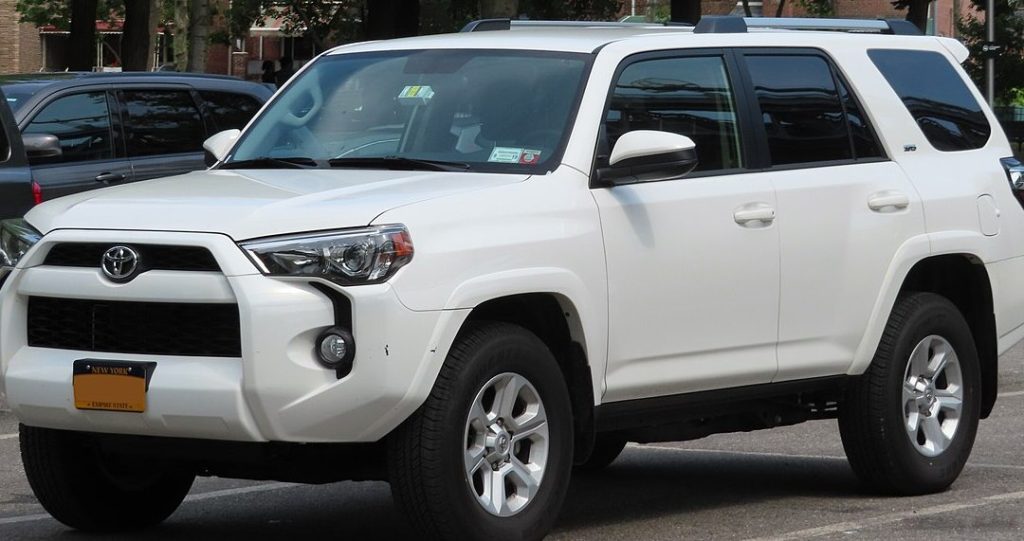
The Toyota 4Runner V, specifically the variant equipped with the 4.0-liter V6 engine (1GR-FE) producing 270 horsepower and paired with a five-speed automatic transmission and four-wheel drive, was a mainstay of Toyota’s mid-size SUV lineup from 2009 to 2013. Representing the fifth generation (often referred to as the 2009-2013 model years) of the 4Runner, this configuration occupied a central position within the range, offering a balance between capability, comfort, and price. It was positioned above the base, four-cylinder models and below the more luxurious and often better-equipped Limited trim levels.
Technical Specifications
| Brand | Toyota |
| Model | 4Runner |
| Generation | 4Runner V |
| Type (Engine) | 4.0 V6 24V (270 Hp) 4×4 Automatic |
| Start of production | 2009 |
| End of production | 2013 |
| Powertrain Architecture | Internal Combustion engine |
| Body type | SUV |
| Seats | 7 |
| Doors | 5 |
| Fuel consumption (urban) | 13.8 l/100 km (17 US mpg, 20.5 UK mpg, 7.2 km/l) |
| Fuel consumption (extra urban) | 10.6 l/100 km (22.2 US mpg, 26.6 UK mpg, 9.4 km/l) |
| Fuel consumption (combined) | 12.3 l/100 km (19.1 US mpg, 23 UK mpg, 8.1 km/l) |
| Fuel Type | Petrol (Gasoline) |
| Weight-to-power ratio | 7.9 kg/Hp, 127.4 Hp/tonne |
| Weight-to-torque ratio | 5.6 kg/Nm, 177.8 Nm/tonne |
| Power | 270 Hp @ 5600 rpm |
| Power per litre | 68.3 Hp/l |
| Torque | 377 Nm @ 4400 rpm (278.06 lb.-ft. @ 4400 rpm) |
| Engine layout | Front, Longitudinal |
| Engine Model/Code | 1GR-FE |
| Engine displacement | 3956 cm3 (241.41 cu. in.) |
| Number of cylinders | 6 |
| Engine configuration | V-engine |
| Cylinder Bore | 94 mm (3.7 in.) |
| Piston Stroke | 95 mm (3.74 in.) |
| Compression ratio | 10.4:1 |
| Number of valves per cylinder | 4 |
| Fuel injection system | Multi-port manifold injection |
| Engine aspiration | Naturally aspirated engine |
| Valvetrain | DOHC |
| Engine oil capacity | 6.2 l (6.55 US qt | 5.46 UK qt) |
| Coolant capacity | 10.5 l (11.1 US qt | 9.24 UK qt) |
| Kerb Weight | 2120 kg (4673.8 lbs.) |
| Max. weight | 2858 kg (6300.81 lbs.) |
| Max load | 738 kg (1627.01 lbs.) |
| Trunk (boot) space – minimum | 255 l (9.01 cu. ft.) |
| Trunk (boot) space – maximum | 2515 l (88.82 cu. ft.) |
| Fuel tank capacity | 90 l (23.78 US gal | 19.8 UK gal) |
| Permitted trailer load with brakes (12%) | 2268 kg (5000.08 lbs.) |
| Length | 4823 mm (189.88 in.) |
| Width | 1925 mm (75.79 in.) |
| Height | 1780-1816 mm (70.08 – 71.5 in.) |
| Wheelbase | 2789 mm (109.8 in.) |
| Front track | 1605 mm (63.19 in.) |
| Rear (Back) track | 1605 mm (63.19 in.) |
| Ride height (ground clearance) | 244 mm (9.61 in.) |
| Drag coefficient (Cd) | 0.36 |
| Minimum turning circle (turning diameter) | 11.4 m (37.4 ft.) |
| Approach angle | 25-33° |
| Departure angle | 24-26° |
| Drive wheel | All wheel drive (4×4) |
| Number of gears and type of gearbox | 5 gears, automatic transmission |
| Front suspension | Double wishbone |
| Rear suspension | Independent multi-link suspension |
| Front brakes | Ventilated discs |
| Rear brakes | Ventilated discs |
| Assisting systems | ABS (Anti-lock braking system) |
| Steering type | Steering rack and pinion |
| Power steering | Hydraulic Steering |
| Tires size | 265/70 R17; 245/60 R20 |
| Wheel rims size | 7J x 17; 7.5J x 17; 7.5J x 20 |
INTRODUCTION
The fifth-generation Toyota 4Runner, introduced in 2009, marked a significant departure from its body-on-frame predecessors. While retaining the rugged durability expected of a 4Runner, it incorporated more sophisticated features and a more comfortable ride. The 4.0-liter V6 engine, designated 1GR-FE, became the primary powerplant for the North American market, replacing the older 3.4-liter engine. This engine, coupled with the five-speed automatic transmission and a part-time four-wheel-drive system, provided a compelling combination of power, efficiency, and off-road capability. The 4Runner V trim, in particular, aimed to deliver a well-rounded package for families and individuals seeking a versatile SUV.
Powertrain & Engine Architecture
The 1GR-FE is a 3,956 cc (241.4 cu in) naturally aspirated V6 engine. It features a cast-iron block and aluminum cylinder heads, incorporating dual overhead camshafts (DOHC) and four valves per cylinder. The engine utilizes a multi-port fuel injection system, delivering fuel directly to the intake ports. This design, while not as advanced as direct injection, proved reliable and offered good performance. The five-speed automatic transmission (A750F) was chosen for its durability and ability to handle the engine’s torque output. This transmission featured overdrive and electronically controlled shifting. The 4Runner’s four-wheel-drive system allowed the driver to select between two-wheel drive, high-range four-wheel drive, and low-range four-wheel drive, enhancing its off-road prowess.
Driving Characteristics
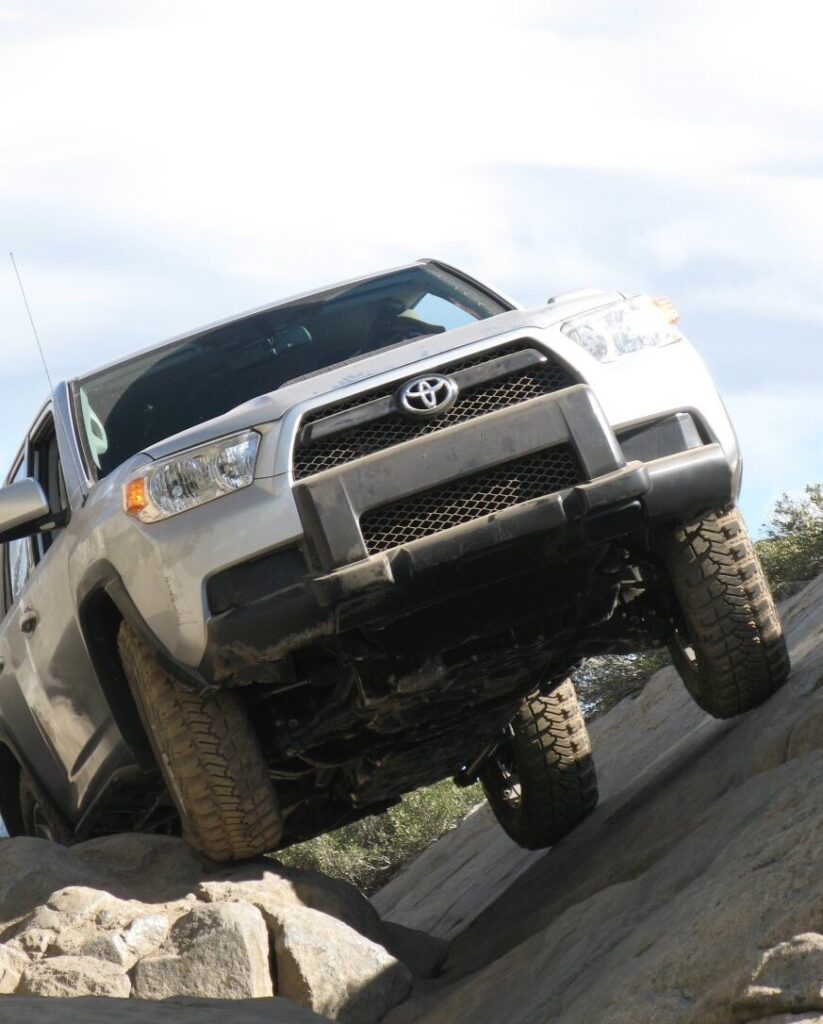
The 4Runner V 4.0L Automatic offered a comfortable and capable driving experience. While not a performance-oriented SUV, the 270 horsepower and 278 lb-ft of torque provided adequate acceleration for everyday driving and highway merging. The automatic transmission, while smooth, wasn’t particularly quick to downshift, resulting in a slightly less responsive feel compared to the available manual transmission. The gear ratios were tuned for a balance of fuel economy and towing capacity. Off-road, the 4Runner V excelled, thanks to its robust four-wheel-drive system, high ground clearance, and durable suspension. The vehicle felt stable and planted on various terrains, making it a popular choice for outdoor enthusiasts.
Equipment & Trim Levels
The 4Runner V trim typically included standard features such as air conditioning, power windows and locks, a CD player with auxiliary input, and cloth upholstery. Optional extras included a sunroof, leather upholstery, a navigation system, and a premium sound system. Safety features such as anti-lock brakes (ABS) and multiple airbags were standard. The interior design was functional and durable, prioritizing practicality over luxury. The 4Runner V offered a seven-passenger seating configuration, with a third-row seat that could be folded flat to increase cargo space.
Chassis & Braking
The 4Runner V utilized a body-on-frame construction, providing a robust and durable chassis. The front suspension consisted of a double wishbone setup, while the rear featured an independent multi-link suspension. This configuration offered a good balance of ride comfort and off-road capability. The braking system consisted of ventilated discs on all four wheels, providing adequate stopping power. The hydraulic power steering offered a responsive and precise steering feel.
Market Reception & Comparison
The 4Runner V 4.0L Automatic was generally well-received by critics and consumers alike. It was praised for its reliability, durability, and off-road capability. However, some reviewers noted that its fuel economy was relatively poor compared to newer crossover SUVs. Compared to the base four-cylinder models, the V6 offered significantly more power and a more refined driving experience. Compared to the Limited trim, the V offered a more affordable entry point into the 4Runner lineup, albeit with fewer luxury features. The 4Runner consistently outperformed competitors like the Nissan Pathfinder and Ford Explorer in terms of long-term reliability.
Legacy
The 1GR-FE engine, in particular, has earned a reputation for exceptional reliability and longevity. Many 4Runner V models equipped with this engine have surpassed 200,000 miles with minimal maintenance. On the used car market, these 4Runners hold their value remarkably well, due to their reputation for durability and off-road capability. The fifth-generation 4Runner, and the 4.0L V6 variant specifically, remains a popular choice for those seeking a rugged, reliable, and capable SUV.