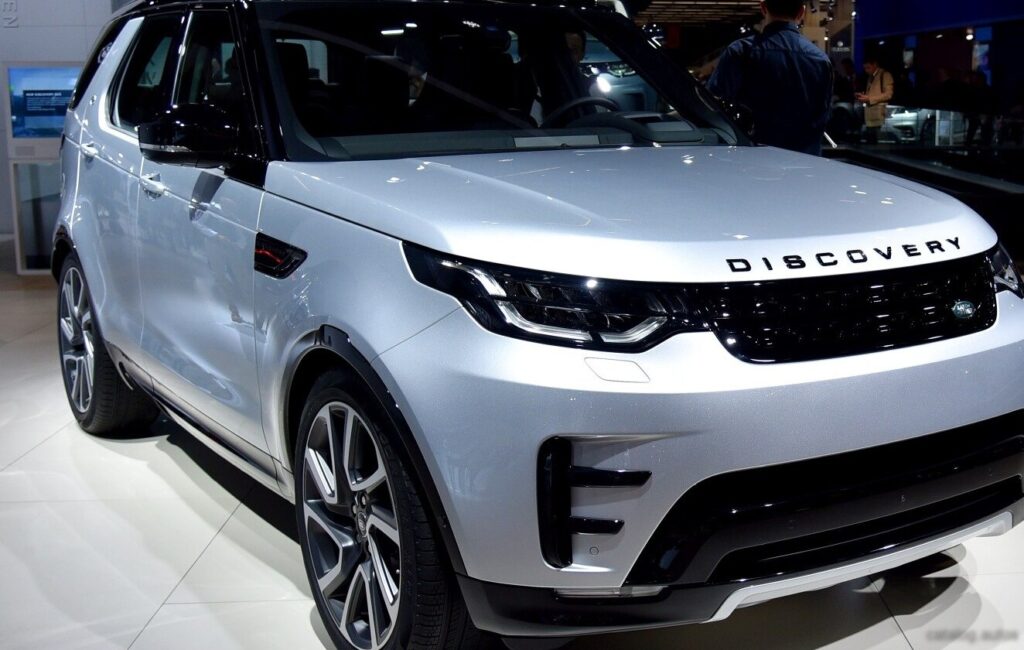
The Land Rover Discovery V, produced from 2017 to 2018, represented a significant evolution in the iconic Discovery lineage. This fifth generation moved away from the rugged, boxy aesthetic of its predecessors, adopting a more refined and aerodynamic design while retaining the model’s renowned off-road capability. The 3.0 TD V6 (258 Hp) 4WD Automatic variant occupied a sweet spot in the lineup, offering a compelling blend of performance, luxury, and practicality for buyers seeking a versatile premium SUV. It was positioned as a mid-range offering, bridging the gap between the entry-level Ingenium engines and the higher-performance SDV6 models.
Technical Specifications
| Brand | Land Rover |
| Model | Discovery |
| Generation | Discovery V |
| Type (Engine) | 3.0 TD V6 (258 Hp) 4WD Automatic |
| Start of production | 2017 |
| End of production | 2018 |
| Powertrain Architecture | Internal Combustion engine |
| Body type | SUV |
| Seats | 5 |
| Doors | 5 |
| Fuel consumption (urban) | 8.3 l/100 km (28.3 US mpg, 34 UK mpg, 12 km/l) |
| Fuel consumption (extra urban) | 6.5 l/100 km (36.2 US mpg, 43.5 UK mpg, 15.4 km/l) |
| Fuel consumption (combined) | 7.2 l/100 km (32.7 US mpg, 39.2 UK mpg, 13.9 km/l) |
| CO2 emissions | 189 g/km |
| Fuel Type | Diesel |
| Acceleration 0 – 100 km/h | 8.1 sec |
| Acceleration 0 – 62 mph | 8.1 sec |
| Acceleration 0 – 60 mph | 7.7 sec |
| Maximum speed | 209 km/h (129.87 mph) |
| Emission standard | Euro 5 |
| Weight-to-power ratio | 8.6 kg/Hp, 116.1 Hp/tonne |
| Weight-to-torque ratio | 3.7 kg/Nm, 269.9 Nm/tonne |
| Power | 258 Hp @ 3750 rpm |
| Power per litre | 86.2 Hp/l |
| Torque | 600 Nm @ 1750-2250 rpm (442.54 lb.-ft. @ 1750-2250 rpm) |
| Engine layout | Front, Longitudinal |
| Engine Model/Code | 306DT |
| Engine displacement | 2993 cm3 (182.64 cu. in.) |
| Number of cylinders | 6 |
| Engine configuration | V-engine |
| Cylinder Bore | 84 mm (3.31 in.) |
| Piston Stroke | 90 mm (3.54 in.) |
| Compression ratio | 16.1:1 |
| Number of valves per cylinder | 4 |
| Fuel injection system | Diesel Commonrail |
| Engine aspiration | BiTurbo, Intercooler |
| Engine oil capacity | 6 l (6.34 US qt | 5.28 UK qt) |
| Coolant | 9.4 l (9.93 US qt | 8.27 UK qt) |
| Kerb Weight | 2223 kg (4900.88 lbs.) |
| Trunk (boot) space – minimum | 1231 l (43.47 cu. ft.) |
| Trunk (boot) space – maximum | 2500 l (88.29 cu. ft.) |
| Fuel tank capacity | 85 l (22.45 US gal | 18.7 UK gal) |
| Permitted trailer load with brakes (12%) | 3500 kg (7716.18 lbs.) |
| Permitted trailer load without brakes | 750 kg (1653.47 lbs.) |
| Length | 4970 mm (195.67 in.) |
| Width with mirrors folded | 2073 mm (81.61 in.) |
| Width including mirrors | 2220 mm (87.4 in.) |
| Height | 1846 mm (72.68 in.) |
| Wheelbase | 2923 mm (115.08 in.) |
| Front track | 1692 mm (66.61 in.) |
| Rear (Back) track | 1686 mm (66.38 in.) |
| Front overhang | 872 mm (34.33 in.) |
| Rear overhang | 1175 mm (46.26 in.) |
| Ride height (ground clearance) | 220 mm (8.66 in.) |
| Drag coefficient (Cd) | 0.35 |
| Minimum turning circle (turning diameter) | 12.7 m (41.67 ft.) |
| Approach angle | 28.5° |
| Departure angle | 27.0° |
| Ramp-over (brakeover) angle | 22.5° |
| Climb angle | 45° |
| Wading depth | 850 mm (33.46 in.) |
| Drivetrain Architecture | The Internal combustion engine (ICE) drives permanently the four wheels of the vehicle. |
| Drive wheel | All wheel drive (4×4) |
| Number of gears and type of gearbox | 8 gears, automatic transmission |
| Front suspension | Independent multi-link suspension, Independent coil spring |
| Rear suspension | Independent multi-link suspension |
| Front brakes | Ventilated discs, 360 mm |
| Rear brakes | Ventilated discs, 350 mm |
| Assisting systems | ABS (Anti-lock braking system) |
| Steering type | Steering rack and pinion |
| Power steering | Electric Steering |
| Tires size | 235/65 R19; 255/60 R19; 255/55 R20; 275/45 R21; 285/40 R22 |
| Wheel rims size | 7.5J x 19; 8.5J x 20; 9.5J x 21; 9.5J x 22 |
INTRODUCTION
The Land Rover Discovery V 3.0 TD V6 (258 Hp) 4WD Automatic, produced between 2017 and 2018, was a key variant within the fifth-generation Discovery range. Built on the Premium Lightweight Architecture (PLA) platform, also used by the Range Rover and Range Rover Sport, this iteration of the Discovery aimed to balance off-road prowess with on-road refinement. The 3.0-liter turbodiesel engine, paired with an eight-speed automatic transmission, provided a comfortable and capable driving experience, making it a popular choice for families and those requiring a versatile SUV. This model year marked a transition for the Discovery, moving towards a more luxurious and technologically advanced vehicle.
Powertrain & Engine Architecture
At the heart of the Discovery V 3.0 TD V6 was the 306DT engine, a 2993cc V6 turbodiesel. This engine utilized a sophisticated common-rail direct injection system and a sequential twin-turbocharger setup. The twin-turbo configuration allowed for both rapid response at low engine speeds and sustained power output at higher RPMs. The engine produced 258 horsepower at 3750 rpm and a substantial 600 Nm (442.54 lb-ft) of torque between 1750 and 2250 rpm. The eight-speed automatic transmission, sourced from ZF, was known for its smooth and quick shifts. It was programmed to prioritize fuel efficiency while still providing ample power when needed. The transmission also featured a Sport mode for more aggressive shifting. The engine also incorporated start/stop technology and a particulate filter to reduce emissions, meeting Euro 5 standards.
Driving Characteristics
The 3.0 TD V6 Automatic offered a relaxed and refined driving experience. While not as overtly sporty as some of its competitors, the engine’s ample torque provided strong acceleration, especially in the mid-range. The eight-speed transmission helped to keep the engine in its optimal power band, resulting in effortless cruising. Compared to the lower-powered Ingenium engines, the 3.0 TD V6 offered significantly more performance, particularly when fully loaded or towing. Against the higher-output SDV6 models, it provided a more balanced experience, sacrificing some outright speed for improved fuel economy and a more manageable driving experience. The automatic transmission, while smooth, wasn’t as engaging as the available manual options, but it suited the Discovery’s overall character as a comfortable and capable family SUV.
Equipment & Trim Levels
The 3.0 TD V6 Automatic typically came well-equipped, reflecting the Discovery’s premium positioning. Standard features included leather upholstery, dual-zone climate control, a touchscreen infotainment system with navigation, and a suite of safety features such as autonomous emergency braking and lane departure warning. Higher trim levels offered additional luxuries such as heated and ventilated seats, a panoramic sunroof, and a premium audio system. Optional extras included adaptive cruise control, a head-up display, and a rear-seat entertainment system. Interior trim options varied, with choices ranging from wood veneers to aluminum accents.
Chassis & Braking
The Discovery V featured an all-independent suspension system, utilizing multi-link setups at both the front and rear. This provided a comfortable ride quality, even on rough terrain. Air suspension was available as an option, further enhancing ride comfort and providing adjustable ride height for improved off-road capability. The braking system consisted of ventilated discs all around, with larger discs at the front. Anti-lock brakes (ABS) and electronic stability control were standard features. The Discovery V’s chassis was designed to provide a balance between on-road handling and off-road articulation.
Market Reception & Comparison
The Land Rover Discovery V 3.0 TD V6 Automatic was generally well-received by automotive critics. It was praised for its comfortable ride, spacious interior, and capable off-road performance. The engine was considered a good compromise between power and fuel economy. However, some critics noted that the infotainment system could be complex to use and that the Discovery’s size could make it challenging to maneuver in tight urban environments. Compared to rivals such as the Audi Q7 and BMW X5, the Discovery offered a more rugged and adventurous character. Fuel economy figures were competitive for its class, averaging around 32.7 US mpg in combined driving. Reliability was generally good, although some owners reported minor issues with the infotainment system.
Legacy
The Land Rover Discovery V 3.0 TD V6 Automatic has proven to be a relatively reliable and durable vehicle. The 306DT engine is known for its longevity, provided it is properly maintained. In the used car market, these Discoveries hold their value reasonably well, reflecting their reputation for quality and capability. Common maintenance items include regular oil changes, filter replacements, and inspection of the air suspension system (if equipped). While the fifth-generation Discovery represented a departure from the model’s traditional image, the 3.0 TD V6 variant remains a popular choice for buyers seeking a versatile and capable premium SUV.