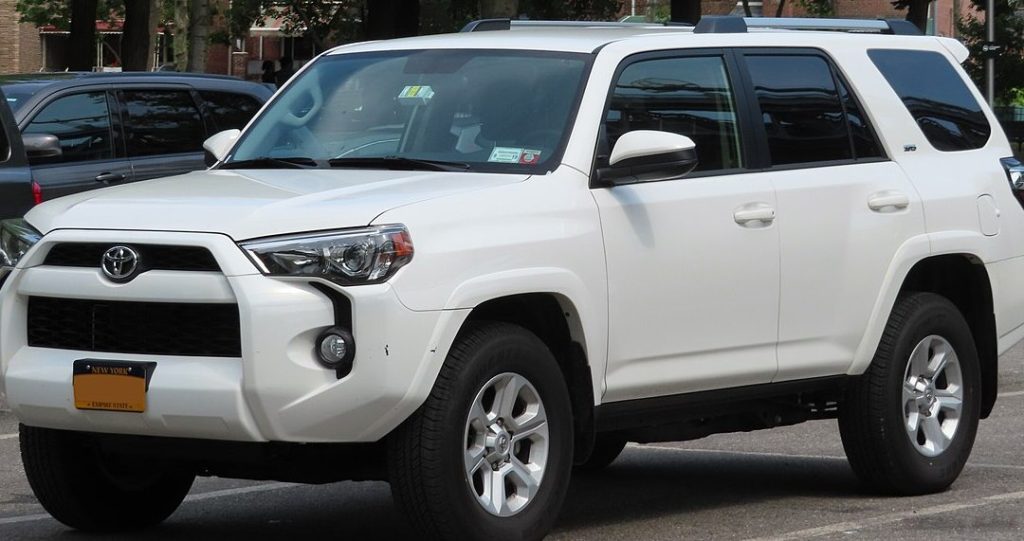
The Toyota 4Runner V, specifically equipped with the 4.0-liter V6 24V engine producing 270 horsepower and paired with a 5-speed automatic transmission, was a mainstay of Toyota’s mid-size SUV lineup from 2009 to 2013. This variant represented a balance between capability and comfort within the fifth generation (N280) 4Runner series, appealing to buyers seeking a robust SUV with everyday usability. It occupied a middle ground in the 4Runner range, positioned above the base model but below the more luxurious and off-road focused trims like the Trail Edition or Limited.
Technical Specifications
| Brand | Toyota |
| Model | 4Runner |
| Generation | 4Runner V |
| Type (Engine) | 4.0 V6 24V (270 Hp) Automatic |
| Start of production | 2009 |
| End of production | 2013 |
| Powertrain Architecture | Internal Combustion engine |
| Body type | SUV |
| Seats | 7 |
| Doors | 5 |
| Fuel consumption (urban) | 13.8 l/100 km (17 US mpg, 20.5 UK mpg, 7.2 km/l) |
| Fuel consumption (extra urban) | 10.2 l/100 km (23.1 US mpg, 27.7 UK mpg, 9.8 km/l) |
| Fuel consumption (combined) | 12.3 l/100 km (19.1 US mpg, 23 UK mpg, 8.1 km/l) |
| Fuel Type | Petrol (Gasoline) |
| Weight-to-power ratio | 7.4 kg/Hp, 135.3 Hp/tonne |
| Weight-to-torque ratio | 5.3 kg/Nm, 188.9 Nm/tonne |
| Power | 270 Hp @ 5600 rpm |
| Power per litre | 68.3 Hp/l |
| Torque | 377 Nm @ 4400 rpm (278.06 lb.-ft. @ 4400 rpm) |
| Engine layout | Front, Longitudinal |
| Engine Model/Code | 1GR-FE |
| Engine displacement | 3956 cm3 (241.41 cu. in.) |
| Number of cylinders | 6 |
| Engine configuration | V-engine |
| Cylinder Bore | 94 mm (3.7 in.) |
| Piston Stroke | 95 mm (3.74 in.) |
| Compression ratio | 10.4:1 |
| Number of valves per cylinder | 4 |
| Fuel injection system | Multi-port manifold injection |
| Engine aspiration | Naturally aspirated engine |
| Valvetrain | DOHC |
| Engine oil capacity | 6.2 l (6.55 US qt | 5.46 UK qt) |
| Coolant | 10.5 l (11.1 US qt | 9.24 UK qt) |
| Kerb Weight | 1996 kg (4400.43 lbs.) |
| Max. weight | 2766 kg (6097.99 lbs.) |
| Max load | 770 kg (1697.56 lbs.) |
| Trunk (boot) space – minimum | 255 l (9.01 cu. ft.) |
| Trunk (boot) space – maximum | 2515 l (88.82 cu. ft.) |
| Fuel tank capacity | 90 l (23.78 US gal | 19.8 UK gal) |
| Permitted trailer load with brakes (12%) | 2268 kg (5000.08 lbs.) |
| Length | 4823 mm (189.88 in.) |
| Width | 1925 mm (75.79 in.) |
| Height | 1780-1816 mm (70.08 – 71.5 in.) |
| Wheelbase | 2789 mm (109.8 in.) |
| Front track | 1605 mm (63.19 in.) |
| Rear (Back) track | 1605 mm (63.19 in.) |
| Ride height (ground clearance) | 229 mm (9.02 in.) |
| Drag coefficient (Cd) | 0.36 |
| Minimum turning circle (turning diameter) | 11.4 m (37.4 ft.) |
| Approach angle | 24° |
| Departure angle | 24° |
| Drivetrain Architecture | Rear wheel drive |
| Number of gears and type of gearbox | 5 gears, automatic transmission |
| Front suspension | Double wishbone |
| Rear suspension | Independent multi-link suspension |
| Front brakes | Ventilated discs |
| Rear brakes | Ventilated discs |
| Assisting systems | ABS (Anti-lock braking system) |
| Steering type | Steering rack and pinion |
| Power steering | Hydraulic Steering |
| Tires size | 265/70 R17; 245/60 R20 |
| Wheel rims size | 7J x 17; 7.5J x 17; 7.5J x 20 |
INTRODUCTION
The 2009-2013 Toyota 4Runner V, powered by the 4.0-liter V6 and automatic transmission, was a significant iteration of Toyota’s long-running SUV. Built on the robust 1HX0 platform (also known as the N280 platform, shared with the Lexus GX), this generation moved away from the body-on-frame construction of earlier 4Runners, adopting a more modern and refined approach. The “V” designation denoted a specific trim level, offering a balance of features and affordability. This model was primarily sold in North America, where the demand for capable, family-oriented SUVs remained strong. It was designed to appeal to buyers who needed space, reliability, and a degree of off-road capability without the higher price tag of more luxurious trims.
Powertrain & Engine Architecture
The heart of the 4Runner V was the 1GR-FE 4.0-liter V6 engine. This engine is a naturally aspirated, dual overhead camshaft (DOHC) design with four valves per cylinder. It utilizes a multi-port fuel injection system for precise fuel delivery. The 1GR-FE is known for its durability and relatively simple design, contributing to its long-term reliability. The engine produces 270 horsepower at 5600 rpm and 278 lb-ft of torque at 4400 rpm. This power is delivered through a 5-speed automatic transmission, which was chosen for its smooth operation and ease of use. While not the most technologically advanced transmission available at the time, it was well-suited to the engine’s characteristics and the 4Runner’s intended use. The transmission features overdrive for improved highway fuel economy.
Driving Characteristics
The 4Runner V with the 4.0L V6 and automatic transmission offered a comfortable and capable driving experience. Acceleration was adequate for everyday driving, but not particularly sporty. The automatic transmission, while smooth, could sometimes feel hesitant during quick acceleration or when attempting to pass on the highway. Compared to the available manual transmission, the automatic resulted in a slight decrease in fuel economy and a less engaging driving experience. However, it provided greater convenience for many drivers, especially in urban environments. The gear ratios were tuned for a balance of low-end torque for off-roading and reasonable highway cruising. The rear-wheel-drive configuration, standard on the 4Runner V, provided a more traditional SUV feel, while four-wheel drive was available as an option.
Equipment & Trim Levels
The 4Runner V trim typically included standard features such as air conditioning, power windows and locks, a CD player with auxiliary input, and cloth upholstery. Higher-end features like leather seats, a sunroof, and a premium sound system were often available as optional extras. Safety features included anti-lock brakes (ABS) and multiple airbags. The interior design was functional and durable, prioritizing practicality over luxury. The 4Runner V offered a spacious cabin with seating for up to seven passengers, depending on the configuration. The rear seats could be folded down to create additional cargo space.
Chassis & Braking
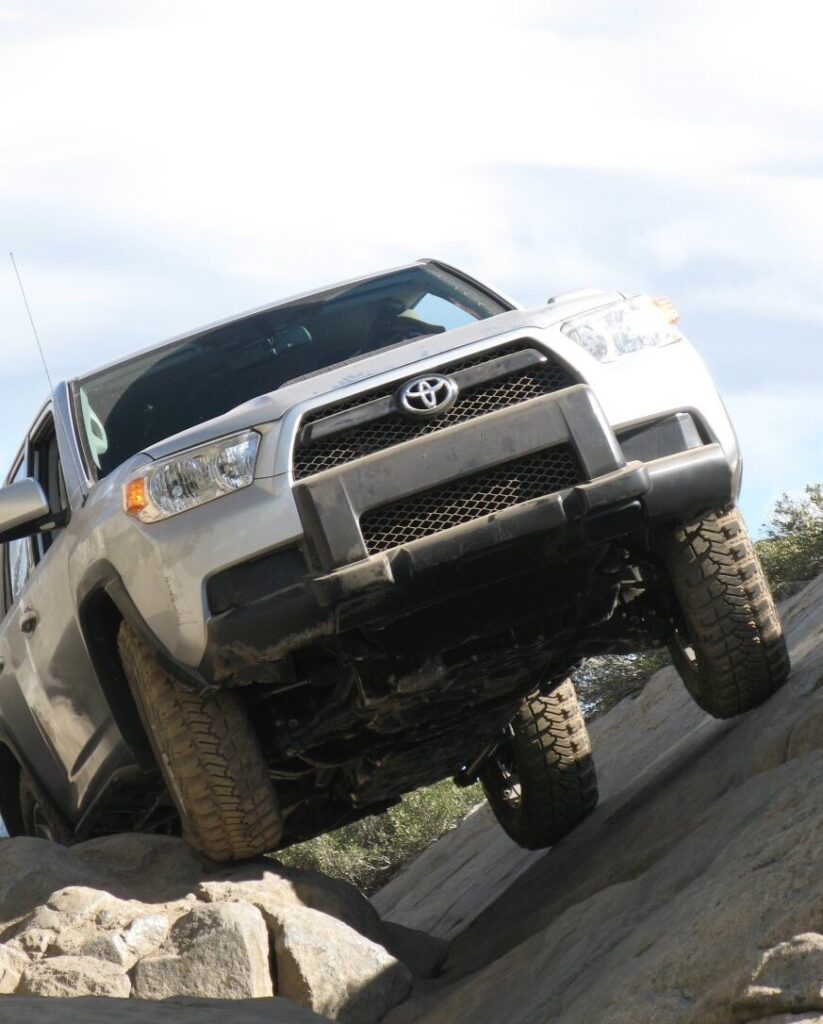
The 4Runner V featured a robust body-on-frame construction, providing a solid and durable platform. The front suspension utilized a double wishbone design, while the rear suspension employed an independent multi-link setup. This suspension configuration provided a comfortable ride and good handling characteristics. Braking duties were handled by ventilated disc brakes on all four wheels, providing adequate stopping power. The ABS system helped to maintain control during emergency braking situations. The 4Runner V’s relatively high ground clearance (9.02 inches) allowed it to tackle moderate off-road terrain with ease.
Market Reception & Comparison
The 4Runner V was generally well-received by critics and consumers alike. It was praised for its reliability, durability, and spacious interior. However, some reviewers noted that the fuel economy was relatively poor compared to other SUVs in its class. Compared to the 4Runner SR5, the V trim offered a slightly more refined interior and additional features. The Trail Edition, geared towards more serious off-road enthusiasts, offered more aggressive styling and enhanced off-road capabilities, but at a higher price point. The Limited trim provided a more luxurious experience with features like leather seats and a premium sound system.
Legacy
The 2009-2013 Toyota 4Runner V, particularly the 4.0L V6/automatic combination, has proven to be a remarkably reliable vehicle. These models continue to hold their value well in the used car market, a testament to their durability and Toyota’s reputation for quality. The 1GR-FE engine is known for its longevity, and with proper maintenance, can easily exceed 200,000 miles. While the automatic transmission is generally reliable, it’s important to ensure that it has been regularly serviced. Today, these 4Runners are popular choices for those seeking a dependable and capable SUV for family adventures or everyday commuting. Their blend of practicality, reliability, and off-road capability ensures their continued presence on roads and trails for years to come.