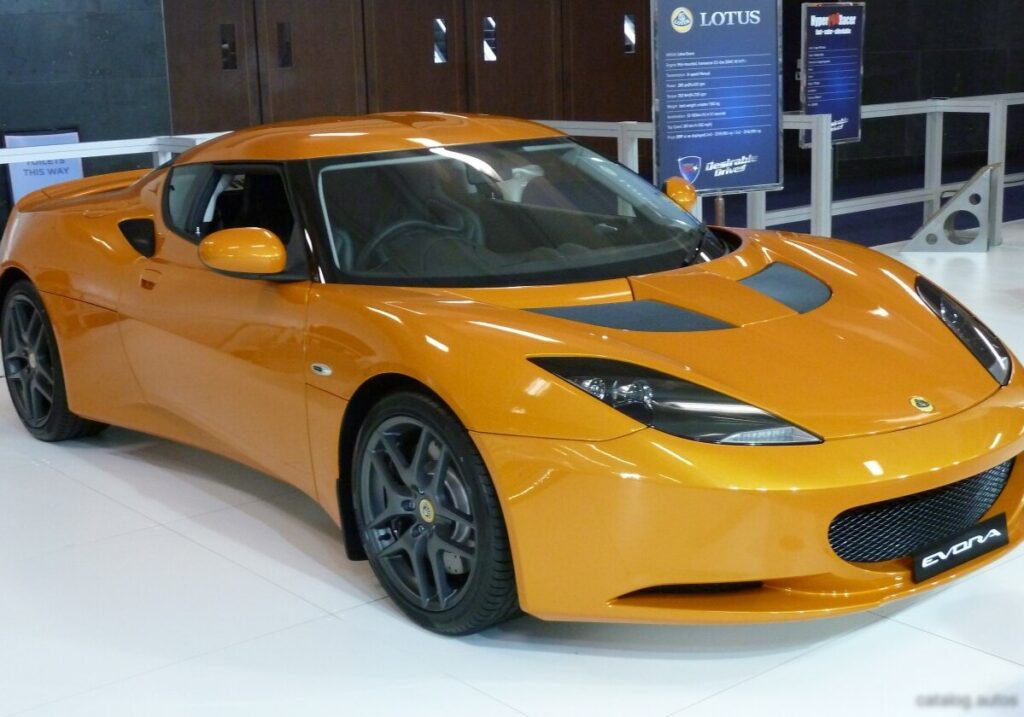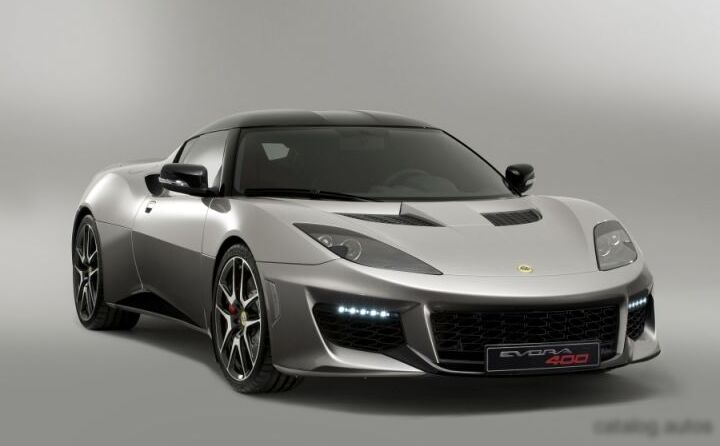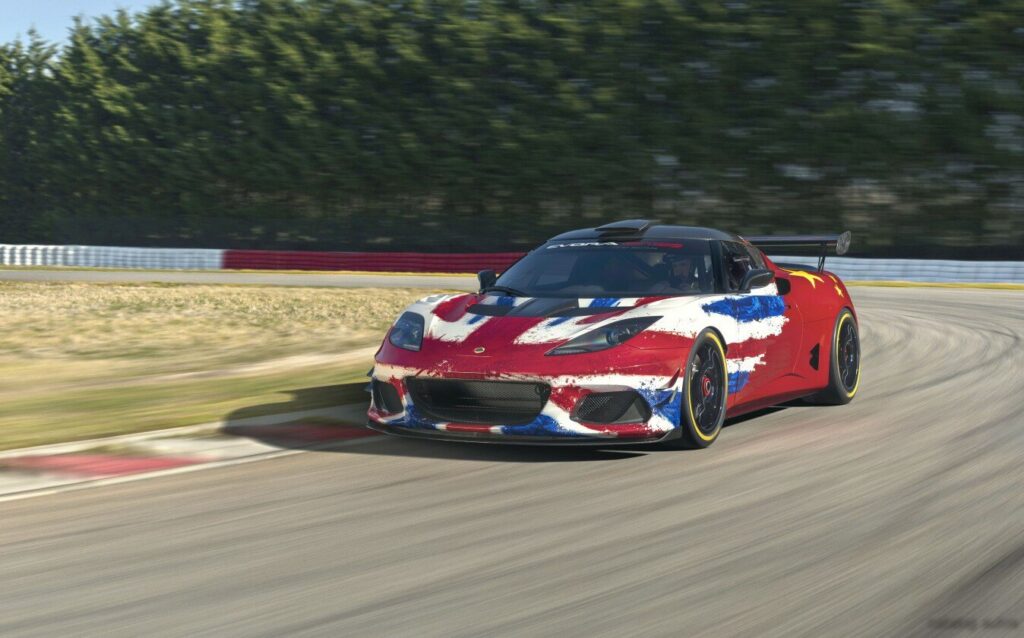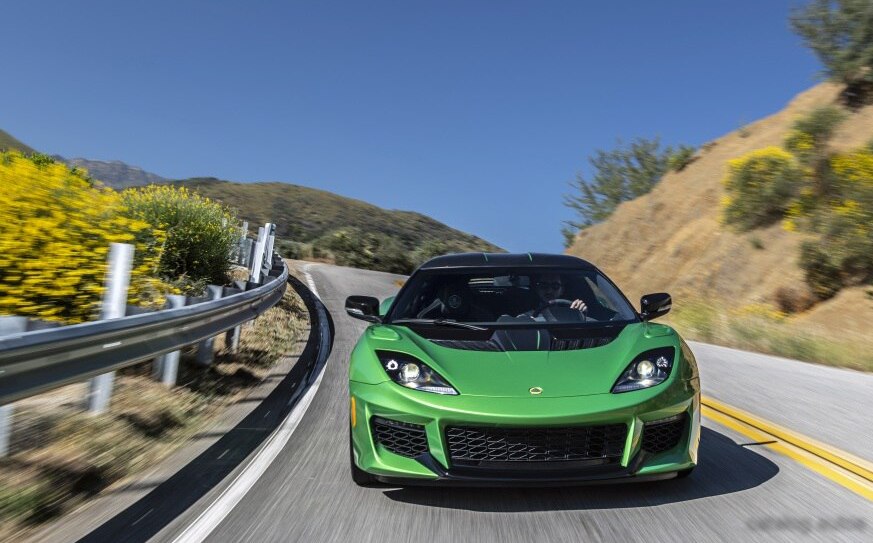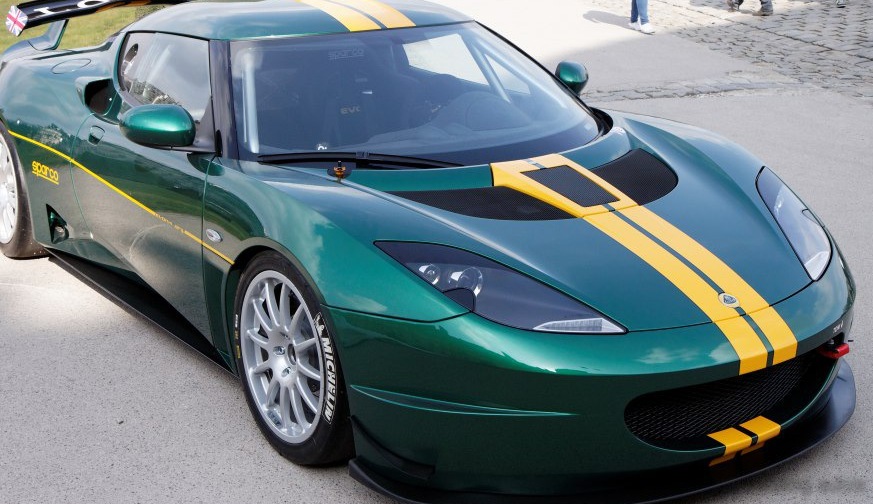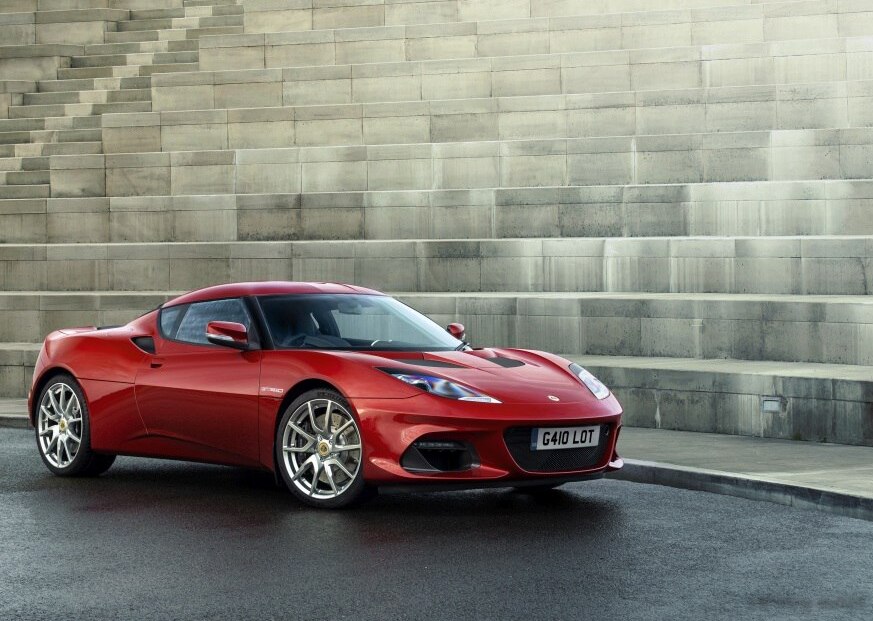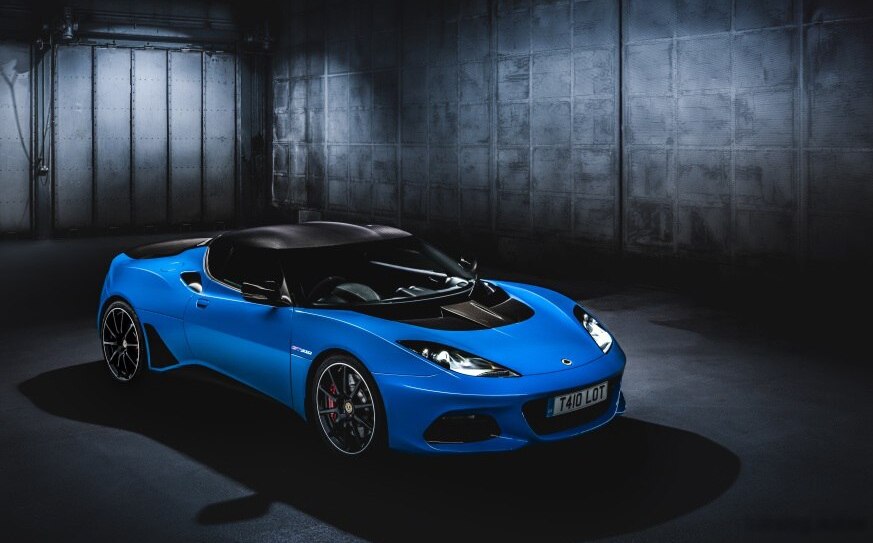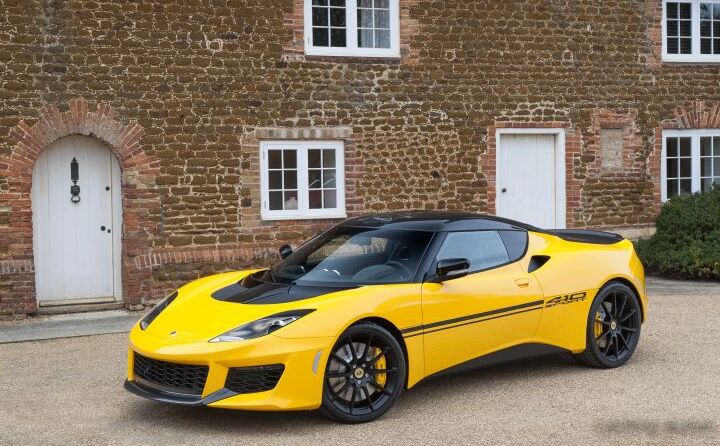
The Lotus Evora Sport 410, produced between June 2016 and August 2018, represents a focused, high-performance iteration of the Evora coupe. Positioned as the most extreme road-going version of the Evora at the time of its release, the Sport 410 aimed to deliver a raw, engaging driving experience, staying true to Lotus’s core principles of lightweight construction and precise handling. It served as a bridge between the standard Evora and the even more track-focused Evora GT4 racing car. The Sport 410 was primarily sold in European and Asian markets, with limited availability in North America, appealing to enthusiasts seeking a visceral sports car experience.
| Brand | Lotus |
| Model | Evora |
| Generation | Evora Sport 410 |
| Type (Engine) | 3.5 V6 (410 Hp) |
| Start of production | June, 2016 |
| End of production | August, 2018 |
| Powertrain Architecture | Internal Combustion engine |
| Body type | Coupe |
| Seats | 2 |
| Doors | 2 |
| Fuel consumption (urban) | 13.6 l/100 km (17.3 US mpg) |
| Fuel consumption (extra urban) | 7.3 l/100 km (32.2 US mpg) |
| Fuel consumption (combined) | 9.7 l/100 km (24.2 US mpg) |
| CO2 emissions | 225 g/km |
| Fuel Type | Petrol (Gasoline) |
| Acceleration 0 – 100 km/h | 4.2 sec |
| Acceleration 0 – 62 mph | 4.2 sec |
| Acceleration 0 – 60 mph | 4.0 sec |
| Maximum speed | 300 km/h (186.41 mph) |
| Weight-to-power ratio | 3.2 kg/Hp |
| Weight-to-torque ratio | 3.2 kg/Nm |
| Power | 410 Hp @ 7000 rpm |
| Torque | 410 Nm @ 3500 rpm (302.4 lb.-ft. @ 3500 rpm) |
| Engine layout | Middle, Transverse |
| Engine Model/Code | 2GR-FE |
| Engine displacement | 3456 cm3 (210.9 cu. in.) |
| Number of cylinders | 6 |
| Engine configuration | V-engine |
| Number of valves per cylinder | 4 |
| Engine oil capacity | 5.75 l (6.08 US qt) |
| Coolant capacity | 5.5 l (5.81 US qt) |
| Kerb Weight | 1325 kg (2921.12 lbs) |
| Fuel tank capacity | 60 l (15.85 US gal) |
| Drivetrain Architecture | Rear wheel drive |
| Number of gears | 6 |
| Gearbox type | Manual transmission |
| Front suspension | Double wishbone |
| Rear suspension | Double wishbone |
| Front brakes | Ventilated discs |
| Rear brakes | Ventilated discs |
| Assisting systems | ABS (Anti-lock braking system) |
| Steering type | Steering rack and pinion |
| Power steering | Hydraulic Steering |
| Tires size | 235/35 R19; 285/30 R20 |
| Wheel rims size | 19; 20 |
Powertrain & Engine Architecture
The heart of the Evora Sport 410 is the Toyota-sourced 2GR-FE 3.5-liter V6 engine. This naturally aspirated powerplant, known for its reliability and responsiveness, produces 410 horsepower at 7,000 rpm and 302.4 lb-ft of torque at 3,500 rpm. The engine features a dual VVT-i (Variable Valve Timing-intelligent) system, optimizing valve timing for improved performance and efficiency across the rev range. Fuel delivery is handled by electronic fuel injection. The engine is transversely mounted behind the driver, contributing to the car’s balanced handling characteristics. The Sport 410 exclusively came with a six-speed manual transmission, a deliberate choice by Lotus to enhance driver engagement. This transmission is known for its precise shifts and relatively short throw.
Driving Characteristics
The combination of the 410 hp engine and the six-speed manual gearbox results in exhilarating performance. The car accelerates from 0 to 60 mph in approximately 4.0 seconds and reaches a top speed of 186 mph. The manual transmission allows for complete control over the engine’s power, making it a rewarding experience for skilled drivers. The gear ratios are well-matched to the engine’s torque curve, providing strong acceleration in all gears. Compared to the standard Evora, the Sport 410 feels significantly more responsive and agile, thanks to its reduced weight and more focused suspension setup. While the standard Evora offered an automatic transmission option, the Sport 410 intentionally omitted this to maintain its pure sports car character. The lack of turbocharging or supercharging means the power delivery is linear and predictable, unlike some of its turbocharged competitors.
Equipment & Trim Levels
The Sport 410 was relatively sparsely equipped, adhering to Lotus’s philosophy of prioritizing performance over luxury. Standard features included lightweight composite body panels, a minimalist interior with sport seats, and a leather-wrapped steering wheel. Air conditioning and an infotainment system were typically included, but options were limited. The interior focused on functionality and driver involvement, with a clear and concise instrument cluster. Available options included upgraded audio systems and different interior trim materials. The emphasis was on creating a driver-focused environment, minimizing distractions and maximizing the connection between the driver and the car.
Chassis & Braking
The Evora Sport 410 utilizes a lightweight aluminum chassis, a hallmark of Lotus engineering. The suspension consists of double wishbones at both the front and rear, providing excellent handling and ride quality. The suspension was specifically tuned for the Sport 410, with stiffer springs and dampers compared to the standard Evora. Braking duties are handled by ventilated discs at all four corners, providing ample stopping power. The car is equipped with an ABS (Anti-lock Braking System) to enhance safety. The lightweight construction and well-tuned suspension contribute to the car’s exceptional cornering ability and precise steering feel.
Market Reception & Comparison
The Evora Sport 410 was generally well-received by automotive critics, who praised its engaging driving experience, responsive engine, and precise handling. It was often compared to other high-performance sports cars, such as the Porsche 911 and the Chevrolet Corvette. While the Sport 410 offered less outright luxury than some of its competitors, it excelled in providing a raw, visceral driving experience. Fuel economy was reasonable for a high-performance sports car, averaging around 24.2 US mpg in combined driving. Reliability was generally good, benefiting from the Toyota-sourced engine. However, Lotus’s relatively small production volumes and limited dealer network meant that maintenance and repairs could sometimes be more challenging than with more mainstream brands.
Legacy
The Evora Sport 410 represents a high point in Lotus’s modern history, showcasing the brand’s commitment to lightweight construction and driver engagement. The 2GR-FE V6 engine has proven to be remarkably reliable, and the manual transmission is highly regarded by enthusiasts. In the used car market, the Sport 410 commands a premium over the standard Evora, reflecting its limited production numbers and focused performance. It remains a sought-after car for drivers who prioritize driving experience over all else, and is considered a modern classic among sports car aficionados. The Sport 410’s influence can be seen in subsequent Lotus models, which continue to emphasize lightweight construction and precise handling.