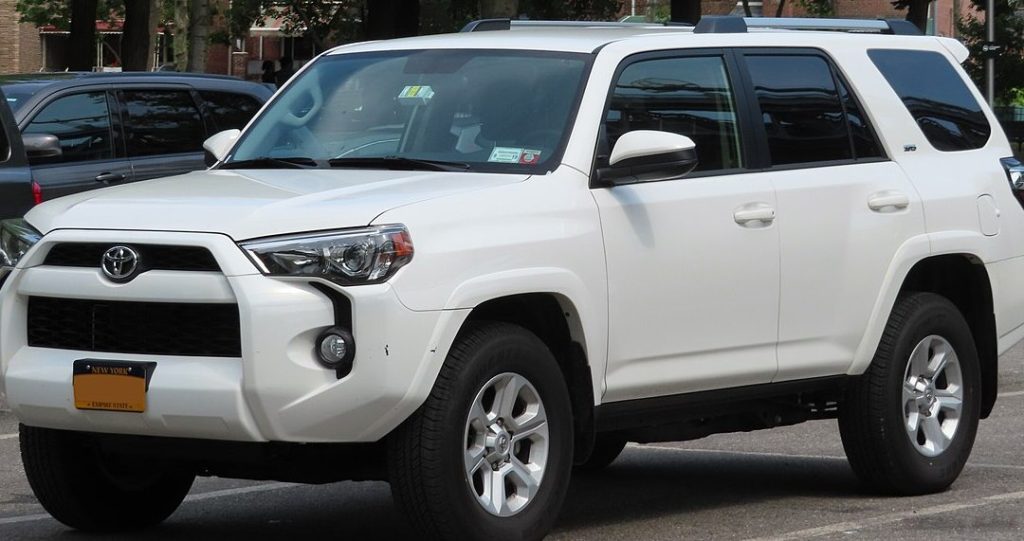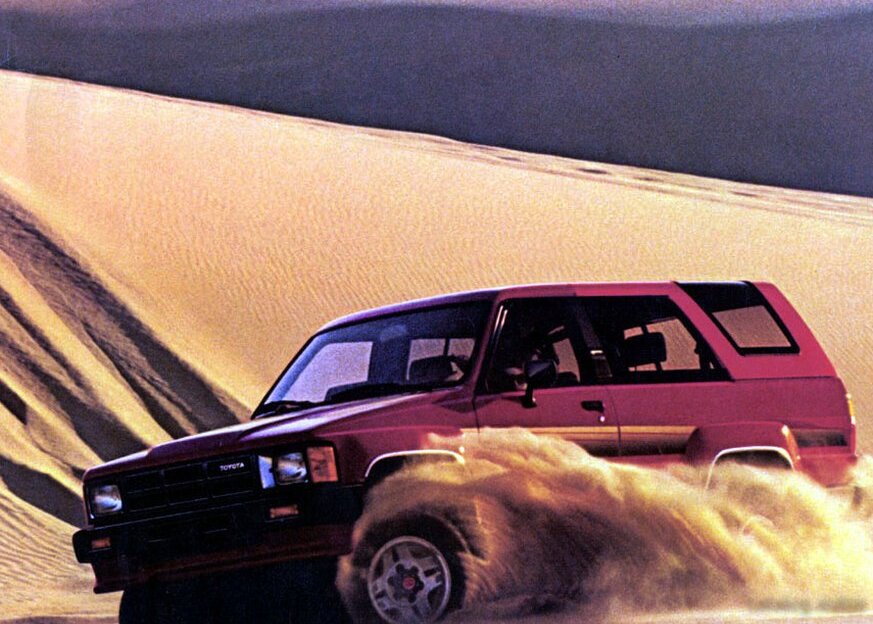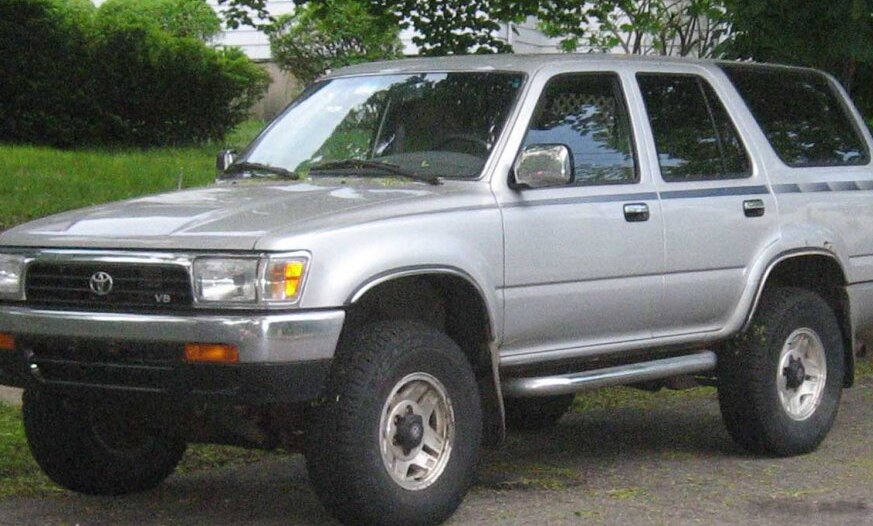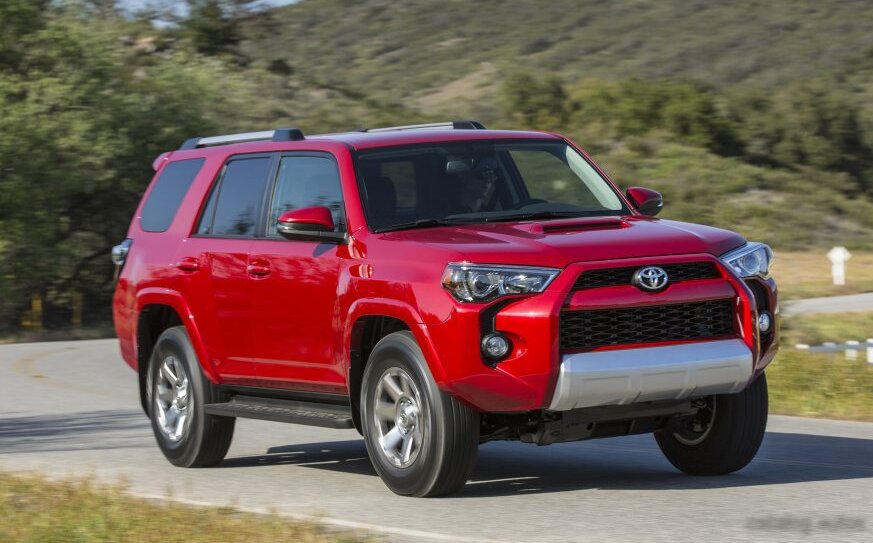
The Toyota 4Runner V, specifically the facelifted version introduced in 2013 and continuing through the 2024 model year, represents a significant iteration of Toyota’s long-running body-on-frame SUV. This variant, equipped with the 4.0-liter V6 engine (1GR-FE) paired with a 5-speed automatic transmission, occupied a central position within the 4Runner lineup, offering a balance between capability, comfort, and price. The 2013 facelift brought updated styling, improved interior materials, and refinements to the suspension, solidifying the 4Runner’s reputation as a durable and reliable off-road vehicle with a focus on practicality for American families. It was primarily sold in the North American market, where body-on-frame SUVs remained popular for their towing capacity and ruggedness.
Technical Specifications
| Brand | Toyota |
| Model | 4Runner |
| Generation | 4Runner V (facelift 2013) |
| Type (Engine) | 4.0 V6 24V (270 Hp) Automatic |
| Start of production | 2013 |
| End of production | 2024 |
| Powertrain Architecture | Internal Combustion engine |
| Body type | SUV |
| Seats | 7 |
| Doors | 5 |
| Fuel consumption (urban) | 13.8 l/100 km (17 US mpg, 20.5 UK mpg, 7.2 km/l) |
| Fuel consumption (extra urban) | 10.6 l/100 km (22.2 US mpg, 26.6 UK mpg, 9.4 km/l) |
| Fuel consumption (combined) | 12.3 l/100 km (19.1 US mpg, 23 UK mpg, 8.1 km/l) |
| Fuel Type | Petrol (Gasoline) |
| Weight-to-power ratio | 7.4 kg/Hp, 135.3 Hp/tonne |
| Weight-to-torque ratio | 5.3 kg/Nm, 188.9 Nm/tonne |
| Power | 270 Hp @ 5600 rpm |
| Power per litre | 68.3 Hp/l |
| Torque | 377 Nm @ 4400 rpm (278.06 lb.-ft. @ 4400 rpm) |
| Engine layout | Front, Longitudinal |
| Engine Model/Code | 1GR-FE |
| Engine displacement | 3956 cm3 (241.41 cu. in.) |
| Number of cylinders | 6 |
| Engine configuration | V-engine |
| Cylinder Bore | 94 mm (3.7 in.) |
| Piston Stroke | 95 mm (3.74 in.) |
| Compression ratio | 10.4:1 |
| Number of valves per cylinder | 4 |
| Fuel injection system | Multi-port manifold injection |
| Engine aspiration | Naturally aspirated engine |
| Valvetrain | DOHC |
| Engine oil capacity | 6.2 l (6.55 US qt | 5.46 UK qt) |
| Coolant | 10.5 l (11.1 US qt | 9.24 UK qt) |
| Kerb Weight | 1996 kg (4400.43 lbs.) |
| Max. weight | 2766 kg (6097.99 lbs.) |
| Max load | 770 kg (1697.56 lbs.) |
| Trunk (boot) space – minimum | 255 l (9.01 cu. ft.) |
| Trunk (boot) space – maximum | 2515 l (88.82 cu. ft.) |
| Fuel tank capacity | 90 l (23.78 US gal | 19.8 UK gal) |
| Permitted trailer load with brakes (12%) | 2131 kg (4698.05 lbs.) |
| Length | 4831-4859 mm (190.2 – 191.3 in.) |
| Width | 1925 mm (75.79 in.) |
| Height | 1816 mm (71.5 in.) |
| Wheelbase | 2789 mm (109.8 in.) |
| Front track | 1605 mm (63.19 in.) |
| Rear (Back) track | 1605 mm (63.19 in.) |
| Ride height (ground clearance) | 229 mm (9.02 in.) |
| Drag coefficient (Cd) | 0.36 |
| Minimum turning circle (turning diameter) | 11.4 m (37.4 ft.) |
| Approach angle | 30° |
| Departure angle | 26° |
| Drivetrain Architecture | Rear wheel drive |
| Number of gears and type of gearbox | 5 gears, automatic transmission ECT-i |
| Front suspension | Double wishbone |
| Rear suspension | Independent multi-link suspension |
| Front brakes | Ventilated discs |
| Rear brakes | Ventilated discs |
| Assisting systems | ABS (Anti-lock braking system) |
| Steering type | Steering rack and pinion |
| Power steering | Hydraulic Steering |
| Tires size | 265/70 R17; 245/60 R20 |
| Wheel rims size | 7J x 17; 7.5J x 17; 7.5J x 20 |
Powertrain & Engine Architecture
The heart of the 4Runner V is the 1GR-FE 4.0-liter V6 engine. This engine, a member of Toyota’s GR family, is known for its durability and relatively simple design. It features a cast iron block and aluminum cylinder heads, incorporating dual overhead camshafts (DOHC) and four valves per cylinder. Fuel delivery is handled by a multi-port fuel injection system, providing adequate atomization for efficient combustion. The 1GR-FE produces 270 horsepower at 5600 rpm and 278 lb-ft of torque at 4400 rpm. The engine’s longitudinal mounting and rear-wheel-drive configuration contribute to its off-road capabilities. Paired with the engine is a 5-speed automatic transmission (ECT-i – Electronically Controlled Transmission with intelligence). This transmission, while not the most modern, is known for its robustness and reliability. It provides smooth shifts under normal driving conditions, but can feel somewhat dated compared to transmissions with more gears.
Driving Characteristics
The 4Runner V with the 4.0L V6 and automatic transmission delivers a comfortable and capable driving experience. Acceleration is adequate for everyday driving, but it’s not particularly sporty. The automatic transmission’s gear ratios are tuned for practicality and towing, rather than outright performance. The 0-60 mph time is typically in the 7.5-8.5 second range. Compared to the manual transmission versions, the automatic sacrifices some responsiveness, but offers greater convenience, especially in urban environments. The engine’s torque curve provides sufficient power for highway passing and climbing hills, even when fully loaded. Off-road, the 4Runner V excels, thanks to its body-on-frame construction, high ground clearance, and available four-wheel-drive system (optional on some trims).
Equipment & Trim Levels
The 4Runner V trim generally included standard features such as air conditioning, power windows and locks, a basic audio system, and cloth upholstery. Higher sub-trims within the V designation (like the Limited) added features like leather upholstery, heated seats, a sunroof, and a more advanced audio system with navigation. Optional extras included a rear-seat entertainment system, upgraded wheels, and various off-road packages with features like a locking rear differential and crawl control. The interior design was functional and durable, prioritizing practicality over luxury.
Chassis & Braking
The 4Runner V utilizes a traditional body-on-frame construction, providing a robust and durable platform. The front suspension consists of a double wishbone setup, while the rear features an independent multi-link suspension. This configuration offers a good balance between ride comfort and off-road capability. Braking duties are handled by ventilated disc brakes on all four wheels, providing adequate stopping power. An Anti-lock Braking System (ABS) is standard. The steering system is a hydraulic rack and pinion setup, offering a reasonably direct feel.
Market Reception & Comparison
The 4Runner V was generally well-received by critics and consumers alike. It was praised for its reliability, durability, and off-road capability. However, the fuel economy was often criticized as being relatively poor compared to newer crossover SUVs. Compared to other 4Runner trims, the 4.0L V6 automatic offered a good balance between performance and fuel efficiency, falling between the less powerful four-cylinder options and the more expensive and performance-oriented trims. Its target audience was families and individuals who needed a capable and reliable SUV for both daily driving and occasional off-road adventures.
Legacy
The 1GR-FE engine and the 5-speed automatic transmission used in the 4Runner V have proven to be remarkably reliable over the long term. These vehicles are known to accumulate high mileage with minimal major mechanical issues, provided they receive regular maintenance. On the used car market, the 4Runner V holds its value well, due to its reputation for durability and its strong demand among off-road enthusiasts. While newer 4Runners have received updates to their engines and transmissions, the 4.0L V6 automatic remains a popular choice for those seeking a proven and dependable SUV.