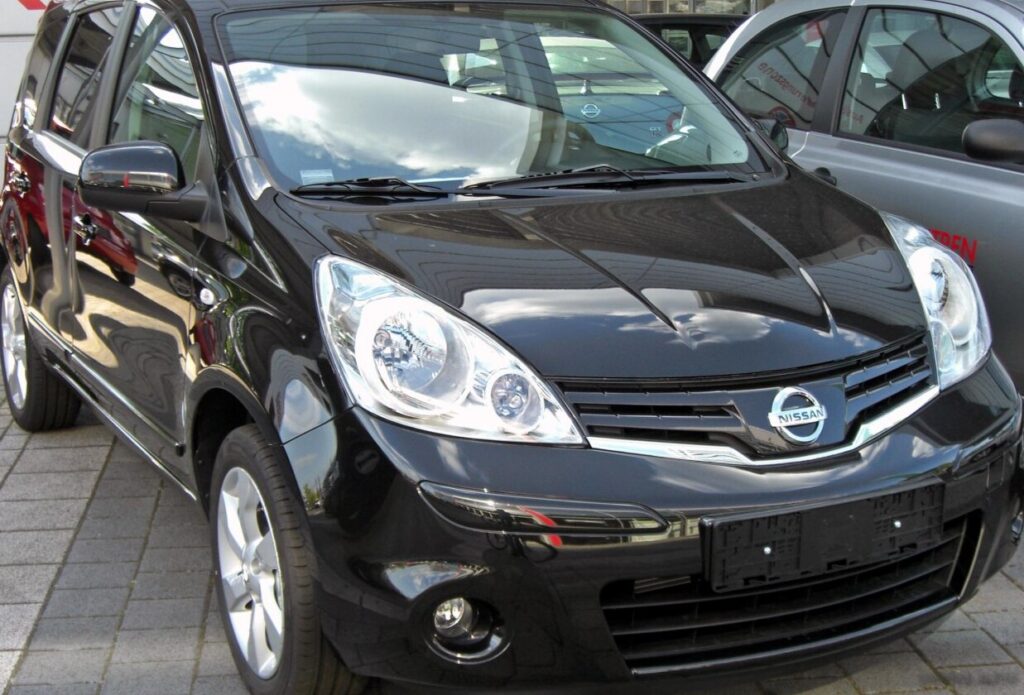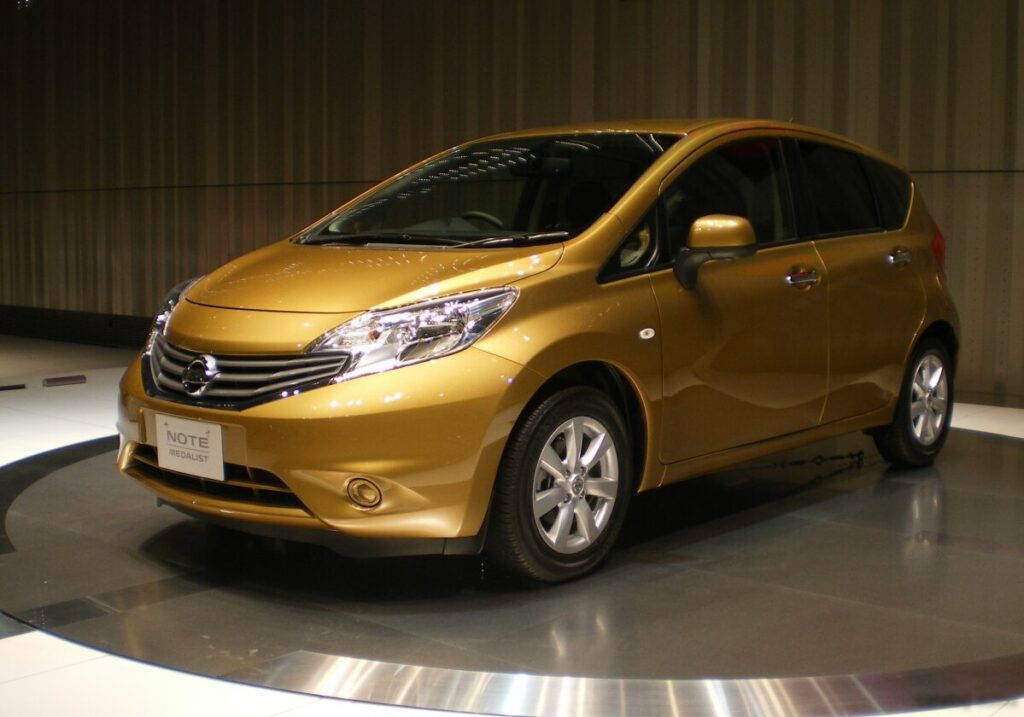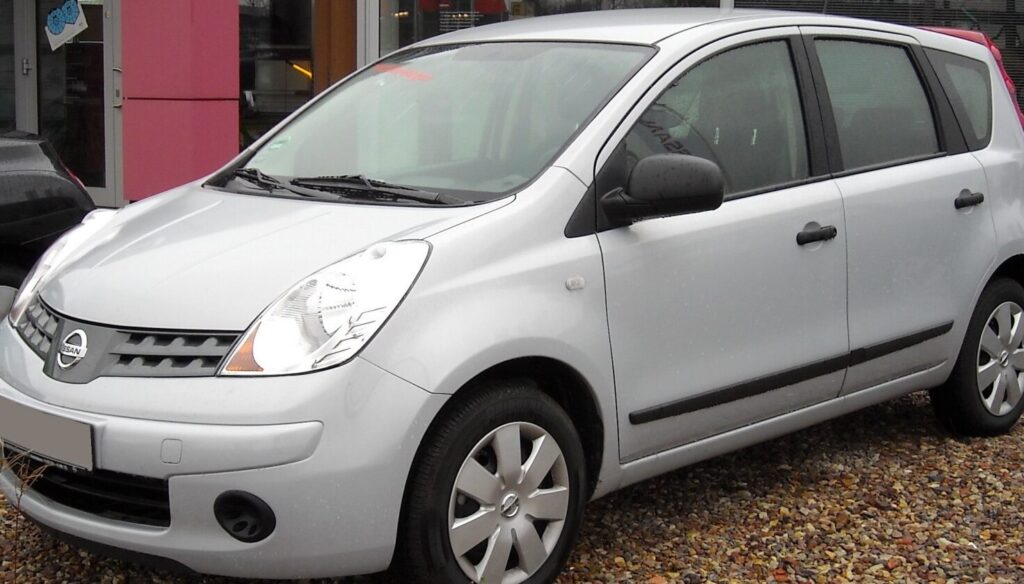
The Nissan Note I (E11) 1.5 dCi, producing 86 horsepower, was a key variant in the first generation of Nissan’s popular supermini, produced between 2005 and 2009. Positioned as an economy-focused option within the Note lineup, it aimed to provide a balance of fuel efficiency and practicality for European and Asian markets. The E11 Note, built on Nissan’s ‘S’ platform, represented a significant step for Nissan in the small MPV/hatchback segment, offering a relatively spacious interior and versatile seating arrangements within a compact footprint. This particular diesel variant was designed to appeal to buyers prioritizing low running costs and reasonable performance for daily commuting.
Technical Specifications
| Brand | Nissan |
| Model | Note |
| Generation | Note I (E11) |
| Type (Engine) | 1.5 dCi (86 Hp) |
| Start of production | 2005 |
| End of production | 2009 |
| Powertrain Architecture | Internal Combustion engine |
| Body type | Hatchback |
| Seats | 5 |
| Doors | 5 |
| Fuel consumption (urban) | 5.8 l/100 km (40.6 US mpg, 48.7 UK mpg, 17.2 km/l) |
| Fuel consumption (extra urban) | 4.6 l/100 km (51.1 US mpg, 61.4 UK mpg, 21.7 km/l) |
| Fuel Type | Diesel |
| Acceleration 0 – 100 km/h | 13 sec |
| Acceleration 0 – 62 mph | 13 sec |
| Acceleration 0 – 60 mph | 12.4 sec |
| Maximum speed | 168 km/h (104.39 mph) |
| Weight-to-power ratio | 13.5 kg/Hp, 73.8 Hp/tonne |
| Weight-to-torque ratio | 5.8 kg/Nm, 171.7 Nm/tonne |
| Power | 86 Hp @ 3750 rpm |
| Power per litre | 58.9 Hp/l |
| Torque | 200 Nm @ 2000 rpm (147.51 lb.-ft. @ 2000 rpm) |
| Engine layout | Front, Transverse |
| Engine Model/Code | K9K 276, K9K 400 |
| Engine displacement | 1461 cm3 (89.16 cu. in.) |
| Number of cylinders | 4 |
| Engine configuration | Inline |
| Cylinder Bore | 76 mm (2.99 in.) |
| Piston Stroke | 80.5 mm (3.17 in.) |
| Compression ratio | 18.8:1 |
| Number of valves per cylinder | 2 |
| Fuel injection system | Diesel Commonrail |
| Engine aspiration | Turbocharger, Intercooler |
| Valvetrain | OHC |
| Engine oil capacity | 4.4 l (4.65 US qt | 3.87 UK qt) |
| Coolant | 6 l (6.34 US qt | 5.28 UK qt) |
| Kerb Weight | 1165 kg (2568.39 lbs.) |
| Max. weight | 1610 kg (3549.44 lbs.) |
| Max load | 445 kg (981.06 lbs.) |
| Trunk (boot) space – minimum | 280 l (9.89 cu. ft.) |
| Trunk (boot) space – maximum | 1332 l (47.04 cu. ft.) |
| Fuel tank capacity | 46 l (12.15 US gal | 10.12 UK gal) |
| Length | 4083 mm (160.75 in.) |
| Width | 1690 mm (66.54 in.) |
| Height | 1550 mm (61.02 in.) |
| Wheelbase | 2600 mm (102.36 in.) |
| Front track | 1470 mm (57.87 in.) |
| Rear (Back) track | 1460 mm (57.48 in.) |
| Minimum turning circle | 11 m (36.09 ft.) |
| Drivetrain Architecture | Front wheel drive |
| Number of gears | 5 |
| Gearbox type | Manual transmission |
| Front suspension | Spring Strut |
| Rear suspension | Torsion |
| Front brakes | Disc |
| Rear brakes | Drum |
| Assisting systems | ABS (Anti-lock braking system) |
| Steering type | Steering rack and pinion |
| Tires size | 185/55 R16 |
INTRODUCTION
The Nissan Note I (E11) 1.5 dCi 86 Hp, launched in 2005, was a significant offering in the European and Asian small car market. It represented Nissan’s attempt to capitalize on the growing demand for compact, versatile, and fuel-efficient vehicles. The Note, marketed as a ‘mini MPV’ or ‘compact utility vehicle’, aimed to bridge the gap between traditional hatchbacks and larger MPVs, offering a higher seating position and a more spacious interior than many of its competitors. The 1.5 dCi variant, with its Renault-sourced engine, was specifically targeted at buyers seeking low running costs and acceptable performance for urban and suburban driving. Production continued until 2009, when the second-generation Note (E12) was introduced.
Powertrain & Engine Architecture
The heart of the 1.5 dCi Note is the K9K engine, a series of inline-four cylinder diesel engines developed jointly by Renault and Nissan. The specific engine codes used in the Note I were K9K 276 and K9K 400, with minor variations depending on the market and emissions regulations. This engine utilizes a common rail direct injection system, delivering fuel at extremely high pressure for improved combustion efficiency and reduced emissions. The engine features a single overhead camshaft (OHC) operating two valves per cylinder. A turbocharger with an intercooler is employed to boost power and torque, overcoming the inherent limitations of a small-displacement diesel engine. The 86 horsepower output is achieved at 3750 rpm, while peak torque of 200 Nm (147.51 lb-ft) is available from 2000 rpm. The Note 1.5 dCi was typically paired with a five-speed manual transmission, although an automated manual transmission (sometimes referred to as a ‘robotized’ manual) was also available in some markets. This automated manual, while offering some of the convenience of an automatic, was often criticized for its jerky shifts and slow response compared to traditional automatic transmissions.
Driving Characteristics
The 1.5 dCi 86 Hp Note offered a practical, if not particularly exciting, driving experience. Acceleration from 0-60 mph took around 12.4 seconds, and top speed was limited to 104.39 mph. The engine’s torque delivery was relatively flat, providing adequate pulling power for everyday driving situations. However, it lacked the punch of higher-output diesel variants or petrol-powered Notes. The five-speed manual transmission was well-matched to the engine’s characteristics, allowing drivers to keep the engine in its optimal torque band. The automated manual transmission, when equipped, suffered from noticeable lag and less smooth gear changes. The Note’s suspension was tuned for comfort, providing a reasonably compliant ride over most road surfaces. Handling was predictable but not particularly sporty, with noticeable body roll in corners. Overall, the driving experience was geared towards practicality and fuel efficiency rather than performance.
Equipment & Trim Levels
The 1.5 dCi Note typically came with a reasonable level of standard equipment, reflecting its position as a mainstream model. Standard features often included power steering, central locking, electric front windows, and an adjustable steering column. Air conditioning was frequently an optional extra. Interior upholstery was typically cloth, with a relatively simple dashboard layout. Higher trim levels, such as the ‘Visia’, ‘Acenta’, and ‘Tekna’, added features like alloy wheels, climate control, a CD player, and electric rear windows. The Note’s interior was notable for its flexible seating arrangements, with a sliding rear bench and folding rear seats allowing for a variety of cargo configurations. The boot space ranged from 280 liters (9.89 cu. ft.) with the rear seats up to 1332 liters (47.04 cu. ft.) with the rear seats folded down.
Chassis & Braking
The Note I (E11) utilized a front-wheel-drive layout with a MacPherson strut suspension at the front and a torsion beam suspension at the rear. The front brakes were ventilated discs, while the rear brakes were drums. Anti-lock Braking System (ABS) was standard across the range. The suspension setup prioritized ride comfort over handling precision. The torsion beam rear suspension was a cost-effective solution, but it limited the Note’s cornering ability compared to vehicles with more sophisticated rear suspension designs. The steering was a rack and pinion system, providing reasonably precise steering feel.
Market Reception & Comparison
The Nissan Note I 1.5 dCi was generally well-received by critics for its fuel efficiency, practicality, and spacious interior. However, the engine was sometimes criticized for being underpowered, particularly when the vehicle was fully loaded. Compared to the petrol-powered versions of the Note, the 1.5 dCi offered significantly better fuel economy but slightly less performance. Against competitors like the Renault Clio, Peugeot 206, and Ford Fiesta, the Note offered a unique combination of MPV-like practicality and compact dimensions. The automated manual transmission, when equipped, was often viewed as a less desirable option compared to the standard manual gearbox.
Legacy
The Nissan Note I 1.5 dCi has proven to be a relatively reliable vehicle, with the K9K engine generally considered to be durable and long-lasting. However, like all diesel engines, it is susceptible to issues related to the fuel injection system and turbocharger. The automated manual transmission, if fitted, can be prone to failures. On the used car market, the 1.5 dCi Note remains a popular choice for buyers seeking an affordable and fuel-efficient small car. Its practicality and spacious interior continue to appeal to families and individuals alike. The E11 Note paved the way for subsequent generations of the Note, solidifying Nissan’s position in the competitive small car segment.