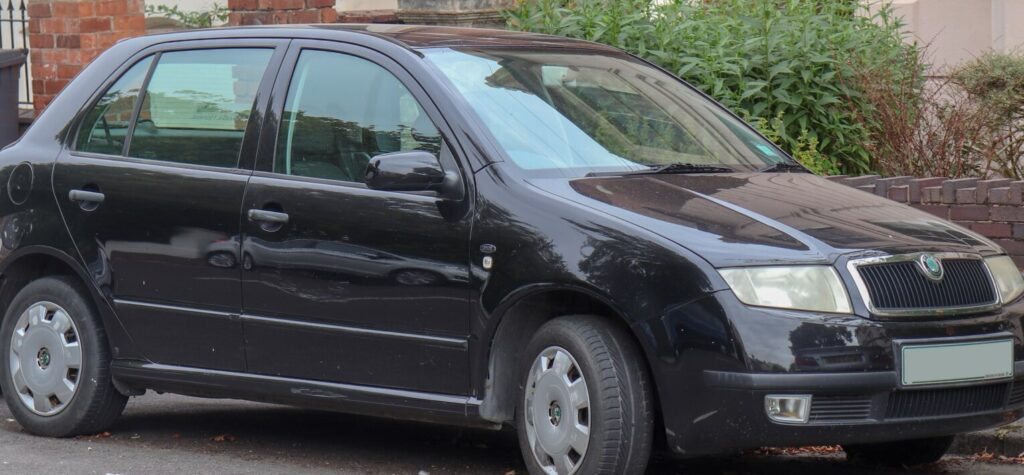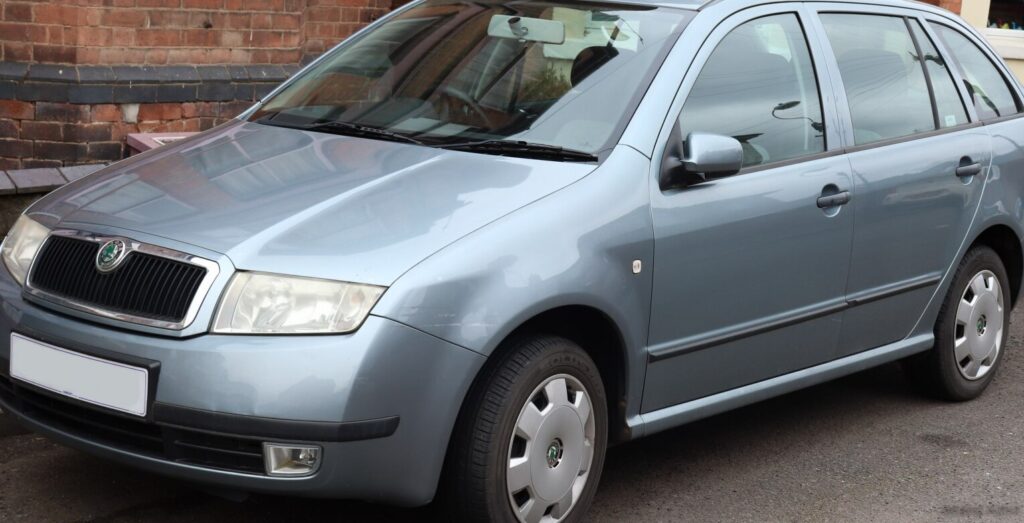
The Skoda Fabia I Combi (6Y) 1.4 16V, produced from December 1999 to July 2004, represented a practical and affordable entry point into the compact estate car segment. Part of the first generation Fabia (6Y) series, this variant utilized the Volkswagen Group’s PQ6 platform, also underpinning the Volkswagen Polo Mk4 and SEAT Ibiza Mk2. The Combi, or station wagon, body style offered increased cargo capacity compared to the hatchback, making it a popular choice for families and those requiring versatile load-lugging capabilities. This 1.4 16V engine and five-speed manual transmission combination was positioned as a mid-range offering, balancing fuel economy with acceptable performance for everyday driving.
Technical Specifications
| Brand | Skoda |
| Model | Fabia |
| Generation | Fabia I Combi (6Y) |
| Type (Engine) | 1.4 16V (101 Hp) |
| Start of production | December, 1999 |
| End of production | July, 2004 |
| Powertrain Architecture | Internal Combustion engine |
| Body type | Station wagon (estate) |
| Seats | 5 |
| Doors | 5 |
| Fuel consumption (urban) | 9.7 l/100 km (24.2 US mpg) |
| Fuel consumption (extra urban) | 5.6 l/100 km (42 US mpg) |
| Fuel Type | Petrol (Gasoline) |
| Acceleration 0 – 100 km/h | 11.6 sec |
| Acceleration 0 – 62 mph | 11.6 sec |
| Acceleration 0 – 60 mph | 11 sec |
| Maximum speed | 186 km/h (115.58 mph) |
| Weight-to-power ratio | 11.6 kg/Hp |
| Weight-to-torque ratio | 9.3 kg/Nm |
| Power | 101 Hp @ 6000 rpm |
| Torque | 126 Nm @ 4400 rpm (92.93 lb.-ft. @ 4400 rpm) |
| Engine layout | Front, Transverse |
| Engine Model/Code | AUB |
| Engine displacement | 1390 cm3 (84.82 cu. in.) |
| Number of cylinders | 4 |
| Engine configuration | Inline |
| Cylinder Bore | 76.5 mm (3.01 in.) |
| Piston Stroke | 75.6 mm (2.98 in.) |
| Compression ratio | 10.5:1 |
| Number of valves per cylinder | 4 |
| Fuel injection system | Multi-port manifold injection |
| Engine aspiration | Naturally aspirated engine |
| Valvetrain | DOHC |
| Engine oil capacity | 3.2 l (3.38 US qt | 2.82 UK qt) |
| Coolant capacity | 5.5 l (5.81 US qt | 4.84 UK qt) |
| Kerb Weight | 1175 kg (2590.43 lbs.) |
| Max. weight | 1615 kg (3560.47 lbs.) |
| Max load | 440 kg (970.03 lbs.) |
| Trunk (boot) space – minimum | 426 l (15.04 cu. ft.) |
| Trunk (boot) space – maximum | 1225 l (43.26 cu. ft.) |
| Fuel tank capacity | 45 l (11.89 US gal | 9.9 UK gal) |
| Length | 4222 mm (166.22 in.) |
| Width | 1646 mm (64.8 in.) |
| Height | 1452 mm (57.17 in.) |
| Wheelbase | 2462 mm (96.93 in.) |
| Front track | 1419 mm (55.87 in.) |
| Rear track | 1408 mm (55.43 in.) |
| Drivetrain Architecture | Front wheel drive |
| Number of gears | 5 |
| Gearbox type | Manual transmission |
Powertrain & Engine Architecture
The Fabia Combi 1.4 16V was powered by the Audi/Volkswagen Group’s AUB engine code. This 1.4-liter inline-four engine featured a cast iron block and an aluminum cylinder head. The 16-valve configuration (four valves per cylinder) and dual overhead camshafts (DOHC) contributed to its relatively high output for its displacement. Fuel delivery was handled by a multi-port fuel injection system, providing precise fuel metering for improved efficiency and emissions. The engine’s 101 horsepower at 6000 rpm and 126 Nm (93 lb-ft) of torque at 4400 rpm were respectable for its class, though not particularly sporty. The five-speed manual transmission offered a fairly conventional gear ratio spread, prioritizing fuel economy over outright acceleration.
Driving Characteristics
The 1.4 16V Fabia Combi offered a comfortable and predictable driving experience. Acceleration was adequate for everyday commuting and highway merging, but it wasn’t a particularly quick car. The 0-60 mph time of around 11 seconds reflects this. Compared to the more powerful 1.8-liter versions, the 1.4 felt noticeably less responsive, especially when fully loaded. The manual transmission allowed for reasonable control, but the gear ratios were spaced to favor fuel efficiency. The steering was light and easy, making it maneuverable in urban environments. The suspension provided a comfortable ride, absorbing bumps and imperfections in the road surface well, though it wasn’t particularly sporty or engaging.
Equipment & Trim Levels
The 1.4 16V Fabia Combi typically came with a reasonable level of standard equipment. This included central locking, power steering, front airbags, and an adjustable steering column. Interior upholstery was typically cloth, with a functional but basic dashboard layout. Optional extras included air conditioning, alloy wheels, a radio/CD player, and electric windows. Trim levels varied depending on the market, but generally, the 1.4 16V sat in the middle of the range, offering a good balance of features and affordability. Higher trim levels added features like upgraded upholstery, more comprehensive audio systems, and additional safety equipment.
Chassis & Braking
The Fabia Combi’s chassis featured a MacPherson strut front suspension and a twist-beam rear suspension. This setup provided a good compromise between ride comfort and handling. Braking was typically accomplished with disc brakes on the front wheels and drum brakes on the rear. The braking system was adequate for the car’s weight and performance, but it wasn’t particularly powerful. Anti-lock brakes (ABS) were often available as an option, enhancing safety in emergency braking situations. Stabilizer bars were fitted to both the front and rear axles to reduce body roll during cornering.
Market Reception & Comparison
The Skoda Fabia Combi 1.4 16V was generally well-received by automotive critics as a practical and affordable estate car. It was praised for its spacious interior, generous cargo capacity, and reasonable fuel economy. However, it was also criticized for its relatively modest performance and somewhat basic interior. Compared to the more powerful 1.8-liter versions, the 1.4 offered better fuel economy but significantly less performance. The 1.9 TDI diesel version provided even better fuel economy and more torque, but at a higher purchase price. The 1.4 16V appealed to buyers who prioritized practicality and affordability over outright performance.
Legacy
The AUB 1.4 16V engine proved to be a relatively reliable unit, although regular maintenance is crucial. Common issues include oil leaks and occasional problems with the throttle body. The Fabia Combi 1.4 16V remains a relatively affordable used car today, making it a good option for budget-conscious buyers. Its simple mechanical design and readily available parts contribute to its ease of maintenance. While not a particularly exciting car to drive, the Fabia Combi 1.4 16V offers a practical and dependable solution for those needing a versatile and economical estate car.