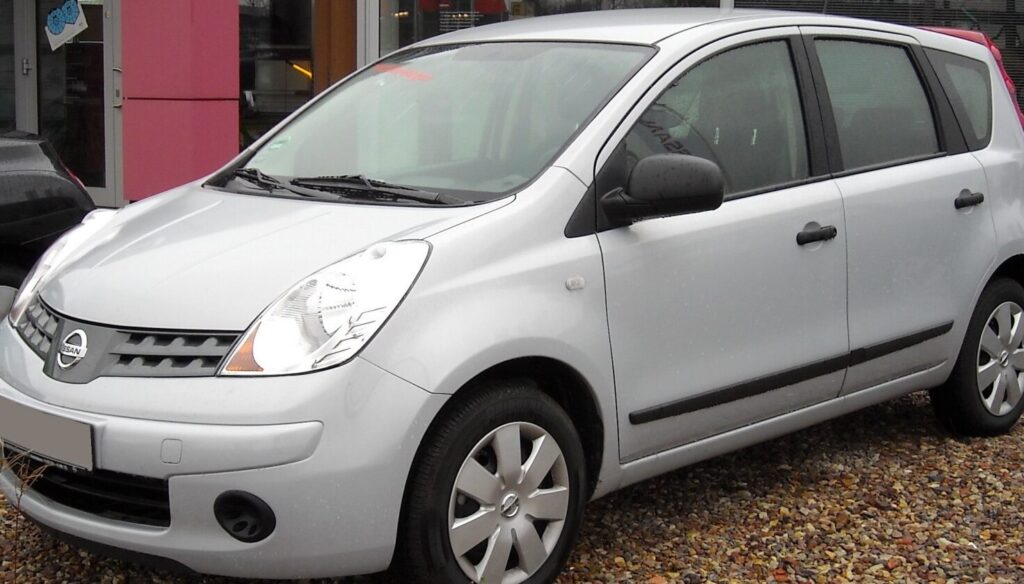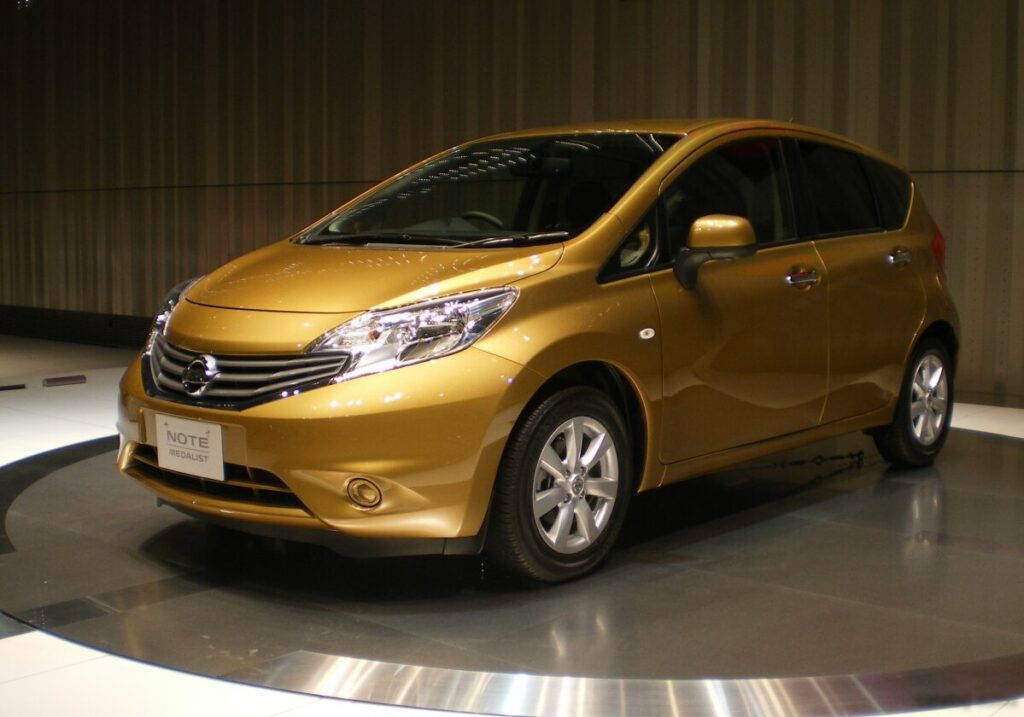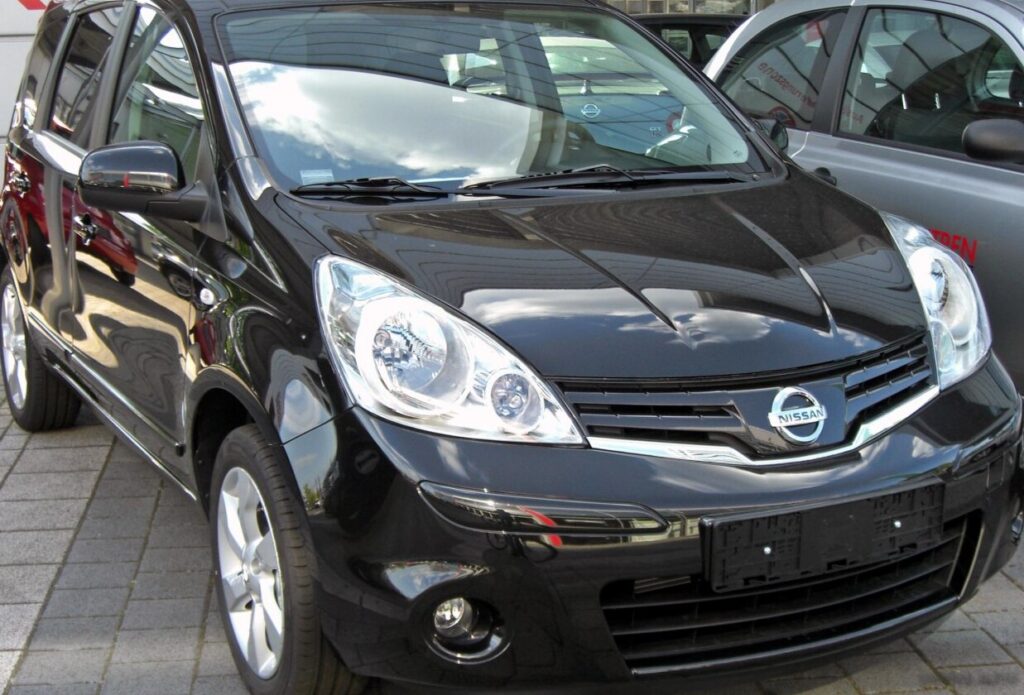
The Nissan Note I (E11), particularly the facelifted version introduced in 2010, represented Nissan’s entry into the increasingly popular subcompact hatchback segment in Europe and other international markets. Positioned as a practical and affordable vehicle, the Note aimed to offer a blend of space, efficiency, and user-friendly features. This specific variant, powered by the 1.4-liter CR14DE engine producing 88 horsepower, served as a core model within the E11 range, typically representing the entry-level or mid-range offering depending on the specific market and trim level. Production of this configuration ran from 2010 to 2012, coinciding with the facelift that brought styling updates and minor mechanical revisions to the original E11 platform.
Technical Specifications
| Brand | Nissan |
| Model | Note |
| Generation | Note I (E11, facelift 2010) |
| Type (Engine) | 1.4 (88 Hp) |
| Start of production | 2010 |
| End of production | 2012 |
| Powertrain Architecture | Internal Combustion engine |
| Body type | Hatchback |
| Seats | 5 |
| Doors | 5 |
| Fuel consumption (urban) | 7.3 l/100 km (32.2 US mpg) |
| Fuel consumption (extra urban) | 5.1 l/100 km (46.1 US mpg) |
| Fuel consumption (combined) | 5.9 l/100 km (39.9 US mpg) |
| Fuel Type | Petrol (Gasoline) |
| Acceleration 0 – 100 km/h | 13.4 sec |
| Acceleration 0 – 62 mph | 13.4 sec |
| Acceleration 0 – 60 mph | 12.7 sec |
| Maximum speed | 163 km/h (101.28 mph) |
| Emission standard | Euro 5 |
| Weight-to-power ratio | 12.4 kg/Hp |
| Weight-to-torque ratio | 8.5 kg/Nm |
| Power | 88 Hp @ 5200 rpm |
| Torque | 128 Nm @ 3200 rpm (94.41 lb.-ft. @ 3200 rpm) |
| Engine layout | Front, Transverse |
| Engine Model/Code | CR14DE |
| Engine displacement | 1386 cm3 (84.58 cu. in.) |
| Number of cylinders | 4 |
| Engine configuration | Inline |
| Number of valves per cylinder | 4 |
| Fuel injection system | Multi-port manifold injection |
| Engine aspiration | Naturally aspirated |
| Engine oil capacity | 3.4 l (3.59 US qt | 2.99 UK qt) |
| Coolant capacity | 4.9 l (5.18 US qt | 4.31 UK qt) |
| Kerb Weight | 1092 kg (2407.45 lbs.) |
| Max. weight | 1546 kg (3408.35 lbs.) |
| Max load | 454 kg (1000.9 lbs.) |
| Trunk (boot) space – minimum | 280 l (9.89 cu. ft.) |
| Trunk (boot) space – maximum | 437 l (15.43 cu. ft.) |
| Fuel tank capacity | 46 l (12.15 US gal | 10.12 UK gal) |
| Length | 4100 mm (161.42 in.) |
| Width | 1690 mm (66.54 in.) |
| Height | 1550 mm (61.02 in.) |
| Wheelbase | 2600 mm (102.36 in.) |
| Minimum turning circle | 11 m (36.09 ft.) |
| Number of gears | 5 |
| Gearbox type | Manual transmission |
| Front suspension | Independent, McPherson with coil spring and anti-roll bar |
| Rear suspension | Rigid axle |
| Front brakes | Disc |
| Rear brakes | Drum |
| Assisting systems | ABS |
| Steering type | Steering rack and pinion |
| Power steering | Electric |
| Tires size | 175/65 R15; 185/65 R15; 185/55 R16 |
| Wheel rims size | 15; 16 |
Powertrain & Engine Architecture
The heart of this Note variant is the CR14DE, a 1.4-liter inline-four cylinder gasoline engine. This engine, part of Nissan’s ‘HR’ series, is known for its relatively simple design and focus on fuel efficiency rather than outright performance. It utilizes a multi-point fuel injection system and a single overhead camshaft (SOHC) valvetrain with four valves per cylinder. The engine’s 88 horsepower output at 5200 rpm and 128 Nm (94.41 lb-ft) of torque at 3200 rpm are modest, reflecting its positioning as an economy-focused option. The engine is transversely mounted in the front of the vehicle. Paired with this engine is a five-speed manual transmission, which was the most common configuration in many European markets. While an automatic transmission was offered in some regions, it was generally less popular due to its impact on fuel economy and performance.
Driving Characteristics
The 1.4-liter Note with a manual transmission delivers a driving experience geared towards practicality and ease of use. Acceleration is not brisk, with a 0-60 mph time around 12.7 seconds. The engine feels most comfortable in the mid-range, providing adequate power for everyday driving situations like commuting and city driving. The five-speed gearbox is generally smooth, although the shift quality isn’t particularly sporty. Compared to higher-output versions of the Note (which were not widely available in all markets), this variant feels noticeably slower, particularly when fully loaded or tackling uphill climbs. However, the lighter engine weight contributes to better handling and a more nimble feel compared to heavier, more powerful models. The gear ratios are tuned for fuel efficiency, meaning the engine operates at relatively low RPMs during highway cruising.
Equipment & Trim Levels
The 1.4-liter Note typically came equipped with a reasonable level of standard features, though specifics varied by market. Common features included power steering, central locking, electric front windows, and an adjustable steering column. Air conditioning was often standard or available as an option. Interior upholstery was typically cloth, with a relatively simple dashboard layout. Higher trim levels, often denoted by names like ‘Visia’, ‘Acenta’, or ‘Tekna’ (depending on the country), added features such as alloy wheels, rear electric windows, a CD player with MP3 compatibility, and sometimes even climate control and parking sensors. The Note was designed with practicality in mind, offering a relatively spacious interior for its size and a versatile cargo area.
Chassis & Braking
The Note I (E11) utilizes a front-wheel-drive layout. The front suspension consists of an independent McPherson strut setup with coil springs and an anti-roll bar, providing a comfortable ride and reasonable handling. The rear suspension employs a simpler rigid axle configuration, which is cost-effective but less sophisticated than independent rear suspension. Braking duties are handled by disc brakes at the front and drum brakes at the rear. Anti-lock Braking System (ABS) was standard, enhancing safety. The steering is rack and pinion with electric power assistance, offering light and easy steering feel, particularly useful for maneuvering in urban environments.
Market Reception & Comparison
The Nissan Note 1.4 was generally well-received as an affordable and practical city car. Critics praised its spacious interior, fuel efficiency, and ease of driving. However, the engine’s lack of power was a common criticism, particularly when compared to competitors offering more potent engines. Compared to other subcompact hatchbacks like the Renault Clio, Peugeot 207, or Volkswagen Polo, the Note offered a competitive package in terms of price and practicality, but often lagged behind in terms of driving dynamics and perceived quality. Fuel economy was a strong point, with combined figures around 39.9 US mpg, making it an attractive option for budget-conscious buyers.
Legacy
The CR14DE engine, while not known for being particularly groundbreaking, proved to be a relatively reliable unit when properly maintained. Common issues are generally related to age and mileage, such as oil leaks and wear on suspension components. Today, the 2010-2012 Nissan Note 1.4 represents an affordable entry point into the used car market. Its simplicity and relatively low running costs make it a practical choice for first-time car buyers or those seeking a dependable and economical city car. While not a performance icon, the Note I (E11) 1.4 holds a place as a solid, no-frills hatchback that served a valuable role in Nissan’s global lineup.