
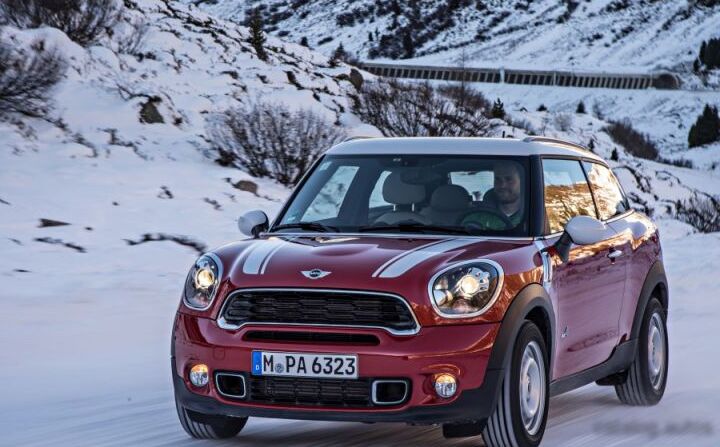
The Mini Paceman Cooper S 1.6 Automatic, produced between 2014 and 2016, represents a unique offering within the second generation Paceman (R61) lineup. Positioned as a sporty, yet accessible, variant, it blended the Mini brand’s characteristic handling with the convenience of an automatic transmission and a potent turbocharged engine. The Paceman itself was Mini’s attempt to create a more practical, four-door crossover based on the successful R60 Countryman, aiming to broaden the brand’s appeal beyond the traditional hatchback demographic. This specific 1.6-liter Cooper S Automatic trim served as a mid-range option, offering a step up in performance from the base Cooper models while remaining more affordable than the all-wheel-drive John Cooper Works variants.
Technical Specifications
| Brand | Mini |
| Model | Paceman |
| Generation | Paceman (R61) |
| Type (Engine) | Cooper S 1.6 (190 Hp) Automatic |
| Start of production | 2014 |
| End of production | 2016 |
| Powertrain Architecture | Internal Combustion engine |
| Body type | Hatchback |
| Seats | 4 |
| Doors | 3 |
| Fuel consumption (urban) | 9.2 l/100 km (25.6 US mpg) |
| Fuel consumption (extra urban) | 5.4 l/100 km (43.6 US mpg) |
| Fuel consumption (combined) | 6.8 l/100 km (34.6 US mpg) |
| CO2 emissions | 157 g/km |
| Fuel Type | Petrol (Gasoline) |
| Acceleration 0 – 100 km/h | 7.7 sec |
| Acceleration 0 – 62 mph | 7.7 sec |
| Acceleration 0 – 60 mph | 7.3 sec |
| Maximum speed | 216 km/h (134.22 mph) |
| Emission standard | Euro 6 |
| Weight-to-power ratio | 7 kg/Hp |
| Weight-to-torque ratio | 5.1 kg/Nm |
| Power | 190 Hp @ 5500-6500 rpm |
| Torque | 260 Nm @ 1700-4500 rpm (191.77 lb.-ft.) |
| Engine layout | Front, Transverse |
| Engine Model/Code | N18B16A |
| Engine displacement | 1598 cm3 (97.52 cu. in.) |
| Number of cylinders | 4 |
| Engine configuration | Inline |
| Cylinder Bore | 77 mm (3.03 in.) |
| Piston Stroke | 85.8 mm (3.38 in.) |
| Compression ratio | 10.5:1 |
| Number of valves per cylinder | 4 |
| Fuel injection system | Direct injection |
| Engine aspiration | Twin-power turbo, Intercooler |
| Engine oil capacity | 4.2 l (4.44 US qt | 3.7 UK qt) |
| Coolant | 6.5 l (6.87 US qt | 5.72 UK qt) |
| Kerb Weight | 1330 kg (2932.15 lbs.) |
| Max. weight | 1800 kg (3968.32 lbs.) |
| Max load | 470 kg (1036.17 lbs.) |
| Trunk (boot) space – minimum | 330 l (11.65 cu. ft.) |
| Trunk (boot) space – maximum | 1080 l (38.14 cu. ft.) |
| Fuel tank capacity | 47 l (12.42 US gal | 10.34 UK gal) |
| Max. roof load | 75 kg (165.35 lbs.) |
| Permitted trailer load with brakes (12%) | 1000 kg (2204.62 lbs.) |
| Permitted trailer load without brakes | 500 kg (1102.31 lbs.) |
| Permitted towbar download | 75 kg (165.35 lbs.) |
| Length | 4114 mm (161.97 in.) |
| Width | 1786 mm (70.31 in.) |
| Height | 1518 mm (59.76 in.) |
| Wheelbase | 2595 mm (102.17 in.) |
| Front track | 1531 mm (60.28 in.) |
| Rear (Back) track | 1558 mm (61.34 in.) |
| Ride height (ground clearance) | 124 mm (4.88 in.) |
| Drag coefficient (Cd) | 0.36 |
| Minimum turning circle (turning diameter) | 11.6 m (38.06 ft.) |
| Drivetrain Architecture | Front wheel drive |
| Drive wheel | Front wheel drive |
| Number of gears and type of gearbox | 6 gears, automatic transmission |
| Front suspension | Independent, type McPherson with coil spring and anti-roll bar |
| Rear suspension | Independent multi-link suspension |
| Front brakes | Ventilated discs |
| Rear brakes | Disc |
| Assisting systems | ABS (Anti-lock braking system) |
| Steering type | Steering rack and pinion |
| Power steering | Electric Steering |
| Tires size | 205/55 R17 |
| Wheel rims size | 7J x 17 |
Powertrain & Engine Architecture
At the heart of the Paceman Cooper S Automatic lies the N18B16A 1.6-liter inline-four cylinder engine. This engine is a member of the BMW/PSA Prince engine family, known for its compact size, lightweight construction, and impressive power output for its displacement. The N18 features direct fuel injection, a twin-scroll turbocharger, and variable valve timing (Double-VANOS) on both the intake and exhaust camshafts. These technologies work in concert to deliver a broad torque curve and responsive performance. The engine produces 190 horsepower at 5500-6500 rpm and 260 Nm (191.77 lb-ft) of torque between 1700 and 4500 rpm. The automatic transmission is a six-speed unit, specifically the Aisin B6F40, chosen for its smooth shifting characteristics and reliability. While not a dual-clutch transmission, it offered a good balance of efficiency and driving comfort.
Driving Characteristics
The 1.6-liter turbocharged engine, paired with the six-speed automatic, provided a respectable level of performance for the Paceman. Acceleration from 0 to 60 mph took approximately 7.3 seconds, making it noticeably quicker than the base Cooper models. However, it wasn’t as brisk as the John Cooper Works variants. The automatic transmission, while smooth, could sometimes feel hesitant during quick downshifts. The gear ratios were tuned for a balance of fuel economy and everyday drivability, rather than outright performance. Compared to the six-speed manual transmission available on the Cooper S, the automatic offered greater convenience, particularly in urban environments, but at the expense of some driver engagement. The front-wheel-drive configuration provided predictable handling, although it could exhibit some torque steer under hard acceleration.
Equipment & Trim Levels
The Cooper S Automatic trim typically included standard features such as air conditioning, power windows and locks, a multi-function steering wheel, and a basic audio system. Upholstery was generally cloth, although leather options were available. Common optional extras included a panoramic sunroof, navigation system, upgraded audio systems (Harman Kardon), sport seats, and various exterior styling packages. The Paceman also offered a range of customization options through Mini’s “Yours” personalization program, allowing buyers to tailor the interior and exterior to their preferences. The dashboard layout was characteristic of Mini, with a large central speedometer and a smaller gauge for fuel and temperature.
Chassis & Braking
The Paceman Cooper S Automatic utilized a McPherson strut front suspension and a multi-link rear suspension. This setup provided a good balance of ride comfort and handling precision. Stabilizer bars were fitted to both axles to reduce body roll during cornering. The braking system consisted of ventilated discs at the front and solid discs at the rear. Anti-lock braking system (ABS) was standard. The suspension tuning was slightly firmer than that of the base Cooper models, reflecting the Cooper S’s sporty aspirations. The steering was electrically assisted, providing light and precise control.
Market Reception & Comparison
The Mini Paceman Cooper S Automatic received generally positive reviews from automotive critics. It was praised for its stylish design, engaging handling, and potent engine. However, some reviewers noted that the automatic transmission could feel sluggish at times, and the rear seat space was somewhat limited. Compared to other compact crossovers, the Paceman offered a more premium and sporty driving experience. Fuel economy was respectable, averaging around 34.6 US mpg in combined driving. Reliability was generally good, although some owners reported minor issues with the turbocharger and fuel injectors. The Cooper S Automatic was positioned as a more upscale alternative to mainstream crossovers like the Honda HR-V or Nissan Juke.
Legacy
The N18 engine, while generally reliable, is known to be susceptible to carbon buildup on the intake valves, requiring periodic cleaning to maintain optimal performance. The Aisin B6F40 automatic transmission has proven to be relatively durable, but regular fluid changes are essential for longevity. Today, used examples of the Paceman Cooper S Automatic are relatively affordable, making them an attractive option for buyers seeking a stylish and fun-to-drive crossover. However, potential buyers should be aware of the potential maintenance costs associated with the turbocharged engine and automatic transmission. The Paceman, while not a mainstream success, remains a distinctive and characterful vehicle within the Mini lineup, representing a unique blend of practicality and personality.
