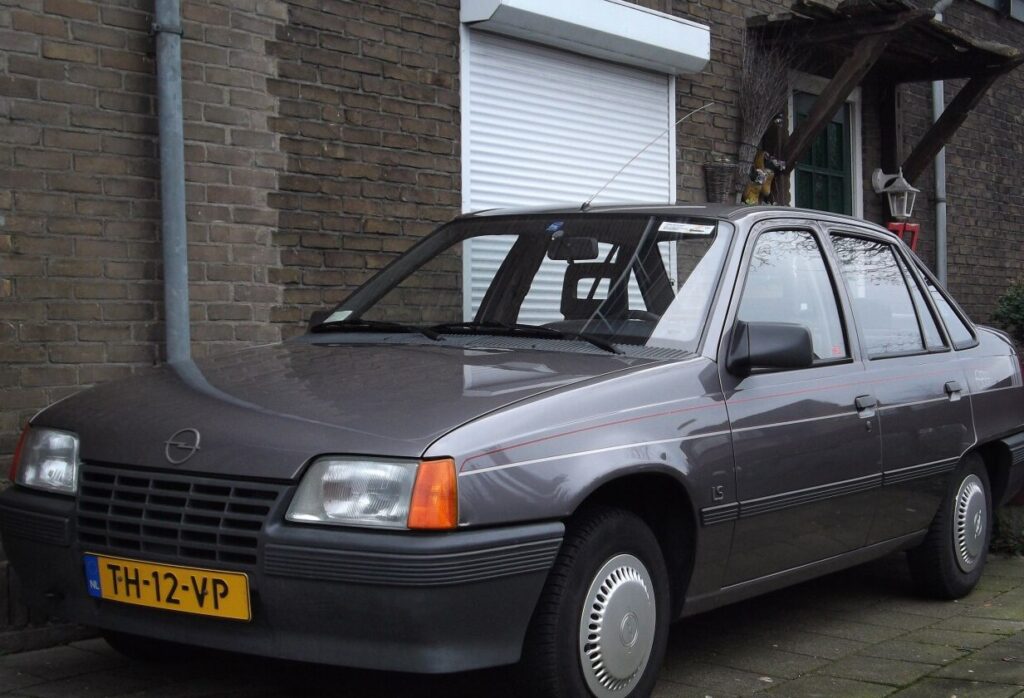
The Opel Kadett E 1.6 S, producing 82 horsepower, was a mainstay of the Kadett E range produced between 1986 and 1991. Positioned as a mid-range offering, it bridged the gap between the more basic Kadett models and the sportier, higher-performance variants. The Kadett E itself represented a significant step forward for Opel, built on the GM T-platform (internally known as the 1HX0/A3 platform) and offering improved comfort, safety, and efficiency compared to its predecessor, the Kadett D. This generation aimed to compete directly with rivals like the Volkswagen Golf, Ford Escort, and Fiat Tipo in the highly competitive European compact car segment.
Technical Specifications
| Brand | Opel |
| Model | Kadett |
| Generation | Kadett E |
| Type (Engine) | 1.6 S (82 Hp) |
| Start of production | 1986 |
| End of production | 1991 |
| Powertrain Architecture | Internal Combustion engine |
| Body type | Sedan |
| Seats | 5 |
| Doors | 4 |
| Fuel Type | Petrol (Gasoline) |
| Acceleration 0 – 100 km/h | 12 sec |
| Acceleration 0 – 62 mph | 12 sec |
| Acceleration 0 – 60 mph | 11.4 sec |
| Maximum speed | 175 km/h (108.74 mph) |
| Weight-to-power ratio | 11.2 kg/Hp, 89.1 Hp/tonne |
| Weight-to-torque ratio | 7.1 kg/Nm, 141.3 Nm/tonne |
| Power | 82 Hp @ 5400 rpm |
| Power per litre | 51.3 Hp/l |
| Torque | 130 Nm @ 2600 rpm (95.88 lb.-ft. @ 2600 rpm) |
| Engine layout | Front, Transverse |
| Engine Model/Code | 16SV |
| Engine displacement | 1598 cm3 (97.52 cu. in.) |
| Number of cylinders | 4 |
| Engine configuration | Inline |
| Cylinder Bore | 80 mm (3.15 in.) |
| Piston Stroke | 79.5 mm (3.13 in.) |
| Compression ratio | 10:1 |
| Number of valves per cylinder | 2 |
| Fuel injection system | Carburettor |
| Engine aspiration | Naturally aspirated engine |
| Valvetrain | SOHC |
| Engine oil capacity | 3.5 l (3.7 US qt | 3.08 UK qt) |
| Coolant | 6.4 l (6.76 US qt | 5.63 UK qt) |
| Kerb Weight | 920 kg (2028.25 lbs.) |
| Max. weight | 1405 kg (3097.49 lbs.) |
| Max load | 485 kg (1069.24 lbs.) |
| Trunk (boot) space – minimum | 550 l (19.42 cu. ft.) |
| Trunk (boot) space – maximum | 890 l (31.43 cu. ft.) |
| Fuel tank capacity | 52 l (13.74 US gal | 11.44 UK gal) |
| Length | 4218 mm (166.06 in.) |
| Width | 1658 mm (65.28 in.) |
| Height | 1400 mm (55.12 in.) |
| Wheelbase | 2520 mm (99.21 in.) |
| Front track | 1400 mm (55.12 in.) |
| Rear (Back) track | 1406 mm (55.35 in.) |
| Minimum turning circle | 10.5 m (34.45 ft.) |
Powertrain & Engine Architecture
The heart of the Kadett E 1.6 S was the 16SV engine, a 1.6-liter inline-four cylinder unit. This engine utilized a single overhead camshaft (SOHC) valvetrain operating two valves per cylinder. Crucially, this variant employed a carburetor for fuel delivery, a relatively common practice for the time, particularly in the mid-range models. While simpler and less expensive than fuel injection, carburetors offered less precise fuel metering and generally resulted in slightly lower fuel economy and higher emissions. The 16SV produced 82 horsepower at 5400 rpm and 130 Nm (95.88 lb-ft) of torque at 2600 rpm. The engine was transversely mounted in the front of the vehicle, driving the front wheels. The transmission was a five-speed manual, offering a reasonable balance between fuel efficiency and driver engagement. An optional three-speed automatic transmission was also available, though it impacted performance.
Driving Characteristics
The 1.6 S with the manual transmission provided adequate, if not exhilarating, performance. Acceleration from 0 to 60 mph took around 11.4 seconds, and top speed was approximately 108.74 mph. The carburetor did result in a slight throttle lag compared to fuel-injected counterparts. The five-speed gearbox was well-matched to the engine’s powerband, allowing drivers to keep the engine in its optimal rev range. The automatic transmission, while offering convenience, noticeably dulled acceleration and reduced fuel economy. The Kadett E’s suspension, while not particularly sophisticated, provided a comfortable ride for everyday driving. The steering was light and easy, making it maneuverable in urban environments.
Equipment & Trim Levels
The 1.6 S trim level offered a step up in features compared to the base Kadett models. Standard equipment typically included cloth upholstery, a basic stereo system, and a more comprehensive instrument cluster. Optional extras included power windows, central locking, a sunroof, and upgraded audio systems. The interior design was functional and straightforward, prioritizing practicality over luxury. The 1.6 S often featured a slightly more refined interior trim than the base models, with improved fabric choices and detailing.
Chassis & Braking
The Kadett E 1.6 S utilized a MacPherson strut front suspension and a twist-beam rear suspension. This setup provided a good compromise between ride comfort and handling. Braking was typically accomplished with disc brakes on the front wheels and drum brakes on the rear. The braking system was adequate for the car’s weight and performance, but lacked the stopping power of more advanced systems found on higher-performance models. Stabilizer bars were fitted to both the front and rear axles to reduce body roll during cornering.
Market Reception & Comparison
The Kadett E 1.6 S was generally well-received by automotive critics as a practical and affordable family car. It was praised for its fuel efficiency, comfortable ride, and spacious interior. However, the carburetor engine was often criticized for its lack of refinement and slightly lower performance compared to fuel-injected alternatives. Compared to the more powerful Kadett E 1.6 GSI (with fuel injection and more horsepower), the 1.6 S offered a more economical option for buyers who prioritized fuel economy and affordability over outright performance. Against rivals like the Volkswagen Golf, the Kadett E 1.6 S offered a competitive price point and a similar level of practicality.
Legacy
The Opel Kadett E 1.6 S, while not a particularly rare or collectible model, remains a popular choice among classic car enthusiasts and those seeking an affordable and reliable vintage vehicle. The 16SV engine, while simple in design, proved to be relatively durable and easy to maintain. However, carburetors can require periodic cleaning and adjustment to ensure optimal performance. Today, well-maintained examples of the Kadett E 1.6 S can be found in the used car market at relatively low prices, making them an attractive option for those looking for a classic European car experience. The Kadett E, as a whole, cemented Opel’s position as a major player in the European compact car market and paved the way for future generations of Opel vehicles.