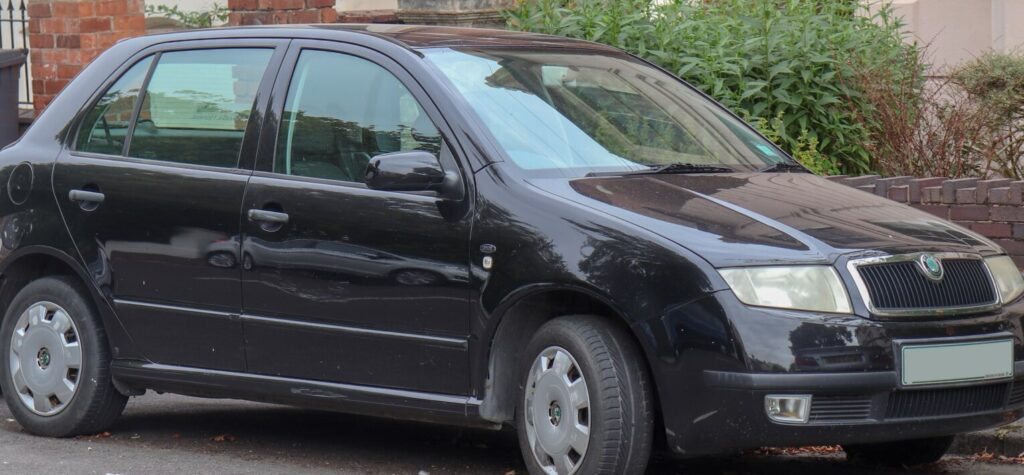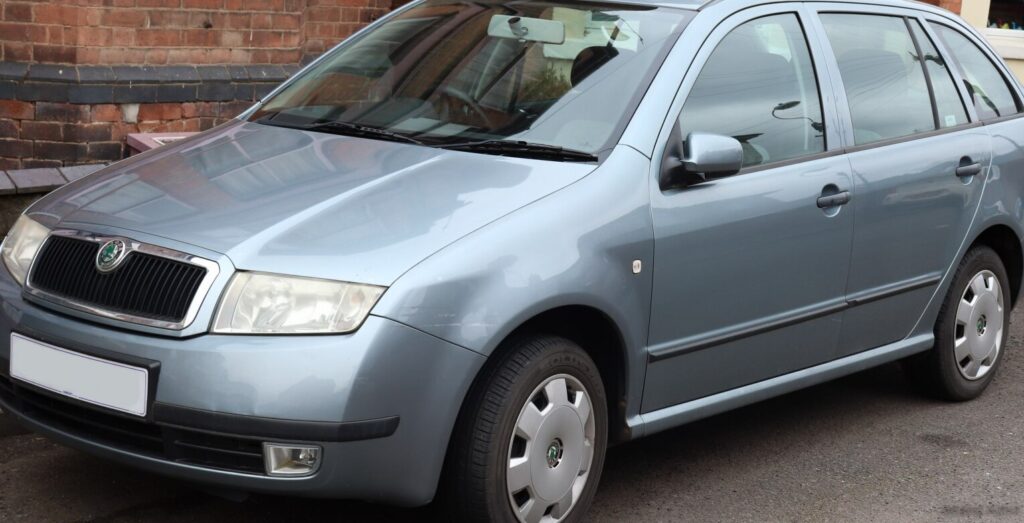
The Skoda Fabia I Combi (6Y) 1.4, producing 68 horsepower, was a mainstay of the first-generation Fabia Combi (estate) lineup, manufactured between August 1999 and May 2004. Positioned as the entry-level engine option for the practical Combi body style, it aimed to provide affordable and economical transportation for families and individuals. The 6Y Fabia Combi, built on the Volkswagen Group’s PQ24 platform (also known as the A4 platform), represented Skoda’s increasing focus on modern, value-oriented vehicles within the European market. This variant offered a spacious interior and a large cargo area within a compact footprint, making it a popular choice for those needing versatility without the expense of larger vehicles.
Technical Specifications
| Brand | Skoda |
| Model | Fabia |
| Generation | Fabia I Combi (6Y) |
| Type (Engine) | 1.4 (68 Hp) |
| Start of production | August, 1999 |
| End of production | May, 2004 |
| Powertrain Architecture | Internal Combustion engine |
| Body type | Station wagon (estate) |
| Seats | 5 |
| Doors | 5 |
| Fuel consumption (urban) | 9.8 l/100 km (24 US mpg, 28.8 UK mpg, 10.2 km/l) |
| Fuel consumption (extra urban) | 5.6 l/100 km (42 US mpg, 50.4 UK mpg, 17.9 km/l) |
| Fuel consumption (combined) | 6 l/100 km (39.2 US mpg, 47.1 UK mpg, 16.7 km/l) |
| Fuel Type | Petrol (Gasoline) |
| Acceleration 0 – 100 km/h | 15.8 sec |
| Acceleration 0 – 62 mph | 15.8 sec |
| Acceleration 0 – 60 mph | 15 sec |
| Maximum speed | 164 km/h (101.9 mph) |
| Weight-to-power ratio | 17.3 kg/Hp, 57.9 Hp/tonne |
| Weight-to-torque ratio | 9.8 kg/Nm, 102.1 Nm/tonne |
| Power | 68 Hp @ 5000 rpm |
| Power per litre | 48.7 Hp/l |
| Torque | 120 Nm @ 2500 rpm (88.51 lb.-ft. @ 2500 rpm) |
| Engine layout | Front, Transverse |
| Engine Model/Code | AME |
| Engine displacement | 1397 cm3 (85.25 cu. in.) |
| Number of cylinders | 4 |
| Engine configuration | Inline |
| Cylinder Bore | 75.5 mm (2.97 in.) |
| Piston Stroke | 78 mm (3.07 in.) |
| Compression ratio | 10.5:1 |
| Number of valves per cylinder | 2 |
| Fuel injection system | Multi-port manifold injection |
| Engine aspiration | Naturally aspirated engine |
| Valvetrain | OHC |
| Engine oil capacity | 4 l (4.23 US qt | 3.52 UK qt) |
| Coolant capacity | 6 l (6.34 US qt | 5.28 UK qt) |
| Kerb Weight | 1175 kg (2590.43 lbs.) |
| Max. weight | 1615 kg (3560.47 lbs.) |
| Max load | 440 kg (970.03 lbs.) |
| Trunk (boot) space – minimum | 426 l (15.04 cu. ft.) |
| Trunk (boot) space – maximum | 1225 l (43.26 cu. ft.) |
| Fuel tank capacity | 45 l (11.89 US gal | 9.9 UK gal) |
| Length | 4222 mm (166.22 in.) |
| Width | 1646 mm (64.8 in.) |
| Height | 1452 mm (57.17 in.) |
| Wheelbase | 2462 mm (96.93 in.) |
| Front track | 1419 mm (55.87 in.) |
| Rear track | 1408 mm (55.43 in.) |
| Drivetrain Architecture | Front wheel drive |
| Number of gears | 5 |
| Gearbox type | Manual transmission |
| Front suspension | Independent, McPherson with coil spring and anti-roll bar |
| Rear suspension | Semi-independent, coil spring |
| Front brakes | Disc |
| Rear brakes | Drum |
| Steering type | Steering rack and pinion |
| Power steering | Hydraulic |
| Tires size | 185/60 R14 |
| Wheel rims size | 6J x 14 |
Powertrain & Engine Architecture
The 1.4-liter engine, designated AME, is a naturally aspirated, inline-four cylinder petrol engine. It features a single overhead camshaft (OHC) operating two valves per cylinder. Fuel delivery is managed by a multi-port fuel injection system, a common setup for engines of this era. The AME engine is known for its simplicity and relative reliability, though it doesn’t offer the performance of larger engines in the Fabia range. The engine’s 10.5:1 compression ratio was fairly standard for the time, balancing efficiency with performance. The five-speed manual transmission was the standard pairing for this engine, offering a reasonable spread of gears for everyday driving. The transmission was chosen for its cost-effectiveness and durability, rather than sporty performance.
Driving Characteristics
The 68 horsepower output of the 1.4-liter engine translates to modest performance. Acceleration from 0-100 km/h (0-62 mph) takes approximately 15.8 seconds, and top speed is around 164 km/h (101.9 mph). In real-world driving, the engine feels adequate for city and suburban commutes, but struggles when fully loaded or attempting to overtake at higher speeds. The five-speed manual gearbox helps to keep the engine in its optimal power band, but requires frequent shifting to maintain momentum. Compared to the more powerful 1.6-liter or the diesel options, the 1.4 feels noticeably slower. However, the lighter engine weight contributes to a more nimble feel in corners.
Equipment & Trim Levels
The 1.4 Combi typically represented the base trim level. Standard equipment generally included power steering, central locking, and front airbags. Interior appointments were basic, with cloth upholstery and a functional, if somewhat spartan, dashboard layout. Optional extras included air conditioning, alloy wheels, and an upgraded audio system. The focus was on providing a practical and affordable vehicle, so luxury features were kept to a minimum. The Combi body style itself was a key feature, offering a generous 426-1225 liter cargo capacity with the rear seats folded down.
Chassis & Braking
The Fabia I Combi 1.4 utilized a McPherson strut front suspension with a coil spring and anti-roll bar, providing a comfortable ride and reasonable handling. The rear suspension was a semi-independent torsion beam setup, a cost-effective solution that offered adequate stability. Braking was handled by disc brakes on the front wheels and drum brakes on the rear. This configuration was typical for vehicles in this price range and weight class. The hydraulic power steering provided light and easy steering, making it maneuverable in urban environments.
Market Reception & Comparison
The Skoda Fabia I Combi 1.4 was generally well-received as an affordable and practical family car. Critics praised its spacious interior, large cargo area, and fuel efficiency. However, the engine’s lack of power was a common criticism. Compared to the 1.6-liter version, the 1.4 offered significantly lower performance but better fuel economy. The diesel options, while more expensive, provided superior torque and fuel efficiency. The 1.4 appealed to buyers prioritizing affordability and practicality over outright performance.
Legacy
The AME 1.4-liter engine, while not known for its high performance, proved to be a relatively reliable unit. Common issues are typically related to age and maintenance, such as oil leaks and worn suspension components. Today, the Fabia I Combi 1.4 represents an affordable entry point into classic Skoda ownership. Parts availability is generally good, and the simple engine design makes it relatively easy to maintain for those with basic mechanical skills. While not a collector’s item, it remains a practical and economical choice for those seeking a reliable and spacious estate car.