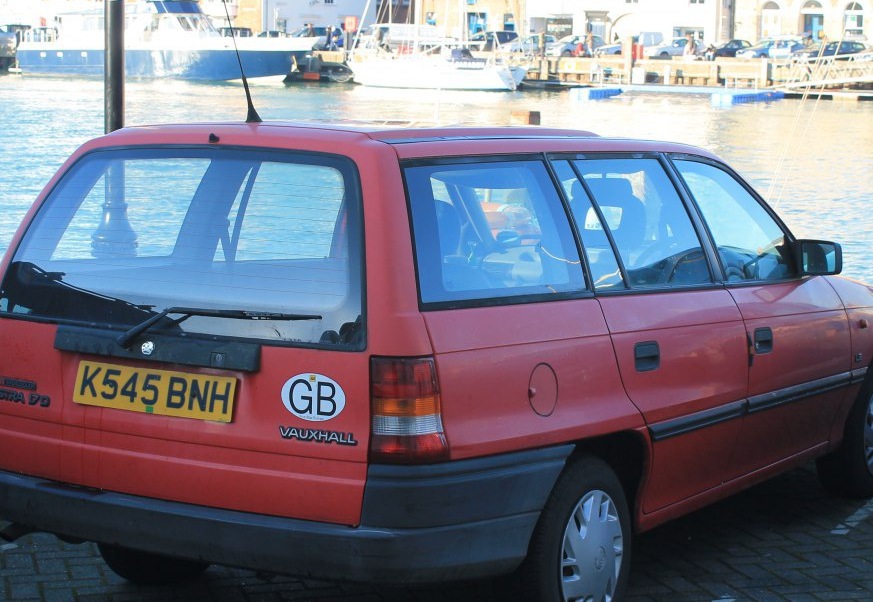
The Vauxhall Astra Mk III Estate 1.6i Eco, produced between 1991 and 1996, represented an entry-level offering within the broader Mk III Astra range (1991-1998), which itself was based on the GM T platform. This variant, characterized by its 1.6-liter engine producing 71 horsepower, was specifically aimed at buyers prioritizing fuel economy and practicality over outright performance. The Estate (station wagon) body style further emphasized the vehicle’s utility, making it a popular choice for families and those requiring ample cargo space. It occupied the lower end of the trim spectrum, serving as a more affordable alternative to the higher-specification models like the 1.8 and 2.0-liter versions.
Technical Specifications
| Brand | Vauxhall |
| Model | Astra |
| Generation | Astra Mk III Estate |
| Type (Engine) | 1.6i Eco (71 Hp) |
| Start of production | 1991 |
| End of production | 1996 |
| Powertrain Architecture | Internal Combustion engine |
| Body type | Station wagon (estate) |
| Seats | 5 |
| Doors | 5 |
| Fuel consumption (combined) | 6.9 l/100 km |
| Fuel consumption (US mpg) | 34.1 |
| Fuel consumption (UK mpg) | 40.9 |
| Fuel consumption (km/l) | 14.5 |
| CO2 emissions | 164 g/km |
| Fuel Type | Petrol (Gasoline) |
| Acceleration 0 – 100 km/h | 14 sec |
| Acceleration 0 – 62 mph | 14 sec |
| Acceleration 0 – 60 mph | 13.3 sec |
| Maximum speed | 171 km/h (106.25 mph) |
| Weight-to-power ratio | 14.4 kg/Hp |
| Power | 71 Hp @ 5000 rpm |
| Power per litre | 44.4 Hp/l |
| Torque | 128 Nm @ 2800 rpm (94.41 lb.-ft. @ 2800 rpm) |
| Engine layout | Front, Transverse |
| Engine Model/Code | X16SZ |
| Engine displacement | 1598 cm3 (97.52 cu. in.) |
| Number of cylinders | 4 |
| Engine configuration | Inline |
| Number of valves per cylinder | 2 |
| Fuel injection system | Single-point injection |
| Engine aspiration | Naturally aspirated |
| Engine oil capacity | 3.5 l (3.7 US qt | 3.08 UK qt) |
| Coolant capacity | 5.6 l (5.92 US qt | 4.93 UK qt) |
| Kerb Weight | 1020 kg (2248.72 lbs) |
| Max. weight | 1495 kg (3295.91 lbs) |
| Max load | 475 kg (1047.2 lbs) |
| Trunk (boot) space – minimum | 500 l (17.66 cu. ft.) |
| Fuel tank capacity | 50 l (13.21 US gal | 11 UK gal) |
| Length | 4280 mm (168.5 in) |
| Width | 1688 mm (66.46 in) |
| Height | 1481 mm (58.31 in) |
| Wheelbase | 2520 mm (99.21 in) |
| Drivetrain Architecture | Front wheel drive |
| Number of gears | 5 gears, manual transmission |
| Front brakes | Ventilated discs |
| Rear brakes | Drum |
| Tires size | 175/70 R13 |
| Wheel rims size | 13 |
Powertrain & Engine Architecture
The heart of the Astra Mk III Estate 1.6i Eco is the X16SZ engine, a 1.6-liter inline-four cylinder unit. This engine utilizes a single-point fuel injection system, a relatively simple and cost-effective technology for the early 1990s. The two valves per cylinder configuration, combined with a modest compression ratio, prioritized fuel efficiency and smooth operation over high-performance output. The engine’s 71 horsepower and 94.41 lb-ft of torque were sufficient for everyday driving, but it wasn’t designed for spirited acceleration. The five-speed manual transmission was the standard offering, providing a reasonable spread of gears to optimize fuel economy and maintain drivability. The transmission’s gear ratios were geared towards maximizing efficiency rather than providing quick acceleration.
Driving Characteristics
The 1.6i Eco variant offered a decidedly unhurried driving experience. Acceleration from 0-60 mph took around 13.3 seconds, and top speed was limited to approximately 106 mph. The engine felt strained when pushed hard, and overtaking maneuvers required careful planning. However, in typical urban and highway driving conditions, the engine proved adequate. The manual transmission, while not particularly sporty, was light and easy to operate. The suspension, tuned for comfort, provided a reasonably smooth ride, although it could feel somewhat wallowy when cornering. Compared to the 1.8 and 2.0-liter Astra Estates, the 1.6i Eco felt significantly less powerful, but it also offered better fuel economy.
Equipment & Trim Levels
The 1.6i Eco trim level was fairly basic, focusing on essential features. Standard equipment typically included central locking, power steering, and a basic stereo system. Interior upholstery was usually cloth, and the dashboard featured a simple, functional design. Optional extras, such as electric windows and a sunroof, were available, but they added to the vehicle’s cost. The interior trim was generally durable but lacked the refinement of higher-specification models. The emphasis was on practicality and affordability.
Chassis & Braking
The Astra Mk III Estate featured a MacPherson strut front suspension and a torsion beam rear suspension. The front brakes were ventilated discs, providing adequate stopping power, while the rear brakes were drums, a cost-saving measure common in this class of vehicle. The suspension setup prioritized ride comfort over handling precision. The 175/70 R13 tires offered reasonable grip in most conditions, but they weren’t designed for high-performance driving. The chassis was relatively lightweight, contributing to the vehicle’s fuel efficiency.
Market Reception & Comparison
The Astra Mk III Estate 1.6i Eco was generally well-received by critics as a practical and affordable family car. Its fuel economy was a major selling point, and its spacious interior and large cargo area made it a versatile vehicle. However, its lack of power was often criticized. Compared to the 1.8 and 2.0-liter Astra Estates, the 1.6i Eco offered significantly lower performance but also a lower purchase price and better fuel economy. It competed with other mainstream estate cars of the time, such as the Ford Escort Estate and the Peugeot 305 Estate.
Legacy
The X16SZ engine, while not known for its performance, proved to be relatively reliable. With proper maintenance, these engines can last for many years. Today, the Astra Mk III Estate 1.6i Eco is a relatively affordable classic car. Parts availability is generally good, and the vehicle’s simple mechanical design makes it relatively easy to maintain. While not a collector’s item, it remains a popular choice for those seeking a practical and affordable classic estate car. The 1.6i Eco variant is often seen as a good entry point into classic Astra ownership, offering a balance of affordability, reliability, and practicality.