
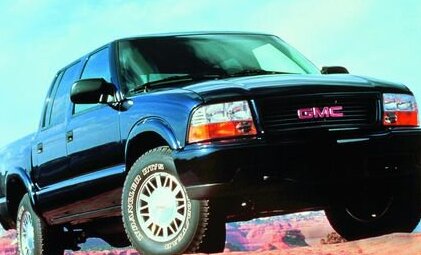
The GMC Sonoma (GMT400) 2.2i SWB 2WD, producing 120 horsepower, was a compact pickup truck manufactured from 1996 to 2000. It represented the entry-level offering in the GMT400 Sonoma/S-15 platform, sharing its core structure with the Chevrolet S-10. This variant was primarily aimed at buyers seeking an affordable and practical truck for light-duty tasks, prioritizing fuel economy and ease of use over outright performance. It served as a workhorse for individuals and small businesses needing a reliable, albeit modestly powered, pickup.
Technical Specifications
| Brand | GMC |
| Model | Sonoma |
| Generation | Sonoma (GMT400) |
| Type | 2.2i SWB 2WD (120 Hp) |
| Start of production | 1996 |
| End of production | 2000 |
| Powertrain Architecture | Internal Combustion engine |
| Body type | Pick-up |
| Seats | 3 |
| Doors | 2 |
| Fuel Type | Petrol (Gasoline) |
| Weight-to-power ratio | 11.4 kg/Hp, 87.7 Hp/tonne |
| Weight-to-torque ratio | 7.2 kg/Nm, 138.9 Nm/tonne |
| Power | 120 Hp @ 5000 rpm |
| Power per litre | 54.8 Hp/l |
| Torque | 190 Nm @ 3600 rpm (140.14 lb.-ft. @ 3600 rpm) |
| Engine layout | Front, Longitudinal |
| Engine displacement | 2189 cm3 (133.58 cu. in.) |
| Number of cylinders | 4 |
| Engine configuration | Inline |
| Number of valves per cylinder | 2 |
| Fuel injection system | Multi-port manifold injection |
| Engine aspiration | Naturally aspirated |
| Kerb Weight | 1368 kg (3015.92 lbs) |
| Max. weight | 1905 kg (4199.81 lbs) |
| Max load | 537 kg (1183.88 lbs) |
| Fuel tank capacity | 68 l (17.96 US gal | 14.96 UK gal) |
| Length | 4841 mm (190.59 in) |
| Width | 1725 mm (67.91 in) |
| Height | 1575 mm (62.01 in) |
| Wheelbase | 2751 mm (108.31 in) |
| Front track | 1382 mm (54.41 in) |
| Rear track | 1387 mm (54.61 in) |
| Drivetrain | Rear wheel drive |
| Number of gears | 5 gears, manual transmission |
| Front suspension | Coil spring |
| Rear suspension | Coil spring |
| Front brakes | Ventilated discs |
| Rear brakes | Drum |
| Assisting systems | ABS (Anti-lock braking system) |
| Power steering | Hydraulic Steering |
| Tires size | 205/75 R15 |
| Wheel rims size | 15 |
Powertrain & Engine Architecture
The heart of the Sonoma 2.2i was the 2.2-liter (2189 cc) inline four-cylinder engine. This engine, often referred to by its engine code, was a relatively simple design featuring a two-valve-per-cylinder configuration and multi-port fuel injection. The engine’s design prioritized durability and fuel efficiency over high-end performance. The 120 horsepower output was achieved at 5000 rpm, while peak torque of 190 Nm (140.14 lb-ft) arrived at 3600 rpm. The engine was mounted longitudinally in the chassis, driving the rear wheels. The five-speed manual transmission was the standard offering, providing a reasonable balance between fuel economy and usability. While an automatic transmission was available, it often resulted in a noticeable decrease in fuel efficiency and acceleration.
Driving Characteristics
The 120 hp Sonoma 2.2i SWB 2WD offered modest performance. Acceleration was adequate for everyday driving, but hauling heavy loads or tackling steep inclines required careful gear selection. The five-speed manual transmission allowed drivers to keep the engine in its optimal power band, but the engine lacked the low-end torque found in larger displacement engines. Compared to the available 4.3L V6 option, the 2.2L felt significantly underpowered. The short wheelbase contributed to a somewhat choppy ride, especially when unladen. The rear-wheel-drive configuration provided decent handling on dry pavement, but traction could be limited in wet or slippery conditions.
Equipment & Trim Levels
The Sonoma 2.2i SWB 2WD typically came with a basic level of equipment. Standard features generally included a basic AM/FM radio, vinyl upholstery, and manual windows and locks. Air conditioning was often an optional extra. Higher trim levels, such as the SL or S, added features like upgraded interior trim, a better sound system, and power windows/locks. The interior was functional and durable, designed to withstand the rigors of truck ownership. The dashboard layout was straightforward and easy to use, with clearly labeled controls.
Chassis & Braking
The Sonoma’s chassis was a traditional body-on-frame construction, providing a robust and durable platform. The front suspension utilized coil springs, while the rear suspension also employed coil springs. The braking system consisted of ventilated discs at the front and drum brakes at the rear. ABS (Anti-lock Braking System) was available as an option, enhancing safety by preventing wheel lockup during hard braking. The steering was hydraulic, providing reasonable ease of use. The relatively light curb weight of around 1368 kg (3015.92 lbs) helped to mitigate the effects of the modest engine power.
Market Reception & Comparison
The Sonoma 2.2i SWB 2WD was generally well-received as an affordable and practical entry-level pickup. Critics acknowledged its fuel efficiency and ease of use, but often noted its lack of power compared to larger-engined competitors. The 4.3L V6 Sonoma offered significantly more performance, but at a higher price point. The 2.2L version appealed to buyers who prioritized economy and didn’t require a truck for heavy-duty work. Fuel economy was a strong point, typically achieving around 20-25 mpg in combined driving. Reliability was generally good, although the 2.2L engine was known to be susceptible to oil leaks as it aged.
Legacy
The GMC Sonoma 2.2i SWB 2WD has become a relatively affordable and accessible classic pickup in the used car market. While not as sought after as the V6-powered models, it remains a viable option for those seeking a simple and reliable truck for light-duty tasks. The 2.2L engine, while not particularly powerful, is known for its durability and relatively low maintenance costs. Parts availability is generally good, as many components are shared with the Chevrolet S-10. Today, these Sonomas are often found being used as daily drivers, work trucks, or project vehicles for enthusiasts. The simplicity of the design makes them relatively easy to maintain and repair, contributing to their continued presence on the road.
