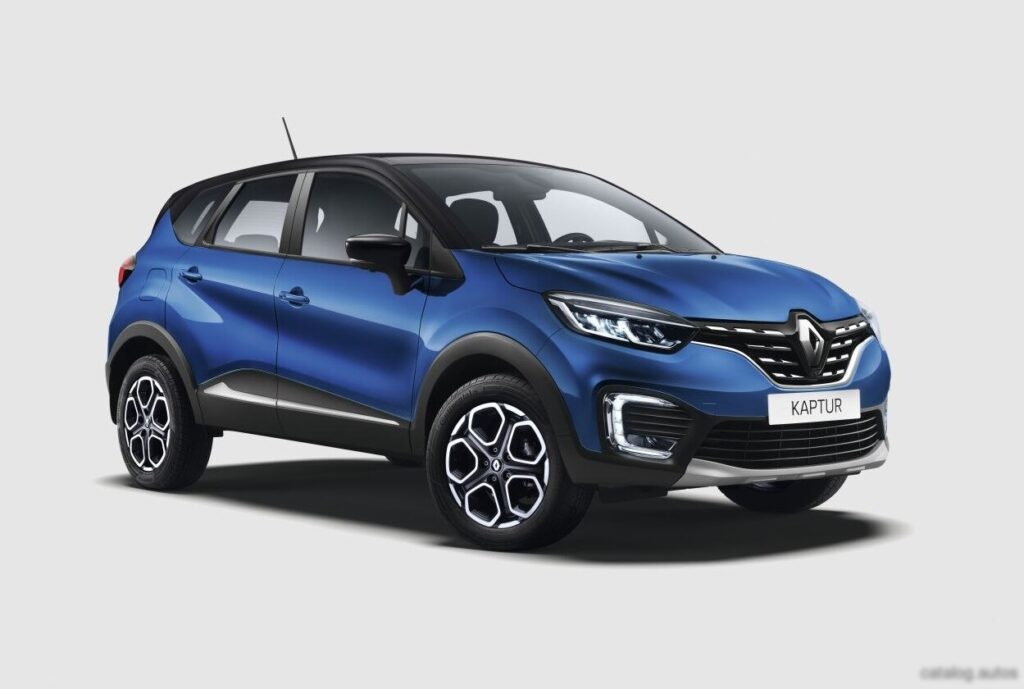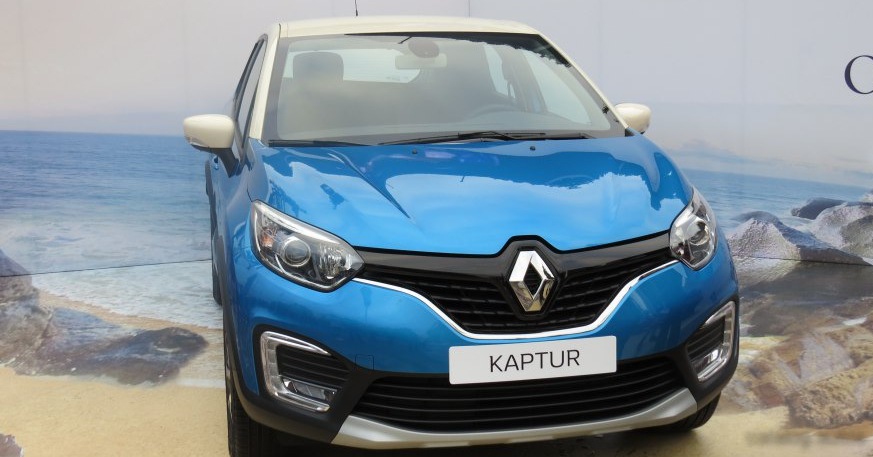
The Renault Kaptur 2.0 (143 Hp) 4×4 was a crossover SUV produced by the French automaker Renault from April 2016 to May 2020. Positioned as a more rugged and capable variant within the Kaptur range, it offered all-wheel drive and a more powerful engine option compared to the base models. The Kaptur itself was primarily marketed in Russia and other Eastern European markets, representing Renault’s attempt to capture a growing segment of buyers seeking affordable, practical, and stylish compact SUVs. It was built on the B0 platform, shared with other Renault and Nissan models.
Technical Specifications
| Brand | Renault |
| Model | Kaptur |
| Generation | Kaptur |
| Type (Engine) | 2.0 (143 Hp) 4×4 |
| Start of production | April, 2016 |
| End of production | May, 2020 |
| Powertrain Architecture | Internal Combustion engine |
| Body type | Crossover |
| Seats | 5 |
| Doors | 5 |
| Fuel consumption (urban) | 10.1 l/100 km (23.3 US mpg, 28 UK mpg, 9.9 km/l) |
| Fuel consumption (extra urban) | 6.7 l/100 km (35.1 US mpg, 42.2 UK mpg, 14.9 km/l) |
| Fuel consumption (combined) | 8 l/100 km (29.4 US mpg, 35.3 UK mpg, 12.5 km/l) |
| CO2 emissions | 185 g/km |
| Fuel Type | Petrol (Gasoline) |
| Acceleration 0 – 100 km/h | 10.5 sec |
| Acceleration 0 – 62 mph | 10.5 sec |
| Acceleration 0 – 60 mph | 10 sec |
| Maximum speed | 185 km/h (114.95 mph) |
| Emission standard | Euro 5 |
| Weight-to-power ratio | 9.7 kg/Hp, 102.9 Hp/tonne |
| Weight-to-torque ratio | 7.1 kg/Nm, 140.3 Nm/tonne |
| Power | 143 Hp @ 5750 rpm |
| Power per litre | 71.6 Hp/l |
| Torque | 195 Nm @ 4000 rpm (143.82 lb.-ft. @ 4000 rpm) |
| Engine layout | Front, Transverse |
| Engine Model/Code | F4R |
| Engine displacement | 1998 cm3 (121.93 cu. in.) |
| Number of cylinders | 4 |
| Engine configuration | Inline |
| Cylinder Bore | 82.7 mm (3.26 in.) |
| Piston Stroke | 93 mm (3.66 in.) |
| Compression ratio | 11.05:1 |
| Number of valves per cylinder | 4 |
| Fuel injection system | Multi-port manifold injection |
| Engine aspiration | Naturally aspirated engine |
| Engine oil capacity | 5.5 l (5.81 US qt | 4.84 UK qt) |
| Coolant | 4.5 l (4.76 US qt | 3.96 UK qt) |
| Kerb Weight | 1390-1411 kg (3064.43 – 3110.72 lbs.) |
| Max. weight | 1859 kg (4098.39 lbs.) |
| Max load | 448-469 kg (987.67 – 1033.97 lbs.) |
| Trunk (boot) space – minimum | 387 l (13.67 cu. ft.) |
| Trunk (boot) space – maximum | 1200 l (42.38 cu. ft.) |
| Fuel tank capacity | 52 l (13.74 US gal | 11.44 UK gal) |
| Permitted trailer load with brakes (12%) | 1200 kg (2645.55 lbs.) |
| Permitted trailer load without brakes | 730 kg (1609.37 lbs.) |
| Length | 4333 mm (170.59 in.) |
| Width | 1813 mm (71.38 in.) |
| Height | 1613 mm (63.5 in.) |
| Wheelbase | 2673 mm (105.24 in.) |
| Front track | 1564 mm (61.57 in.) |
| Rear (Back) track | 1570 mm (61.81 in.) |
| Ride height (ground clearance) | 204 mm (8.03 in.) |
| Drag coefficient (Cd) | 0.30 |
| Minimum turning circle (turning diameter) | 11 m (36.09 ft.) |
| Approach angle | 20° |
| Departure angle | 31° |
| Drive wheel | All wheel drive (4×4) |
| Number of gears and type of gearbox | 6 gears, manual transmission |
| Front suspension | Independent, type McPherson with coil spring and anti-roll bar |
| Rear suspension | Independent multi-link spring suspension with stabilizer |
| Front brakes | Ventilated discs |
| Rear brakes | Drum |
| Assisting systems | ABS (Anti-lock braking system) |
| Steering type | Steering rack and pinion |
| Power steering | Hydraulic Steering |
| Tires size | 215/65 R16; 215/60 R17 |
| Wheel rims size | 16; 17 |
Powertrain & Engine Architecture
The Renault Kaptur 2.0 4×4 was powered by the F4R engine, a 1.998-liter (121.93 cubic inches) inline-four cylinder gasoline engine. This engine had been a mainstay in Renault’s lineup for many years, known for its relative simplicity and durability. It featured a multi-point fuel injection system and a compression ratio of 11.05:1. The engine produced 143 horsepower at 5750 rpm and 195 Nm (143.82 lb-ft) of torque at 4000 rpm. The engine’s all-aluminum construction helped to keep weight down. The 4×4 system was a part-time all-wheel drive system, typically operating in front-wheel drive and engaging the rear wheels when traction was lost. The transmission was a six-speed manual gearbox, providing a balance between fuel efficiency and driver control.
Driving Characteristics
The 2.0-liter engine and manual transmission combination provided adequate performance for everyday driving. Acceleration from 0 to 100 km/h (0-62 mph) took approximately 10.5 seconds, which was competitive within its segment. The all-wheel drive system significantly improved traction, particularly on slippery surfaces. Compared to the base engine options available in the Kaptur range, the 2.0-liter offered a noticeable improvement in responsiveness and overall driving enjoyment. However, it wasn’t a particularly sporty vehicle; the focus was on practicality and capability rather than outright performance. The manual transmission allowed for more driver engagement than an automatic, but the gear ratios were tuned for fuel economy and smooth operation rather than aggressive acceleration.
Equipment & Trim Levels
The Kaptur 2.0 4×4 typically came with a reasonably well-equipped standard specification. This included air conditioning, power windows, central locking, and an audio system with USB connectivity. Higher trim levels added features such as alloy wheels, fog lights, a touchscreen infotainment system with navigation, and a rear-view camera. Interior upholstery was typically cloth, with options for leather seats on higher-spec models. Safety features included ABS brakes, front airbags, and ISOFIX child seat anchors. Optional extras included a panoramic sunroof, heated seats, and parking sensors.
Chassis & Braking
The Kaptur featured independent suspension all around, with a McPherson strut setup at the front and a multi-link system at the rear. This provided a comfortable ride quality, even on uneven surfaces. The front brakes were ventilated discs, while the rear brakes were drums. The all-wheel drive system added to the vehicle’s weight, but the suspension was tuned to handle the increased mass. The hydraulic power steering provided a reasonable level of assistance, making the vehicle easy to maneuver in urban environments. The ground clearance of 204 mm (8.03 inches) allowed for some light off-road capability.
Market Reception & Comparison
The Renault Kaptur 2.0 4×4 was generally well-received in its target markets. Critics praised its spacious interior, comfortable ride, and capable all-wheel drive system. However, some reviewers noted that the engine could feel a bit underpowered when fully loaded or driving uphill. Compared to other crossovers in its class, the Kaptur offered a good value proposition, with a competitive price and a generous level of standard equipment. Fuel economy was reasonable, but not class-leading. The 2.0-liter engine offered a better balance of performance and fuel efficiency than the smaller engine options, making it a popular choice for buyers who needed a bit more power.
Legacy
The Renault Kaptur 2.0 4×4 has proven to be a relatively reliable vehicle, with the F4R engine being known for its durability. Common maintenance items include regular oil changes, filter replacements, and spark plug servicing. The all-wheel drive system requires periodic inspection and maintenance to ensure proper operation. On the used car market, the Kaptur 2.0 4×4 holds its value reasonably well, particularly models in good condition with a full service history. It remains a practical and affordable option for buyers seeking a compact crossover SUV with all-wheel drive capability.