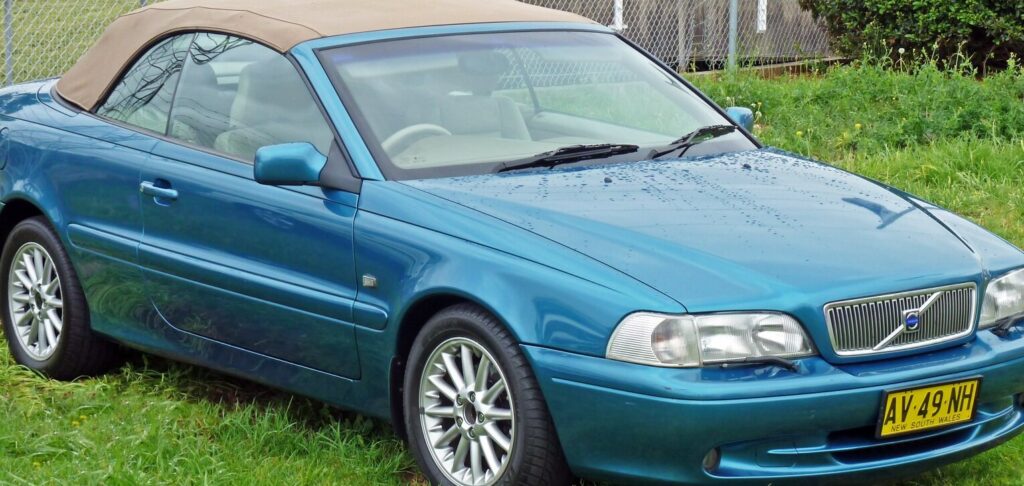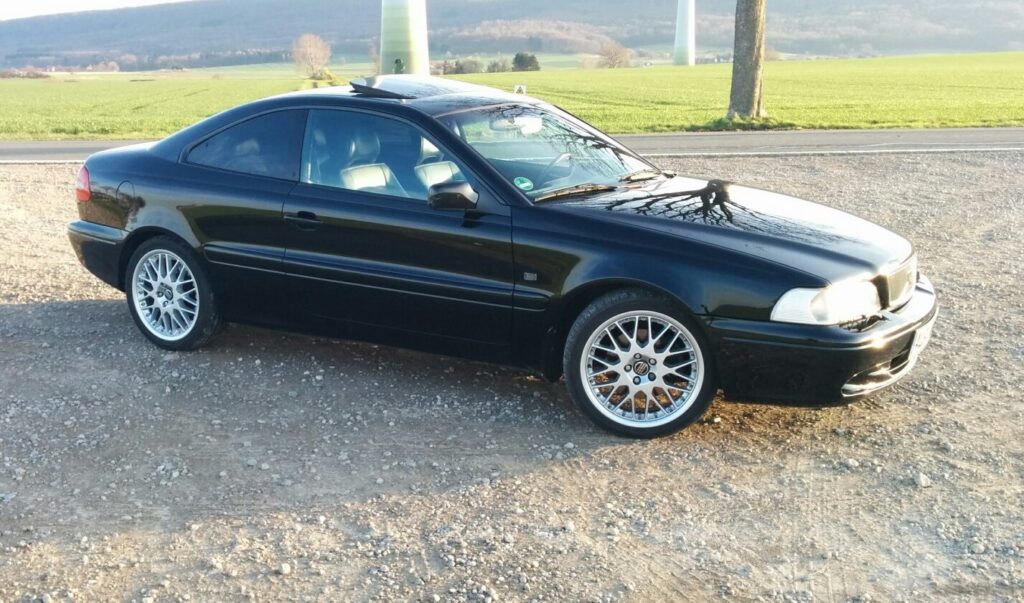
The Volvo C70 Coupe 2.3 20V T5, produced between 1996 and 2001, represented Volvo’s foray into the premium coupe market. Based on the 850 platform, the C70 aimed to combine Scandinavian practicality with sporty styling and performance. This particular variant, equipped with the 2.3-liter turbocharged five-cylinder engine and a four-speed automatic transmission, occupied a middle ground in the C70 lineup, offering a balance between performance and ease of driving. It was positioned above the naturally aspirated 2.0-liter models and below the more potent, and often manually-equipped, higher-output versions.
Technical Specifications
| Brand | Volvo |
| Model | C70 |
| Generation | C70 Coupe |
| Type (Engine) | 2.3 20V T5 (240 Hp) Automatic |
| Start of production | 1996 |
| End of production | 2001 |
| Powertrain Architecture | Internal Combustion engine |
| Body type | Coupe |
| Seats | 4 |
| Doors | 2 |
| Fuel consumption (urban) | 17.1 l/100 km (13.8 US mpg, 16.5 UK mpg, 5.8 km/l) |
| Fuel consumption (extra urban) | 8.7 l/100 km (27 US mpg, 32.5 UK mpg, 11.5 km/l) |
| Fuel consumption (combined) | 11.7 l/100 km (20.1 US mpg, 24.1 UK mpg, 8.5 km/l) |
| Fuel Type | Petrol (Gasoline) |
| Acceleration 0 – 100 km/h | 7.2 sec |
| Acceleration 0 – 62 mph | 7.2 sec |
| Acceleration 0 – 60 mph | 6.8 sec |
| Maximum speed | 240 km/h (149.13 mph) |
| Power | 240 Hp @ 5100 rpm |
| Power per litre | 103.5 Hp/l |
| Torque | 330 Nm @ 2700-5100 rpm (243.4 lb.-ft. @ 2700-5100 rpm) |
| Engine layout | Front, Transverse |
| Engine Model/Code | B5234T3 |
| Engine displacement | 2319 cm3 (141.51 cu. in.) |
| Number of cylinders | 5 |
| Engine configuration | Inline |
| Cylinder Bore | 81 mm (3.19 in.) |
| Piston Stroke | 90 mm (3.54 in.) |
| Compression ratio | 8.5:1 |
| Number of valves per cylinder | 4 |
| Fuel injection system | Multi-port manifold injection |
| Engine aspiration | Turbocharger |
| Valvetrain | DOHC |
| Engine oil capacity | 5.8 l (6.13 US qt | 5.1 UK qt) |
| Coolant | 7 l (7.4 US qt | 6.16 UK qt) |
| Max. weight | 1950 kg (4299.01 lbs.) |
| Trunk (boot) space – minimum | 427 l (15.08 cu. ft.) |
| Fuel tank capacity | 70 l (18.49 US gal | 15.4 UK gal) |
| Max. roof load | 100 kg (220.46 lbs.) |
| Permitted trailer load with brakes (12%) | 1103 kg (2431.7 lbs.) |
| Length | 4720 mm (185.83 in.) |
| Width | 1820 mm (71.65 in.) |
| Height | 1410 mm (55.51 in.) |
| Wheelbase | 2660 mm (104.72 in.) |
| Front track | 1520 mm (59.84 in.) |
| Rear (Back) track | 1520 mm (59.84 in.) |
| Ride height (ground clearance) | 121 mm (4.76 in.) |
| Drag coefficient (Cd) | 0.29 |
| Minimum turning circle (turning diameter) | 11.7 m (38.39 ft.) |
| Drivetrain Architecture | The Internal combustion engine (ICE) drives the front wheels of the vehicle. |
| Drive wheel | Front wheel drive |
| Number of gears and type of gearbox | 4 gears, automatic transmission |
| Front suspension | Wishbone |
| Rear suspension | Coil spring |
| Front brakes | Ventilated discs, 302 mm |
| Rear brakes | Ventilated discs, 295 mm |
| Assisting systems | ABS (Anti-lock braking system) |
| Steering type | Steering rack and pinion |
| Power steering | Hydraulic Steering |
| Tires size | 225/45 R17 |
| Wheel rims size | 17 |
Powertrain & Engine Architecture
The heart of the C70 T5 is the B5234T3 engine, a 2.3-liter inline five-cylinder powerplant. This engine, a staple of Volvo’s performance models in the 1990s, featured a light-pressure turbocharger, multi-port fuel injection, and a double overhead camshaft (DOHC) valvetrain with 20 valves. The turbocharger provided a significant boost in power and torque, making the engine responsive and capable. The B5234T3 was known for its robust construction and relatively simple design, contributing to its reliability. The four-speed automatic transmission, while not as sporty as a manual, offered smooth shifts and convenience. It was designed to handle the engine’s torque output, but its gear ratios were geared more towards comfort and fuel efficiency than outright acceleration.
Driving Characteristics
The C70 2.3 T5 Automatic delivered a comfortable and refined driving experience. Acceleration from 0-60 mph took around 6.8 seconds, respectable for the era, but noticeably slower than the manual transmission versions. The automatic transmission, while smooth, did result in some power loss and a less engaging driving feel. The gear ratios were spaced to prioritize cruising comfort, meaning the engine sometimes felt strained during hard acceleration. Steering was light and precise, and the suspension provided a good balance between ride comfort and handling. Compared to the base 2.0-liter models, the T5 offered a substantial performance upgrade, making it a more enjoyable car for spirited driving.
Equipment & Trim Levels
The C70 T5 Automatic typically came well-equipped, reflecting its position as a premium coupe. Standard features included leather upholstery, power windows and locks, a sunroof, and an upgraded audio system. Optional extras included heated front seats, automatic climate control, and a premium sound system. The interior design was typically Scandinavian – clean, functional, and focused on comfort. The dashboard layout was straightforward, with easy-to-read gauges and logically placed controls. The overall ambiance was one of understated luxury.
Chassis & Braking
The C70 Coupe utilized a front-wheel-drive layout with an independent wishbone front suspension and a coil spring rear suspension. This setup provided a comfortable ride and predictable handling. Braking duties were handled by ventilated discs on all four wheels, with ABS (Anti-lock Braking System) standard. The braking system was adequate for the car’s performance, providing good stopping power in most conditions. The C70’s chassis was relatively lightweight, contributing to its agility and responsiveness.
Market Reception & Comparison
The Volvo C70 Coupe was generally well-received by critics, who praised its stylish design, comfortable interior, and strong performance. The 2.3 T5 Automatic variant was seen as a good compromise between performance and convenience. However, some reviewers noted that the automatic transmission dulled the driving experience compared to the manual version. Fuel economy was average for the class, with combined figures around 20 mpg. Compared to rivals like the BMW 3 Series Coupe and the Mercedes-Benz CLK, the C70 offered a unique Scandinavian aesthetic and a reputation for safety and reliability.
Legacy
The Volvo C70 Coupe 2.3 T5 Automatic has proven to be a relatively reliable car over the long term. The B5234T3 engine is known for its durability, and the automatic transmission, while not without its quirks, has generally held up well. Today, these cars are becoming increasingly sought after by enthusiasts and collectors. Parts availability is generally good, although some specific trim pieces may be difficult to find. The C70 T5 Automatic represents a unique blend of Scandinavian design, turbocharged performance, and everyday practicality, making it a desirable classic for those seeking a stylish and comfortable coupe.