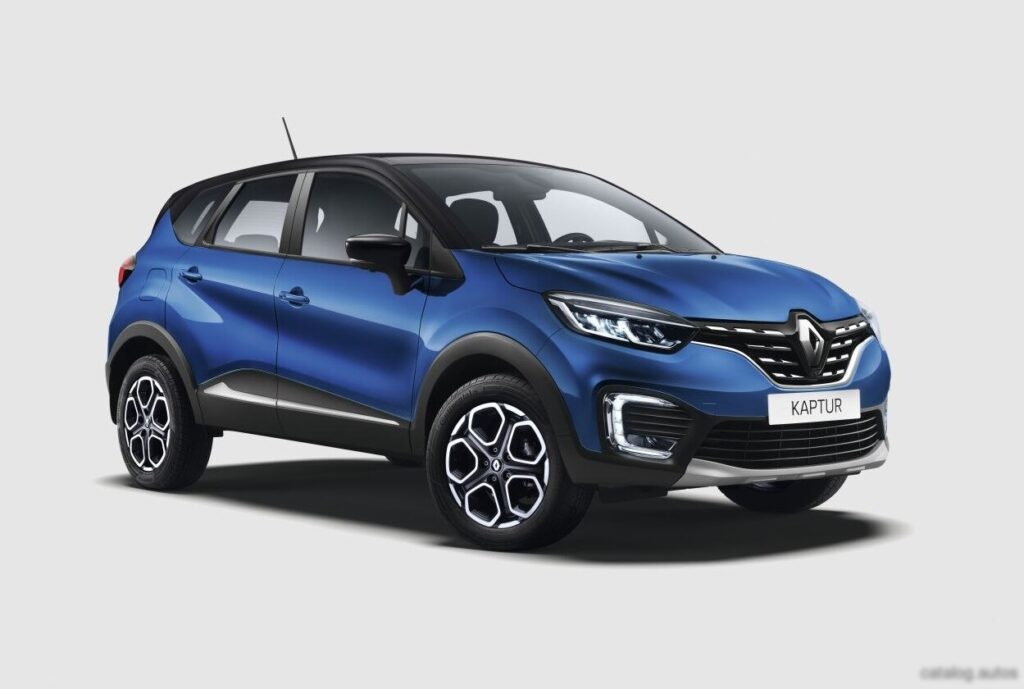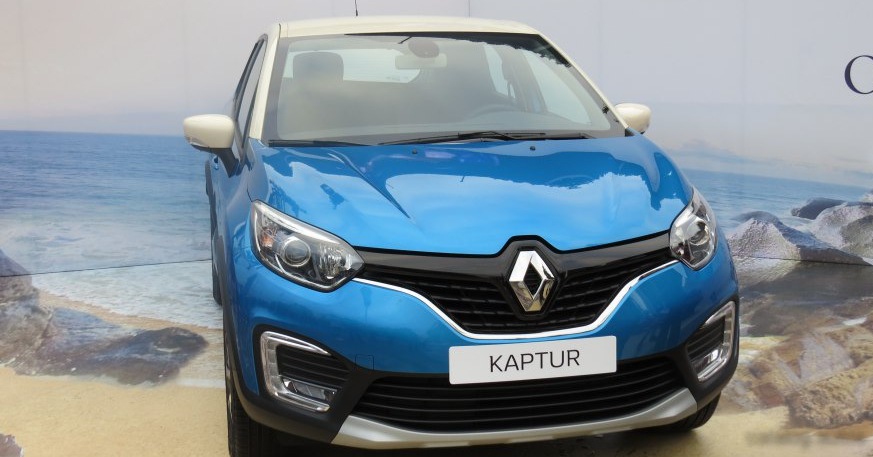
The Renault Kaptur 2.0 (143 Hp) 4×4 Automatic was a crossover SUV produced by Renault between April 2016 and May 2020. Designed primarily for the Russian and Eastern European markets, the Kaptur represented Renault’s entry into the growing compact SUV segment. It was based on the B0 platform, shared with other Renault and Nissan models, and aimed to provide a blend of affordability, practicality, and available all-wheel drive capability. This particular variant, equipped with the 2.0-liter engine and four-speed automatic transmission, occupied a mid-to-upper position within the Kaptur lineup, offering a step up in performance compared to the base 1.6-liter engine options.
Technical Specifications
| Brand | Renault |
| Model | Kaptur |
| Generation | Kaptur |
| Type (Engine) | 2.0 (143 Hp) 4×4 Automatic |
| Start of production | April, 2016 |
| End of production | May, 2020 |
| Powertrain Architecture | Internal Combustion engine |
| Body type | Crossover |
| Seats | 5 |
| Doors | 5 |
| Fuel consumption (urban) | 11.7 l/100 km (20.1 US mpg, 24.1 UK mpg, 8.5 km/l) |
| Fuel consumption (extra urban) | 7.3 l/100 km (32.2 US mpg, 38.7 UK mpg, 13.7 km/l) |
| Fuel consumption (combined) | 8.9 l/100 km (26.4 US mpg, 31.7 UK mpg, 11.2 km/l) |
| CO2 emissions | 206 g/km |
| Fuel Type | Petrol (Gasoline) |
| Acceleration 0 – 100 km/h | 11.2 sec |
| Acceleration 0 – 62 mph | 11.2 sec |
| Acceleration 0 – 60 mph | 10.6 sec |
| Maximum speed | 180 km/h (111.85 mph) |
| Emission standard | Euro 5 |
| Weight-to-power ratio | 9.8 kg/Hp, 101.8 Hp/tonne |
| Weight-to-torque ratio | 7.2 kg/Nm, 138.8 Nm/tonne |
| Power | 143 Hp @ 5750 rpm |
| Power per litre | 71.6 Hp/l |
| Torque | 195 Nm @ 4000 rpm (143.82 lb.-ft. @ 4000 rpm) |
| Engine layout | Front, Transverse |
| Engine Model/Code | F4R |
| Engine displacement | 1998 cm3 (121.93 cu. in.) |
| Number of cylinders | 4 |
| Engine configuration | Inline |
| Cylinder Bore | 82.7 mm (3.26 in.) |
| Piston Stroke | 93 mm (3.66 in.) |
| Compression ratio | 11.05:1 |
| Number of valves per cylinder | 4 |
| Fuel injection system | Multi-port manifold injection |
| Engine aspiration | Naturally aspirated engine |
| Engine oil capacity | 5.5 l (5.81 US qt | 4.84 UK qt) |
| Coolant | 4.5 l (4.76 US qt | 3.96 UK qt) |
| Kerb Weight | 1405-1426 kg (3097.49 – 3143.79 lbs.) |
| Max. weight | 1874 kg (4131.46 lbs.) |
| Max load | 448-469 kg (987.67 – 1033.97 lbs.) |
| Trunk (boot) space – minimum | 387 l (13.67 cu. ft.) |
| Trunk (boot) space – maximum | 1200 l (42.38 cu. ft.) |
| Fuel tank capacity | 52 l (13.74 US gal | 11.44 UK gal) |
| Permitted trailer load with brakes (12%) | 1200 kg (2645.55 lbs.) |
| Permitted trailer load without brakes | 740 kg (1631.42 lbs.) |
| Length | 4333 mm (170.59 in.) |
| Width | 1813 mm (71.38 in.) |
| Height | 1613 mm (63.5 in.) |
| Wheelbase | 2673 mm (105.24 in.) |
| Front track | 1564 mm (61.57 in.) |
| Rear (Back) track | 1570 mm (61.81 in.) |
| Ride height (ground clearance) | 204 mm (8.03 in.) |
| Drag coefficient (Cd) | 0.30 |
| Minimum turning circle (turning diameter) | 11 m (36.09 ft.) |
| Approach angle | 20° |
| Departure angle | 31° |
| Drive wheel | All wheel drive (4×4) |
| Number of gears and type of gearbox | 4 gears, automatic transmission |
| Front suspension | Independent, type McPherson with coil spring and anti-roll bar |
| Rear suspension | Independent multi-link spring suspension with stabilizer |
| Front brakes | Ventilated discs |
| Rear brakes | Drum |
| Assisting systems | ABS (Anti-lock braking system) |
| Steering type | Steering rack and pinion |
| Power steering | Hydraulic Steering |
| Tires size | 215/65 R16; 215/60 R17 |
| Wheel rims size | 16; 17 |
INTRODUCTION
The Renault Kaptur 2.0 4×4 Automatic, launched in April 2016, was a significant addition to Renault’s lineup, particularly in markets like Russia where demand for compact SUVs with all-wheel drive was growing. Built on the B0 platform, the Kaptur shared underpinnings with the Dacia Duster, but featured a more refined interior and a distinct exterior design. The 2.0-liter engine and four-speed automatic transmission combination aimed to provide a balance between performance and ease of driving, appealing to customers seeking a comfortable and capable crossover.
Powertrain & Engine Architecture
The heart of the Kaptur 2.0 4×4 Automatic is the F4R engine, a 1998cc inline-four cylinder gasoline engine. This engine, a mainstay in Renault’s portfolio for many years, utilizes a multi-point fuel injection system and a naturally aspirated design. It produces 143 horsepower at 5750 rpm and 195 Nm (143.82 lb-ft) of torque at 4000 rpm. The engine features a cast iron block and aluminum cylinder head, with four valves per cylinder. The four-speed automatic transmission, while providing convenience, is a relatively older design compared to the continuously variable transmissions (CVTs) or six-speed automatics becoming common in newer vehicles. It’s a conventional hydraulic automatic, known for its robustness but less efficient than more modern transmissions.
Driving Characteristics
The Kaptur 2.0 4×4 Automatic offered adequate, but not particularly exhilarating, performance. The 0-60 mph acceleration time of around 10.6 seconds reflects this. The four-speed automatic transmission, while smooth in operation, limited the engine’s ability to stay in its optimal power band. Gear ratios were spaced relatively wide, resulting in noticeable shifts during acceleration. Compared to the manual transmission versions of the Kaptur, the automatic felt slightly less responsive. The all-wheel-drive system provided enhanced traction in slippery conditions, making it a capable vehicle for inclement weather or light off-road use. However, it wasn’t designed for serious off-roading.
Equipment & Trim Levels
The Kaptur 2.0 4×4 Automatic typically came with a reasonable level of standard equipment. This included air conditioning, power windows, central locking, and an audio system with USB connectivity. Higher trim levels added features such as alloy wheels, fog lights, a touchscreen infotainment system with navigation, and rear parking sensors. Interior upholstery was typically cloth, with options for leather seats on higher-spec models. Safety features included ABS brakes, front airbags, and, on some trims, electronic stability control.
Chassis & Braking
The Kaptur utilized an independent McPherson strut suspension at the front and an independent multi-link suspension at the rear, providing a comfortable ride quality. The front suspension incorporated a stabilizer bar to reduce body roll during cornering. Braking duties were handled by ventilated discs at the front and drum brakes at the rear. The all-wheel-drive system employed a viscous coupling to distribute torque between the front and rear axles, automatically adjusting based on traction conditions. The hydraulic power steering provided light and easy steering feel.
Market Reception & Comparison
The Renault Kaptur 2.0 4×4 Automatic was generally well-received in its target markets. Critics praised its spacious interior, comfortable ride, and available all-wheel drive. However, the four-speed automatic transmission was often criticized for its dated technology and impact on fuel economy. Compared to the 1.6-liter Kaptur models, the 2.0-liter version offered noticeably more power and better acceleration, but at the cost of increased fuel consumption. The Kaptur competed with other compact crossovers such as the Hyundai Creta and Kia Sportage, offering a compelling value proposition in terms of price and features.
Legacy
The Renault Kaptur 2.0 4×4 Automatic, while no longer in production, remains a relatively common sight on the used car market. The F4R engine is known for its durability and reliability, provided it receives regular maintenance. The four-speed automatic transmission, while not the most efficient, is generally robust. Potential buyers should be aware of the higher fuel consumption compared to newer vehicles and the limited availability of spare parts in some regions. Overall, the Kaptur 2.0 4×4 Automatic represents a practical and affordable crossover SUV that offered a good balance of features and capability for its time.