
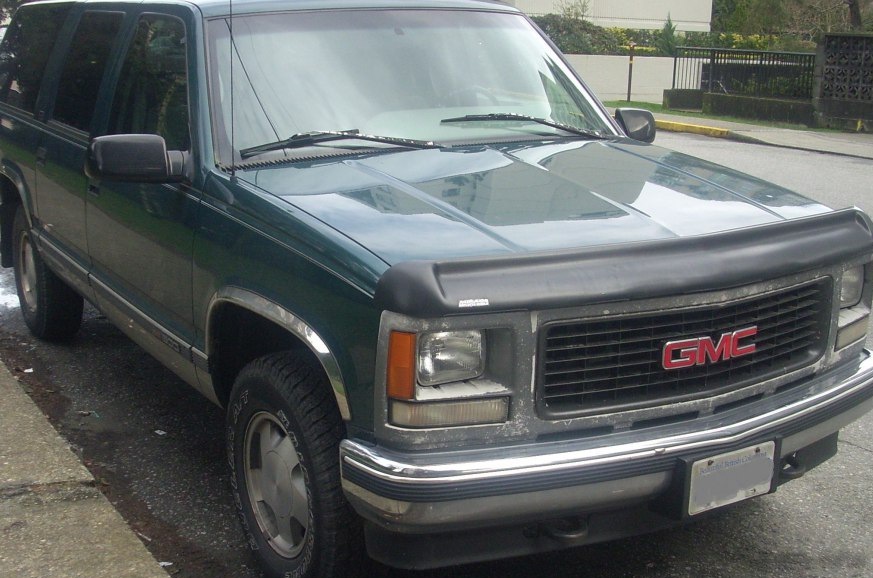
The GMC Suburban 5.7 V8, produced for the 1995 and 1996 model years, represents a significant iteration of the long-running Suburban full-size SUV. Falling within the broader fourth generation (1992-1996) of the Suburban, this variant occupied a middle ground in the lineup, offering a balance between capability and affordability. It served as a popular choice for families and those needing substantial towing capacity, particularly in North America where large SUVs were, and continue to be, in high demand. This specific configuration – the 5.7-liter V8 paired with a four-speed automatic transmission – was a mainstay for buyers who prioritized a proven powertrain over the newer, more complex technologies emerging at the time.
Technical Specifications
| Brand | GMC |
| Model | Suburban |
| Generation | Suburban (Fourth Generation) |
| Type (Engine) | 5.7 V8 (200 Hp) |
| Start of production | 1995 |
| End of production | 1996 |
| Powertrain Architecture | Internal Combustion engine |
| Body type | SUV |
| Seats | 8 |
| Doors | 5 |
| Fuel Type | Petrol (Gasoline) |
| Weight-to-power ratio | 11.5 kg/Hp, 87 Hp/tonne |
| Power | 200 Hp |
| Power per litre | 34.9 Hp/l |
| Engine displacement | 5737 cm3 |
| Engine displacement (cu. in.) | 350.09 cu. in. |
| Number of cylinders | 8 |
| Engine configuration | V-engine |
| Engine oil capacity | 4.8 l (5.07 US qt | 4.22 UK qt) |
| Coolant capacity | 16.5 l (17.44 US qt | 14.52 UK qt) |
| Kerb Weight | 2300 kg (5070.63 lbs.) |
| Max. weight | 3250 kg (7165.02 lbs.) |
| Max load | 950 kg (2094.39 lbs.) |
| Fuel tank capacity | 150 l (39.63 US gal | 33 UK gal) |
| Length | 5575 mm (219.49 in.) |
| Width | 1956 mm (77.01 in.) |
| Height | 1910 mm (75.2 in.) |
| Wheelbase | 3340 mm (131.5 in.) |
| Drive wheel | All wheel drive (4×4) |
| Front brakes | Disc |
| Rear brakes | Disc |
| Assisting systems | ABS (Anti-lock braking system) |
| Power steering | Hydraulic Steering |
| Tires size | 245/75 R16 |
| Wheel rims size | 16 |
Powertrain & Engine Architecture
The heart of this Suburban variant is the 5.7-liter (350 cubic inch) small-block Chevrolet V8 engine. This engine, designated L30, is a naturally aspirated, pushrod design known for its durability and relatively simple construction. It utilizes sequential fuel injection, a significant upgrade from the carburetor-equipped engines of earlier Suburbans, improving fuel efficiency and driveability. The engine’s valvetrain consists of two valves per cylinder, operated by a hydraulic lifter camshaft. The 4L60E four-speed automatic transmission was the standard pairing for this engine. This transmission is electronically controlled, offering smoother shifts and improved efficiency compared to older hydraulic automatics. The 4L60E is known for its robustness, but also for potential issues with overheating if subjected to heavy towing or prolonged use in demanding conditions.
Driving Characteristics
The 200 horsepower and 300 lb-ft of torque produced by the 5.7L V8 provided adequate, though not exhilarating, performance for the substantial weight of the Suburban. Acceleration from 0 to 60 mph was typically in the 9-10 second range. The 4L60E transmission’s gear ratios were geared towards towing and cruising, prioritizing low-end torque over outright speed. Compared to the available 6.5L diesel engine, the 5.7L V8 offered quicker acceleration and a more responsive feel, but lacked the diesel’s superior towing capacity and fuel economy. Against the smaller 5.0L V8 option, the 5.7L provided a noticeable power increase, making it a more suitable choice for those regularly hauling passengers or cargo. The Suburban’s substantial size and body-on-frame construction resulted in a noticeable amount of body roll in corners, but the hydraulic steering provided a reasonably direct feel.
Equipment & Trim Levels
The 1995-1996 Suburban 5.7 V8 was typically offered in base and SLX trim levels. The base model included standard features such as air conditioning, cloth upholstery, an AM/FM stereo, and power windows and locks. The SLX trim added features like upgraded cloth or leather upholstery, a premium sound system, and exterior trim enhancements. Optional extras included a heavy-duty towing package, a sunroof, and rear air conditioning. Interior appointments were generally functional and durable, reflecting the Suburban’s intended use as a workhorse vehicle. Dashboard configurations were relatively simple, with clearly labeled controls and a focus on practicality.
Chassis & Braking
The fourth-generation Suburban utilized a traditional body-on-frame construction, providing a robust and durable platform. The suspension consisted of independent front suspension with coil springs and a solid rear axle with leaf springs. Rear disc brakes were standard, offering improved stopping power compared to earlier drum brake setups. An Anti-lock Braking System (ABS) was also standard, enhancing safety and control during emergency braking situations. The Suburban’s relatively heavy weight and high center of gravity necessitated a robust suspension and braking system to ensure safe and stable handling. Stabilizer bars were included at both the front and rear to reduce body roll.
Market Reception & Comparison
The 1995-1996 GMC Suburban 5.7 V8 was generally well-received by critics and consumers alike. It was praised for its spacious interior, ample cargo capacity, and strong towing capabilities. However, its fuel economy was often criticized, averaging around 13-15 mpg in city driving and 16-18 mpg on the highway. Compared to the 6.5L diesel, the 5.7L V8 offered a lower purchase price and a more refined driving experience, but at the expense of fuel efficiency and maximum towing capacity. The 5.7L V8 was considered a reliable powertrain, but required regular maintenance, including oil changes and tune-ups, to ensure optimal performance.
Legacy
The 5.7L V8-powered Suburban from 1995-1996 remains a popular choice in the used car market, particularly among those seeking a classic American SUV with proven durability. The L30 engine is known for its longevity, and many examples have surpassed 200,000 miles with proper maintenance. However, potential buyers should be aware of common issues such as oil leaks, cooling system problems, and transmission wear. Parts availability is generally good, and the Suburban’s relatively simple mechanical design makes it a relatively easy vehicle to maintain and repair. These Suburbans represent a transitional period in SUV design, bridging the gap between older, more utilitarian models and the more sophisticated and feature-rich SUVs of the late 1990s and early 2000s.
