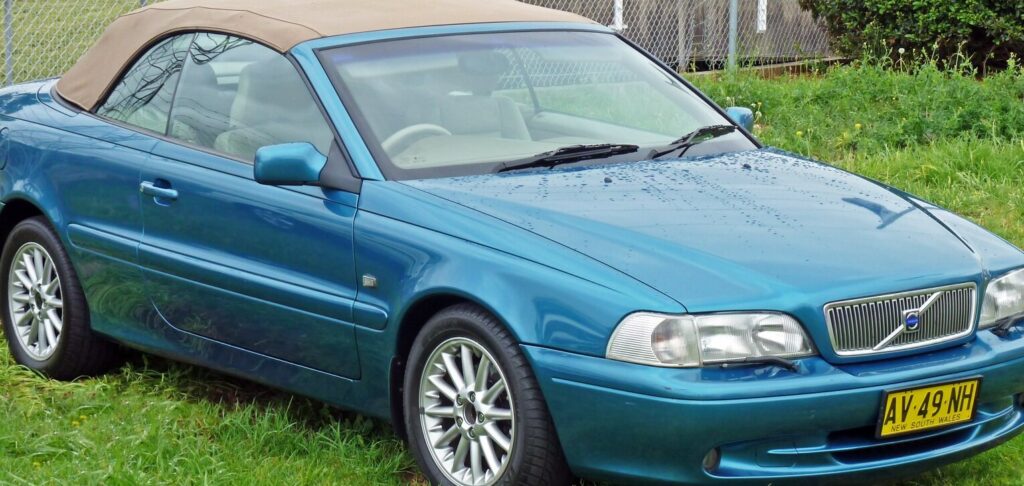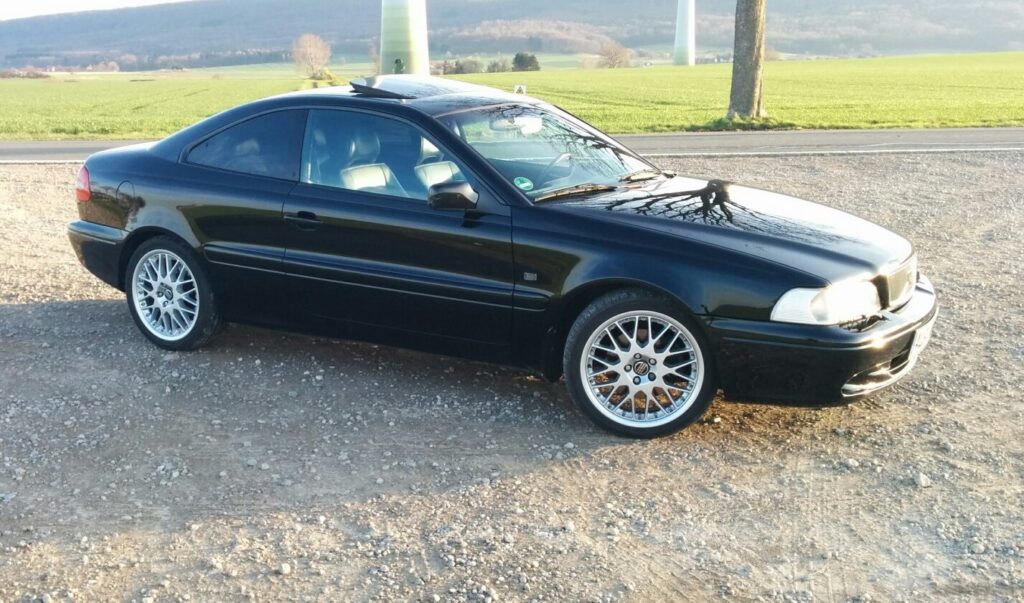
The Volvo C70 Coupe 2.5 20V, produced between 1999 and 2001, represented Volvo’s foray into the premium coupe market. Positioned as a stylish and comfortable grand tourer, it was based on the 850 platform, sharing many components with the S70 sedan and V70 wagon. This generation C70 (internally designated as the first generation) aimed to offer a more sporting alternative to Volvo’s traditionally practical offerings, while still maintaining the brand’s reputation for safety and reliability. The 2.5-liter 20-valve engine paired with a 5-speed manual transmission was a popular choice, offering a balance between performance and fuel economy within the C70 lineup.
Technical Specifications
| Brand | Volvo |
| Model | C70 |
| Generation | C70 Coupe |
| Type (Engine) | 2.5 20 V (170 Hp) |
| Start of production | 1999 |
| End of production | 2001 |
| Powertrain Architecture | Internal Combustion engine |
| Body type | Coupe |
| Seats | 4 |
| Doors | 2 |
| Fuel consumption (urban) | 13.1 l/100 km (18 US mpg, 21.6 UK mpg) |
| Fuel consumption (extra urban) | 7.4 l/100 km (31.8 US mpg, 38.2 UK mpg) |
| Fuel Type | Petrol (Gasoline) |
| Acceleration 0 – 100 km/h | 8.9 sec |
| Acceleration 0 – 62 mph | 8.9 sec |
| Acceleration 0 – 60 mph | 8.5 sec |
| Maximum speed | 215 km/h (133.59 mph) |
| Weight-to-power ratio | 8.5 kg/Hp |
| Weight-to-torque ratio | 6.5 kg/Nm |
| Power | 170 Hp @ 6100 rpm |
| Power per litre | 69.8 Hp/l |
| Torque | 220 Nm @ 4700 rpm (162.26 lb.-ft. @ 4700 rpm) |
| Engine layout | Front, Transverse |
| Engine Model/Code | B5244S |
| Engine displacement | 2435 cm3 (148.59 cu. in.) |
| Number of cylinders | 5 |
| Engine configuration | Inline |
| Cylinder Bore | 83 mm (3.27 in.) |
| Piston Stroke | 90 mm (3.54 in.) |
| Compression ratio | 10.3:1 |
| Number of valves per cylinder | 4 |
| Fuel injection system | Multi-port manifold injection |
| Engine aspiration | Naturally aspirated engine |
| Valvetrain | DOHC |
| Engine oil capacity | 5.8 l (6.13 US qt | 5.1 UK qt) |
| Coolant | 7.2 l (7.61 US qt | 6.34 UK qt) |
| Kerb Weight | 1440 kg (3174.66 lbs.) |
| Max. weight | 1900 kg (4188.78 lbs.) |
| Max load | 460 kg (1014.13 lbs.) |
| Trunk (boot) space – minimum | 370 l (13.07 cu. ft.) |
| Trunk (boot) space – maximum | 1200 l (42.38 cu. ft.) |
| Fuel tank capacity | 70 l (18.49 US gal | 15.4 UK gal) |
| Length | 4716 mm (185.67 in.) |
| Width | 1817 mm (71.54 in.) |
| Height | 1414 mm (55.67 in.) |
| Wheelbase | 2660 mm (104.72 in.) |
| Front track | 1520 mm (59.84 in.) |
| Rear (Back) track | 1520 mm (59.84 in.) |
| Drivetrain Architecture | Front wheel drive |
| Drive wheel | Front wheel drive |
| Number of gears and type of gearbox | 5 gears, manual transmission |
| Front suspension | Wishbone |
| Rear suspension | Coil spring |
| Front brakes | Ventilated discs |
| Rear brakes | Disc |
| Assisting systems | ABS (Anti-lock braking system) |
| Steering type | Steering rack and pinion |
| Power steering | Hydraulic Steering |
| Tires size | 205/55 R16 |
| Wheel rims size | 16 |
Powertrain & Engine Architecture
The heart of the C70 2.5 was the B5244S engine, a naturally aspirated, inline-five cylinder powerplant. This engine was a staple of Volvo’s mid-size and larger models during the late 1990s and early 2000s. The “20V” designation refers to the engine’s dual overhead camshafts (DOHC) and four valves per cylinder, contributing to its relatively high output for its displacement. Fuel delivery was handled by a multi-port fuel injection system, providing precise fuel metering for improved efficiency and performance. The engine’s 83mm bore and 90mm stroke resulted in a displacement of 2.435 liters. The 5-speed manual transmission offered a direct and engaging driving experience, with gear ratios tuned for a balance of acceleration and cruising comfort. This transmission was known for its durability and relatively smooth shifting.
Driving Characteristics
The C70 2.5 with the manual transmission provided a reasonably spirited driving experience. While not a sports car, the 170 horsepower and 162 lb-ft of torque were sufficient for confident acceleration and highway cruising. The 0-60 mph time of around 8.5 seconds was respectable for the era. The inline-five engine delivered a unique exhaust note, distinct from both inline-four and V6 engines. The manual gearbox allowed drivers to fully exploit the engine’s powerband, while the front-wheel-drive configuration provided good traction in most conditions. Compared to the higher-output turbocharged versions of the C70, the 2.5 offered a more linear power delivery and a less demanding driving experience. It was also noticeably more fuel-efficient than its turbocharged siblings.
Equipment & Trim Levels
The C70 Coupe 2.5 typically came well-equipped, reflecting its positioning as a premium vehicle. Standard features included power windows, power locks, air conditioning, and a decent audio system. Interior upholstery was typically cloth, although leather was available as an option. Dashboard design was typical of Volvo at the time – functional, ergonomic, and focused on safety. Optional extras included a sunroof, upgraded audio systems, and heated front seats. The C70 also featured Volvo’s renowned safety features, including ABS brakes and a robust safety cage.
Chassis & Braking
The C70 Coupe utilized a front-wheel-drive chassis with independent wishbone suspension at the front and a coil spring rear suspension. This setup provided a comfortable ride and predictable handling. The front brakes were ventilated discs, offering good stopping power, while the rear brakes were solid discs. The steering was rack-and-pinion with hydraulic power assistance, providing precise and responsive steering feel. The car rode on 16-inch alloy wheels with 205/55 R16 tires, offering a good balance of grip and ride comfort.
Market Reception & Comparison
The Volvo C70 Coupe 2.5 was generally well-received by automotive critics. It was praised for its stylish design, comfortable interior, and strong safety credentials. However, some critics noted that the 2.5-liter engine could feel a bit underpowered compared to the turbocharged options. Fuel economy was considered reasonable for a vehicle of its size and class. Compared to rivals like the BMW 3 Series Coupe and the Audi TT, the C70 offered a more comfortable ride and a more spacious interior, but lacked the same level of sporting prowess. The 2.5-liter version was often seen as the entry-level C70, appealing to buyers who prioritized comfort and practicality over outright performance.
Legacy
The B5244S engine, found in the C70 2.5, is known for its durability and reliability when properly maintained. While not without its potential issues (such as oil leaks and occasional sensor failures), it is generally considered a robust and long-lasting engine. Today, the C70 Coupe 2.5 represents an affordable entry point into the Volvo coupe world. Well-maintained examples are still relatively common on the used car market, and are appreciated by enthusiasts for their classic Volvo styling and comfortable driving experience. Parts availability is generally good, although some specific trim pieces may be difficult to find. The C70 Coupe, in all its variants, helped establish Volvo as a maker of stylish and desirable coupes, paving the way for future models like the current C40 Recharge.