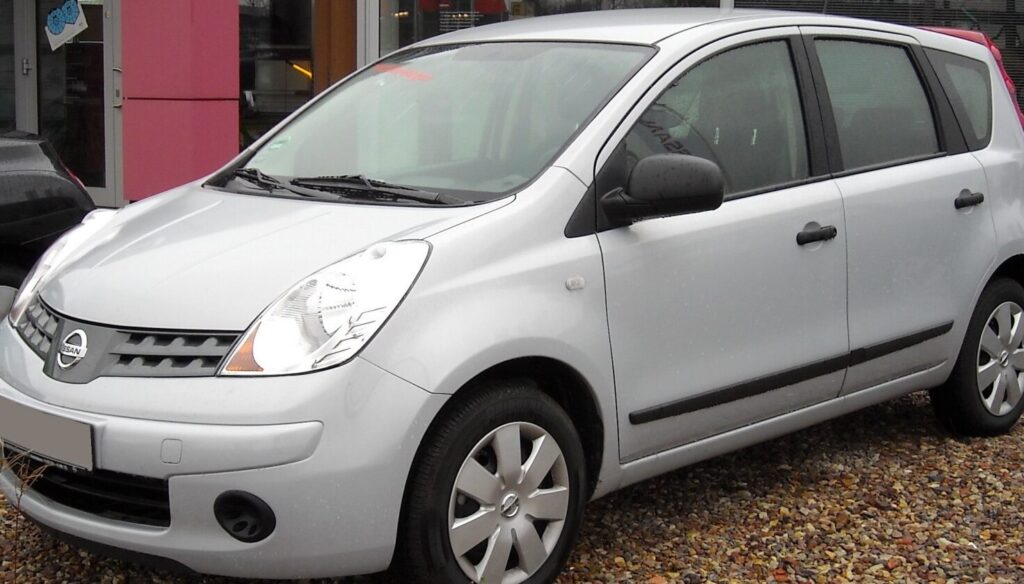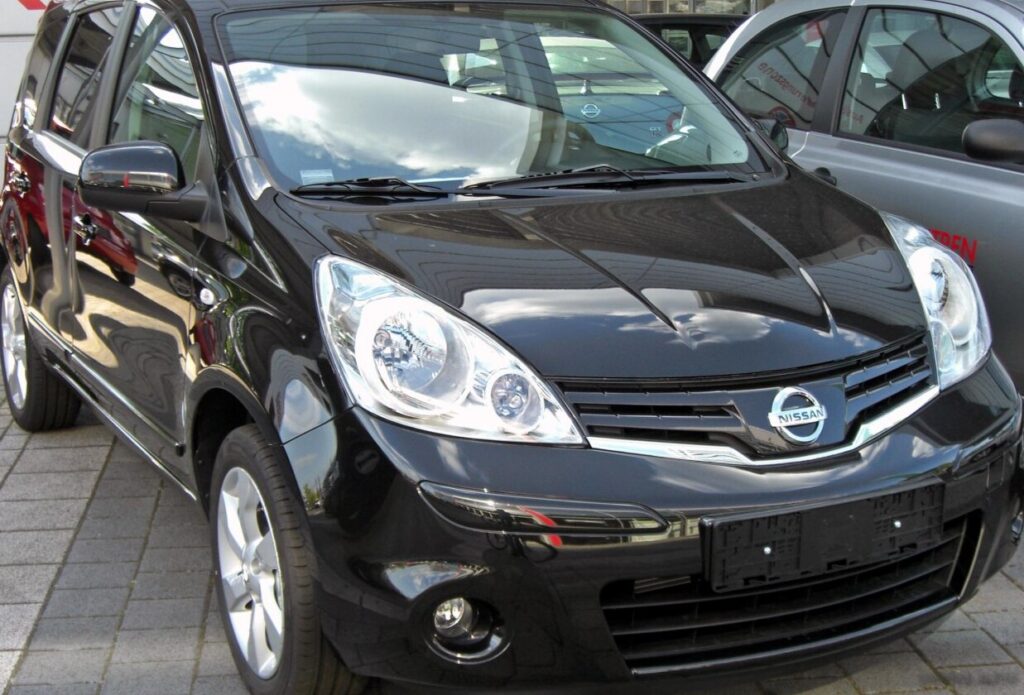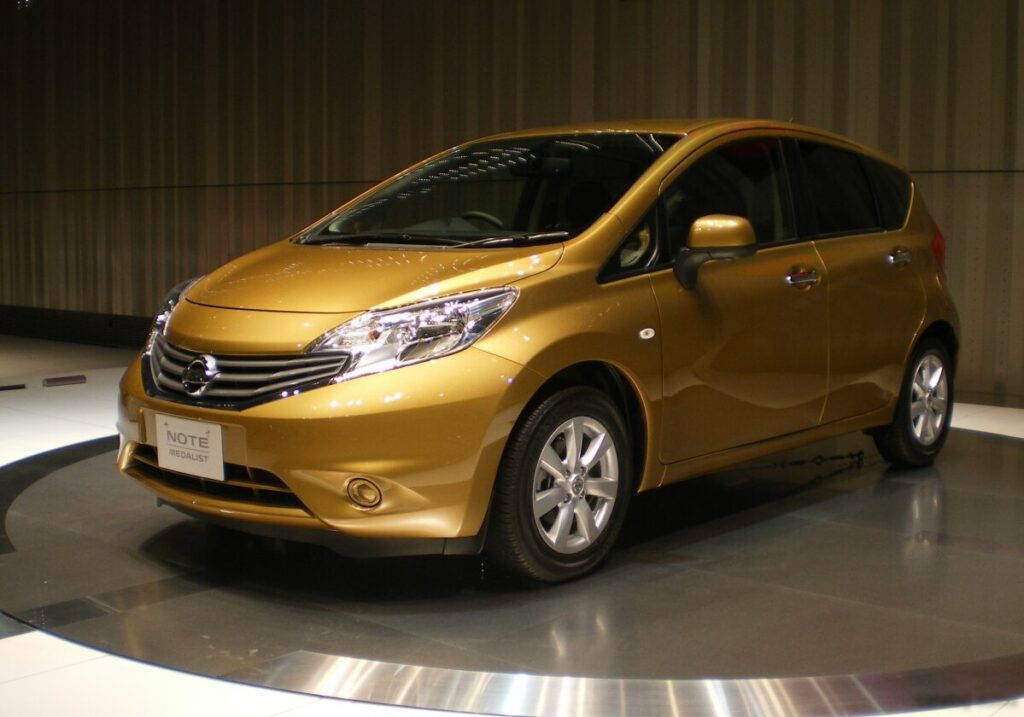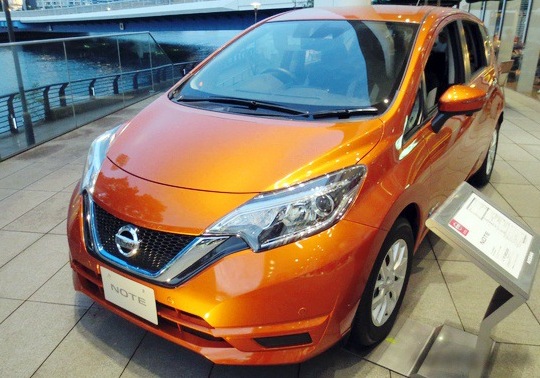
The Nissan Note II (E12 series, specifically the 2017 facelift) 1.2 DIG-S variant, producing 98 horsepower, represents a significant iteration of Nissan’s supermini offering. Introduced in 2017 and continuing through 2020, this model aimed to balance fuel efficiency with adequate performance for urban and suburban driving. Positioned as a mid-range option within the Note II lineup, it slotted between the base 1.2-liter naturally aspirated engine and higher-output turbocharged versions. The E12 Note was primarily marketed in Europe and Japan, offering a practical and economical choice in the competitive B-segment hatchback market.
Technical Specifications
| Brand | Nissan |
| Model | Note |
| Generation | Note II (E12, facelift 2017) |
| Type (Engine) | 1.2 DIG-S (98 Hp) CVT |
| Start of production | 2017 |
| End of production | 2020 |
| Powertrain Architecture | Internal Combustion engine |
| Body type | Hatchback |
| Seats | 5 |
| Doors | 5 |
| Fuel consumption (combined) | 3.8 l/100 km (61.9 US mpg, 74.3 UK mpg, 26.3 km/l) |
| Fuel Type | Petrol (Gasoline) |
| Weight-to-power ratio | 11.1 kg/Hp, 89.9 Hp/tonne |
| Weight-to-torque ratio | 7.7 kg/Nm, 130.3 Nm/tonne |
| Power | 98 Hp @ 5600 rpm |
| Power per litre | 81.8 Hp/l |
| Torque | 142 Nm @ 4400 rpm (104.73 lb.-ft. @ 4400 rpm) |
| Engine layout | Front, Transverse |
| Engine Model/Code | HR12DDR |
| Engine displacement | 1198 cm3 (73.11 cu. in.) |
| Number of cylinders | 3 |
| Engine configuration | Inline |
| Cylinder Bore | 78 mm (3.07 in.) |
| Piston Stroke | 83.6 mm (3.29 in.) |
| Compression ratio | 12:1 |
| Number of valves per cylinder | 4 |
| Fuel injection system | Direct injection |
| Engine aspiration | Supercharger, Intercooler |
| Valvetrain | DOHC |
| Kerb Weight | 1090 kg (2403.04 lbs.) |
| Max. weight | 1365 kg (3009.31 lbs.) |
| Max load | 275 kg (606.27 lbs.) |
| Fuel tank capacity | 41 l (10.83 US gal | 9.02 UK gal) |
| Length | 4100 mm (161.42 in.) |
| Width including mirrors | 1695 mm (66.73 in.) |
| Height | 1535 mm (60.43 in.) |
| Wheelbase | 2600 mm (102.36 in.) |
| Front track | 1480 mm (58.27 in.) |
| Rear (Back) track | 1485 mm (58.46 in.) |
| Ride height (ground clearance) | 150 mm (5.91 in.) |
| Minimum turning circle | 9.4 m (30.84 ft.) |
| Drivetrain Architecture | Front wheel drive, Internal Combustion engine |
| Number of gears and type of gearbox | automatic transmission CVT |
| Front suspension | Independent coil spring |
| Rear suspension | Elastic beam |
| Front brakes | Ventilated discs |
| Rear brakes | Drum |
| Assisting systems | ABS (Anti-lock braking system) |
| Steering type | Steering rack and pinion |
| Power steering | Electric Steering |
| Tires size | 185/70 R14 88S |
| Wheel rims size | 5.5J x 14 ET40 |
Powertrain & Engine Architecture
The heart of the Note II 1.2 DIG-S is the HR12DDR engine, a 1.2-liter, three-cylinder gasoline engine. This engine utilizes direct fuel injection and is notably equipped with a supercharger and intercooler. The supercharger, unlike a turbocharger, provides boost across a wider RPM range, contributing to improved low-end torque. The direct injection system ensures precise fuel delivery, enhancing efficiency and reducing emissions. The engine employs a double overhead camshaft (DOHC) valvetrain with four valves per cylinder, optimizing gas flow for increased power output. Paired with this engine is a Continuously Variable Transmission (CVT). Nissan’s CVT, known for its smooth operation, prioritizes fuel economy by keeping the engine within its optimal power band. The HR12DDR engine is part of Nissan’s ‘DIG-S’ (Direct Injection Gasoline – Supercharged) engine family, designed for efficiency and responsiveness.
Driving Characteristics
The 1.2 DIG-S with the CVT delivers a driving experience geared towards practicality and ease of use. With 98 horsepower, acceleration is adequate for city driving and merging onto highways, but it isn’t particularly sporty. The CVT contributes to a seamless and linear power delivery, lacking the distinct gear shifts of a traditional automatic transmission. While the supercharger helps mitigate turbo lag, the overall performance is noticeably less spirited than the higher-powered turbocharged variants of the Note II. The CVT’s programming is tuned for fuel efficiency, which can sometimes result in the engine ‘drone’ under hard acceleration. The weight of the vehicle, around 1090 kg, further influences the driving dynamics, making it feel less agile than lighter competitors. The gear ratios are optimized for fuel economy, prioritizing smooth cruising over rapid acceleration.
Equipment & Trim Levels
The 1.2 DIG-S trim typically included standard features such as air conditioning, power windows, central locking, and a basic audio system with USB connectivity. Safety features included ABS, multiple airbags, and stability control. Higher trim levels, often available as optional packages, added features like alloy wheels, a touchscreen infotainment system with navigation, rear parking sensors, and climate control. Interior upholstery was generally cloth, with options for upgraded materials on higher-spec models. The dashboard layout was functional and straightforward, prioritizing usability over aesthetic flair. Optional extras often included a panoramic sunroof and advanced driver-assistance systems (ADAS) depending on the market.
Chassis & Braking
The Note II 1.2 DIG-S utilizes a front independent coil spring suspension and a rear elastic beam suspension. This setup provides a comfortable ride quality, absorbing bumps and imperfections in the road surface effectively. The front suspension geometry is tuned for stability and predictable handling. Braking duties are handled by ventilated discs on the front wheels and drum brakes on the rear. While adequate for everyday driving, the rear drum brakes are a cost-saving measure and offer less stopping power than disc brakes. Electric power steering provides light and responsive steering feel, making it easy to maneuver in tight spaces. The vehicle’s relatively modest weight contributes to reasonable braking performance.
Market Reception & Comparison
The Nissan Note II 1.2 DIG-S was generally well-received by critics as a practical and fuel-efficient city car. Its supercharged engine offered a noticeable improvement in responsiveness compared to naturally aspirated alternatives, while the CVT contributed to excellent fuel economy. However, some reviewers noted that the performance was not particularly exciting, and the CVT could feel somewhat unrefined under hard acceleration. Compared to the higher-output turbocharged versions of the Note II, the 1.2 DIG-S offered a more affordable entry point but sacrificed performance. Against competitors like the Renault Clio, Peugeot 208, and Volkswagen Polo, the Note II 1.2 DIG-S held its own in terms of fuel economy and practicality, but often lacked the same level of driving engagement.
Legacy
The HR12DDR engine, while not known for any major inherent flaws, requires regular maintenance to ensure longevity. The CVT, while generally reliable, benefits from timely fluid changes to prevent premature wear. In the used car market, the Note II 1.2 DIG-S represents a good value proposition for buyers seeking an economical and reliable supermini. Its fuel efficiency and relatively low running costs make it an attractive option for urban commuters. The availability of spare parts is generally good, and the vehicle’s simple mechanical design makes it relatively easy to repair. However, potential buyers should be aware of the CVT’s maintenance requirements and ensure that it has been properly serviced.