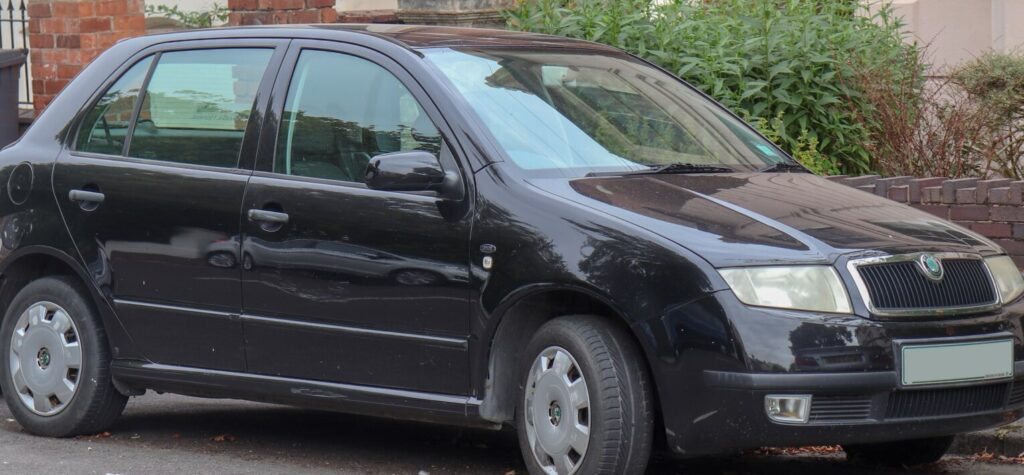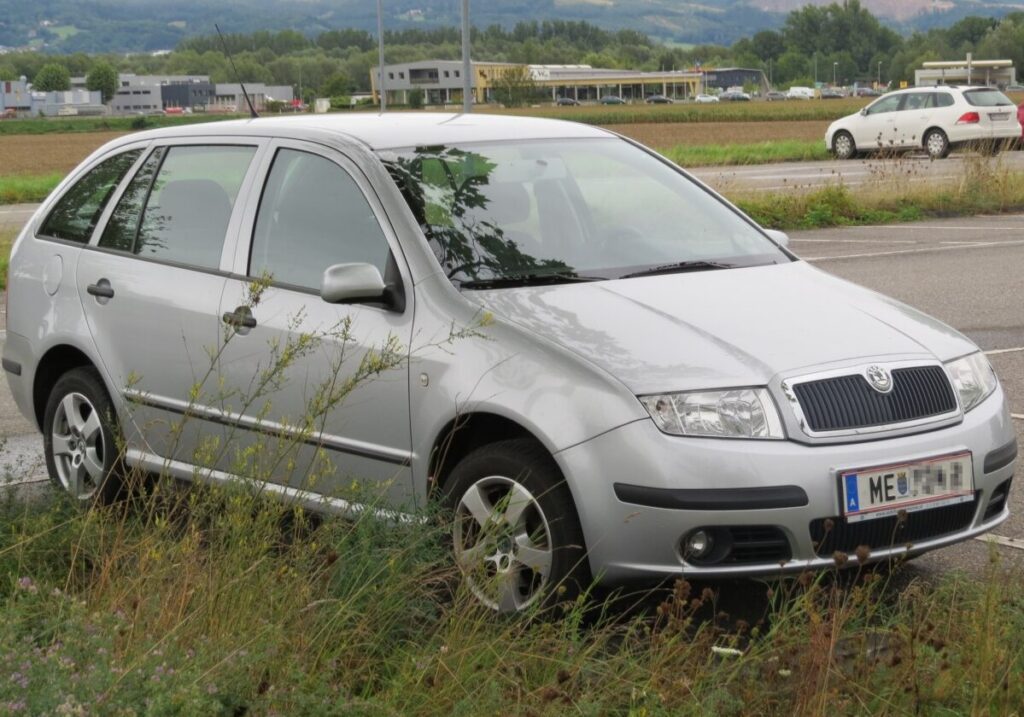
The Skoda Fabia I Combi 1.4 16V, produced from July 2004 through December 2007, represents an entry-level offering within the facelifted (6Y) first-generation Fabia Combi range. Positioned as a practical and affordable family vehicle, this variant catered to buyers prioritizing economy and space over outright performance. It was a key model for Skoda in the European market, building on the brand’s reputation for value and reliability. The Fabia Combi, as a whole, offered a more versatile alternative to the hatchback, appealing to those needing additional cargo capacity. This specific 1.4 16V engine and five-speed manual transmission combination was designed to balance fuel efficiency with acceptable everyday usability.
Technical Specifications
| Brand | Skoda |
| Model | Fabia |
| Generation | Fabia I Combi (6Y, facelift 2004) |
| Type (Engine) | 1.4 16V (80 Hp) |
| Start of production | July, 2004 |
| End of production | December, 2007 |
| Powertrain Architecture | Internal Combustion engine |
| Body type | Station wagon (estate) |
| Seats | 5 |
| Doors | 5 |
| Fuel consumption (urban) | 8.7 l/100 km (27 US mpg, 32.5 UK mpg, 11.5 km/l) |
| Fuel consumption (extra urban) | 5.4 l/100 km (43.6 US mpg, 52.3 UK mpg, 18.5 km/l) |
| Fuel consumption (combined) | 6.6 l/100 km (35.6 US mpg, 42.8 UK mpg, 15.2 km/l) |
| CO2 emissions | 156 g/km |
| Fuel Type | Petrol (Gasoline) |
| Acceleration 0 – 100 km/h | 13.1 sec |
| Acceleration 0 – 62 mph | 13.1 sec |
| Acceleration 0 – 60 mph | 12.4 sec |
| Maximum speed | 175 km/h (108.74 mph) |
| Emission standard | Euro 2/Euro 4 |
| Weight-to-power ratio | 13.7 kg/Hp, 73.1 Hp/tonne |
| Weight-to-torque ratio | 8.3 kg/Nm, 120.5 Nm/tonne |
| Power | 80 Hp @ 5000 rpm |
| Power per litre | 57.6 Hp/l |
| Torque | 132 Nm @ 3800 rpm (97.36 lb.-ft. @ 3800 rpm) |
| Engine layout | Front, Transverse |
| Engine Model/Code | BUD |
| Engine displacement | 1390 cm3 (84.82 cu. in.) |
| Number of cylinders | 4 |
| Engine configuration | Inline |
| Number of valves per cylinder | 4 |
| Fuel injection system | Multi-port manifold injection |
| Engine aspiration | Naturally aspirated engine |
| Engine oil capacity | 3.2 l (3.38 US qt | 2.82 UK qt) |
| Coolant capacity | 5.5 l (5.81 US qt | 4.84 UK qt) |
| Kerb Weight | 1095 kg (2414.06 lbs.) |
| Max. weight | 1610 kg (3549.44 lbs.) |
| Max load | 515 kg (1135.38 lbs.) |
| Fuel tank capacity | 45 l (11.89 US gal | 9.9 UK gal) |
| Permitted trailer load (8%) | 950 kg (2094.39 lbs.) |
| Permitted trailer load (12%) | 800 kg (1763.7 lbs.) |
| Permitted trailer load (unbraked) | 450 kg (992.08 lbs.) |
| Length | 4232 mm (166.61 in.) |
| Width | 1646 mm (64.8 in.) |
| Width including mirrors | 1893 mm (74.53 in.) |
| Height | 1452 mm (57.17 in.) |
| Wheelbase | 2462 mm (96.93 in.) |
| Front track | 1435 mm (56.5 in.) |
| Rear track | 1424 mm (56.06 in.) |
| Drivetrain Architecture | Front wheel drive |
| Number of gears | 5 |
| Gearbox type | Manual transmission |
| Front suspension | Coil spring |
| Rear suspension | Coil spring |
| Steering type | Steering rack and pinion |
| Power steering | Hydraulic |
| Tires size | 185/60 R14 82 T |
| Wheel rims size | 14 |
Powertrain & Engine Architecture
The Fabia Combi 1.4 16V utilizes the BUD engine code, a 1.4-liter inline four-cylinder petrol engine. This engine is a naturally aspirated unit featuring multi-point fuel injection. The 16-valve cylinder head, with four valves per cylinder, contributes to improved breathing and a broader torque curve compared to older two-valve designs. The engine’s output of 80 horsepower at 5000 rpm and 132 Nm (97 lb-ft) of torque at 3800 rpm is relatively modest, but sufficient for everyday driving. The five-speed manual transmission was the standard offering, providing a reasonable spread of gears for both urban and highway driving. The transmission’s gear ratios were tuned for fuel efficiency rather than outright acceleration.
Driving Characteristics
The 1.4 16V Fabia Combi offered a comfortable, if not particularly exciting, driving experience. Acceleration was adequate for merging onto highways and overtaking slower traffic, but it wasn’t a quick car. The 0-60 mph time of around 12.4 seconds reflects this. The engine felt relatively responsive at lower RPMs, making it suitable for city driving. However, it required downshifting to maintain momentum when climbing hills or carrying a full load. Compared to the more powerful 1.6-liter or even the diesel variants, the 1.4 felt noticeably slower. The manual transmission provided a more engaging driving experience than the optional automatic, allowing drivers to better control the engine’s power band.
Equipment & Trim Levels
The 1.4 16V Fabia Combi typically came with a fairly basic level of equipment. Standard features generally included power steering, central locking, electric front windows, and an adjustable steering column. Safety features such as ABS brakes and driver and passenger airbags were also standard. Interior upholstery was typically cloth, and the dashboard featured a functional, if somewhat plain, design. Optional extras included air conditioning, alloy wheels, a radio/CD player, and rear electric windows. Higher trim levels, such as the Classic or Elegance, added more features as standard.
Chassis & Braking
The Fabia Combi’s chassis featured a MacPherson strut front suspension and a torsion beam rear suspension. This setup provided a good balance between ride comfort and handling. The steering was light and precise, making the car easy to maneuver in urban environments. Braking duties were handled by disc brakes on the front wheels and drum brakes on the rear. While adequate for normal driving conditions, the rear drum brakes were less effective than disc brakes, particularly under heavy braking. The car’s relatively light weight helped to compensate for the less sophisticated rear braking system.
Market Reception & Comparison
The Skoda Fabia Combi 1.4 16V was generally well-received by critics as a practical and affordable family car. It was praised for its spacious interior, good fuel economy (around 35.6 US mpg combined), and competitive price. However, it was also criticized for its lack of power and somewhat basic interior. Compared to other cars in its class, such as the Ford Focus Estate or the Vauxhall Astra Estate, the Fabia Combi offered a compelling value proposition. The 1.4 16V engine was considered reliable, but it wasn’t as refined or powerful as some of its competitors.
Legacy
The BUD engine, while not known for being particularly groundbreaking, proved to be a durable and reliable unit. The Fabia Combi 1.4 16V remains a relatively affordable option on the used car market today. Its simplicity and robust construction make it a good choice for those seeking a practical and economical family vehicle. However, potential buyers should be aware of the car’s age and potential maintenance needs. Regular servicing and attention to detail are essential to keep these cars running smoothly. The 1.4 16V Fabia Combi represents a significant step forward for Skoda, demonstrating the brand’s ability to produce well-built and reliable cars that compete effectively in the European market.