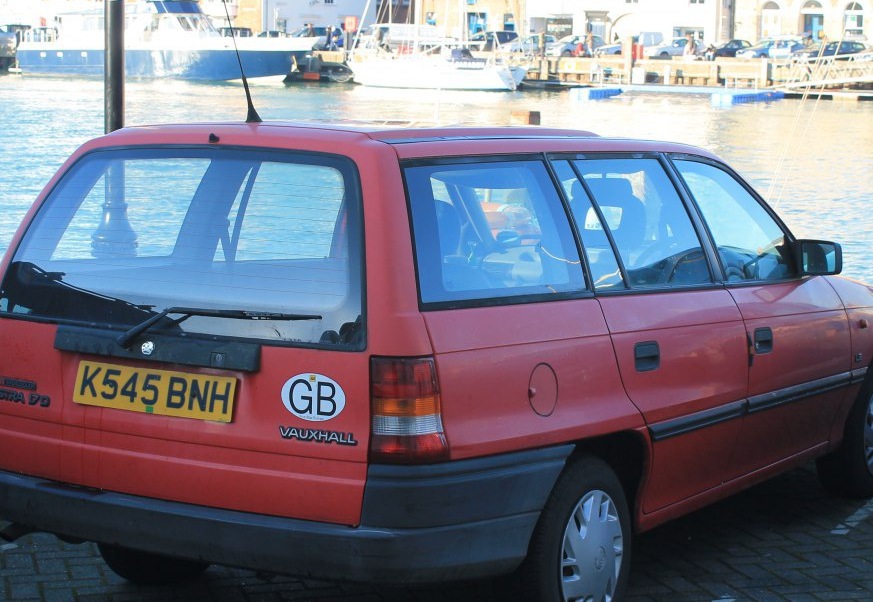
The Vauxhall Astra Mk III Estate 1.8i 16V, produced between 1994 and 1998, represented a significant offering in the British market as a practical and relatively sporty family vehicle. Part of the G platform series (internally designated as the 1HX0 for the estate variant), this model aimed to provide a balance between cargo capacity, reasonable performance, and affordability. The 1.8i 16V engine, producing 125 horsepower, positioned this trim level as a mid-range option within the Mk III Estate lineup, appealing to buyers who desired more power than the base 1.4L models but didn’t require the expense or performance of the more potent, though less common, 2.0L 16V versions. It was a popular choice for families and individuals needing a versatile vehicle for both daily commuting and weekend activities.
Technical Specifications
| Brand | Vauxhall |
| Model | Astra |
| Generation | Astra Mk III Estate |
| Type (Engine) | 1.8i 16V (125 Hp) |
| Start of production | 1994 |
| End of production | 1998 |
| Powertrain Architecture | Internal Combustion engine |
| Body type | Station wagon (estate) |
| Seats | 5 |
| Doors | 5 |
| Fuel consumption (combined) | 7.9 l/100 km |
| Fuel consumption (US mpg) | 29.8 US mpg |
| Fuel consumption (UK mpg) | 35.8 UK mpg |
| Fuel consumption (km/l) | 12.7 km/l |
| Fuel Type | Petrol (Gasoline) |
| Acceleration 0 – 100 km/h | 9 sec |
| Acceleration 0 – 62 mph | 9 sec |
| Acceleration 0 – 60 mph | 8.6 sec |
| Maximum speed | 204 km/h (126.76 mph) |
| Weight-to-power ratio | 8.6 kg/Hp |
| Weight-to-torque ratio | 6.4 kg/Nm |
| Power | 125 Hp @ 5600 rpm |
| Power per litre | 69.5 Hp/l |
| Torque | 168 Nm @ 4800 rpm (123.91 lb.-ft. @ 4800 rpm) |
| Engine layout | Front, Transverse |
| Engine Model/Code | C18XE |
| Engine displacement | 1798 cm3 (109.72 cu. in.) |
| Number of cylinders | 4 |
| Engine configuration | Inline |
| Fuel injection system | Multi-port manifold injection |
| Engine aspiration | Naturally aspirated engine |
| Engine oil capacity | 4 l (4.23 US qt | 3.52 UK qt) |
| Coolant capacity | 7 l (7.4 US qt | 6.16 UK qt) |
| Kerb Weight | 1080 kg (2380.99 lbs) |
| Max. weight | 1595 kg (3516.37 lbs) |
| Max load | 515 kg (1135.38 lbs) |
| Trunk (boot) space – minimum | 500 l (17.66 cu. ft.) |
| Fuel tank capacity | 50 l (13.21 US gal | 11 UK gal) |
| Length | 4280 mm (168.5 in) |
| Width | 1688 mm (66.46 in) |
| Height | 1481 mm (58.31 in) |
| Wheelbase | 2520 mm (99.21 in) |
| Drivetrain Architecture | Front wheel drive |
| Number of gears and type of gearbox | 5 gears, manual transmission |
| Front brakes | Ventilated discs |
| Rear brakes | Disc |
| Tires size | 175/65 R14 |
| Wheel rims size | 14 |
Powertrain & Engine Architecture
The heart of the Astra Mk III Estate 1.8i 16V is the C18XE engine, a 1.8-liter inline-four cylinder powerplant. This engine is a member of Vauxhall/Opel’s ‘E’ family of engines, known for its durability and relatively simple design. The ‘XE’ designation indicates a 16-valve cylinder head, contributing to improved breathing and higher power output compared to earlier 8-valve versions. It utilizes a multi-port fuel injection system, delivering fuel directly to each intake port for precise control and efficient combustion. The engine’s valvetrain employs a single overhead camshaft (SOHC) design, simplifying maintenance and reducing weight. The 5-speed manual transmission, a Getrag unit, was the standard offering, providing a good balance between performance and fuel economy. The transmission’s gear ratios were tuned for everyday driving, prioritizing acceleration in the lower gears and comfortable cruising at highway speeds.
Driving Characteristics
The 1.8i 16V Estate offered a noticeable step up in performance compared to the lower-spec Astra Estate models. While not a sports car, the 125 horsepower and 124 lb-ft of torque provided adequate power for overtaking and maintaining speed on inclines. Acceleration from 0-60 mph took around 8.6 seconds, making it competitive with other family estates of the time. The manual transmission allowed for driver control and engagement, while the gear ratios were well-matched to the engine’s powerband. Compared to the 2.0L 16V variant, the 1.8L felt less eager to rev, but offered a broader, more usable powerband for everyday driving. The suspension, tuned for comfort, provided a reasonably compliant ride, although it could feel somewhat soft when pushed hard through corners.
Equipment & Trim Levels
The 1.8i 16V Estate typically came equipped with features such as central locking, power steering, and an adjustable steering column. Interior upholstery was generally cloth, with options for upgraded materials available. Dashboard configuration was fairly standard for the era, with a functional layout and clear instrumentation. Optional extras included electric windows, a sunroof, and an upgraded stereo system. The trim level sat comfortably in the middle of the range, offering a good balance of features and affordability. It was often chosen by buyers who wanted a well-equipped family car without the premium price tag of the top-of-the-line models.
Chassis & Braking
The Astra Mk III Estate utilized a MacPherson strut front suspension and a torsion beam rear suspension. This setup provided a good compromise between ride comfort and handling. Braking duties were handled by ventilated discs on the front wheels and solid discs on the rear. The braking system was adequate for the vehicle’s weight and performance, but lacked the sophistication of more modern systems. Stabilizer bars were fitted to both the front and rear axles to reduce body roll during cornering. The 14-inch wheels were typically fitted with 175/65 R14 tires, providing a good balance between grip and ride comfort.
Market Reception & Comparison
The Astra Mk III Estate 1.8i 16V was generally well-received by automotive critics. It was praised for its practicality, comfortable ride, and reasonable performance. Fuel economy was considered acceptable for the time, averaging around 30 mpg in mixed driving conditions. Compared to other estates in its class, such as the Ford Mondeo Estate and the Peugeot 306 Estate, the Astra offered a competitive package in terms of price, features, and performance. However, some critics noted that the interior styling was somewhat dated and that the handling wasn’t as sharp as some of its rivals.
Legacy
The C18XE engine, found in the Astra Mk III Estate 1.8i 16V, has proven to be a remarkably durable and reliable unit. With proper maintenance, these engines can easily exceed 200,000 miles. Today, the Astra Mk III Estate 1.8i 16V is a relatively affordable classic car, appealing to enthusiasts and those seeking a practical and reliable family vehicle. Parts availability is generally good, and the engine’s simple design makes it relatively easy to repair. While not a particularly collectible model, the 1.8i 16V Estate represents a solid and dependable choice in the used car market, offering a nostalgic driving experience and a practical solution for everyday transportation.