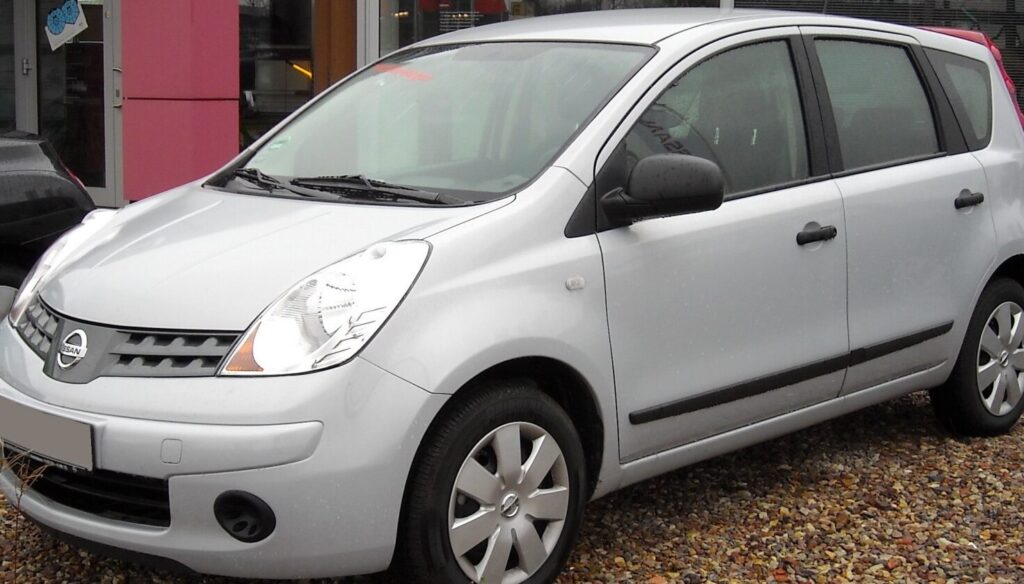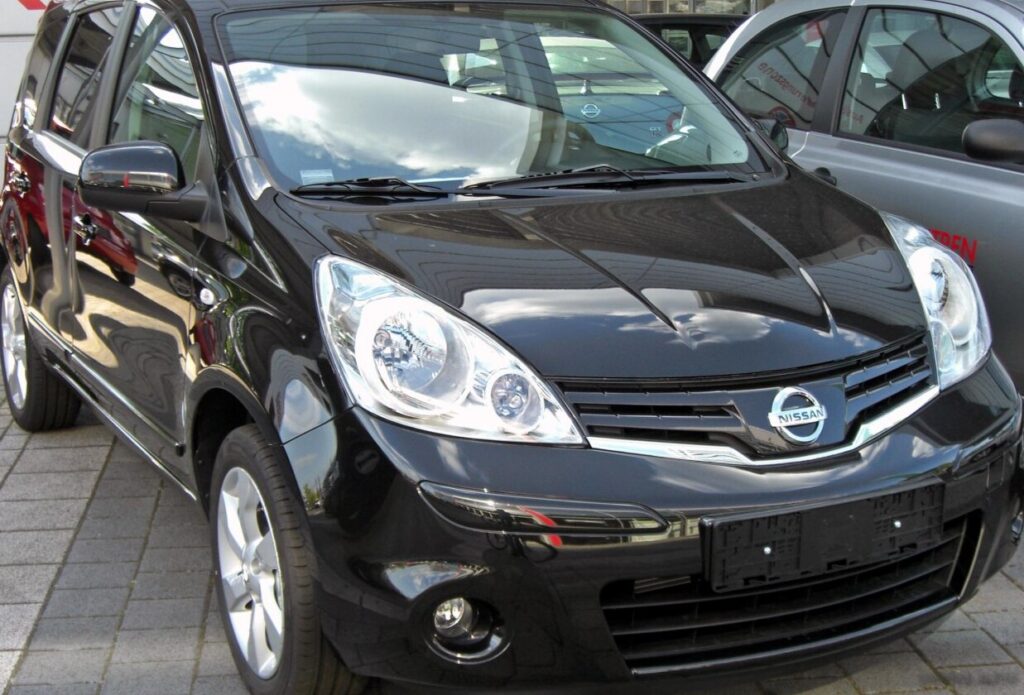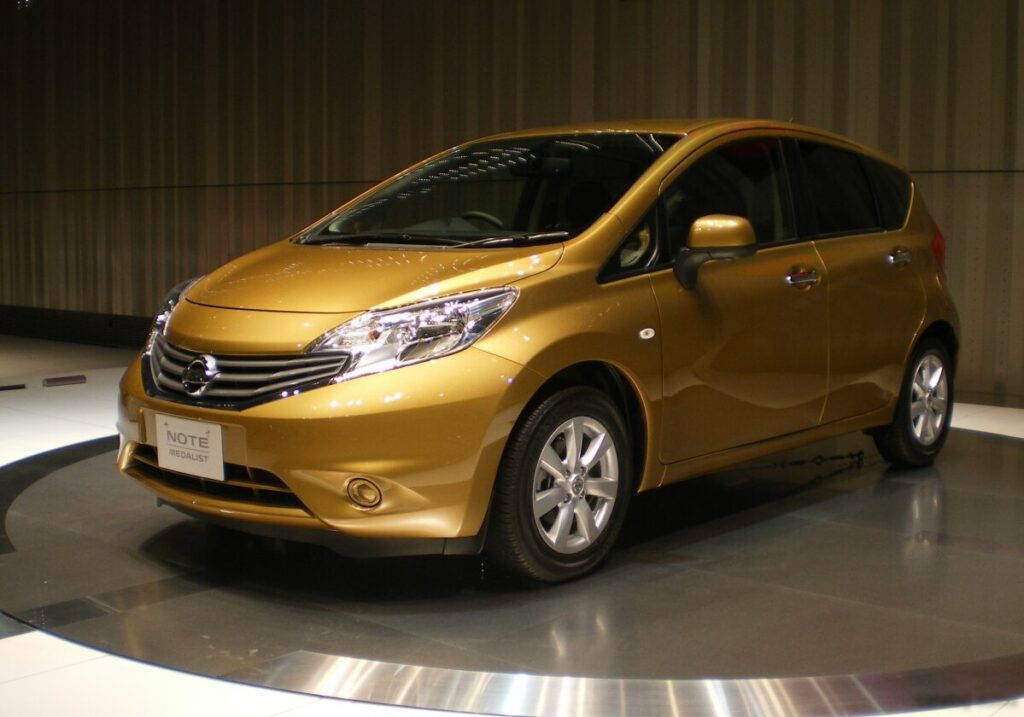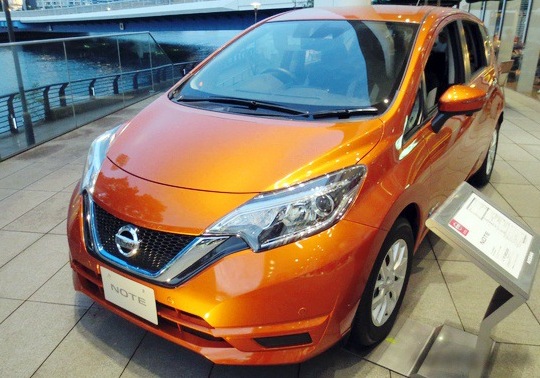
The Nissan Note II (E12 series, facelifted in 2017) with the e-POWER 1.2-liter engine and four-wheel drive (4WD) represents a significant step in Nissan’s hybrid technology. Produced from 2017 to 2020, this variant was primarily aimed at the Japanese and European markets, offering a unique driving experience centered around its series hybrid powertrain. The Note, in general, is a supermini/subcompact MPV, designed to maximize interior space within a relatively small footprint. This particular e-POWER configuration occupied a mid-range position within the Note II lineup, offering a balance between fuel efficiency, all-weather capability, and a more refined driving experience than the standard gasoline-only models.
Technical Specifications
| Brand | Nissan |
| Model | Note |
| Generation | Note II (E12, facelift 2017) |
| Type (Engine) | e-POWER 1.2 (109 Hp) 4WD Hybrid |
| Start of production | 2017 |
| End of production | 2020 |
| Powertrain Architecture | FHEV (Full Hybrid Electric Vehicle) |
| Body type | Hatchback |
| Seats | 5 |
| Doors | 5 |
| Fuel consumption (combined) | 3.4 l/100 km (69.2 US mpg, 83.1 UK mpg, 29.4 km/l) |
| Fuel Type | Petrol (Gasoline) |
| Weight-to-power ratio | 11.9 kg/Hp, 83.8 Hp/tonne |
| Weight-to-torque ratio | 5.1 kg/Nm, 195.4 Nm/tonne |
| Electric motor power | 109 Hp @ 3008-10000 rpm |
| Electric motor Torque | 254 Nm @ 0-3008 rpm (187.34 lb.-ft. @ 0-3008 rpm) |
| System power | 109 Hp @ 3008-10000 rpm |
| System torque | 254 Nm @ 0-3008 rpm (187.34 lb.-ft. @ 0-3008 rpm) |
| Engine Power | 79 Hp @ 5400 rpm |
| Power per litre | 65.9 Hp/l |
| Engine Torque | 103 Nm @ 3600-5200 rpm (75.97 lb.-ft. @ 3600-5200 rpm) |
| Engine layout | Front, Transverse |
| Engine Model/Code | HR12DE |
| Engine displacement | 1198 cm3 (73.11 cu. in.) |
| Number of cylinders | 3 |
| Engine configuration | Inline |
| Cylinder Bore | 78 mm (3.07 in.) |
| Piston Stroke | 83.6 mm (3.29 in.) |
| Compression ratio | 12:1 |
| Number of valves per cylinder | 4 |
| Fuel injection system | Multi-port manifold injection |
| Engine aspiration | Naturally aspirated engine |
| Valvetrain | DOHC |
| Engine oil capacity | 3.4 l (3.59 US qt | 2.99 UK qt) |
| Coolant capacity | 6.96 l (7.35 US qt | 6.12 UK qt) |
| Kerb Weight | 1300-1310 kg (2866.01 – 2888.06 lbs.) |
| Max. weight | 1585 kg (3494.33 lbs.) |
| Max load | 275-285 kg (606.27 – 628.32 lbs.) |
| Fuel tank capacity | 35 l (9.25 US gal | 7.7 UK gal) |
| Length | 4100 mm (161.42 in.) |
| Width including mirrors | 1695 mm (66.73 in.) |
| Height | 1520 mm (59.84 in.) |
| Wheelbase | 2600 mm (102.36 in.) |
| Front track | 1480 mm (58.27 in.) |
| Rear track | 1485 mm (58.46 in.) |
| Ride height (ground clearance) | 130 mm (5.12 in.) |
| Minimum turning circle | 10.4 m (34.12 ft.) |
| Drivetrain Architecture | The Internal combustion engine (ICE) drives the generator only, with no mechanical connection to the drive. Two electric motors drive the front and rear wheels. |
| Drive wheel | All wheel drive (4×4) |
| Number of gears | 1 |
| Type of gearbox | automatic transmission |
| Front suspension | Independent coil spring |
| Rear suspension | Elastic beam |
| Front brakes | Ventilated discs |
| Rear brakes | Drum |
| Assisting systems | ABS (Anti-lock braking system) |
| Steering type | Steering rack and pinion |
| Power steering | Electric Steering |
| Tires size | 185/65 R15 88H |
| Wheel rims size | 5.5J x 15 ET40 |
INTRODUCTION
The Nissan Note II (E12) facelift, introduced in 2017, brought significant updates to Nissan’s popular subcompact MPV. The e-POWER variant, utilizing a 1.2-liter three-cylinder gasoline engine paired with an electric motor and a small battery, was a key feature of this refresh. Unlike traditional hybrids, the gasoline engine in the e-POWER system doesn’t directly drive the wheels; it solely functions to generate electricity, which then powers the electric motor(s). This configuration provides a unique driving experience that mimics that of a fully electric vehicle, but with extended range thanks to the gasoline engine. The addition of 4WD further enhanced the Note’s appeal in regions with inclement weather or challenging road conditions.
Powertrain & Engine Architecture
At the heart of the e-POWER system lies the HR12DE, a 1.2-liter inline three-cylinder gasoline engine. This engine produces 79 horsepower at 5400 rpm and 103 Nm (76 lb-ft) of torque between 3600 and 5200 rpm. It features multi-point fuel injection and a double overhead camshaft (DOHC) valvetrain. The engine’s primary role is to charge the battery and power the electric motor. The electric motor itself delivers 109 horsepower and 254 Nm (187 lb-ft) of torque. The system utilizes a single-speed automatic transmission, as the electric motor provides a wide torque band eliminating the need for multiple gears. The 4WD system employs a separate electric motor to drive the rear wheels, providing on-demand all-wheel drive capability. This setup allows for improved traction and stability, particularly in slippery conditions.
Driving Characteristics
The e-POWER 1.2 4WD Note offers a surprisingly refined driving experience. The instant torque delivery of the electric motor provides brisk acceleration, especially in urban environments. While not a performance car, the 109 hp system power is adequate for everyday driving. The lack of a conventional transmission results in a smooth, linear acceleration curve. Compared to the standard 1.2-liter gasoline Note, the e-POWER version feels significantly more responsive. The 4WD system adds a sense of security and stability, particularly on wet or snowy roads. However, the regenerative braking system can take some getting used to, as it provides a slightly different pedal feel compared to traditional braking systems. Fuel economy is a major strength, with combined figures reaching 3.4 l/100km (69.2 US mpg).
Equipment & Trim Levels
The e-POWER 1.2 4WD Note typically came equipped with a reasonable level of standard features. These included air conditioning, power windows, power mirrors, a touchscreen infotainment system with Bluetooth connectivity, and ABS brakes. Higher trim levels added features such as automatic climate control, a rearview camera, parking sensors, and alloy wheels. Interior upholstery was typically cloth, with options for leather seats on higher-spec models. Safety features included multiple airbags and stability control. Optional extras often included a navigation system, a premium sound system, and advanced driver-assistance systems (ADAS) like lane departure warning and automatic emergency braking.
Chassis & Braking
The Note II utilizes a front independent coil spring suspension and a rear elastic beam suspension. This setup provides a comfortable ride quality, although it’s not particularly sporty. The front brakes are ventilated discs, while the rear brakes are drums. The electric power steering provides light and precise steering feel. The 4WD system adds weight to the vehicle, but the benefits in terms of traction and stability outweigh this drawback. The ABS (Anti-lock Braking System) is standard, enhancing braking performance and safety.
Market Reception & Comparison
The Nissan Note e-POWER received generally positive reviews from critics. It was praised for its fuel efficiency, smooth driving experience, and innovative powertrain. Compared to other subcompact MPVs in Europe and Japan, the Note e-POWER stood out for its unique hybrid technology. The 4WD version was particularly well-received in regions with harsh winters. However, some critics noted that the engine could be noisy under hard acceleration, as it works to generate electricity for the electric motor. Compared to the standard gasoline Note, the e-POWER version was more expensive, but the fuel savings and improved driving experience justified the higher price for many buyers.
Legacy
The Nissan Note e-POWER 1.2 4WD represents an important step in Nissan’s development of electric and hybrid technology. The e-POWER system has since been implemented in other Nissan models, demonstrating its success and versatility. On the used car market, these Notes are generally considered reliable and fuel-efficient. The powertrain has proven to be durable, with few reported issues. However, as with any hybrid vehicle, the battery’s lifespan is a consideration for potential buyers. Overall, the Note e-POWER 1.2 4WD remains a compelling option for those seeking a practical, efficient, and technologically advanced subcompact MPV.