
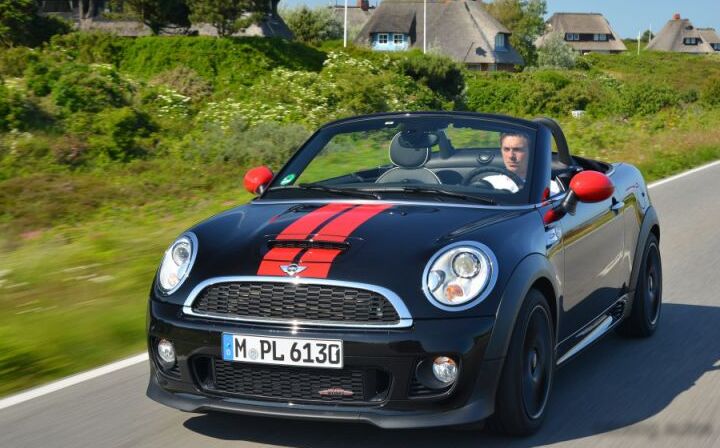
The Mini Roadster Cooper SD 2.0 (143 hp) was a diesel-powered variant of the R59 Mini Roadster, produced between 2012 and 2015. Positioned as a mid-range offering within the Roadster lineup, it aimed to provide a balance of performance and fuel efficiency for drivers seeking a sporty, open-top experience. The R59 Roadster itself was the first and, to date, only convertible model in the modern Mini lineup, building upon the success of the R56 hatchback and offering a unique driving experience focused on agility and fun. This particular diesel variant was primarily sold in European markets, where diesel engines enjoyed significant popularity due to favorable taxation and fuel economy.
Technical Specifications
| Brand | Mini |
| Model | Roadster |
| Generation | Roadster (R59) |
| Type (Engine) | Cooper SD 2.0 (143 Hp) |
| Start of production | 2012 |
| End of production | 2015 |
| Powertrain Architecture | Internal Combustion engine |
| Body type | Roadster |
| Seats | 2 |
| Doors | 2 |
| Fuel consumption (urban) | 5.3 l/100 km (44.4 US mpg, 53.3 UK mpg, 18.9 km/l) |
| Fuel consumption (extra urban) | 4 l/100 km (58.8 US mpg, 70.6 UK mpg, 25 km/l) |
| Fuel consumption (combined) | 4.5 l/100 km (52.3 US mpg, 62.8 UK mpg, 22.2 km/l) |
| CO2 emissions | 118 g/km |
| Fuel Type | Diesel |
| Acceleration 0 – 100 km/h | 8.1 sec |
| Acceleration 0 – 62 mph | 8.1 sec |
| Acceleration 0 – 60 mph | 7.7 sec |
| Maximum speed | 212 km/h (131.73 mph) |
| Emission standard | Euro 5 |
| Weight-to-power ratio | 8.4 kg/Hp, 119.2 Hp/tonne |
| Weight-to-torque ratio | 3.9 kg/Nm, 254.2 Nm/tonne |
| Power | 143 Hp @ 4000 rpm |
| Torque | 305 Nm @ 1750-2700 rpm (224.96 lb.-ft. @ 1750-2700 rpm) |
| Engine layout | Front, Transverse |
| Engine Model/Code | N47C20A |
| Engine displacement | 1995 cm3 (121.74 cu. in.) |
| Number of cylinders | 4 |
| Engine configuration | Inline |
| Cylinder Bore | 84 mm (3.31 in.) |
| Piston Stroke | 90 mm (3.54 in.) |
| Compression ratio | 16.5:1 |
| Number of valves per cylinder | 4 |
| Fuel injection system | Diesel Commonrail |
| Engine aspiration | Turbocharger, Intercooler |
| Engine oil capacity | 5.2 l (5.49 US qt | 4.58 UK qt) |
| Coolant | 6.6 l (6.97 US qt | 5.81 UK qt) |
| Kerb Weight | 1200 kg (2645.55 lbs.) |
| Max. weight | 1490 kg (3284.89 lbs.) |
| Max load | 290 kg (639.34 lbs.) |
| Trunk (boot) space – minimum | 240 l (8.48 cu. ft.) |
| Fuel tank capacity | 40 l (10.57 US gal | 8.8 UK gal) |
| Length | 3734 mm (147.01 in.) |
| Width | 1683 mm (66.26 in.) |
| Height | 1390 mm (54.72 in.) |
| Wheelbase | 2467 mm (97.13 in.) |
| Front track | 1453 mm (57.2 in.) |
| Rear (Back) track | 1461 mm (57.52 in.) |
| Ride height (ground clearance) | 134 mm (5.28 in.) |
| Minimum turning circle | 10.7 m (35.1 ft.) |
| Drivetrain Architecture | Front wheel drive |
| Number of gears | 6 gears, manual transmission |
| Front suspension | Independent, type McPherson with coil spring and anti-roll bar |
| Rear suspension | Independent multi-link suspension |
| Front brakes | Ventilated discs |
| Rear brakes | Disc |
| Assisting systems | ABS (Anti-lock braking system) |
| Steering type | Steering rack and pinion |
| Tires size | 195/55 R16 87V |
| Wheel rims size | 6.5J x 16 |
Powertrain & Engine Architecture
The Cooper SD 2.0 utilized BMW’s N47C20A engine, a 2.0-liter inline-four diesel engine. This engine was a mainstay in many BMW and Mini models of the period, known for its efficiency and relatively strong performance. The N47 featured common-rail direct injection, a turbocharger with an intercooler, and four valves per cylinder. The engine produced 143 horsepower at 4000 rpm and a substantial 305 Nm (224.96 lb-ft) of torque between 1750 and 2700 rpm. This torque output was a key characteristic, providing strong acceleration in everyday driving situations. The engine’s design incorporated features like a balance shaft to minimize vibrations, a common concern with inline-four diesel engines. The transmission was a 6-speed manual, offering precise gear changes and contributing to the car’s sporty feel. While an automatic transmission was available on other Roadster models, it wasn’t offered with the SD 2.0 variant.
Driving Characteristics
The 143 hp diesel engine, coupled with the 6-speed manual transmission, provided a surprisingly engaging driving experience. While not as outright quick as the petrol-powered Cooper S, the SD 2.0 offered strong mid-range acceleration thanks to its abundant torque. The gear ratios were well-matched to the engine’s powerband, allowing for effortless cruising and responsive overtaking. The Roadster’s relatively lightweight construction (1200 kg / 2645.55 lbs) further enhanced its agility. Compared to the petrol versions, the diesel offered superior fuel economy, making it a practical choice for drivers covering long distances. However, the diesel engine did exhibit some typical diesel characteristics, such as slightly more noise and vibration compared to a petrol engine.
Equipment & Trim Levels
The Cooper SD 2.0 Roadster typically came equipped with a reasonable level of standard equipment. This included air conditioning, power windows, central locking, and a basic audio system. Interior upholstery was generally cloth, although leather options were available. Dashboard trim could vary, with options for different finishes. Common optional extras included a premium sound system, navigation system, heated seats, and parking sensors. The Roadster’s design emphasized a driver-focused cockpit, with a prominent central speedometer and a range of customizable options to personalize the interior.
Chassis & Braking
The R59 Roadster utilized a McPherson strut front suspension and a multi-link rear suspension, providing a good balance of ride comfort and handling precision. The suspension was tuned to emphasize agility and responsiveness, making the car enjoyable to drive on winding roads. The front brakes were ventilated discs, while the rear brakes were solid discs. Anti-lock Braking System (ABS) was standard. The Roadster’s chassis was relatively stiff, contributing to its precise handling. The standard tire size was 195/55 R16, providing a good compromise between grip and comfort.
Market Reception & Comparison
The Mini Roadster Cooper SD 2.0 was generally well-received by automotive critics, who praised its fuel efficiency, strong torque, and engaging driving dynamics. It was often seen as a more sensible alternative to the Cooper S, offering a similar level of fun without the higher running costs. Compared to other diesel-powered roadsters of the time, the Mini offered a unique blend of style, practicality, and driving enjoyment. However, some critics noted that the diesel engine lacked the sporty soundtrack of the petrol versions. Fuel economy figures were consistently impressive, making it a popular choice for drivers seeking a fuel-efficient convertible.
Legacy
The N47 engine, while generally reliable, has been known to experience timing chain issues in some instances, particularly with higher mileage examples. Regular oil changes and preventative maintenance are crucial for ensuring the longevity of this engine. Today, the Mini Roadster Cooper SD 2.0 represents an interesting alternative in the used car market. It offers a unique combination of style, fuel efficiency, and driving enjoyment. Its relatively low running costs and readily available parts make it a practical choice for enthusiasts seeking a fun and affordable convertible.
