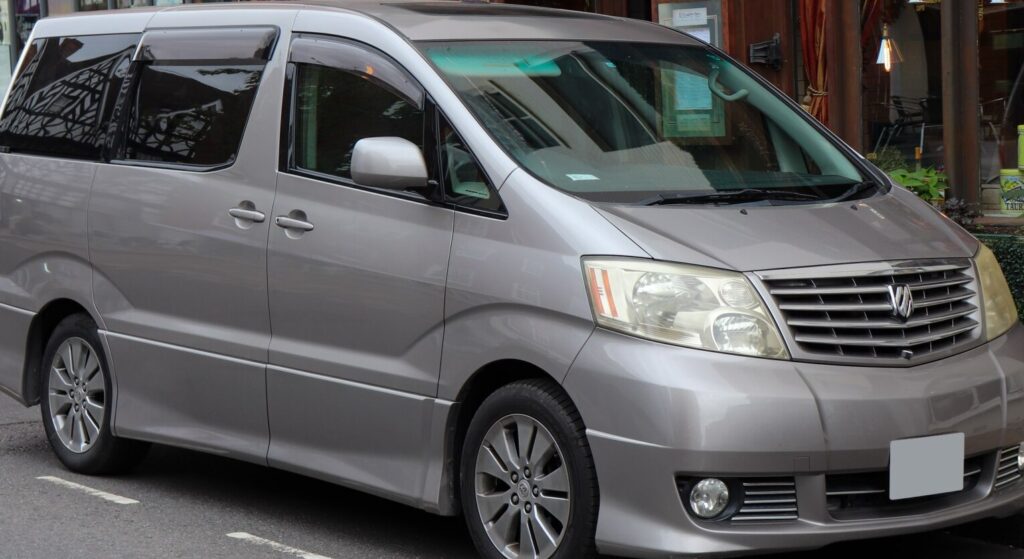
The Toyota Alphard, a nameplate synonymous with luxury and spaciousness in the Japanese domestic market (JDM), entered its first generation in 2002. The Alphard I, and specifically the facelifted version introduced in 2005, aimed to provide a premium people-carrying experience. The 2.4i variant, powered by the 2AZ-FE engine producing 159 horsepower, occupied a middle ground in the Alphard lineup, offering a balance between performance and fuel efficiency. Production of this specific configuration ran from 2005 to 2008, catering to families and businesses seeking a comfortable and reliable minivan.
Technical Specifications
| Brand | Toyota |
| Model | Alphard |
| Generation | Alphard I (facelift 2005) |
| Type (Engine) | 2.4 i (159 Hp) |
| Start of production | 2005 |
| End of production | 2008 |
| Powertrain Architecture | Internal Combustion engine |
| Body type | Minivan |
| Seats | 7 |
| Doors | 5 |
| Fuel consumption (urban) | 14 l/100 km (16.8 US mpg, 20.2 UK mpg, 7.1 km/l) |
| Fuel consumption (extra urban) | 10 l/100 km (23.5 US mpg, 28.2 UK mpg, 10 km/l) |
| Fuel consumption (combined) | 12 l/100 km (19.6 US mpg, 23.5 UK mpg, 8.3 km/l) |
| Fuel Type | Petrol (Gasoline) |
| Acceleration 0 – 100 km/h | 11 sec |
| Acceleration 0 – 62 mph | 11 sec |
| Acceleration 0 – 60 mph | 10.5 sec |
| Maximum speed | 160 km/h (99.42 mph) |
| Power | 159 Hp @ 5600 rpm |
| Power per litre | 67.3 Hp/l |
| Torque | 220 Nm @ 4000 rpm (162.26 lb.-ft. @ 4000 rpm) |
| Engine layout | Front, Transverse |
| Engine Model/Code | 2AZ-FE |
| Engine displacement | 2362 cm3 (144.14 cu. in.) |
| Number of cylinders | 4 |
| Engine configuration | Inline |
| Number of valves per cylinder | 4 |
| Fuel injection system | Multi-port manifold injection |
| Engine aspiration | Naturally aspirated engine |
| Valvetrain | DOHC |
| Engine oil capacity | 4.3 l (4.54 US qt | 3.78 UK qt) |
| Coolant capacity | 8 l (8.45 US qt | 7.04 UK qt) |
| Fuel tank capacity | 70 l (18.49 US gal | 15.4 UK gal) |
| Length | 4865 mm (191.54 in.) |
| Width | 1830 mm (72.05 in.) |
| Height | 1935 mm (76.18 in.) |
| Wheelbase | 2900 mm (114.17 in.) |
| Front track | 1560 mm (61.42 in.) |
| Rear track | 1540 mm (60.63 in.) |
| Minimum turning circle | 11.0 m (36.09 ft.) |
| Drivetrain Architecture | Front wheel drive |
| Number of gears | 4 |
| Gearbox type | Automatic transmission |
| Front suspension | Spring Strut |
| Rear suspension | Coil spring |
| Front brakes | Ventilated discs |
| Rear brakes | Disc |
| Tires size | 225/55 R17 |
Powertrain & Engine Architecture
The heart of the 2.4i Alphard is the 2AZ-FE engine, a 2.4-liter inline-four cylinder powerplant. This engine is part of Toyota’s AZ series, known for its reliability and relatively smooth operation. The 2AZ-FE utilizes a multi-port fuel injection system, delivering fuel directly into the intake ports, and a double overhead camshaft (DOHC) valvetrain for optimized airflow and efficient combustion. The engine produces 159 horsepower at 5600 rpm and 220 Nm (162 lb-ft) of torque at 4000 rpm. Paired with this engine is a four-speed automatic transmission, designed for smooth shifts and ease of use. This transmission was a common choice for Alphards intended for comfort-oriented driving.
Driving Characteristics
The 2.4i Alphard, with its 159 hp and automatic transmission, prioritized comfortable cruising over outright performance. Acceleration from 0-60 mph took around 10.5 seconds, which was adequate for everyday driving but noticeably slower than the higher-powered 3.0-liter V6 variants. The four-speed automatic transmission, while providing smooth shifts, lacked the responsiveness of more modern transmissions or the engagement of a manual gearbox. Gear ratios were tuned for fuel efficiency and relaxed driving, meaning the engine often operated at lower RPMs during highway cruising. Compared to the more powerful Alphard trims, the 2.4i felt less capable when fully loaded with passengers and luggage, requiring more planning when overtaking or climbing hills.
Equipment & Trim Levels
The 2.4i trim of the facelifted Alphard I typically included features such as power windows, power locks, air conditioning, and a basic audio system. Interior upholstery was usually cloth, though leather options were available as upgrades. Dashboard configuration was functional and straightforward, prioritizing ease of use. Optional extras included features like a navigation system, upgraded audio with more speakers, rear climate control, and power-adjustable front seats. The 2.4i trim was often positioned as the entry-level or mid-range option, appealing to buyers who didn’t require the luxury features found in the higher-spec models.
Chassis & Braking
The Alphard I utilized a front-engine, front-wheel-drive layout. Suspension consisted of a spring strut setup in the front and a coil spring arrangement in the rear, providing a comfortable ride quality. Braking duties were handled by ventilated discs in the front and solid discs in the rear. The braking system was adequate for the vehicle’s weight and intended use, but not particularly sporty. Tire size was typically 225/55 R17, offering a good balance between ride comfort and handling. Stabilizer bars were included to reduce body roll during cornering, though the Alphard was primarily designed for straight-line stability and passenger comfort.
Market Reception & Comparison
The 2.4i Alphard was generally well-received in the Japanese market as a practical and comfortable family vehicle. Critics noted its spacious interior, smooth ride, and reliable engine. However, some reviewers pointed out its relatively modest performance compared to the V6 models. Fuel economy was considered reasonable for a vehicle of its size, averaging around 19.6 US mpg in combined driving. Compared to the 3.0-liter Alphard, the 2.4i offered a lower purchase price and slightly better fuel efficiency, but at the expense of performance. The 2.4i also provided a more affordable alternative to luxury MPVs from European manufacturers.
Legacy
The 2AZ-FE engine, found in the 2.4i Alphard, has proven to be a durable and reliable powerplant. With proper maintenance, these engines can accumulate high mileage without major issues. In the used car market, the 2.4i Alphard represents a relatively affordable entry point into Alphard ownership. While not as desirable as the higher-spec V6 models, the 2.4i remains a popular choice for buyers seeking a spacious, comfortable, and dependable minivan. Its simplicity and proven mechanicals make it a relatively easy vehicle to maintain, contributing to its continued presence on roads today.