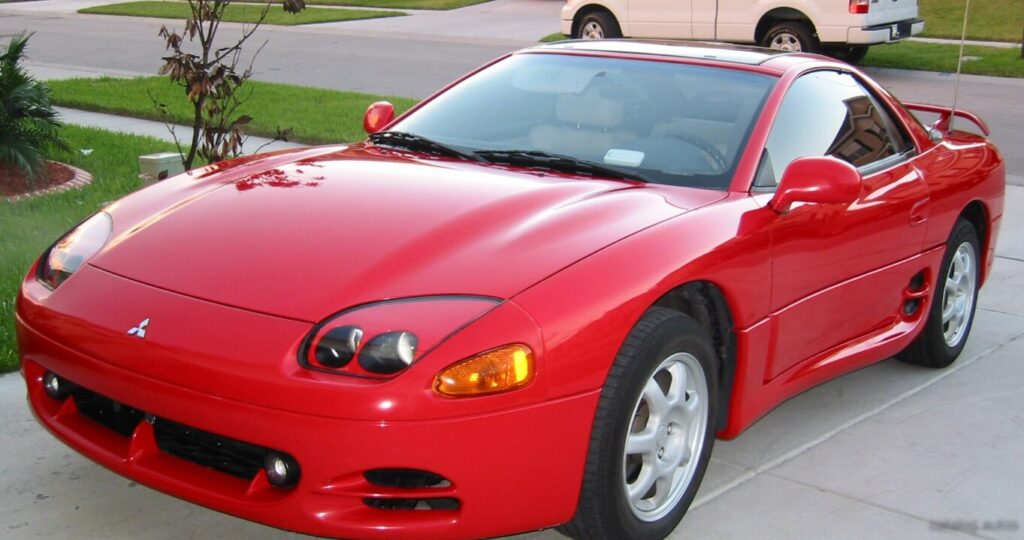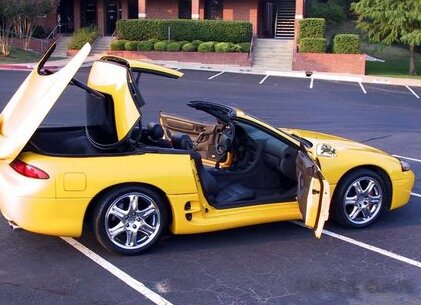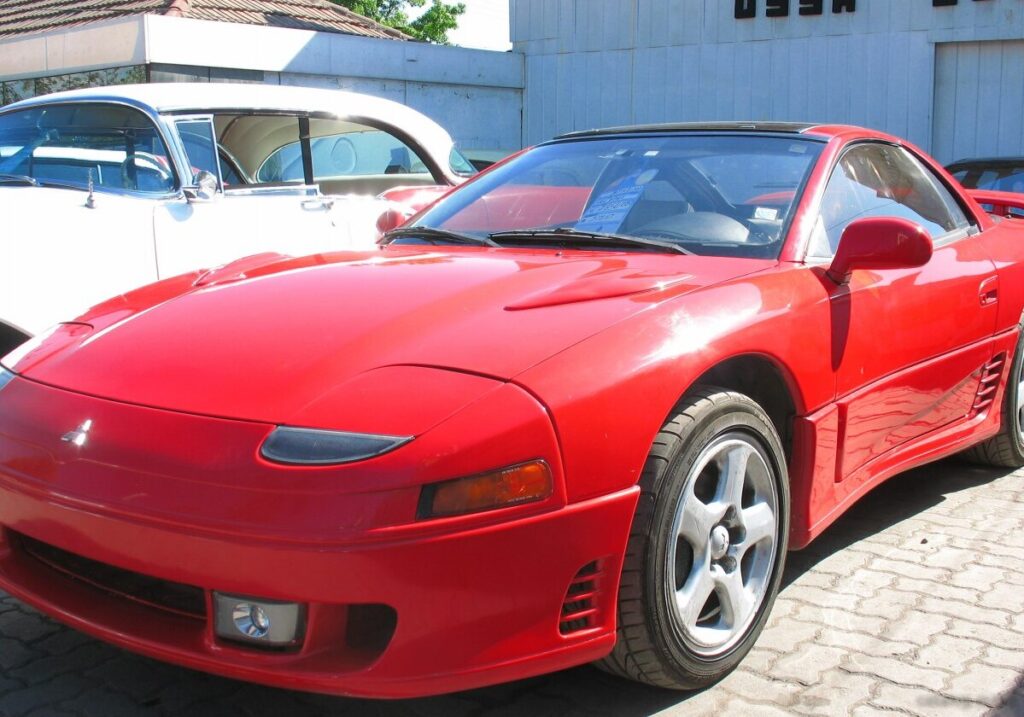
The Mitsubishi 3000 GT 3.0 i 24V 4×4, produced from 1992 to 1993, represents the pinnacle of Mitsubishi’s grand touring ambitions during the early 1990s. This variant, boasting a 286 horsepower 3.0-liter V6 engine and all-wheel drive, was a direct response to the burgeoning sports car market, particularly challenging the likes of the Mazda RX-7 and Toyota Supra. It was part of the first generation (1990-1999) of the 3000 GT, a model designed to elevate Mitsubishi’s image and showcase its engineering capabilities. The 3.0 i 4×4 sat at the top of the 3000 GT range, offering the highest performance and most advanced technology available.
Technical Specifications
| Brand | Mitsubishi |
| Model | 3000 GT |
| Generation | 3000 GT |
| Type (Engine) | 3.0 i 24V 4×4 (286 Hp) |
| Start of production | 1992 |
| End of production | 1993 |
| Powertrain Architecture | Internal Combustion engine |
| Body type | Coupe |
| Seats | 4 |
| Doors | 2 |
| Fuel consumption (urban) | 15 l/100 km (15.7 US mpg, 18.8 UK mpg, 6.7 km/l) |
| Fuel consumption (extra urban) | 9 l/100 km (26.1 US mpg, 31.4 UK mpg, 11.1 km/l) |
| Fuel Type | Petrol (Gasoline) |
| Acceleration 0 – 100 km/h | 5 sec |
| Acceleration 0 – 62 mph | 5 sec |
| Acceleration 0 – 60 mph | 4.8 sec |
| Maximum speed | 250 km/h (155.34 mph) |
| Weight-to-power ratio | 6.1 kg/Hp, 163.9 Hp/tonne |
| Weight-to-torque ratio | 4.3 kg/Nm, 233.2 Nm/tonne |
| Power | 286 Hp @ 6000 rpm |
| Power per litre | 96.2 Hp/l |
| Torque | 407 Nm @ 3000 rpm (300.19 lb.-ft. @ 3000 rpm) |
| Engine layout | Front, Transverse |
| Engine displacement | 2972 cm3 (181.36 cu. in.) |
| Number of cylinders | 6 |
| Engine configuration | V-engine |
| Cylinder Bore | 91.1 mm (3.59 in.) |
| Piston Stroke | 76 mm (2.99 in.) |
| Compression ratio | 8:1 |
| Number of valves per cylinder | 4 |
| Fuel injection system | Multi-port manifold injection |
| Engine aspiration | Turbocharger |
| Valvetrain | DOHC |
| Kerb Weight | 1745 kg (3847.07 lbs.) |
| Max. weight | 2120 kg (4673.8 lbs.) |
| Max load | 375 kg (826.73 lbs.) |
| Trunk (boot) space – maximum | 160 l (5.65 cu. ft.) |
| Fuel tank capacity | 75 l (19.81 US gal | 16.5 UK gal) |
| Length | 4555 mm (179.33 in.) |
| Width | 1840 mm (72.44 in.) |
| Height | 1285 mm (50.59 in.) |
| Wheelbase | 2470 mm (97.24 in.) |
| Front track | 1560 mm (61.42 in.) |
| Rear (Back) track | 1580 mm (62.2 in.) |
| Drive wheel | All wheel drive (4×4) |
| Number of gears and type of gearbox | 5 gears, manual transmission |
| Front suspension | Wishbone |
| Rear suspension | Coil spring |
| Front brakes | Ventilated discs |
| Rear brakes | Ventilated discs |
| Assisting systems | ABS (Anti-lock braking system) |
| Steering type | Steering rack and pinion |
| Power steering | Hydraulic Steering |
| Tires size | 245/40 R18 |
Powertrain & Engine Architecture
The heart of the 3000 GT 3.0 i 4×4 is the 6G72 engine, a 2.972-liter (181.36 cubic inches) DOHC 24-valve V6. This engine utilized a single turbocharger and Mitsubishi’s multi-point fuel injection system to produce 286 horsepower at 6000 rpm and 407 Nm (300.19 lb-ft) of torque at 3000 rpm. The engine featured a relatively low 8:1 compression ratio, a necessity for forced induction. The 5-speed manual transmission was robust, designed to handle the engine’s substantial output. The all-wheel drive system, a key feature of this variant, employed a viscous coupling center differential, distributing power variably between the front and rear axles for optimal traction.
Driving Characteristics
The 3000 GT 3.0 i 4×4 delivered exhilarating performance for its time. Acceleration from 0 to 60 mph was achieved in approximately 4.8 seconds, and it could reach a top speed of 155 mph. The turbocharger provided a noticeable boost in power, but also introduced a degree of turbo lag. The all-wheel drive system significantly enhanced grip, particularly in adverse weather conditions, making the car feel planted and secure. Compared to the non-turbocharged 3000 GT variants, the 3.0 i offered a dramatically improved driving experience, with significantly more power and torque available throughout the rev range. The manual transmission provided precise control, although the clutch could be somewhat heavy for extended city driving.
Equipment & Trim Levels
The 3000 GT 3.0 i 4×4 was well-equipped, reflecting its position as the flagship model. Standard features included leather upholstery, power windows and locks, air conditioning, a premium sound system, and an anti-lock braking system (ABS). Optional extras included a sunroof, upgraded audio systems, and various cosmetic enhancements. The interior design was sporty and functional, with well-bolstered seats and a driver-focused dashboard layout. The instrument cluster featured a comprehensive array of gauges, including a boost gauge to monitor turbocharger performance.
Chassis & Braking
The 3000 GT featured a robust chassis with independent suspension at all four wheels. The front suspension utilized a double wishbone setup, while the rear employed a multi-link coil spring arrangement. This configuration provided a good balance between ride comfort and handling precision. Braking duties were handled by ventilated disc brakes on all four wheels, providing ample stopping power. The ABS system further enhanced safety by preventing wheel lockup during hard braking.
Market Reception & Comparison
The Mitsubishi 3000 GT 3.0 i 4×4 was generally well-received by automotive critics. It was praised for its performance, handling, and advanced technology. However, some reviewers noted the turbo lag and the relatively high price tag. Compared to other sports cars of the era, such as the Mazda RX-7 and Toyota Supra, the 3000 GT offered a unique combination of all-wheel drive traction and turbocharged power. Fuel economy was not a strong point, with combined fuel consumption around 18 mpg. Reliability was generally good, although the complex turbocharging system and all-wheel drive components could require more maintenance than simpler vehicles.
Legacy
Today, the Mitsubishi 3000 GT 3.0 i 4×4 is a sought-after collector’s car. Well-maintained examples command premium prices. The 6G72 engine is known for its durability, but regular maintenance is essential to prevent issues with the turbocharger and other components. The car’s advanced technology and distinctive styling have ensured its place in automotive history. It remains a testament to Mitsubishi’s engineering prowess and a reminder of a time when Japanese manufacturers were pushing the boundaries of performance and innovation.