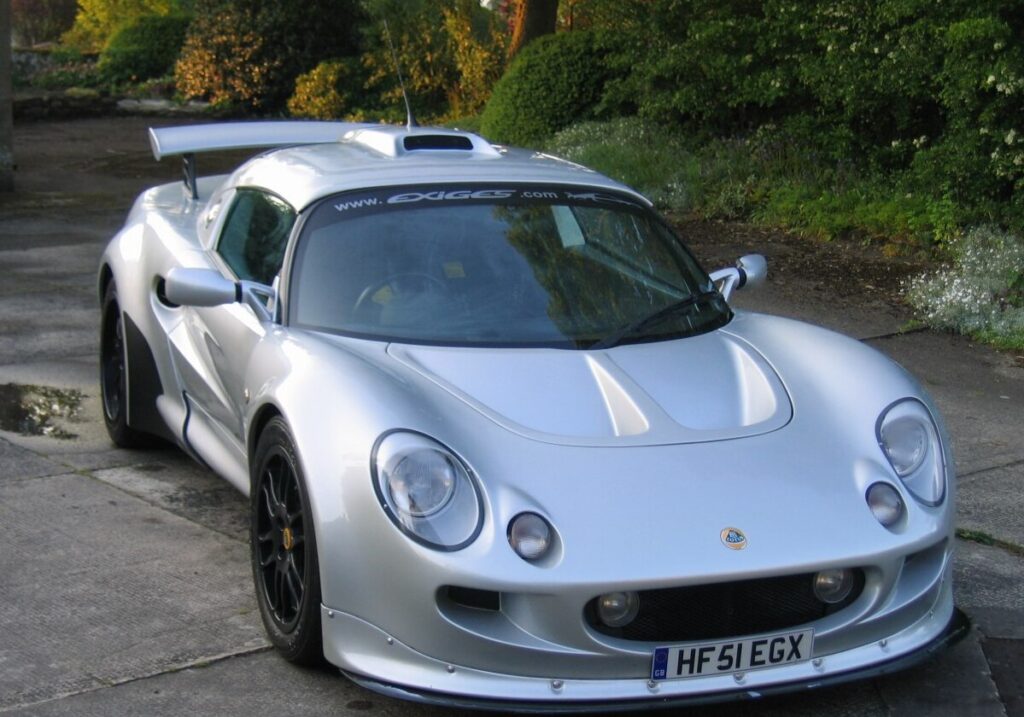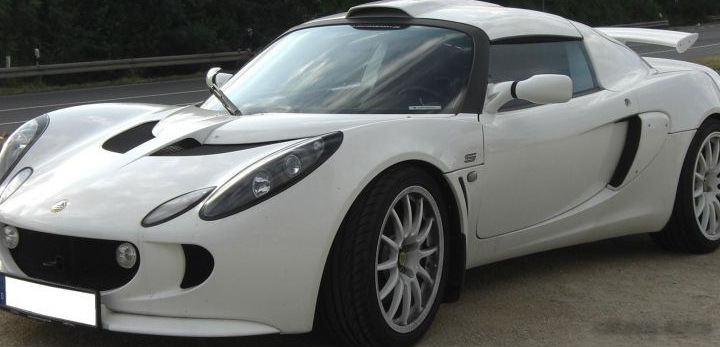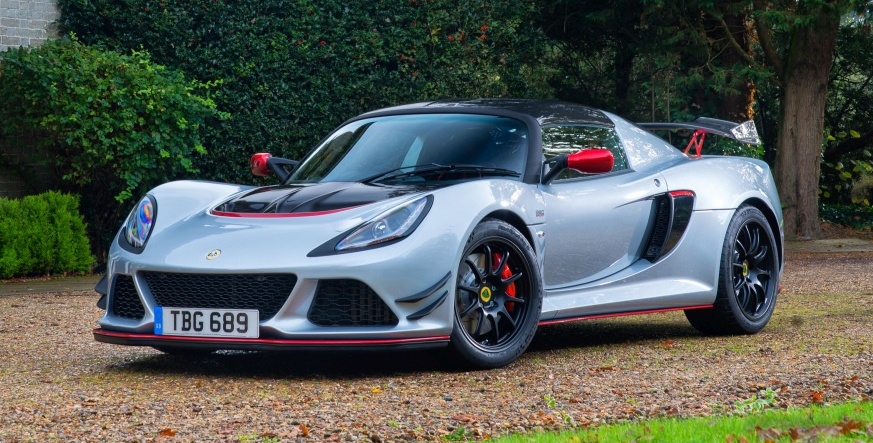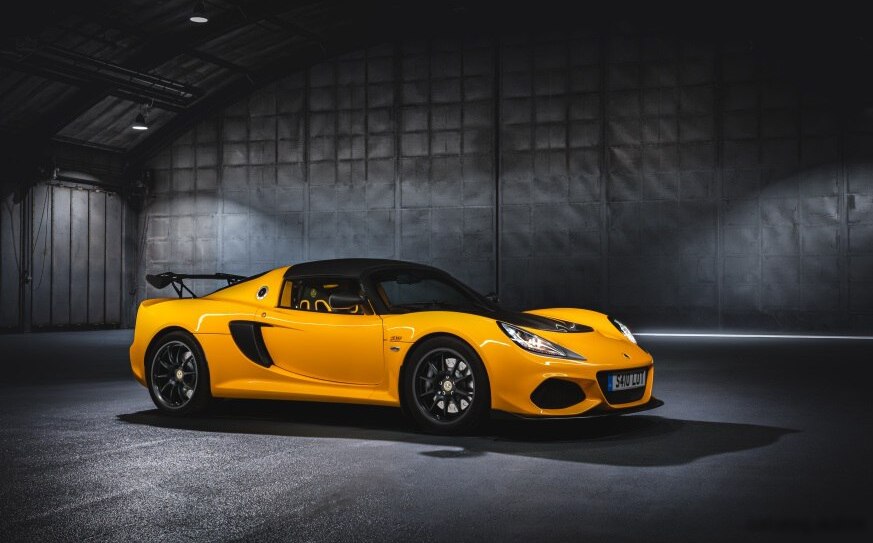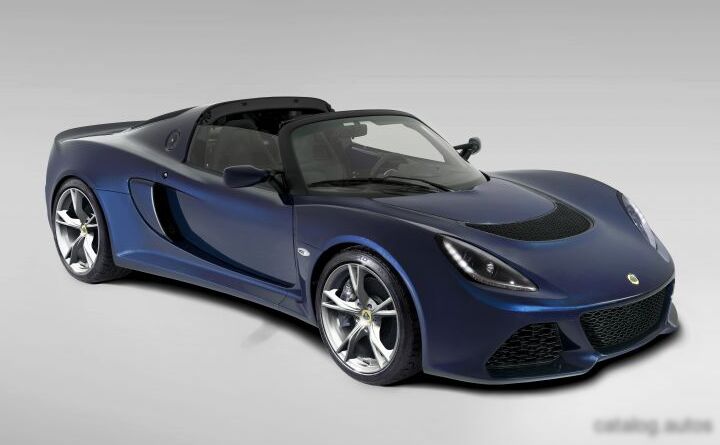
The Lotus Exige III S Roadster Sport 350, introduced in 2015, represents a focused and exhilarating iteration of the long-running Exige lineage. Positioned as a high-performance variant within the Exige III range, the Sport 350 distinguishes itself with a supercharged V6 engine and, notably, an automatic transmission option. This model aimed to deliver the raw driving experience Lotus is known for, but with a degree of accessibility offered by the convenience of an automatic gearbox. It builds upon the lightweight philosophy of the Exige, utilizing bonded aluminum chassis technology and a minimalist approach to weight reduction. The Exige III platform, also underpinning the Evora, allowed Lotus to offer a more refined and technologically advanced sports car while retaining its core principles of handling and driver engagement.
Technical Specifications
| Brand | Lotus |
| Model | Exige |
| Generation | Exige III S Roadster |
| Type | Sport 350 3.5 V6 (350 Hp) Automatic |
| Start of production | 2015 |
| Powertrain Architecture | Internal Combustion engine |
| Body type | Cabriolet |
| Seats | 2 |
| Doors | 2 |
| Fuel consumption (urban) | 13.4 l/100 km (17.6 US mpg, 21.1 UK mpg, 7.5 km/l) |
| Fuel consumption (extra urban) | 7.1 l/100 km (33.1 US mpg, 39.8 UK mpg, 14.1 km/l) |
| Fuel consumption (combined) | 9.4 l/100 km (25 US mpg, 30.1 UK mpg, 10.6 km/l) |
| CO2 emissions | 219 g/km |
| Fuel Type | Petrol (Gasoline) |
| Acceleration 0 – 100 km/h | 4 sec |
| Acceleration 0 – 62 mph | 4 sec |
| Acceleration 0 – 60 mph | 3.9 sec |
| Maximum speed | 250 km/h (155.34 mph) |
| Weight-to-power ratio | 3.2 kg/Hp, 312.5 Hp/tonne |
| Weight-to-torque ratio | 2.8 kg/Nm, 357.1 Nm/tonne |
| Power | 350 Hp @ 7000 rpm |
| Torque | 400 Nm @ 4500 rpm (295.02 lb.-ft. @ 4500 rpm) |
| Engine layout | Middle, Transverse |
| Number of cylinders | 6 |
| Engine configuration | V-engine |
| Number of valves per cylinder | 4 |
| Fuel injection system | Multi-port manifold injection |
| Engine aspiration | Supercharger, Intercooler |
| Valvetrain | DOHC – VVT-i |
| Kerb Weight | 1120 kg (2469.18 lbs.) |
| Fuel tank capacity | 40 l (10.57 US gal | 8.8 UK gal) |
| Length | 4084 mm (160.79 in.) |
| Width | 1802 mm (70.94 in.) |
| Height | 1129 mm (44.45 in.) |
| Wheelbase | 2370 mm (93.31 in.) |
| Drivetrain Architecture | Rear wheel drive |
| Number of gears | 6 |
| Gearbox type | Automatic transmission |
| Front suspension | Double wishbone |
| Rear suspension | Double wishbone |
| Front brakes | Ventilated discs |
| Rear brakes | Ventilated discs |
| Assisting systems | ABS (Anti-lock braking system) |
| Steering type | Steering rack and pinion |
| Tires size | 205/45 R17; 265/35 R18 |
| Wheel rims size | 17; 18 |
Powertrain & Engine Architecture
At the heart of the Exige III S Roadster Sport 350 lies the Lotus 3.5-liter supercharged V6 engine. This engine, internally designated as a variant within the Toyota-sourced 2GR-FE family, benefits from a Harrop TVS1900 supercharger and an integrated intercooler. The supercharger provides a significant boost in power and torque compared to naturally aspirated versions of the engine. Fuel delivery is managed by a multi-port fuel injection system, ensuring precise fuel metering for optimal performance and efficiency. The engine features a double overhead camshaft (DOHC) valvetrain with variable valve timing (VVT-i) on both intake and exhaust camshafts, optimizing engine breathing across the rev range. The automatic transmission is a six-speed unit, specifically tuned to handle the engine’s output. While not a dual-clutch transmission, it offers relatively quick shifts and contributes to the car’s usability.
Driving Characteristics
The combination of the 350 hp engine and the automatic transmission in the Exige Sport 350 delivers a unique driving experience. While purists often favor the manual transmission for maximum driver involvement, the automatic provides a smoother and more accessible experience, particularly in urban environments. Acceleration is brisk, with 0-60 mph achieved in around 3.9 seconds. The automatic transmission’s gear ratios are optimized for performance, but it doesn’t quite match the responsiveness of a skilled driver with a manual gearbox. The car’s lightweight construction and finely tuned suspension contribute to exceptional handling, allowing for confident cornering and a direct connection to the road. Compared to the base Exige S, the Sport 350 offers a noticeable increase in power and torque, resulting in more aggressive acceleration and a more exhilarating driving experience.
Equipment & Trim Levels
The Exige III S Roadster Sport 350 Automatic came reasonably well-equipped, focusing on performance and driver-focused features. Standard equipment included lightweight sports seats, air conditioning, and a basic audio system. The interior was minimalist, reflecting the car’s focus on weight reduction. Optional extras included leather upholstery, upgraded audio systems, and various cosmetic enhancements. Lotus offered a degree of customization, allowing buyers to personalize their Exige with different paint colors, interior trim options, and performance upgrades. The Roadster configuration, with its soft-top roof, added a degree of open-air enjoyment, though it did slightly compromise structural rigidity compared to the coupe version.
Chassis & Braking
The Exige III S Roadster utilizes a bonded aluminum chassis, a hallmark of Lotus engineering. This construction method results in a remarkably lightweight and rigid structure, contributing significantly to the car’s handling prowess. The suspension features double wishbones at both the front and rear, providing precise wheel control and excellent ride quality. Braking is handled by ventilated discs on all four wheels, providing ample stopping power. An Anti-lock Braking System (ABS) is standard, enhancing safety and stability during hard braking. The car’s relatively low weight helps to minimize braking distances. The suspension was tuned to balance performance and comfort, offering a firm but compliant ride.
Market Reception & Comparison
The Exige III S Roadster Sport 350 Automatic received generally positive reviews from automotive critics. It was praised for its exhilarating performance, exceptional handling, and lightweight construction. However, the automatic transmission was sometimes criticized for not being as engaging as the manual gearbox. Compared to other trims in the Exige lineup, the Sport 350 offered a significant performance upgrade, but at a higher price point. Fuel economy, while not a primary concern for buyers of this type of vehicle, was reasonable for its performance level, averaging around 25 US mpg in combined driving. Reliability was generally good, although maintenance costs could be relatively high due to the car’s specialized components and the need for regular servicing.
Legacy
The Lotus Exige III S Roadster Sport 350 Automatic remains a desirable sports car in the used car market. Its combination of performance, handling, and exclusivity continues to appeal to enthusiasts. The Toyota-derived V6 engine is known for its durability, although regular maintenance is essential. The automatic transmission, while not as sought after as the manual, offers a more accessible driving experience. The Exige III platform represents a high point in Lotus’s modern history, blending traditional Lotus values with contemporary technology. The Sport 350 variant, in particular, is regarded as a particularly well-rounded and engaging sports car, offering a unique and rewarding driving experience.