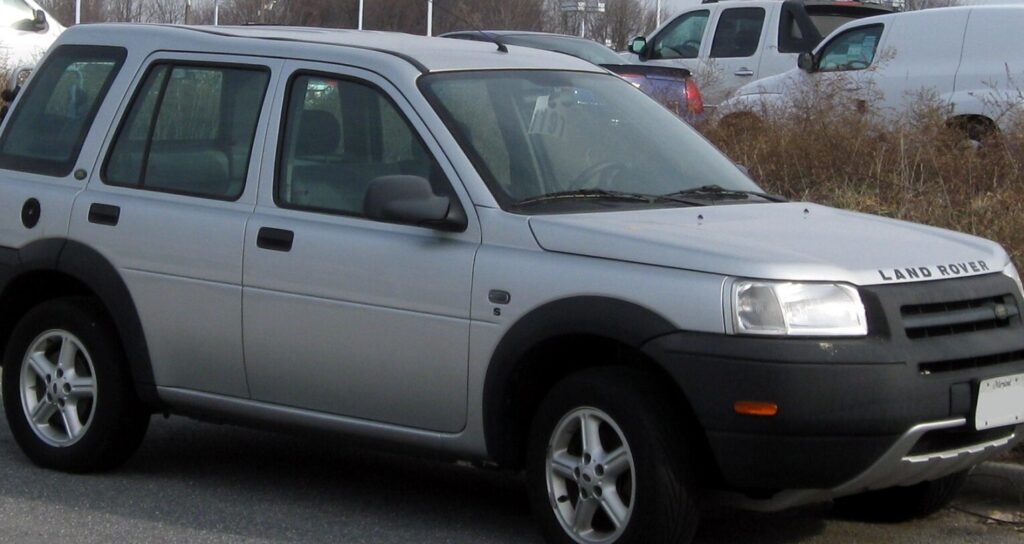
The Land Rover Freelander I, specifically the 2.5 V6 24V variant producing 177 horsepower, was a pivotal model in Land Rover’s lineup during its production run from 2001 to 2006. Positioned as a more accessible entry point into the Land Rover brand, the Freelander aimed to blend off-road capability with on-road comfort and practicality. This first-generation Freelander (LN series) was built on the 1HX0/A3 platform, shared with other Ford-owned brands, and represented Land Rover’s attempt to capture a larger share of the burgeoning compact SUV market. The 2.5 V6 automatic configuration occupied a mid-range position within the Freelander lineup, offering a step up in performance from the four-cylinder models while remaining more affordable than the later, more powerful versions.
Technical Specifications
| Brand | Land Rover |
| Model | Freelander |
| Generation | Freelander I (LN) |
| Type (Engine) | 2.5 V6 24V (177 Hp) |
| Start of production | 2001 |
| End of production | 2006 |
| Powertrain Architecture | Internal Combustion engine |
| Body type | SUV |
| Seats | 5 |
| Doors | 5 |
| Fuel consumption (urban) | 17.2 l/100 km (13.7 US mpg, 16.4 UK mpg, 5.8 km/l) |
| Fuel consumption (extra urban) | 9.7 l/100 km (24.2 US mpg, 29.1 UK mpg, 10.3 km/l) |
| Fuel consumption (combined) | 12.4 l/100 km (19 US mpg, 22.8 UK mpg, 8.1 km/l) |
| Fuel Type | Petrol (Gasoline) |
| Acceleration 0 – 100 km/h | 11.1 sec |
| Acceleration 0 – 62 mph | 11.1 sec |
| Acceleration 0 – 60 mph | 10.5 sec |
| Maximum speed | 182 km/h (113.09 mph) |
| Weight-to-power ratio | 9.2 kg/Hp, 109.3 Hp/tonne |
| Weight-to-torque ratio | 6.8 kg/Nm, 148.1 Nm/tonne |
| Power | 177 Hp @ 6500 rpm |
| Power per litre | 70.9 Hp/l |
| Torque | 240 Nm @ 4000 rpm (177.01 lb.-ft. @ 4000 rpm) |
| Engine layout | Front, Transverse |
| Engine Model/Code | 25K4F |
| Engine displacement | 2497 cm3 (152.38 cu. in.) |
| Number of cylinders | 6 |
| Engine configuration | V-engine |
| Cylinder Bore | 80 mm (3.15 in.) |
| Piston Stroke | 82.8 mm (3.26 in.) |
| Compression ratio | 10.5:1 |
| Number of valves per cylinder | 4 |
| Fuel injection system | Multi-port manifold injection |
| Engine aspiration | Naturally aspirated engine |
| Valvetrain | DOHC |
| Engine oil capacity | 5.2 l (5.49 US qt | 4.58 UK qt) |
| Coolant capacity | 7.8 l (8.24 US qt | 6.86 UK qt) |
| Kerb Weight | 1620 kg (3571.49 lbs.) |
| Max. weight | 2060 kg (4541.52 lbs.) |
| Max load | 440 kg (970.03 lbs.) |
| Trunk (boot) space – minimum | 354 l (12.5 cu. ft.) |
| Trunk (boot) space – maximum | 1319 l (46.58 cu. ft.) |
| Fuel tank capacity | 60 l (15.85 US gal | 13.2 UK gal) |
| Length | 4445 mm (175 in.) |
| Width | 1809 mm (71.22 in.) |
| Height | 1708 mm (67.24 in.) |
| Wheelbase | 2557 mm (100.67 in.) |
| Front track | 1534 mm (60.39 in.) |
| Rear track | 1545 mm (60.83 in.) |
| Drive wheel | All wheel drive (4×4) |
| Number of gears | 5 |
| Gearbox type | automatic transmission |
| Front suspension | Coil spring |
| Rear suspension | Coil spring |
| Front brakes | Ventilated discs |
| Rear brakes | Drum |
| Assisting systems | ABS (Anti-lock braking system) |
| Steering type | Steering rack and pinion |
| Power steering | Hydraulic Steering |
| Tires size | 195/80 R15 S |
Powertrain & Engine Architecture
The heart of this Freelander variant is the 2.5-liter V6 engine, designated as the 25K4F. This engine, a product of Ford’s collaboration with Rover Group (before Land Rover’s acquisition by Ford), is a naturally aspirated, 24-valve DOHC unit. It utilizes a multi-port fuel injection system, delivering fuel directly into the intake ports. The engine’s design prioritized smooth power delivery over outright performance. The automatic transmission paired with this engine is a five-speed unit, designed to provide comfortable and convenient shifting. While not known for its sportiness, the transmission was reliable and well-suited to the Freelander’s intended use as a versatile family vehicle. The engine’s relatively simple design, compared to later Land Rover engines, contributed to its overall robustness.
Driving Characteristics
The 177 hp 2.5 V6 automatic Freelander offered a reasonable level of performance for its time. Acceleration from 0-60 mph took around 10.5 seconds, and it had a top speed of approximately 113 mph. However, it wasn’t a particularly quick vehicle. The automatic transmission, while smooth, did sap some power, resulting in a less responsive feel compared to the five-speed manual versions. The gear ratios were tuned for everyday drivability and fuel economy rather than aggressive acceleration. In real-world conditions, the Freelander 2.5 V6 automatic felt adequate for highway cruising and city driving, but struggled when fully loaded or tackling steep inclines. The all-wheel-drive system provided good traction in slippery conditions, making it a capable vehicle for inclement weather.
Equipment & Trim Levels
The 2.5 V6 automatic Freelander typically came equipped with a decent level of standard features. These included air conditioning, power windows and locks, and an AM/FM stereo. Interior upholstery was generally cloth, although leather options were available. Dashboard configuration was relatively straightforward, with a focus on functionality. Optional extras included a sunroof, upgraded audio systems, and alloy wheels. Higher trim levels added features like heated seats and automatic climate control. The Freelander aimed to provide a comfortable and well-equipped interior without the premium price tag of more luxurious SUVs.
Chassis & Braking
The Freelander I featured an independent suspension system with coil springs all around. The front suspension utilized MacPherson struts, while the rear employed a multi-link setup. This configuration provided a reasonable balance between ride comfort and handling. Braking duties were handled by ventilated discs at the front and drum brakes at the rear. ABS (Anti-lock Braking System) was standard, enhancing safety during emergency braking situations. The chassis was designed to provide a stable and predictable driving experience, both on and off-road. Stabilizer bars were fitted to both the front and rear axles to reduce body roll during cornering.
Market Reception & Comparison
The Freelander 2.5 V6 automatic received mixed reviews from automotive critics. While praised for its off-road capability and comfortable ride, it was often criticized for its relatively slow acceleration and somewhat dated interior. Compared to the four-cylinder Freelander models, the 2.5 V6 offered a noticeable improvement in performance, but at the cost of increased fuel consumption. Against competitors like the Honda CR-V and Toyota RAV4, the Freelander offered a more rugged and capable all-wheel-drive system, but lacked the refinement and fuel efficiency of its Japanese rivals. Fuel economy was a significant drawback, averaging around 19 mpg in combined driving.
Legacy
The Land Rover Freelander I, including the 2.5 V6 automatic variant, has developed a reputation for reasonable reliability, although certain components, such as the cooling system and transfer case, are known to be potential weak points. In the used car market today, these Freelanders are relatively affordable and offer a unique blend of off-road capability and practicality. The 2.5 V6 engine, while not the most powerful, is generally considered to be durable and relatively easy to maintain. However, prospective buyers should be aware of the potential for age-related issues and ensure that the vehicle has been properly maintained. The Freelander I paved the way for future Land Rover models and helped to broaden the brand’s appeal to a wider audience.