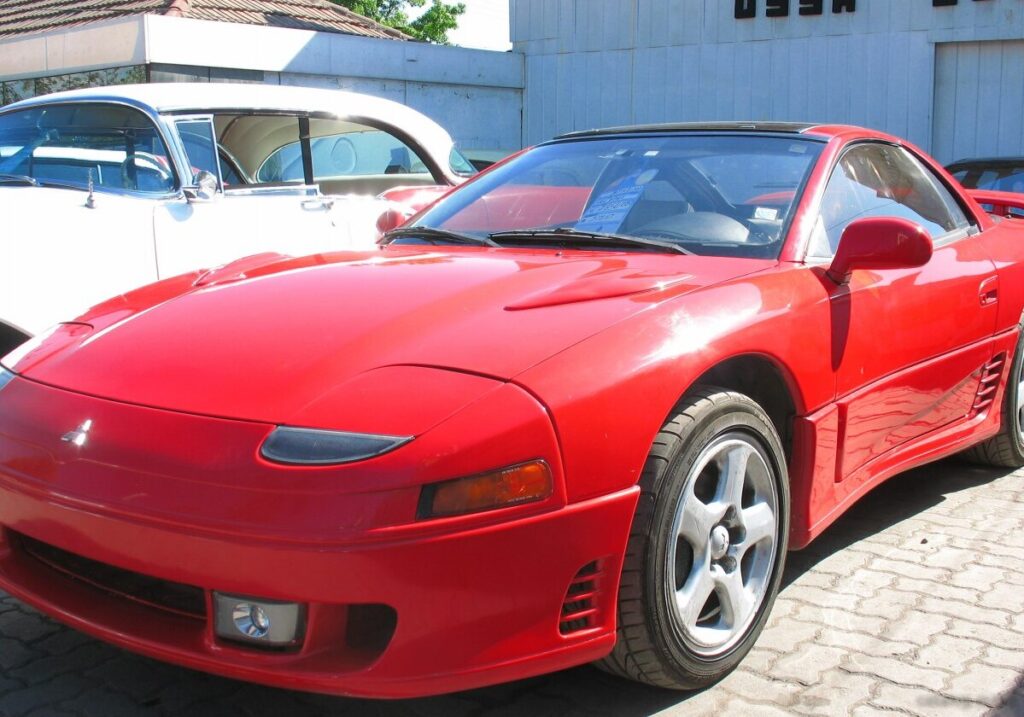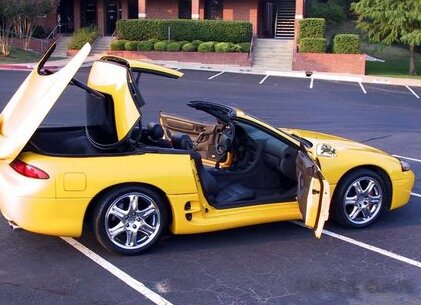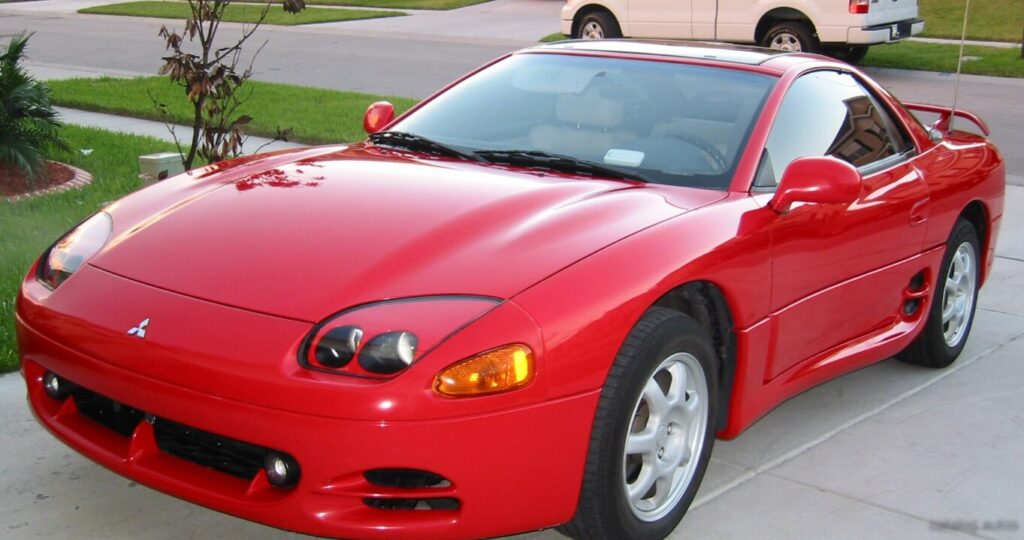
The Mitsubishi 3000GT VR-4, particularly the facelifted version introduced in 1994, represents a high point in Japanese sports car engineering. Produced from 1994 to 1997, this iteration of the 3000GT (known as the GTO in Japan) was a technologically advanced grand tourer aimed at competing with established European marques like Porsche and Mazda. The VR-4 designation signified the top-of-the-line model, equipped with a potent 3.0-liter twin-turbocharged V6 engine and a sophisticated all-wheel-drive system. It was a flagship model for Mitsubishi, showcasing their engineering prowess and design capabilities. The 1994 facelift brought subtle but important styling changes, along with refinements to the engine and suspension.
Technical Specifications
| Brand | Mitsubishi |
| Model | 3000 GT |
| Generation | 3000 GT (facelift 1994) |
| Type (Engine) | VR-4 3.0 V6 (320 Hp) |
| Start of production | 1994 |
| End of production | 1997 |
| Powertrain Architecture | Internal Combustion engine |
| Body type | Coupe |
| Seats | 4 |
| Doors | 3 |
| Fuel Type | Petrol (Gasoline) |
| Weight-to-power ratio | 5.4 kg/Hp, 185.5 Hp/tonne |
| Weight-to-torque ratio | 4 kg/Nm, 247.5 Nm/tonne |
| Power | 320 Hp @ 6000 rpm |
| Power per litre | 107.7 Hp/l |
| Torque | 427 Nm @ 2500 rpm, 314.94 lb.-ft. @ 2500 rpm |
| Engine layout | Front, Transverse |
| Engine Model/Code | 6G72T |
| Engine displacement | 2972 cm3, 181.36 cu. in. |
| Number of cylinders | 6 |
| Engine configuration | V-engine |
| Cylinder Bore | 91.1 mm, 3.59 in. |
| Piston Stroke | 76 mm, 2.99 in. |
| Compression ratio | 8:1 |
| Number of valves per cylinder | 4 |
| Fuel injection system | Multi-port manifold injection |
| Engine aspiration | Twin-Turbo, Intercooler |
| Valvetrain | DOHC |
| Engine oil capacity | 4.6 l, 4.86 US qt | 4.05 UK qt |
| Coolant | 8 l, 8.45 US qt | 7.04 UK qt |
| Kerb Weight | 1725 kg, 3802.97 lbs |
| Fuel tank capacity | 75 l, 19.81 US gal | 16.5 UK gal |
| Length | 4565 mm, 179.72 in |
| Width | 1840 mm, 72.44 in |
| Height | 1253 mm, 49.33 in |
| Wheelbase | 2470 mm, 97.24 in |
| Drag coefficient (Cd) | 0.33 |
| Drivetrain Architecture | The Internal combustion engine (ICE) drives permanently the four wheels of the vehicle. |
| Drive wheel | All wheel drive (4×4) |
| Number of gears and type of gearbox | 6 gears, manual transmission |
| Front suspension | Independent type McPherson, Transverse stabilizer |
| Rear suspension | Independent multi-link suspension, Transverse stabilizer, Trailing arm |
| Front brakes | Ventilated discs |
| Rear brakes | Ventilated discs |
| Assisting systems | ABS (Anti-lock braking system), 4-wheel steering (4WS, active rear steering) |
| Steering type | Steering rack and pinion |
| Power steering | Hydraulic Steering |
| Tires size | 245/45 R17 |
| Wheel rims size | 8.5J x 17 |
Powertrain & Engine Architecture
The heart of the 1994-1997 3000GT VR-4 is the 6G72T engine, a 2.972-liter (181.36 cubic inches) DOHC 24-valve V6. This engine is distinguished by its twin-turbocharger setup, utilizing two Mitsubishi TD06H turbochargers. The turbochargers are sequentially activated, providing minimal turbo lag and a broad powerband. An intercooler is employed to cool the compressed intake air, further enhancing performance. The engine features multi-port fuel injection, delivering precise fuel metering for optimal combustion. The 8:1 compression ratio was a compromise to handle the boost from the turbochargers. The engine’s robust construction and sophisticated cooling system were crucial for managing the high power output. The VR-4 exclusively came with a 6-speed manual transmission, designed to handle the engine’s substantial torque.
Driving Characteristics
The 3000GT VR-4 offered a thrilling driving experience. The twin-turbocharged engine delivered a surge of power, with peak torque available from as low as 2500 rpm. This resulted in strong acceleration across the rev range. The all-wheel-drive system provided excellent traction, particularly in challenging conditions. The 6-speed manual transmission allowed for precise control over the engine’s power. While the car was relatively heavy at 3803 lbs, the powerful engine and sophisticated drivetrain compensated for this, delivering impressive performance. The active aero system, including an automatically adjusting rear spoiler, contributed to stability at higher speeds. Compared to non-turbocharged 3000GT models, the VR-4 offered a significantly more engaging and performance-oriented driving experience.
Equipment & Trim Levels
The VR-4 trim was the most luxurious and well-equipped version of the 3000GT. Standard features included leather upholstery, power-adjustable seats, a premium sound system, automatic climate control, and power windows and locks. The interior featured unique VR-4 badging and trim. Optional extras included a sunroof, upgraded audio systems, and various cosmetic enhancements. The VR-4 also featured a more comprehensive gauge cluster, providing information on boost pressure, oil temperature, and other vital engine parameters.
Chassis & Braking
The 3000GT VR-4 featured a robust chassis designed to handle the high power output and demanding driving conditions. The suspension consisted of independent McPherson struts at the front and an independent multi-link setup at the rear, both with transverse stabilizers. This configuration provided a good balance between ride comfort and handling precision. The braking system utilized ventilated discs on all four wheels, providing ample stopping power. An Anti-lock Braking System (ABS) was standard. A notable feature was the optional 4-wheel steering (4WS) system, which could adjust the rear wheel angle to improve maneuverability at low speeds and stability at high speeds.
Market Reception & Comparison
The 3000GT VR-4 was generally well-received by automotive critics, who praised its performance, technology, and handling. However, it was also criticized for its relatively high price and complexity. Compared to other sports cars of the era, such as the Mazda RX-7 and the Toyota Supra, the 3000GT VR-4 offered a unique combination of all-wheel-drive traction and turbocharged power. Fuel economy was not a strong point, with the VR-4 averaging around 18 mpg in mixed driving. Reliability was also a concern for some owners, due to the complexity of the engine and drivetrain.
Legacy
The Mitsubishi 3000GT VR-4 has become a sought-after collector’s car, particularly the 1994-1997 facelifted models. The 6G72T engine, while complex, is considered a robust and capable powerplant when properly maintained. However, finding parts can be challenging and expensive. The VR-4’s advanced technology and distinctive styling have cemented its place in automotive history as a significant example of Japanese sports car engineering. Today, well-maintained examples command high prices in the used car market, reflecting their rarity and desirability. The car remains a testament to Mitsubishi’s ambition and engineering capabilities during the 1990s.