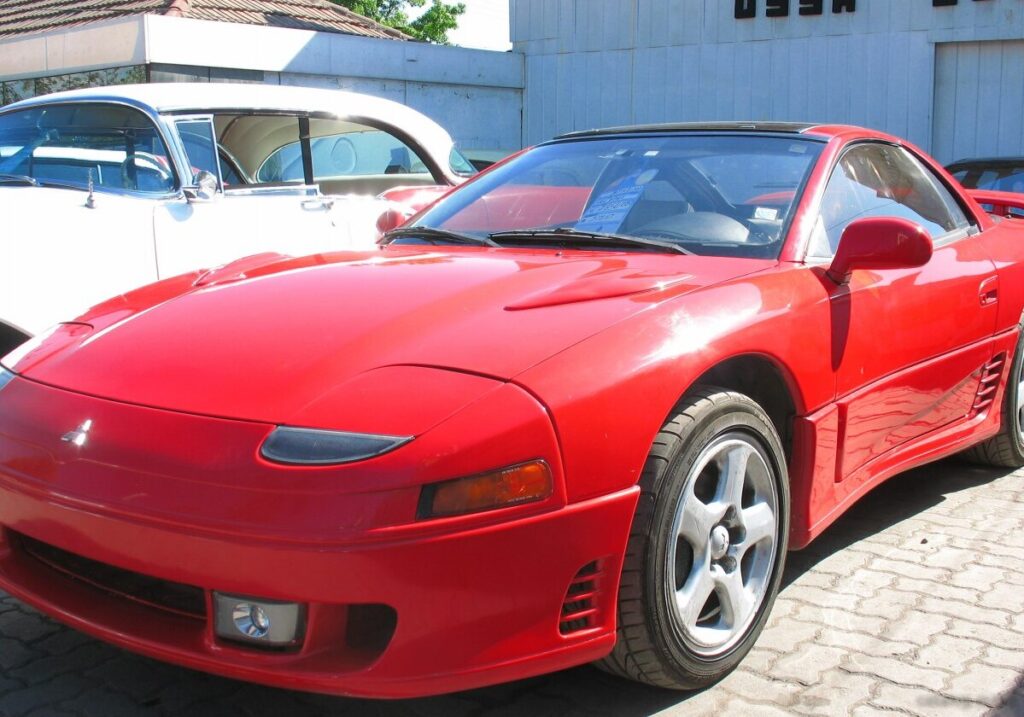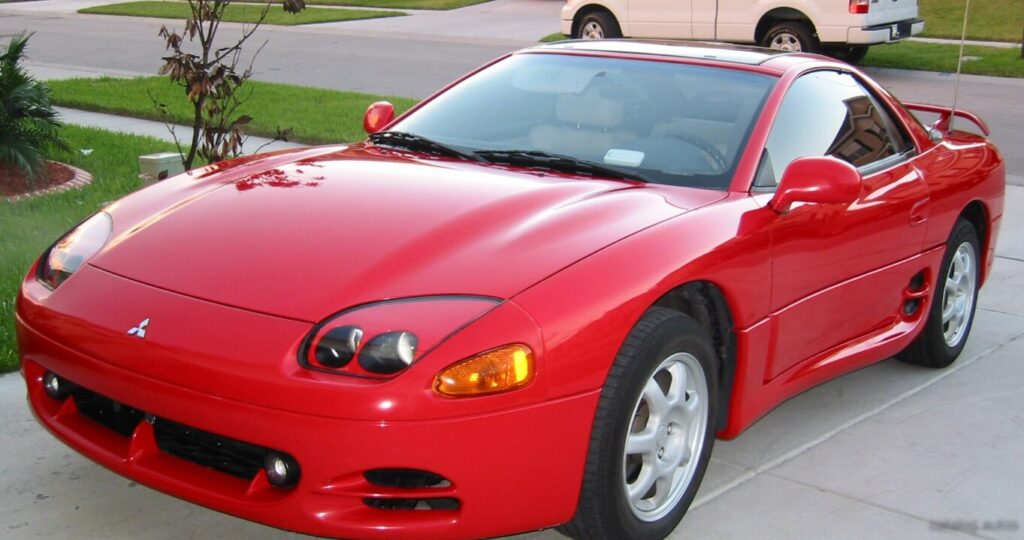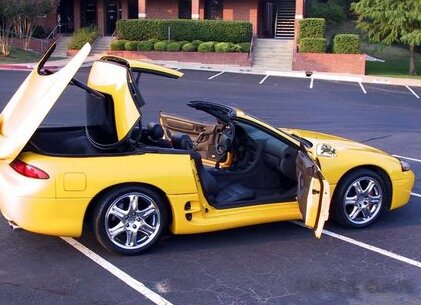
The Mitsubishi 3000GT Spyder 3.0 Turbo, produced between 1995 and 2000, represented the convertible iteration of Mitsubishi’s flagship sports car. Positioned as the premium offering within the 3000GT lineup, the Spyder combined the performance of the 3.0-liter turbocharged V6 engine with the open-air experience of a retractable hardtop. It was a direct competitor to models like the Mazda MX-5 Miata and Toyota Supra, aiming for a blend of performance and luxury. The Spyder was never as popular as the hardtop coupe, but it remains a sought-after vehicle among enthusiasts, particularly for its unique combination of features and relative rarity.
Technical Specifications
| Brand | Mitsubishi |
| Model | 3000 GT |
| Generation | 3000 GT Spyder |
| Type (Engine) | 3.0 Turbo (320 Hp) |
| Start of production | 1995 |
| End of production | 2000 |
| Powertrain Architecture | Internal Combustion engine |
| Body type | Cabriolet |
| Seats | 4 |
| Doors | 2 |
| Fuel consumption (combined) | 11.5 l/100 km (20.5 US mpg, 24.6 UK mpg, 8.7 km/l) |
| Fuel Type | Petrol (Gasoline) |
| Weight-to-power ratio | 5.4 kg/Hp, 185.5 Hp/tonne |
| Weight-to-torque ratio | 4 kg/Nm, 247.5 Nm/tonne |
| Power | 320 Hp @ 6000 rpm |
| Power per litre | 107.7 Hp/l |
| Torque | 427 Nm @ 2500 rpm (314.94 lb.-ft. @ 2500 rpm) |
| Engine layout | Front, Transverse |
| Engine displacement | 2972 cm3 (181.36 cu. in.) |
| Number of cylinders | 6 |
| Engine configuration | V-engine |
| Cylinder Bore | 91.1 mm (3.59 in.) |
| Piston Stroke | 76 mm (2.99 in.) |
| Compression ratio | 8:1 |
| Number of valves per cylinder | 4 |
| Fuel injection system | Multi-port manifold injection |
| Engine aspiration | Turbocharger |
| Valvetrain | DOHC |
| Kerb Weight | 1725 kg (3802.97 lbs.) |
| Trunk (boot) space – maximum | 160 l (5.65 cu. ft.) |
| Fuel tank capacity | 75 l (19.81 US gal | 16.5 UK gal) |
| Length | 4565 mm (179.72 in.) |
| Width | 1840 mm (72.44 in.) |
| Height | 1290 mm (50.79 in.) |
| Wheelbase | 2470 mm (97.24 in.) |
| Front track | 1560 mm (61.42 in.) |
| Rear (Back) track | 1580 mm (62.2 in.) |
| Drivetrain Architecture | The Internal combustion engine (ICE) drives the front wheels of the vehicle. |
| Drive wheel | Front wheel drive |
| Number of gears and type of gearbox | 5 gears, manual transmission |
| Front suspension | Wishbone |
| Rear suspension | Coil spring |
| Front brakes | Ventilated discs |
| Rear brakes | Ventilated discs |
| Assisting systems | ABS (Anti-lock braking system) |
| Steering type | Steering rack and pinion |
| Power steering | Hydraulic Steering |
| Tires size | 245/45 R17 |
Powertrain & Engine Architecture
The heart of the 3000GT Spyder 3.0 Turbo was the 6G72 engine, a 2.972-liter (181.36 cubic inches) DOHC 24-valve V6. This engine featured a single turbocharger with an intercooler, boosting power output to 320 horsepower at 6000 rpm and 427 Nm (314.94 lb-ft) of torque at 2500 rpm. The engine utilized multi-port fuel injection for precise fuel delivery. The 6G72 was known for its robust construction and ability to handle increased boost pressures with modifications. The Spyder exclusively came with a 5-speed manual transmission, designed to handle the engine’s substantial power. The transmission was a conventional manual, offering a direct and engaging driving experience.
Driving Characteristics
The 3000GT Spyder 3.0 Turbo delivered a thrilling driving experience. The turbocharger provided a noticeable surge of power, particularly in the mid-range, making for quick acceleration. While the added weight of the convertible top and associated reinforcement compared to the coupe slightly impacted handling, the Spyder still offered a sporty and responsive feel. The 5-speed manual transmission allowed for precise control over the engine’s power band. Compared to the non-turbocharged 3000GT models, the 3.0 Turbo offered a significantly more potent driving experience, with a focus on performance rather than fuel economy. The Spyder’s open-top configuration added another dimension to the driving experience, enhancing the connection between driver and road.
Equipment & Trim Levels
The 3000GT Spyder 3.0 Turbo was well-equipped for its time. Standard features included leather upholstery, power seats, air conditioning, a premium sound system, and alloy wheels. The retractable hardtop was, of course, a key feature, providing the security and weather protection of a coupe with the open-air enjoyment of a convertible. Optional extras included a CD changer, upgraded sound systems, and various cosmetic enhancements. The interior design was focused on providing a comfortable and sporty environment for both driver and passengers.
Chassis & Braking
The 3000GT Spyder utilized a front-engine, front-wheel-drive layout. The suspension consisted of independent wishbone suspension in the front and a multi-link coil spring suspension in the rear. This setup provided a good balance between ride comfort and handling performance. Braking duties were handled by ventilated disc brakes on all four wheels, assisted by an Anti-lock Braking System (ABS). The Spyder’s chassis was reinforced to compensate for the lack of a fixed roof, ensuring structural rigidity and minimizing body flex.
Market Reception & Comparison
The 3000GT Spyder 3.0 Turbo was generally well-received by automotive critics, who praised its performance, handling, and luxurious features. However, its relatively high price and complex mechanicals were noted as potential drawbacks. Compared to the 3000GT coupe, the Spyder offered a more unique and engaging driving experience, but at the cost of some structural rigidity. Fuel economy was also a concern, with the 3.0 Turbo achieving around 20.5 US mpg in combined driving. The Spyder’s rarity also contributed to its higher resale value compared to other 3000GT models.
Legacy
The Mitsubishi 3000GT Spyder 3.0 Turbo remains a desirable sports car among enthusiasts. The 6G72 engine is known for its durability and potential for modification, making it a popular choice for performance upgrades. While maintenance can be complex due to the car’s age and sophisticated technology, parts availability is generally good. The Spyder’s unique combination of performance, luxury, and open-air enjoyment ensures its continued appeal in the used car market. It represents a high point in Mitsubishi’s engineering prowess and a testament to the enduring appeal of the Japanese sports car of the 1990s.