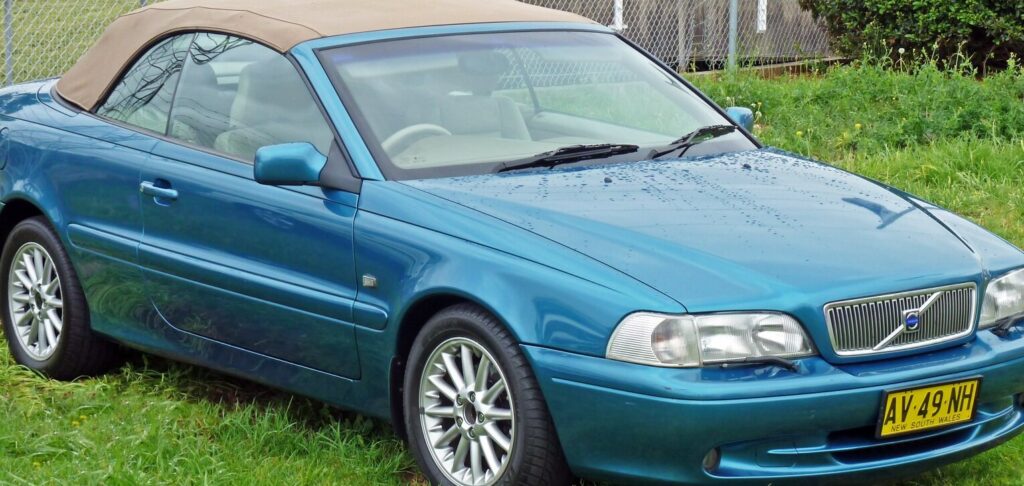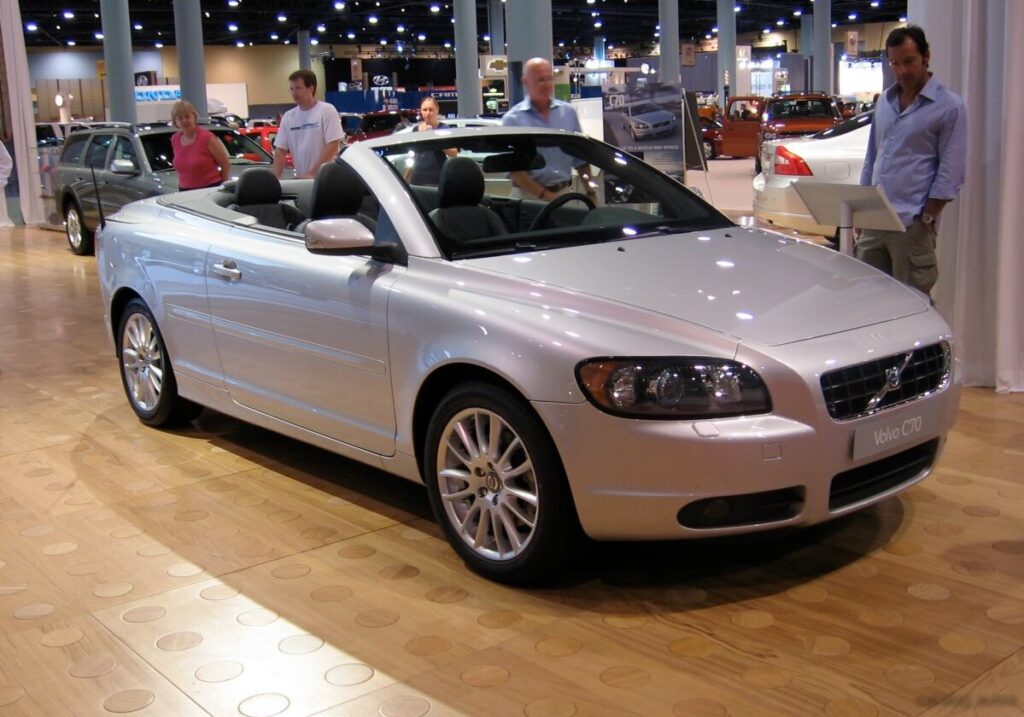
The Volvo C70 Coupe Cabriolet II, produced from 2005 to 2006, represented a significant evolution in Volvo’s open-top offerings. This generation, internally designated as the 1HX0, combined the practicality of a coupe with the open-air enjoyment of a convertible. The 2.5 T5 20V variant, equipped with a 2.5-liter turbocharged inline-five engine producing 220 horsepower, occupied a sweet spot in the C70 lineup, offering a balance of performance and refinement. It was positioned as the mainstream performance option, sitting above the naturally aspirated 2.4i models and below the more potent, though less common, T5 High Performance versions.
Technical Specifications
| Brand | Volvo |
| Model | C70 |
| Generation | C70 Coupe Cabrio II |
| Type (Engine) | 2.5 T5 20V (220 Hp) |
| Start of production | 2005 |
| End of production | 2006 |
| Powertrain Architecture | Internal Combustion engine |
| Body type | Coupe – Cabriolet |
| Seats | 4 |
| Doors | 2 |
| Fuel consumption (urban) | 12.9 l/100 km (18.2 US mpg, 21.9 UK mpg, 7.8 km/l) |
| Fuel consumption (extra urban) | 6.6 l/100 km (35.6 US mpg, 42.8 UK mpg, 15.2 km/l) |
| Fuel consumption (combined) | 9.1 l/100 km (25.8 US mpg, 31 UK mpg, 11 km/l) |
| CO2 emissions | 217 g/km |
| Fuel Type | Petrol (Gasoline) |
| Acceleration 0 – 100 km/h | 7.6 sec |
| Acceleration 0 – 62 mph | 7.6 sec |
| Acceleration 0 – 60 mph | 7.2 sec |
| Maximum speed | 240 km/h (149.13 mph) |
| Weight-to-power ratio | 7.5 kg/Hp, 133.3 Hp/tonne |
| Weight-to-torque ratio | 5.2 kg/Nm, 193.8 Nm/tonne |
| Power | 220 Hp @ 5000 rpm |
| Power per litre | 87.3 Hp/l |
| Torque | 320 Nm @ 1500-4800 rpm (236.02 lb.-ft. @ 1500-4800 rpm) |
| Engine layout | Front, Transverse |
| Engine Model/Code | B5254T3 |
| Engine displacement | 2521 cm3 (153.84 cu. in.) |
| Number of cylinders | 5 |
| Engine configuration | Inline |
| Cylinder Bore | 83 mm (3.27 in.) |
| Piston Stroke | 93.2 mm (3.67 in.) |
| Compression ratio | 9:1 |
| Number of valves per cylinder | 4 |
| Fuel injection system | Multi-port manifold injection |
| Engine aspiration | Turbocharger, Intercooler |
| Engine oil capacity | 5.8 l (6.13 US qt | 5.1 UK qt) |
| Coolant | 9.5 l (10.04 US qt | 8.36 UK qt) |
| Kerb Weight | 1651 kg (3639.83 lbs.) |
| Max. weight | 2090 kg (4607.66 lbs.) |
| Max load | 439 kg (967.83 lbs.) |
| Trunk (boot) space – minimum | 200 l (7.06 cu. ft.) |
| Trunk (boot) space – maximum | 404 l (14.27 cu. ft.) |
| Fuel tank capacity | 62 l (16.38 US gal | 13.64 UK gal) |
| Length | 4582 mm (180.39 in.) |
| Width | 1770 mm (69.69 in.) |
| Width including mirrors | 2025 mm (79.72 in.) |
| Height | 1400 mm (55.12 in.) |
| Wheelbase | 2640 mm (103.94 in.) |
| Front track | 1550 mm (61.02 in.) |
| Rear (Back) track | 1560 mm (61.42 in.) |
| Drivetrain Architecture | Front wheel drive |
| Number of gears and type of gearbox | 6 gears, manual transmission |
| Front suspension | Coil spring |
| Rear suspension | Coil spring |
| Front brakes | Ventilated discs |
| Rear brakes | Disc |
| Assisting systems | ABS (Anti-lock braking system) |
| Steering type | Steering rack and pinion |
| Tires size | 215/50 R17 |
| Wheel rims size | 17 |
Powertrain & Engine Architecture
The heart of the C70 2.5 T5 was the B5254T3 engine, a 2.5-liter inline-five cylinder powerplant. This engine was a cornerstone of Volvo’s mid-size and larger offerings during the early 2000s. The ‘T5’ designation signified the presence of a light-pressure turbocharger and intercooler, boosting power output. The engine utilized multi-port fuel injection and a 9:1 compression ratio. The 20 valves (four per cylinder plus one extra) contributed to efficient cylinder filling and improved breathing. The six-speed manual transmission was the standard offering, providing precise control and engaging driving experience. The engine’s transverse mounting and front-wheel-drive configuration were typical for Volvo’s contemporary models.
Driving Characteristics
The 220 horsepower and 236 lb-ft of torque delivered by the B5254T3 engine provided brisk acceleration. The 0-60 mph sprint was dispatched in around 7.2 seconds, making it a genuinely quick car for its time. The turbocharger provided a noticeable surge of power in the mid-range, offering strong passing performance. Compared to the naturally aspirated 2.4i models, the T5 felt significantly more responsive. While not as raw or focused as some of its German rivals, the C70 T5 offered a comfortable and refined driving experience. The six-speed manual transmission allowed drivers to fully exploit the engine’s powerband, while the well-tuned suspension provided a good balance between ride comfort and handling.
Equipment & Trim Levels
The C70 2.5 T5 came reasonably well-equipped as standard. Features typically included leather upholstery, automatic climate control, power-adjustable front seats, a premium audio system, and alloy wheels. The retractable hardtop was, of course, a key feature. Optional extras included navigation system, upgraded audio options, and various cosmetic enhancements. Interior trim options varied, with different wood or aluminum finishes available. Safety was a Volvo hallmark, and the C70 included features like ABS, traction control, and side airbags as standard.
Chassis & Braking
The C70’s chassis was designed to provide a comfortable ride and stable handling. The front suspension utilized coil springs and independent struts, while the rear featured a multi-link setup. Ventilated disc brakes were fitted to the front wheels, providing strong stopping power, while solid discs were used at the rear. The ABS system helped to maintain control during hard braking. The steering was a rack-and-pinion system, offering precise and responsive feel.
Market Reception & Comparison
The Volvo C70 Coupe Cabriolet II was generally well-received by automotive critics. It was praised for its stylish design, comfortable interior, and refined driving experience. The 2.5 T5 engine was considered a good compromise between performance and fuel economy. Compared to rivals like the BMW 3 Series Convertible and Audi A4 Cabriolet, the C70 offered a more unique and understated style. Fuel economy was respectable for a turbocharged convertible, averaging around 25.8 US mpg in combined driving. Reliability was generally good, although some owners reported minor issues with the retractable hardtop mechanism.
Legacy
The Volvo C70 Coupe Cabriolet II, particularly the 2.5 T5 variant, has become a sought-after used car. The B5254T3 engine is known for its durability and relatively straightforward maintenance. While the retractable hardtop can require occasional attention, it remains a reliable system overall. Today, these cars offer a stylish and affordable way to experience open-top motoring with a touch of Scandinavian elegance. The C70 represents a high point in Volvo’s convertible history, combining practicality, performance, and safety in a compelling package.